
 Save
If you’ve been looking for a natural way to tackle acne, dandruff, or minor skin irritations, tea tree oil might be worth a try. This concentrated essential oil from the Australian Melaleuca alternifolia plant is known for its antibacterial and anti-inflammatory properties, but using it safely is key. In this article, I’ll walk you through how to dilute it properly, simple ways to add it to your beauty routine, and common mistakes to avoid so you get the most out of it without irritating your skin.
Key Takeaways
- Always dilute tea tree oil with a carrier oil before topical use to prevent skin irritation.
- For acne, use a spot treatment of 1 drop tea tree oil mixed with 2-3 drops carrier oil.
- Add 2-3 drops of diluted tea tree oil to your shampoo to help with dandruff.
- Store tea tree oil in a cool, dark place in its original dark glass bottle to maintain potency.
- Discontinue use and consult a doctor if you experience redness, itching, or swelling.
9 ideas in this post
- What is Tea Tree Oil and How Does It Work?
- Essential Supplies for Using Tea Tree Oil Safely
- Versatile Ways to Use Tea Tree Oil for Beauty
- Step-by-Step: Diluting and Patch Testing Tea Tree Oil
- Common Tea Tree Oil Mistakes to Avoid
- Pro Tips for Maximizing Your Tea Tree Oil Experience
- When to Consult a Professional About Skin Concerns
- Frequently Asked Questions
- Final Thoughts
What is Tea Tree Oil and How Does It Work?
Tea tree oil is a concentrated essential oil extracted from the leaves of the Melaleuca alternifolia plant, which is native to Australia. Its primary active component, terpinen-4-ol, gives it strong antibacterial and anti-inflammatory properties. Because it is highly concentrated, you must always dilute it with a carrier oil like jojoba or coconut before applying it to your skin to prevent irritation. Many people use it for common beauty concerns such as acne, dandruff, and fungal infections.
Essential Supplies for Using Tea Tree Oil Safely
To use tea tree oil safely and effectively, gather these essentials:
- Tea tree essential oil: Choose a high-quality oil in a dark glass bottle to protect it from light.
- Carrier oil: Jojoba, coconut, or almond oil work well for dilution.
- Cotton swabs: For precise spot application.
- Small mixing containers: Use a small bowl or bottle for DIY blends.
- Shampoo or moisturizer: To incorporate tea tree oil into your existing routine.
Versatile Ways to Use Tea Tree Oil for Beauty
Spot Treatment for Acne
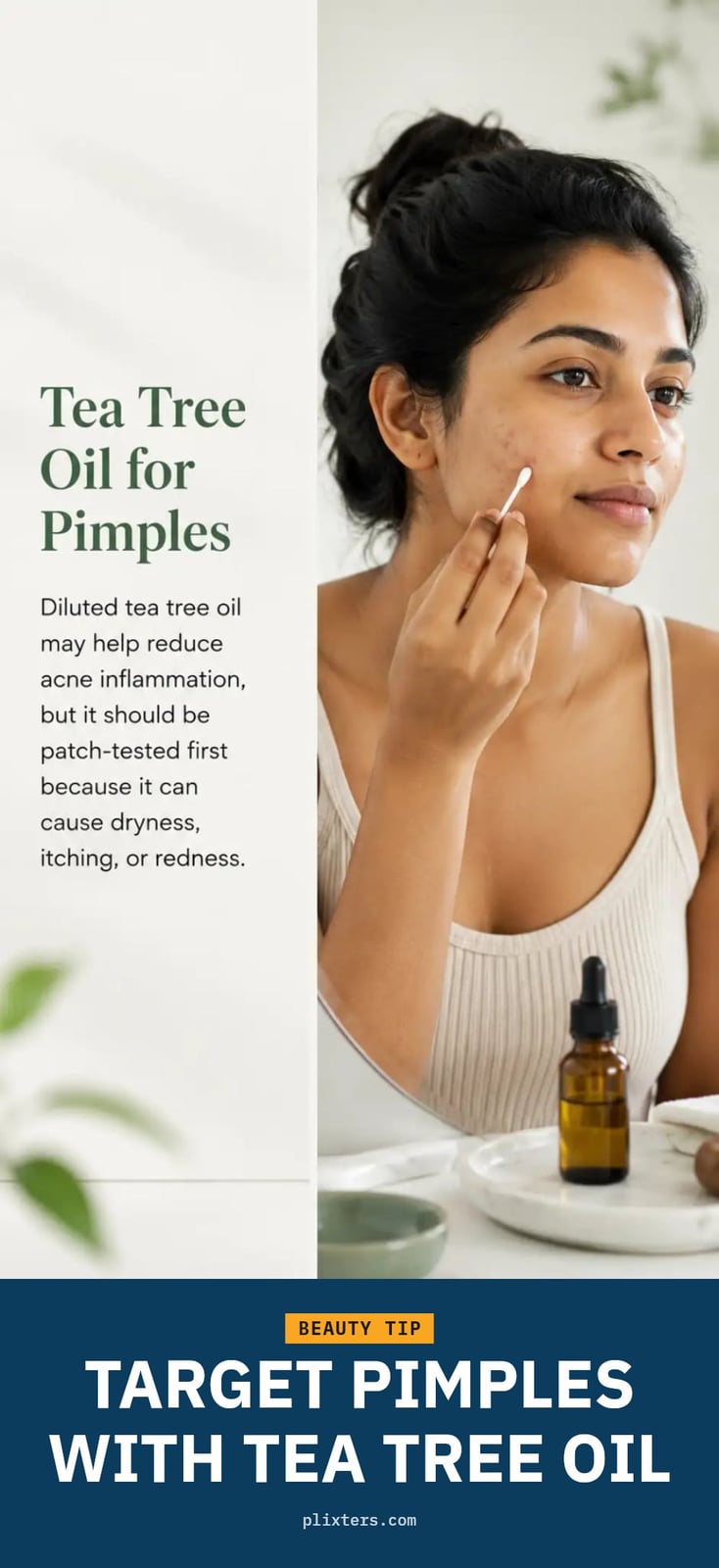
Dilute 1 drop of tea tree oil with 2-3 drops of carrier oil. Dip a cotton swab into the mixture and apply it directly to the pimple. Leave it on overnight or for a few hours. Rinse with warm water. My tip: Start with a lower concentration to see how your skin responds.
Dandruff Remedy
Add 2-3 drops of tea tree oil to a tablespoon of your regular shampoo. Massage it into your scalp for 2-3 minutes before rinsing. You can also dilute it with a carrier oil and massage it directly onto your scalp before washing.
Nail Fungus
Mix 1 drop of tea tree oil with 3-4 drops of carrier oil. Use a cotton swab to apply the mixture to the affected nail and the surrounding skin. Repeat twice daily. Consistency is key; results may take several weeks.
DIY Facial Cleanser or Toner
Add 1 drop of tea tree oil to a small amount of your regular cleanser or to a cotton pad dampened with water. Gently wipe over your face, avoiding the eye area. Rinse if needed. Pro move: Mix it with aloe vera gel for a soothing toner.
Natural Deodorant
Dilute 1 drop of tea tree oil with 4-5 drops of carrier oil. Apply a tiny amount to your underarms. Patch test first to ensure your skin tolerates it. The antibacterial properties may help reduce odor.
Step-by-Step: Diluting and Patch Testing Tea Tree Oil

Diluting and patch testing tea tree oil is a simple but critical step to avoid skin irritation. Follow these steps:
- Choose a carrier oil: Jojoba, coconut, or almond oil are good options.
- Mix the dilution: Combine 1-2 drops of tea tree oil with 12 drops of carrier oil. This creates a safe 5-10% concentration.
- Apply a test drop: Place a small amount of the mixture on a discreet area of skin, such as your inner arm.
- Wait 24 hours: Do not wash the area. Check for any redness, itching, or swelling during this time.
- Proceed if clear: If no reaction occurs, you can use the dilution on a larger area. If irritation appears, discontinue use and try a lower concentration.
Common Tea Tree Oil Mistakes to Avoid
Applying undiluted tea tree oil directly to your skin is the most common mistake. The concentrated oil can cause redness, burning, or even chemical burns. Always mix it with a carrier oil first.
Using too high a concentration also leads to adverse reactions. Stick to the standard ratio of 1-2 drops of tea tree oil per 12 drops of carrier oil. More is not better.
Ingesting tea tree oil is toxic and should never be done. Even a small amount can cause serious harm. Keep it out of reach of children and pets.
Expecting immediate results without consistent use sets you up for disappointment. Tea tree oil works gradually over days or weeks. Apply it regularly as part of your routine.
Using it as a sole treatment for severe conditions like deep acne or persistent fungal infections is not recommended. For serious or worsening issues, consult a dermatologist or healthcare professional.
Pro Tips for Maximizing Your Tea Tree Oil Experience
Store tea tree oil in a cool, dark place in its sealed dark glass bottle. Light and heat cause oxidation, making the oil less effective and more irritating.
Wash your hands thoroughly after handling undiluted oil. It can linger on your skin and accidentally transfer to sensitive areas.
Use fresh, unoxidized oil for best results. If the oil smells different or has changed color, replace it. Old oil is more likely to irritate.
Start with a lower concentration and gradually increase if your skin tolerates it. Begin with 1 drop per 12 drops of carrier oil, then adjust slowly.
Never use tea tree oil near your eyes or mucous membranes. It can cause stinging, redness, or damage. If contact happens, rinse with cool water and seek medical advice if irritation persists.
When to Consult a Professional About Skin Concerns
If you experience severe irritation, redness, itching, or swelling after using tea tree oil, stop immediately and consult a healthcare professional. This may indicate an allergic reaction or sensitivity.
For persistent or worsening skin conditions like severe acne, stubborn fungal infections, or chronic dandruff that don’t improve with tea tree oil, see a dermatologist. Tea tree oil is a complementary remedy, not a replacement for medical treatment.
If you have open wounds, severely irritated skin, or a compromised skin barrier, do not use tea tree oil without professional guidance. It can worsen the damage.
During pregnancy or breastfeeding, consult your doctor before using tea tree oil. Topical use is generally considered safe in small amounts, but professional advice is best.
If you suspect an allergic reaction or have ingested tea tree oil, seek medical attention immediately. Keep the bottle handy for the doctor.
Frequently Asked Questions
Can I use tea tree oil daily?
Yes, you can use it daily as long as you dilute it properly and your skin doesn’t show signs of irritation. For a spot treatment, applying it once a day is usually enough. If you’re using it in a shampoo or body wash, daily use is fine, but stop if you notice any redness or dryness.
How long does it take for tea tree oil to work?
It varies from person to person. Some people see improvements in a few days, while others may need a few weeks of consistent application. Don’t expect overnight results, and be patient, tea tree oil works gradually alongside your regular routine.
Is tea tree oil safe for sensitive skin?
It can be, but you need to be extra cautious. Always do a patch test on a small area of skin like your inner arm before using it on your face or body. Start with a lower concentration, such as 1 drop per 12 drops of carrier oil, and watch for any reaction.
Can tea tree oil help with body acne?
Yes, it can be used on body acne just like on facial acne. Dilute 1 drop of tea tree oil with 2-3 drops of carrier oil and apply it to individual pimples on your back, chest, or shoulders. You can also add a few drops of diluted oil to your body wash for a gentler approach.
What’s the best way to store tea tree oil?
Keep it in its original dark glass bottle with the lid tightly sealed. Store it in a cool, dark place away from direct sunlight and heat, which can cause the oil to oxidize and become less effective. Proper storage helps it stay potent for up to a year.
Final Thoughts
My tip: Start with a simple spot treatment for acne to see how your skin responds. Results vary, so give it at least a few weeks of consistent use before deciding if it works for you. Remember, tea tree oil is a helpful tool, not a cure-all, so pair it with a solid skincare routine and professional advice for persistent issues.
This information is for general informational purposes only and does not constitute medical or professional advice. Tea tree oil is a potent essential oil, and reactions can vary. For persistent or severe skin conditions, consult a dermatologist or healthcare professional.




