
 Save
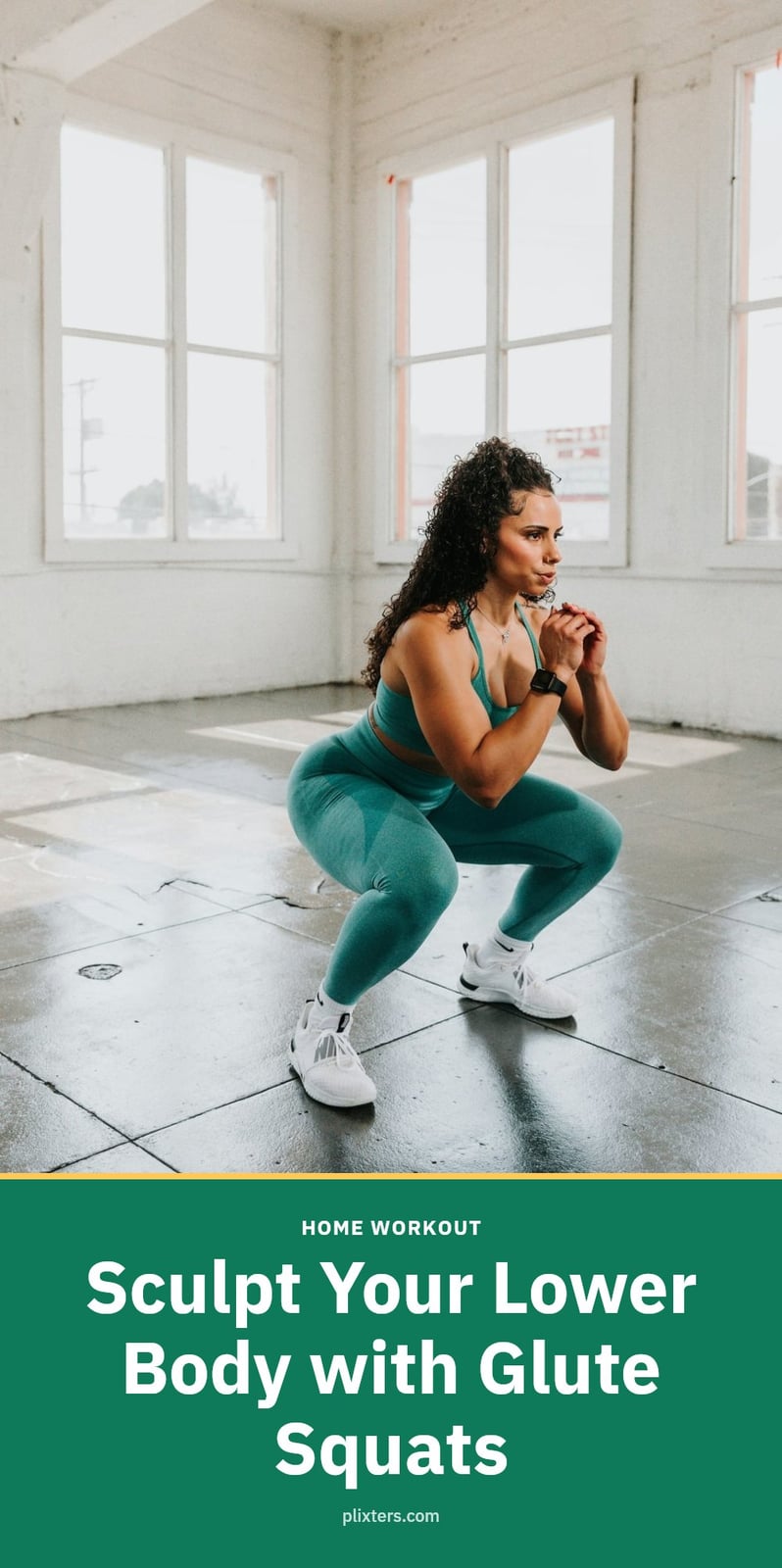
If you are looking to strengthen and shape your glutes at home, squats are one of the most effective moves you can do. This compound exercise targets your glutes, quads, and hamstrings, and you do not need a gym full of equipment to see real results. In this article, I will walk you through proper squat form, a variety of squat variations you can try at home, and a simple weekly plan to help you stay consistent.
Key Takeaways
- Master bodyweight squats first to build proper form before adding resistance.
- Drive through your heels and keep your chest lifted to maximize glute engagement.
- Incorporate variations like sumo and curtsy squats to target your glutes from different angles.
- Aim for 2-3 squat sessions per week for consistent progress.
- Squeeze your glutes at the top of each rep to enhance muscle activation.
12 ideas in this post
1. Warm-Up: Leg Swings
Stand tall next to a wall or sturdy chair and place one hand on it for balance. Swing your outside leg forward and backward in a controlled arc, keeping your torso still and your standing leg slightly bent. Focus on a gentle stretch through your hamstring and hip flexor, not on how high you can kick.
- Sets and reps: 10-15 swings per leg
- Form cue: Keep your hips square and shoulders level throughout the swing
- Make it easier or harder: Shorten the range of motion to start; increase it as your hips feel looser
2. Bodyweight Squat
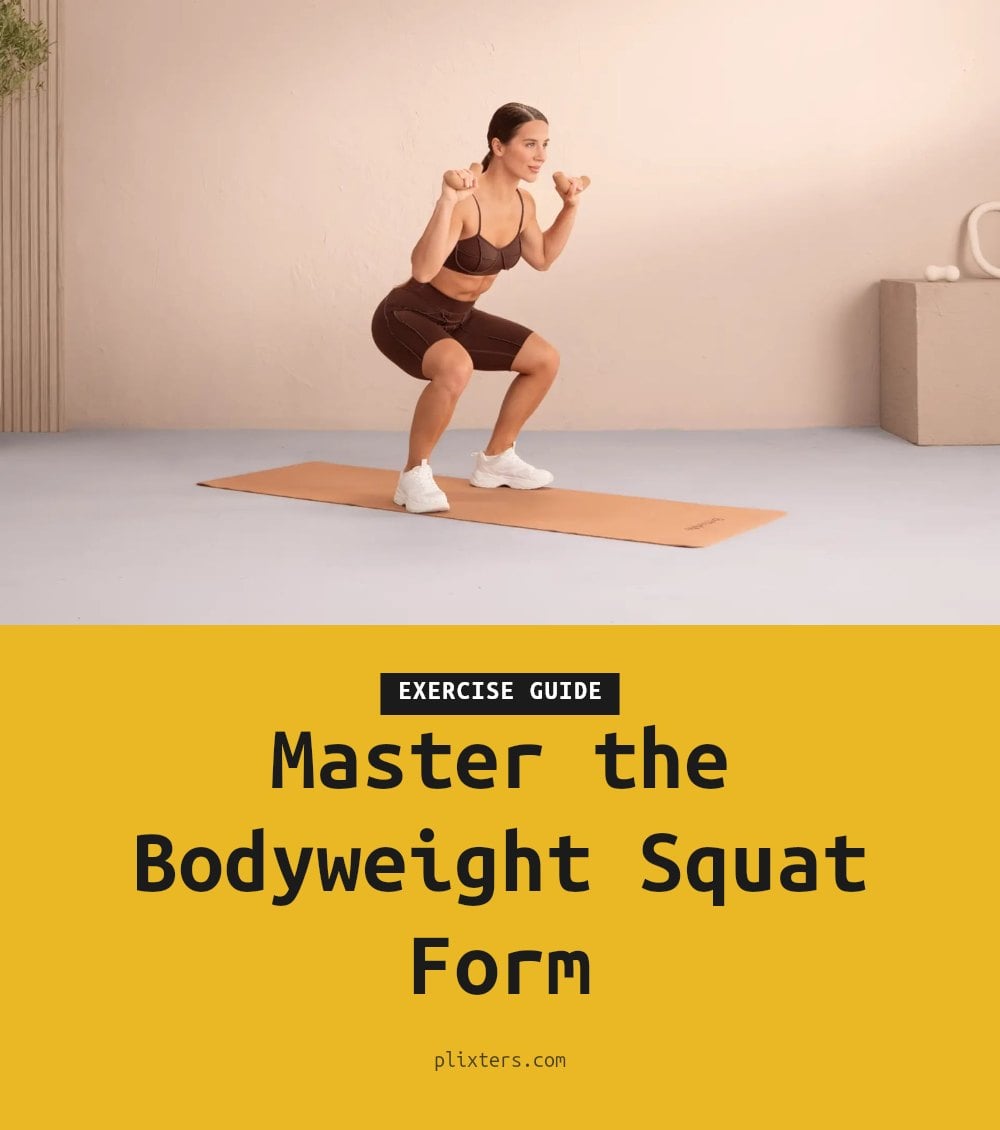
Stand with your feet shoulder-width apart and your toes pointing slightly forward or just slightly outward. Push your hips back as if you are sitting into a low chair, keeping your chest lifted and your core braced. Lower until your thighs are parallel to the floor, or go deeper if your hips allow it, then drive through your heels to stand. Keep your knees tracking over your toes the whole way down and up.
- Sets and reps: 3 sets of 10-15 reps
- Form cue: Inhale on the way down, exhale as you push through your heels to stand
- Make it easier or harder: Squat to a chair to control depth; hold a dumbbell at your chest for more resistance
3. Goblet Squat
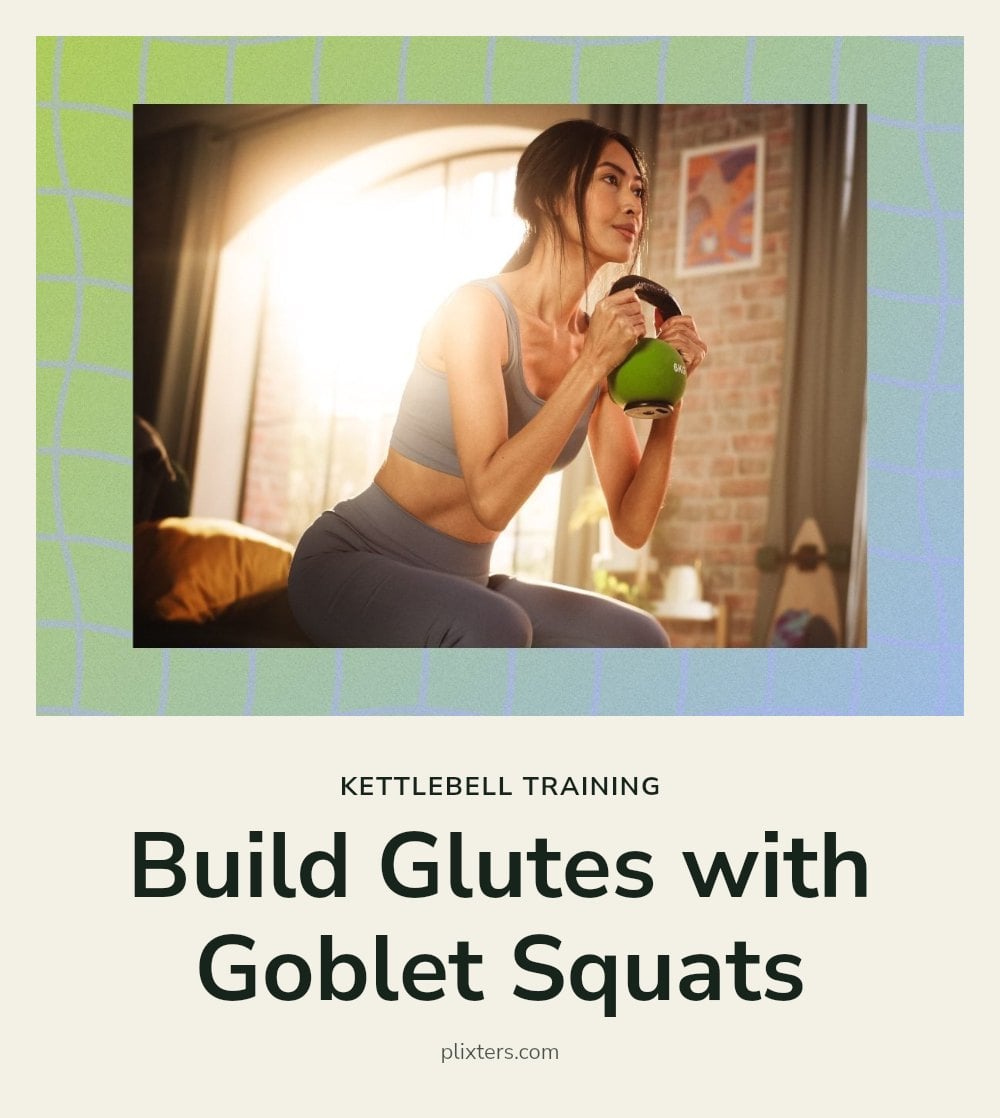
Hold a dumbbell, kettlebell, or even a heavy book or full water bottle vertically against your chest with both hands. Tuck your elbows in toward your body and lower into a squat, keeping your torso as upright as possible. Push through your heels to return to standing, keeping the weight pressed firmly against your sternum.
- Sets and reps: 3 sets of 8-12 reps
- Form cue: Keep the weight touching your chest through the whole movement so your back stays straight
- Make it easier or harder: Use a lighter object until you feel stable; increase the weight when you can complete 12 reps with good form
4. Sumo Squat
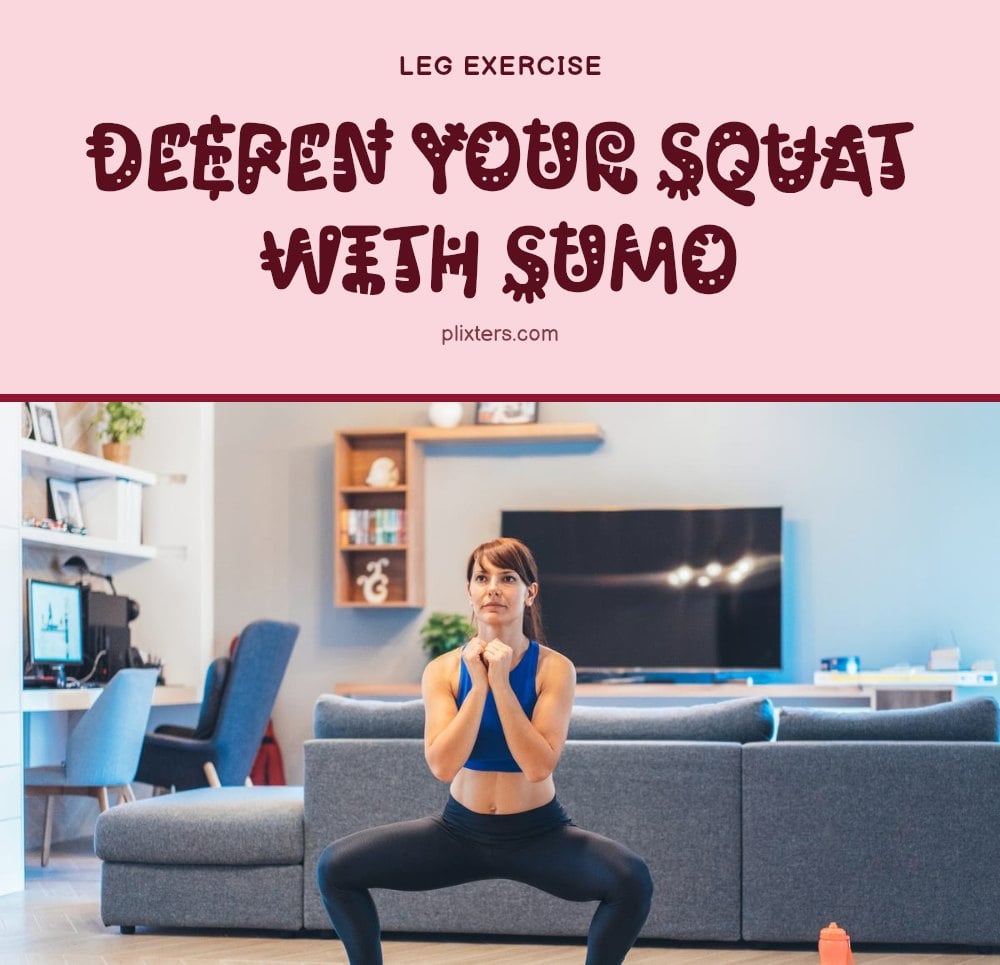
Take a wide stance, feet wider than shoulder-width apart, and point your toes out at about 45 degrees. Lower your hips straight down, keeping your chest lifted and your knees tracking in line with your toes. At the top of the movement, squeeze your glutes together to maximize muscle activation.
- Sets and reps: 3 sets of 10-15 reps
- Form cue: Ensure your knees track in line with your toes on the way down
- Make it easier or harder: Reduce your stance width for less hip demand; add a dumbbell held at your chest for more load
5. Resistance Band Squat
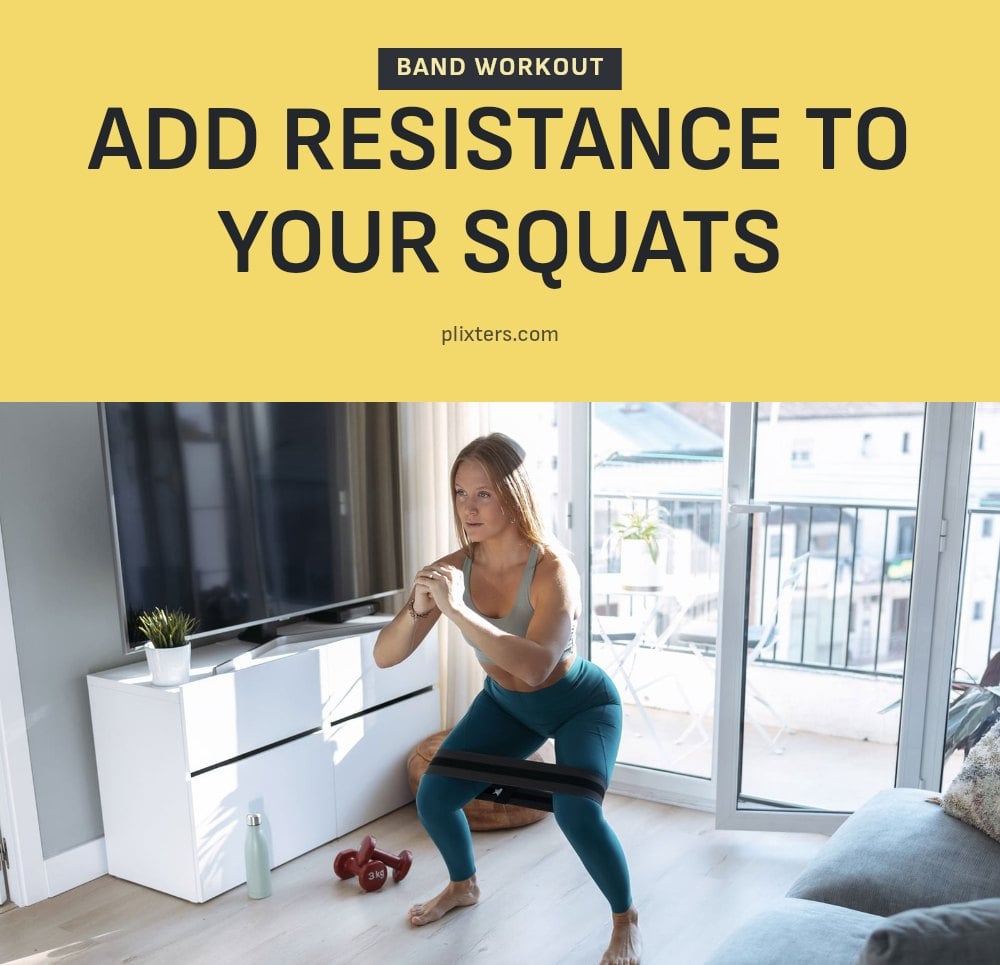
Place a loop resistance band around your ankles. Perform a regular bodyweight squat, and as you lower, actively push your knees outward against the band. Keep the band under tension the entire time. This forces your glute medius to fire, which stabilizes your hips.
- Sets and reps: 3 sets of 12-15 repetitions.
- Form cue: Imagine you are spreading the floor apart with your feet.
- Make it easier or harder: Use a lighter band to start, or a thicker band for more resistance.
6. Curtsy Squat
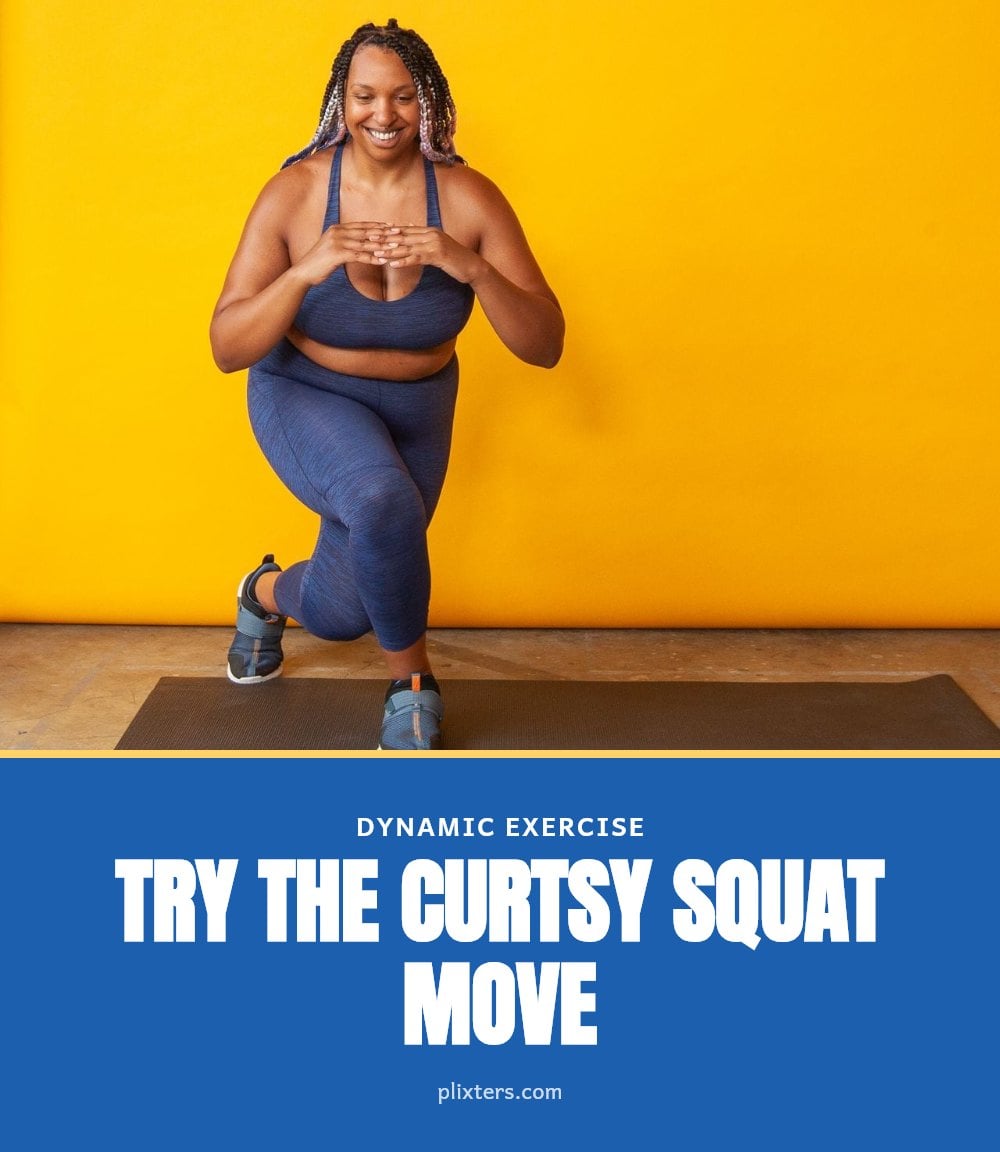
Stand with your feet hip-width apart. Step your right leg diagonally behind your left, lowering your hips until both knees form 90-degree angles. Keep your front knee stacked over your ankle and your chest lifted throughout. Press through your front heel to return to start, then repeat on the other side.
- Sets and reps: 3 sets of 10-12 repetitions per leg.
- Form cue: Keep your hips square and facing forward, not twisting.
- Make it easier or harder: Hold a light dumbbell at your chest for added challenge.
7. Squat Pulse
Lower into a standard squat and hold at the bottom, with your hips below your knees if your mobility allows. From this low position, make small, controlled up-and-down pulses, only about 2-3 inches of movement each time. Keep constant tension in your glutes and quads; do not lock out your knees at the top.
- Sets and reps: 3 sets of 15-20 pulses.
- Form cue: Keep your weight in your heels and your chest lifted.
- Make it easier or harder: Reduce the range of motion if you feel strain, or hold a dumbbell for extra resistance.
8. Cool-Down: Glute Stretch
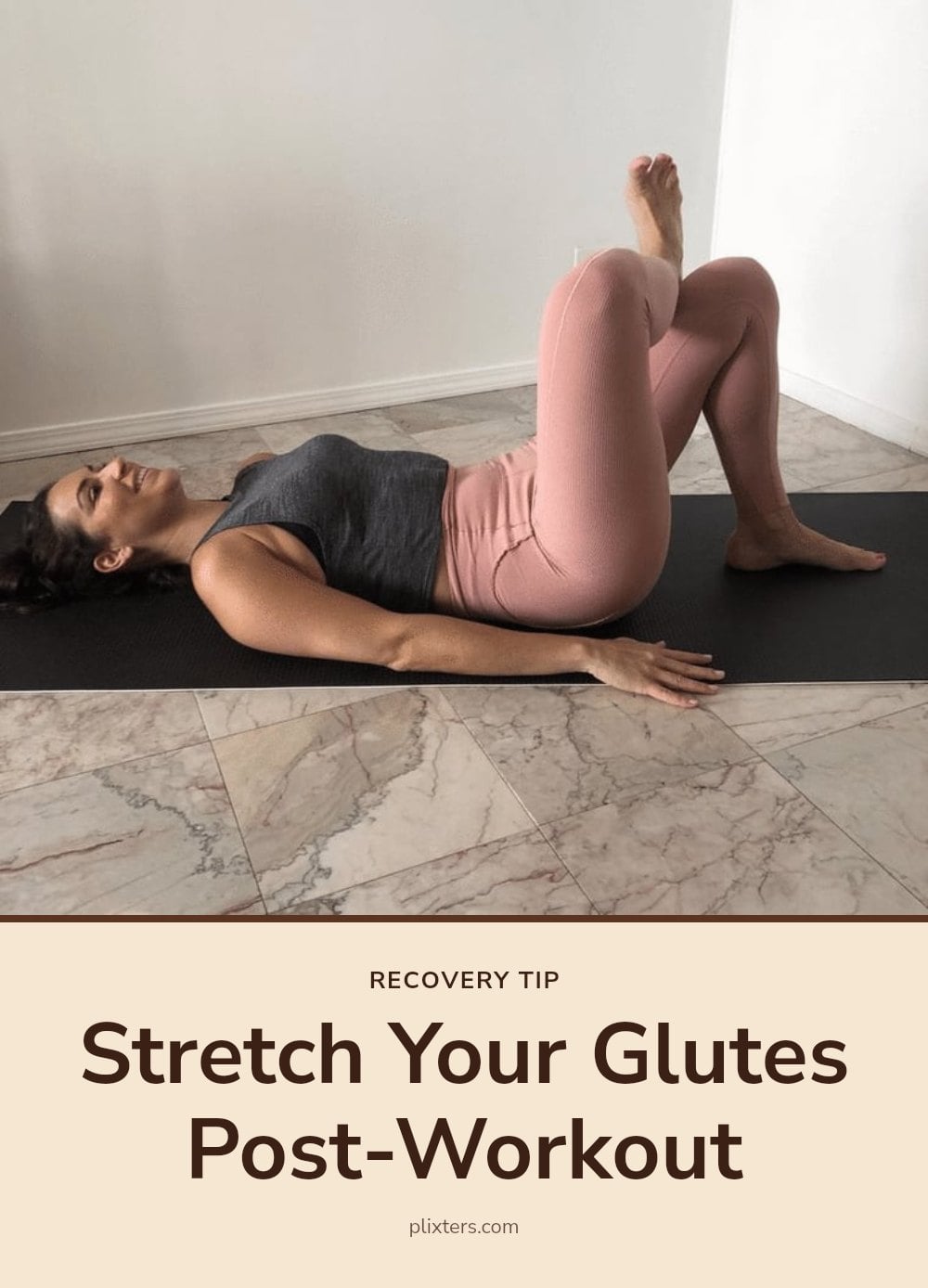
Lie on your back with your knees bent and feet flat on the floor. Cross your right ankle over your left knee, then gently pull your left thigh toward your chest until you feel a stretch in your right glute. Hold for 20-30 seconds, then switch sides. This helps improve flexibility and reduce muscle soreness after your squat workout.
- Time: 20-30 seconds per side.
- Form cue: Keep your lower back pressed into the floor.
- Make it easier or harder: Use a towel behind your thigh for a gentler pull.
Your Weekly Squat Workout Plan
Consistency is key for seeing results, so aim for 2-3 squat sessions per week. Below is a simple weekly plan you can follow, but listen to your body and take rest days when needed. If you feel sore or fatigued, swap a squat day for light stretching or a walk.
| Day | Workout | Notes |
|---|---|---|
| Monday | Bodyweight Squats | Master form first, 3 sets of 10-15 reps |
| Wednesday | Bodyweight Squats + One Variation (e.g., Sumo Squats) | Add one new variation, 3 sets each |
| Friday | Bodyweight Squats + Another Variation (e.g., Curtsy Squats) | Keep intensity moderate, 3 sets each |
| Rest days | Stretch or walk | Let muscles recover |
Start with bodyweight only until you master the movement. After 4-8 weeks of consistent practice, you may notice improved glute strength and definition. Adjust the plan to fit your schedule and energy levels.
Common Squat Mistakes to Avoid
Even small form errors can reduce results and increase injury risk. Here are the most common squat mistakes and how to fix them.
- Not going deep enough: This limits glute activation. Aim to get your hips below your knees if your mobility allows, or at least parallel to the floor.
- Rounding your lower back: This puts unnecessary strain on your spine. Keep your chest up and core engaged throughout the movement.
- Letting knees cave inward: This stresses your knee joints. Actively push your knees out, ensuring they track in line with your toes.
- Lifting heels off the ground: This reduces stability and power. Drive through your entire foot, especially your heels, to stand up.
- Holding your breath: This can increase blood pressure. Inhale on the way down, exhale on the way up, maintaining a steady breathing pattern.
If you feel sharp pain in your knees, back, or hips, stop the exercise. Consider consulting a doctor or physical therapist if you have pre-existing joint issues before continuing.
Frequently Asked Questions
How often should I do squats for glute growth?
Aim for 2 to 3 squat sessions per week, with at least one rest day between sessions. This frequency gives your muscles time to recover and grow. If you feel sore or fatigued, swap a squat day for a light walk or active recovery instead.
Can I really build glutes with just bodyweight squats?
Yes, bodyweight squats can build glute strength and definition, especially if you focus on proper form and depth. As you progress, you can make them more challenging by trying variations like squat pulses, goblet squats with a heavy book, or adding a resistance band.
What if my knees hurt when I squat?
Stop immediately if you feel sharp pain in your knees. Check that your knees are tracking in line with your toes and not caving inward. You may also try a shallower squat depth. If the pain persists, consult a doctor or physical therapist before continuing.
How can I make squats more challenging at home?
You can add resistance with dumbbells, a kettlebell, a heavy book, or a full water bottle held at your chest for a goblet squat. A loop resistance band placed above your knees adds extra work for your glutes. You can also try slowing down the movement or adding squat pulses at the bottom.
Is it better to squat deep or parallel?
Squatting deeper, with your hips below your knees, can fully engage your glutes more than stopping at parallel. However, only go as deep as your mobility and form allow without rounding your back or lifting your heels. If you cannot go deep safely, parallel is still effective.
Final Thoughts
For the best glute results, focus on squat depth and consistent effort rather than just adding more weight. Start with bodyweight squats and progress to goblet or resistance band variations as you get stronger. Realistic expectations matter: with 2-3 sessions per week, you can expect to see noticeable improvements in strength and definition within 4 to 8 weeks. Stick with it, and your lower body will thank you.
This article is for general informational purposes only and does not constitute medical or professional fitness advice. Before starting any new exercise routine, especially if you have pre-existing joint issues or injuries, consult a doctor or physical therapist. Listen to your body and stop if you experience sharp pain.




