
 Save
If you’ve been looking for a natural way to support hair growth, rosemary oil might be worth adding to your routine. Some research suggests it can be as effective as certain conventional treatments, and it’s believed to work by boosting blood circulation to your scalp. In this article, I’ll cover how to use rosemary oil safely, what to expect, and common mistakes to skip.
Key Takeaways
- Always dilute rosemary essential oil with a carrier oil like jojoba or coconut before applying to your scalp.
- Massage the diluted oil into your scalp daily or every other day for at least six months to see potential results.
- Perform a patch test before full application to check for any allergic reaction or irritation.
- Do not use rosemary oil if you are pregnant or breastfeeding without consulting a doctor first.
- Stop use and see a professional if you experience persistent redness, itching, or burning.
10 ideas in this post
- Does Rosemary Oil Really Help with Hair Growth?
- How Rosemary Oil Works to Stimulate Hair Follicles
- Your Essential Kit for Rosemary Oil Application
- Step-by-Step: Applying Rosemary Oil for Hair Growth
- Alternative Ways to Incorporate Rosemary Oil into Your Routine
- Common Mistakes to Avoid When Using Rosemary Oil
- What to Expect: Timeline for Results and Costs
- When to Consult a Professional About Hair Loss
- Frequently Asked Questions
- Final Thoughts
Does Rosemary Oil Really Help with Hair Growth?
Yes, rosemary oil can help with hair growth, but it’s not a quick fix. It’s believed to stimulate hair growth by improving blood circulation to the scalp, which delivers more nutrients and oxygen to hair follicles. A 2015 study even found that rosemary oil showed similar efficacy to minoxidil 2% for androgenetic alopecia after six months. To see potential results, you must dilute it with a carrier oil and apply it consistently for several months.
How Rosemary Oil Works to Stimulate Hair Follicles
How Rosemary Oil Works to Stimulate Hair Follicles
Rosemary oil’s main trick is improving blood circulation to your scalp. When you massage it in, the increased blood flow delivers more oxygen and nutrients directly to your hair follicles, which can encourage growth. The active compounds in rosemary oil, like carnosic acid, are believed to contribute to this effect.
It may also help by reducing inflammation and fighting oxidative stress on your scalp. These anti-inflammatory and antioxidant properties can create a healthier environment for hair to grow, potentially reducing follicle damage over time.
- Improved circulation delivers nutrients and oxygen to follicles
- Anti-inflammatory effects may reduce scalp irritation
- Antioxidant properties can protect follicles from damage
Your Essential Kit for Rosemary Oil Application
You need rosemary essential oil (100% pure, from Rosmarinus officinalis) and a carrier oil to dilute it. Good carrier options are jojoba, coconut, argan, or almond oil. For mixing, grab a small glass bowl or a dropper bottle so you can blend the oils easily. Have your regular shampoo and conditioner ready for washing out the oil after the treatment.
Step-by-Step: Applying Rosemary Oil for Hair Growth
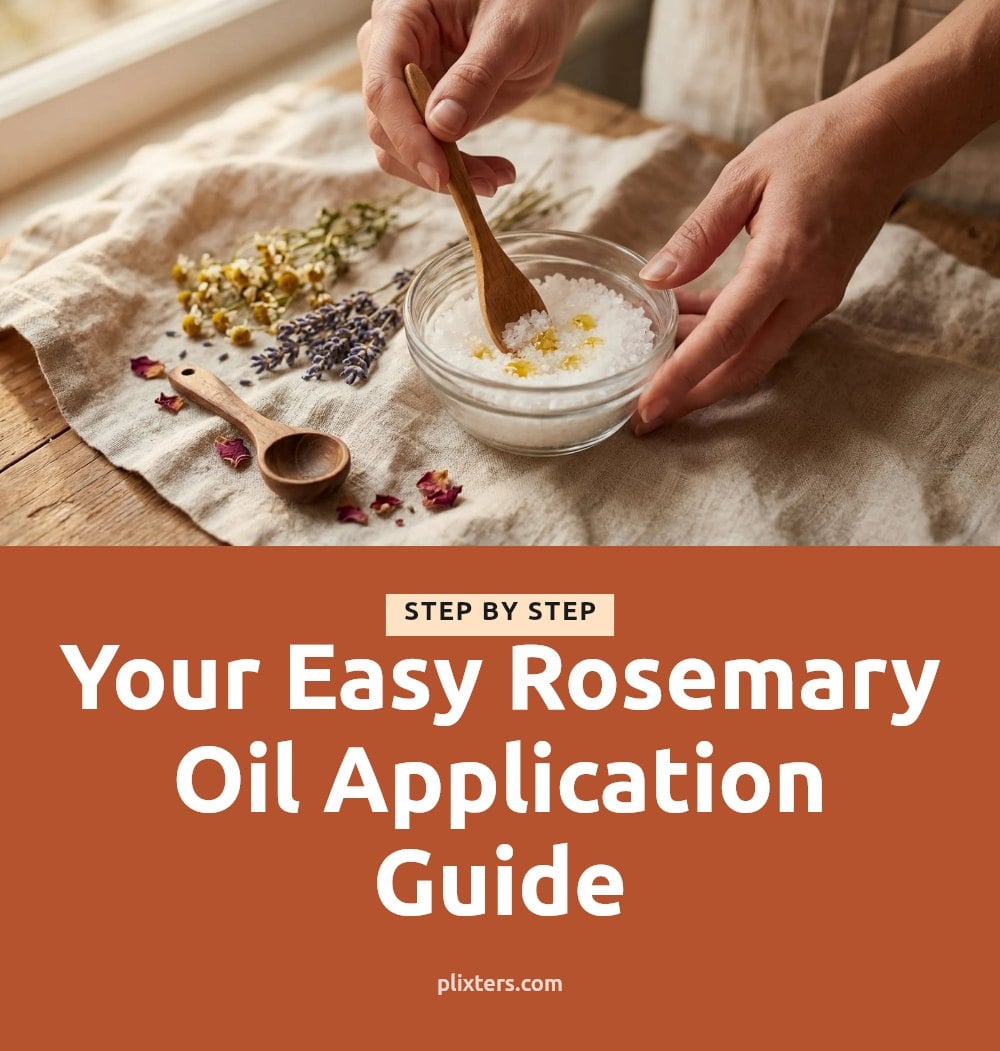
- Dilute the oil: Mix 2-3 drops of rosemary essential oil with 1 teaspoon of carrier oil like jojoba or coconut. Never apply undiluted essential oil to your scalp.
- Patch test first: Apply a small amount of the mixture to your inner arm or behind your ear. Wait 24 hours to check for redness, itching, or irritation before using it on your scalp.
- Section your hair: Part your hair into sections so you can reach your scalp easily. Use clips to hold hair out of the way.
- Massage into scalp: Use your fingertips to gently massage the oil into your scalp in circular motions for 3-5 minutes. Focus on areas where you want to encourage growth.
- Wash your hands: Rinse your hands thoroughly with soap and water after applying to avoid getting oil in your eyes.
- Leave it on: For best results, leave the oil on for at least 30 minutes or overnight before washing with shampoo and conditioner.
Alternative Ways to Incorporate Rosemary Oil into Your Routine

Alternative Ways to Incorporate Rosemary Oil into Your Routine
Direct scalp application with a carrier oil is the most effective method for targeted hair growth, but there are other ways to work rosemary oil into your routine. You can add a few drops of rosemary essential oil to your regular shampoo or conditioner, though the efficacy may be lower because the oil is diluted further and washed off quickly. Tip: Add the drops to a dollop of shampoo in your palm, not the whole bottle, so you can control the amount each time.
A rosemary hair rinse is another option. Steep fresh or dried rosemary leaves in hot water for 15-20 minutes, let it cool, then pour it over your hair after shampooing. This is not the same as using rosemary essential oil. The rinse is much milder and may offer some scalp benefits, but it won’t deliver the concentrated compounds that direct oil application does. For best results, stick with the diluted essential oil massage as your primary method.
Common Mistakes to Avoid When Using Rosemary Oil
Common Mistakes to Avoid When Using Rosemary Oil
The biggest mistake is applying undiluted rosemary essential oil directly to your scalp. This can cause irritation, redness, or even chemical burns. Always mix it with a carrier oil first. Another common error is expecting immediate results, hair growth is slow, and visible changes typically take several months of consistent use.
Many people also skip the patch test, which is a simple way to check for allergic reactions before full application. And be careful not to confuse rosemary essential oil with rosemary water or rosemary-infused oils. These products have much lower concentrations of active compounds and won’t give the same effects. Use the right product for the job.
What to Expect: Timeline for Results and Costs
What to Expect: Timeline for Results and Costs
Results from rosemary oil take time. Most people need at least six months of consistent use, applying it daily or every other day, before noticing a difference in hair thickness or growth. This is normal, so don’t get discouraged if you don’t see changes sooner.
Costs vary widely. A small bottle of rosemary essential oil can range from budget-friendly to premium, and carrier oils like jojoba or coconut are similarly priced. You don’t need expensive brands to get the benefits, but investing in a pure essential oil is worth it for safety and potency.
When to Consult a Professional About Hair Loss
When to Consult a Professional About Hair Loss
If you experience persistent scalp irritation, redness, or burning after using rosemary oil, stop use and see a doctor. It’s also important to consult a healthcare professional before starting rosemary oil if you have epilepsy, high blood pressure, or any other underlying medical condition.
Rosemary oil is generally not recommended for pregnant or breastfeeding individuals without a doctor’s approval. And if your hair loss is sudden, patchy, or accompanied by other symptoms, a dermatologist can help identify the cause and recommend appropriate treatment.
Frequently Asked Questions
How often should I use rosemary oil for hair growth?
For best potential results, apply rosemary oil to your scalp daily or every other day. Consistency is key, and you’ll likely need to keep this up for several months before seeing noticeable changes in hair growth or thickness.
Can rosemary oil be left in hair overnight?
Yes, you can leave diluted rosemary oil in your hair overnight, but be sure to wash it out thoroughly in the morning. If you have a sensitive scalp, start with a shorter leave-in time to see how your skin reacts before trying an overnight application.
Is rosemary oil safe for all hair types?
Rosemary oil is generally safe for all hair types when properly diluted. However, if you have a very sensitive scalp or a condition like eczema, do a patch test first. People with epilepsy or high blood pressure should consult a doctor before using it.
Does rosemary oil help with dandruff?
Some sources suggest that rosemary oil may help with dandruff due to its antimicrobial properties. While it’s not a guaranteed cure, adding it to your scalp care routine could support a healthier scalp environment. If dandruff persists, consider seeing a dermatologist.
What are the best carrier oils to mix with rosemary oil?
Common carrier oils that work well with rosemary oil include jojoba oil, coconut oil, argan oil, and almond oil. Each has its own benefits, so choose one that suits your hair type and preferences. Jojoba oil is a popular choice because it closely mimics the scalp’s natural sebum.
Final Thoughts
My tip: stick with a simple routine of diluting 2-3 drops of rosemary essential oil in a teaspoon of your favorite carrier oil and massaging it into your scalp a few times a week. Realistic expectations matter here. Most people need at least six months of consistent use before noticing a difference in hair thickness. If you stay patient and follow safe practices, rosemary oil can be a gentle, natural addition to your hair care regimen.
This article is for general informational purposes only and does not constitute medical or professional advice. Rosemary oil affects individuals differently, and results are not guaranteed. If you have a persistent or serious scalp condition, hair loss, or any underlying health concern, please consult a doctor or dermatologist before starting a new treatment.




