
 Save
You’ve probably seen peptides listed on your favorite serums and moisturizers, but what do they actually do for your skin? In short, peptides are short chains of amino acids that act like tiny messengers, telling your skin to produce more collagen and elastin, the proteins that keep it firm and smooth. This article breaks down how peptides work, the benefits they offer, and how to choose and use them for visible results.
Key Takeaways
- Peptides signal your skin to make more collagen and elastin, improving firmness and elasticity.
- Use a peptide serum or moisturizer consistently for at least 4 to 12 weeks to see visible results.
- Different peptides target different concerns, so look for a product with a variety of types.
- Apply peptide serums on clean, damp skin before heavier creams or oils for best absorption.
- Combine peptides with hydrating ingredients like hyaluronic acid to support your skin barrier.
10 ideas in this post
- Peptides: Your Skin’s Little Messengers
- How Peptides Work Their Magic in Skincare
- The Many Benefits of Adding Peptides to Your Routine
- Finding the Right Peptide Products for Your Skin
- Top Tips for Using Peptides Effectively
- Common Peptide Mistakes to Avoid
- When to Expect Results and What to Consider
- When to Consult a Professional About Your Skincare
- Frequently Asked Questions
- Final Thoughts
Peptides: Your Skin’s Little Messengers
Peptides are short chains of amino acids, the building blocks your skin uses to make proteins like collagen and elastin. Think of them as tiny messengers: they travel to your skin cells and send signals that say, “produce more collagen, firm up, smooth out.” That’s why they’re a staple in anti-aging skincare.
Different peptides have different jobs. Some focus on boosting firmness and elasticity, while others target fine lines or calm inflammation. This versatility makes them a smart addition to any routine, whether you’re dealing with early signs of aging or just want to maintain a healthy, resilient complexion.
How Peptides Work Their Magic in Skincare
From Building Blocks to Signaling Molecules
To understand peptides, start with proteins. Collagen gives your skin structure and firmness; elastin lets it snap back after stretching. Both are made of amino acids, and peptides are essentially short chains of these acids, typically 2 to 50 long. In skincare, they act as signaling molecules, telling your skin to produce more of these vital proteins.
As you age, your natural collagen and elastin production slows down, which leads to fine lines, wrinkles, and loss of firmness. Peptides step in to encourage your skin to ramp up production, helping to counteract these visible signs.
The Main Types of Peptides
- Signal peptides: These send a message to your skin to boost collagen and elastin production, improving firmness and elasticity.
- Carrier peptides: They deliver trace elements like copper to the skin, which supports wound healing and collagen synthesis.
- Enzyme inhibitor peptides: These block enzymes that break down collagen, helping to preserve what you already have.
- Neurotransmitter-inhibiting peptides: These aim to relax facial muscles, similar to how botulinum toxin works, to soften expression lines.
Not all peptides are created equal, and their effectiveness depends on the specific type, concentration, and how they’re formulated in a product.
The Many Benefits of Adding Peptides to Your Routine

Firmness, Wrinkles, and More
Adding peptides to your routine can bring multiple benefits. By boosting collagen and elastin, they help improve skin firmness and elasticity, making your complexion look more plump and resilient. Over time, this can reduce the appearance of fine lines and wrinkles, especially around the eyes, mouth, and forehead.
Some peptides also have anti-inflammatory properties, which can soothe irritated skin and calm redness. Others support hydration and strengthen the skin barrier, helping your skin retain moisture and defend against environmental stressors.
One of the best things about peptides is that they’re generally well-tolerated by most skin types. Unlike some active ingredients that can cause irritation, peptides are gentle, making them a good option for sensitive skin. You can often use them alongside other actives like hyaluronic acid, vitamin C, or retinoids for enhanced results.
Finding the Right Peptide Products for Your Skin
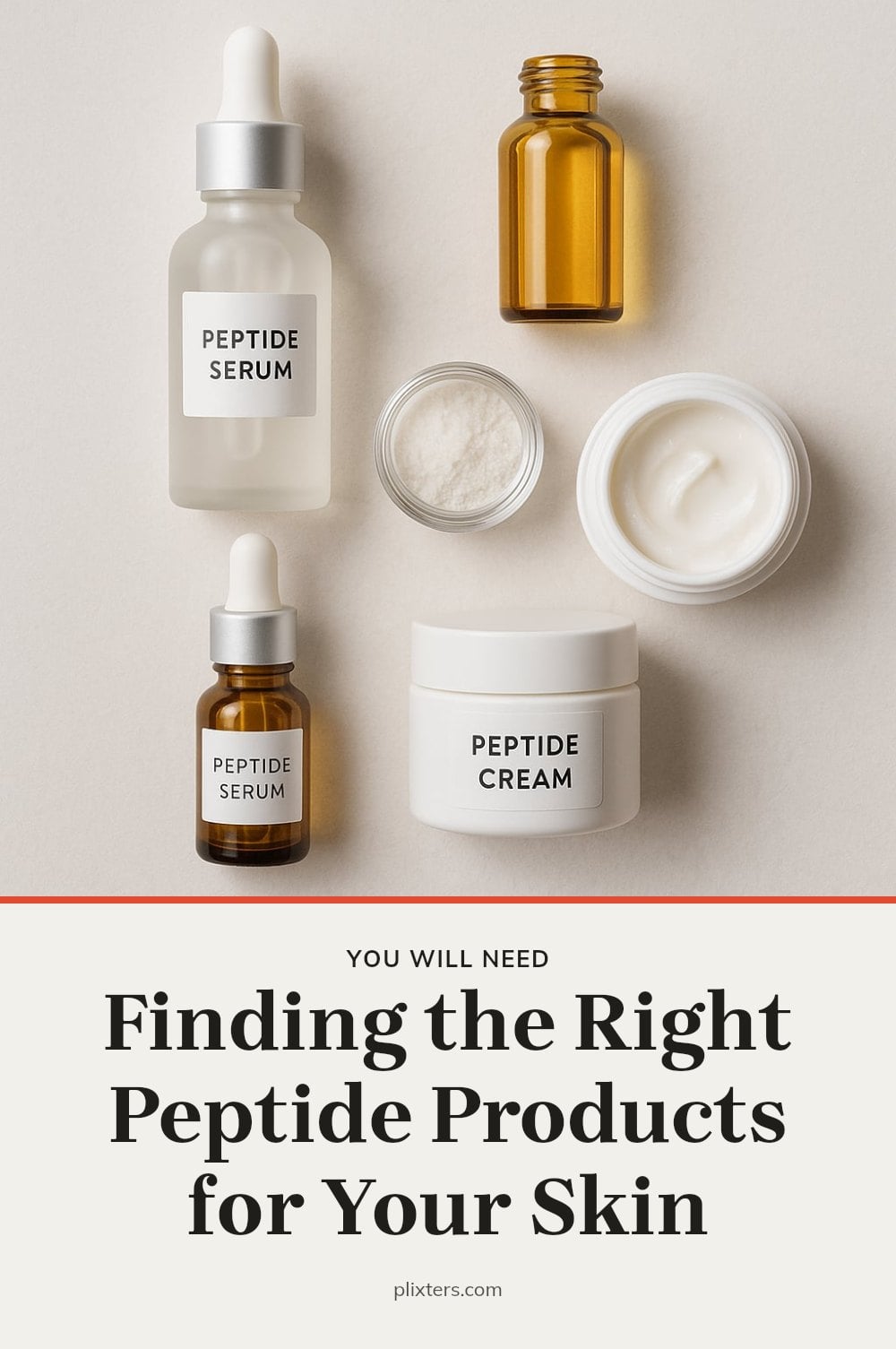
Choose Your Format
Peptides come in several product forms, each with its own strengths. Here’s what to look for:
- Serums: These have a high concentration of peptides and absorb quickly into the skin. Apply them after cleansing, before moisturizer.
- Moisturizers: They combine peptides with hydrating and protective ingredients, making them an easy way to integrate peptides into your daily routine.
- Eye creams: Formulated for the delicate under-eye area, they target fine lines, puffiness, and loss of firmness.
- Masks: These provide an intensive treatment, delivering a concentrated boost of active peptides in a single session.
Choose based on your skin’s needs and your routine preferences. A serum might be ideal for targeted treatment, while a moisturizer offers convenience.
Top Tips for Using Peptides Effectively
Consistency is key: Use your peptide product daily for several weeks to months. The collagen-building process is gradual, and skipping days slows progress.
Layering matters: Apply peptide serums on clean, damp skin right after cleansing. Let them absorb for a minute before layering heavier creams or oils on top.
Look for variety: A product with multiple peptide types (signal, carrier, enzyme inhibitor) often delivers broader benefits than one with a single peptide. Check the ingredient list for a mix.
Complement with hydrators: Pair peptides with hydrating ingredients like hyaluronic acid. A well-hydrated skin barrier absorbs and uses peptides more effectively.
Check formulations: The specific peptide, its concentration, and how the product is stabilized all matter. A well-formulated product with a lower peptide percentage can outperform a poorly made one with a higher percentage.
Common Peptide Mistakes to Avoid
Expecting instant results: Peptides are not a quick fix. They work gradually over weeks to months as your skin builds new collagen. Consistency beats speed every time.
Believing all peptides are the same: Signal peptides boost collagen, carrier peptides deliver copper for repair, and neurotransmitter-inhibiting peptides relax expression lines. Each type targets a different concern, so research what a product actually does.
Neglecting product formulation: A peptide is only as good as its delivery system. If the formula isn’t stabilized or the peptide concentration is too low, it won’t penetrate or work. Read reviews and look for well-regarded brands.
Overlooking storage: Some peptide formulas degrade with heat, light, or air. Store them in a cool, dark place with the cap tightly closed. Don’t leave them in a hot bathroom or direct sunlight.
Relying solely on peptides: Peptides are powerful, but they work best in a complete routine. Always include daily SPF and an antioxidant like vitamin C for full anti-aging protection.
When to Expect Results and What to Consider
Timeline for results: Most people notice visible improvements in firmness and fine lines after 4 to 12 weeks of consistent daily use. The change is gradual because collagen synthesis takes time.
Frequency of use: Most peptide serums and moisturizers are designed for twice-daily application, morning and night. Check the product instructions, but daily use is the norm.
Cost considerations: Peptide products span a wide price range. Mid-range options run from $25 to $75, while high-end formulas can cost $75 or more. Price reflects formulation quality, peptide variety, and brand, not just effectiveness.
Long-term commitment: Peptides are a long-term investment in your skin’s health. They don’t deliver overnight results, but with continued use they support collagen levels and slow visible aging over time.
When to Consult a Professional About Your Skincare
Peptides are generally safe, but stop using a product if you experience persistent irritation, redness, or an allergic reaction. Wash the area and apply a gentle moisturizer.
If you have an underlying skin condition like rosacea, eczema, or acne that isn’t improving with over-the-counter products, a dermatologist can help you decide if peptides are a good addition.
For personalized advice on layering peptides with prescription retinoids or other strong actives, see a professional. They can recommend a sequence that avoids irritation.
If you are considering injectable treatments like Botox or fillers, ask your provider how topical peptides can support your results between sessions.
Frequently Asked Questions
Can I use peptides with retinol?
Yes, you can use peptides with retinol. In fact, they can complement each other well. Retinol speeds up cell turnover and boosts collagen, while peptides signal collagen production. To avoid irritation, apply retinol at night and peptides in the morning, or alternate nights. Always follow product instructions.
Are peptides safe for sensitive skin?
Peptides are generally considered safe and well-tolerated for most skin types, including sensitive skin. However, it’s always a good idea to perform a patch test before using a new product. If you experience any redness or irritation, discontinue use and consult a dermatologist.
What’s the best way to layer peptide products?
Apply peptide serums on clean, damp skin right after cleansing. Let them absorb for a minute before layering heavier creams or oils. If you’re using a peptide moisturizer, apply it after your serum and before sunscreen. Layering thin to thick products ensures better absorption.
Do peptides really work for wrinkles?
Peptides can help reduce the appearance of fine lines and wrinkles by boosting collagen and elastin production. Results are gradual and typically become noticeable after 4 to 12 weeks of consistent use. They won’t work like injectables for instant results, but they are effective for long-term improvement.
What are peptides in skincare?
Peptides are short chains of amino acids, the building blocks of proteins like collagen and elastin. In skincare, they act as signaling molecules that tell your skin to produce more of these proteins, helping to improve firmness, elasticity, and overall skin texture.
Final Thoughts
For most people, a daily peptide serum or moisturizer used consistently over 4 to 12 weeks can improve firmness and reduce fine lines. The change is gradual, but the collagen-building process is worth the wait. Stick with it, and you’ll give your skin the support it needs to stay plump and resilient.
This article provides general information about skincare ingredients and is not a substitute for professional medical advice. Individual results may vary, and it is important to consult a dermatologist or healthcare provider for personalized recommendations or if you experience any skin concerns.




