 Save
You’ve heard about clean eating and you’re ready to give it a try, but maybe you’re not sure where to start. This article walks you through a simple, practical 7-day meal plan along with shopping lists and tips to make the switch easier. Clean eating is about choosing whole, unprocessed foods that nourish your body, and I’ll help you get started without feeling overwhelmed.
Key Takeaways
- Focus on whole foods like fresh fruits, vegetables, lean proteins, and whole grains.
- Read food labels carefully to avoid hidden sugars and artificial ingredients.
- Plan your meals and prep ingredients ahead to make clean eating easier.
- Expect to notice improvements in energy and digestion within a few days to a week.
- Consult a healthcare professional if you have existing health conditions or dietary restrictions.
9 ideas in this post
What is Clean Eating?
Clean eating is about choosing whole, unprocessed foods that nourish your body. I focus on fresh fruits, vegetables, lean proteins, and healthy fats while limiting refined sugars and artificial ingredients. This approach is more of a sustainable lifestyle than a strict diet. Cooking at home and reading food labels become second nature, helping you control exactly what goes into your meals.
Your Clean Eating Shopping List

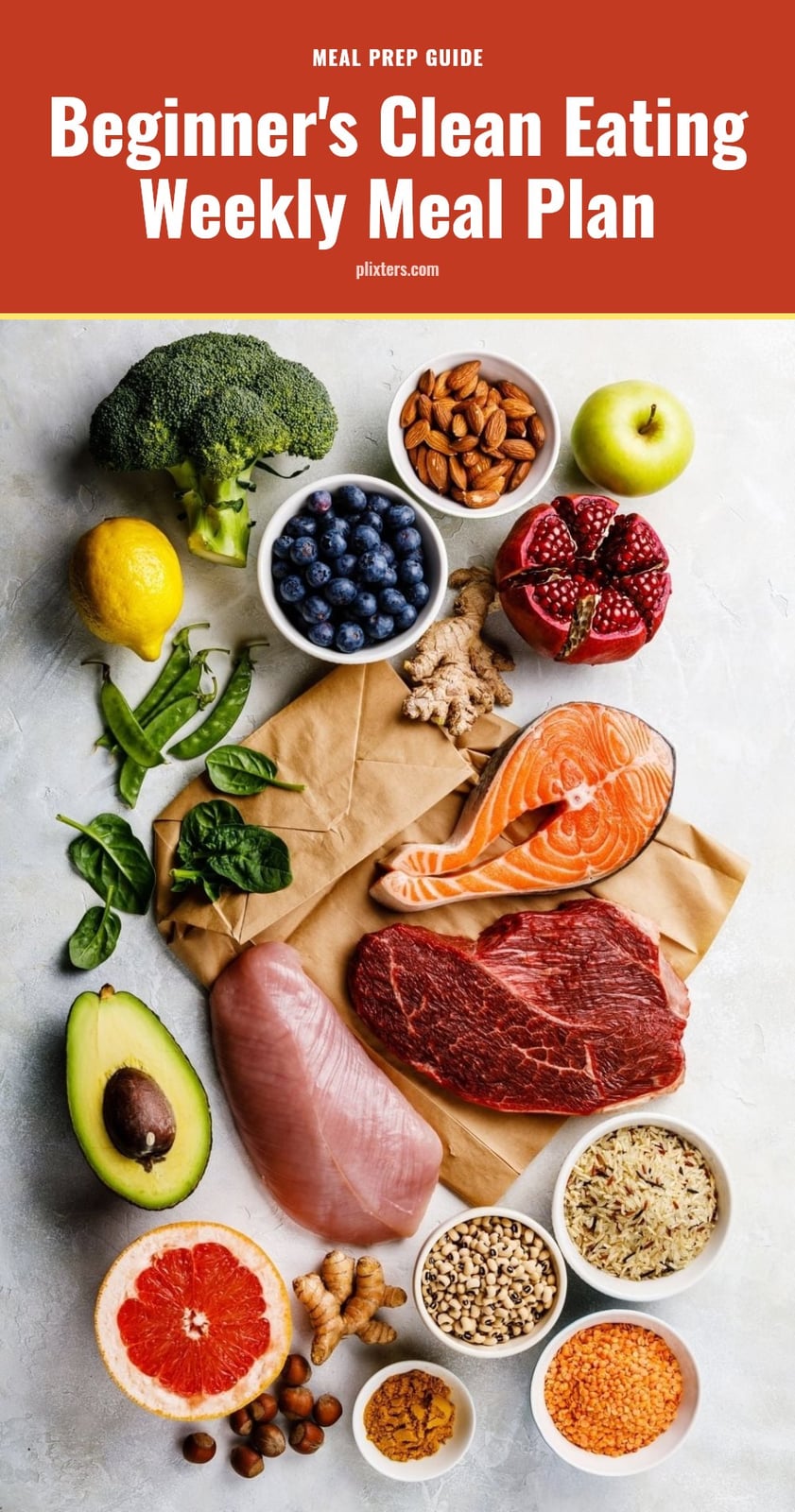
Stock your kitchen with these essentials for a week of clean eating.
- Fresh fruits: berries, apples, bananas, oranges
- Fresh vegetables: leafy greens, broccoli, bell peppers, carrots, sweet potatoes
- Lean proteins: chicken breast, turkey, fish, eggs, lentils, beans
- Whole grains: oats, quinoa, brown rice, whole wheat bread
- Healthy fats: avocados, nuts, seeds, olive oil, avocado oil
- Herbs and spices: for seasoning without added sugars
- Water bottle: for consistent hydration
Your 7-Day Clean Eating Meal Plan
Here is a simple 7-day meal plan to get you started. Each day includes balanced meals built from whole foods.
| Day | Breakfast | Lunch | Dinner |
|---|---|---|---|
| Monday | Oatmeal with berries and nuts | Large salad with grilled chicken | Baked salmon with quinoa and roasted vegetables |
| Tuesday | Scrambled eggs with spinach | Leftover salmon and quinoa | Turkey chili with beans and veggies |
| Wednesday | Smoothie with spinach, banana, protein powder | Turkey chili leftovers | Chicken stir-fry with brown rice and mixed vegetables |
| Thursday | Whole wheat toast with avocado and egg | Chicken stir-fry leftovers | Lentil soup with whole grain bread |
| Friday | Greek yogurt with fruit and seeds | Lentil soup leftovers | Baked cod with sweet potato and green beans |
| Saturday | Whole grain pancakes with fresh fruit | Large salad with hard-boiled eggs | Grilled lean steak with a big side salad |
| Sunday | Omelet with mixed veggies | Leftover grilled steak salad | Roasted chicken with mixed root vegetables |
Use leftovers to save time, and adjust portions to fit your needs.
Practical Tips for Clean Eating Success
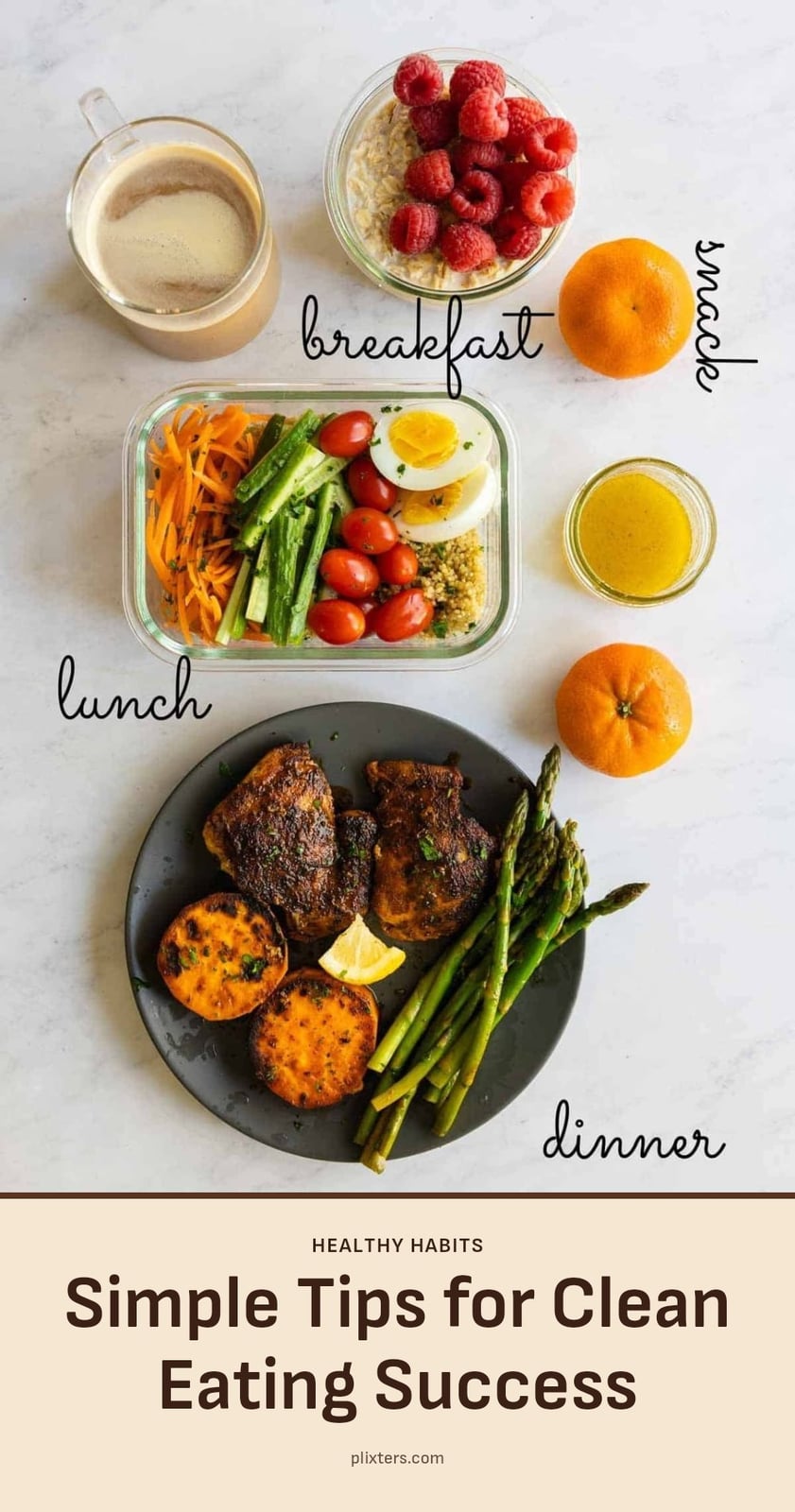
These tips will help you stick with clean eating long-term.
- Meal Prep is Your Friend: Dedicate time once a week to chop veggies, cook grains, and prepare lean proteins. This makes healthy eating easy during busy days.
- Read Food Labels Carefully: Look beyond marketing claims. Check the ingredients list for hidden sugars, artificial sweeteners, colors, and preservatives. My tip: If you don’t recognize an ingredient, it’s probably not ‘clean.’
- Stay Hydrated: Drink plenty of water throughout the day. Sometimes thirst can be mistaken for hunger, leading to unnecessary snacking. Keep a water bottle handy.
- Cook at Home: Preparing your own meals gives you full control over ingredients. Experiment with herbs and spices to add flavor without relying on processed sauces.
- Listen to Your Body: Pay attention to hunger and fullness cues. Clean eating isn’t about deprivation, but about nourishing your body with what it truly needs.
Common Clean Eating Mistakes to Avoid
Being Too Restrictive: Don’t cut out entire food groups without a valid reason. This can lead to nutrient deficiencies and an unhealthy relationship with food. Aim for balance, not perfection.
Ignoring Portion Sizes: Even healthy foods can contribute to weight gain if consumed in excess. Pay attention to how much you’re eating, even with nuts, avocados, or olive oil.
Falling for ‘Healthy’ Marketing: Not all ‘natural’ or ‘organic’ products are automatically ‘clean.’ Always check the ingredient list for added sugars or processed components.
Lack of Planning: Without a plan, it’s easy to revert to less clean options when hunger strikes. My tip: Always have clean snacks and emergency meals ready.
Focusing on Perfection Over Progress: Clean eating is a journey, not a destination. Don’t let one ‘unclean’ meal derail your efforts. Get back on track with your next meal.
Timeline and Cost of Clean Eating
Timeline for Results: Many people notice improvements in energy levels and digestion within a few days to a week of consistent clean eating. More significant changes, like weight management or improved skin, can be seen over several weeks to months.
Cost Considerations: Clean eating can be budget-friendly or more expensive depending on choices. Buying seasonal produce, cooking in bulk, and choosing plant-based proteins can help reduce costs. While organic is often favored, it’s not a strict requirement, and conventional produce is still a clean option.
When to Consult a Professional
If you have existing health conditions, such as diabetes, heart disease, or digestive disorders, consult a healthcare professional or registered dietitian before making significant dietary changes.
If you have dietary restrictions, allergies, or intolerances, a professional can help you create a safe and nutritionally complete clean eating plan.
If you experience any adverse reactions, persistent fatigue, or nutrient deficiency symptoms while clean eating, seek medical advice.
If you are pregnant or breastfeeding, always consult your doctor or a dietitian to ensure adequate nutrient intake for both you and your baby.
Frequently Asked Questions
What is the difference between clean eating and dieting?
Clean eating is a lifestyle choice focused on eating whole, unprocessed foods, while dieting often involves strict rules and calorie restrictions for weight loss. Clean eating emphasizes nourishment and sustainability rather than quick results, and it doesn’t require you to eliminate entire food groups without reason.
Can I still eat out while clean eating?
Yes, you can eat out while sticking to clean eating. Look for grilled or baked proteins, steamed vegetables, and dishes with simple ingredients. Ask for dressings and sauces on the side, and avoid fried foods, creamy sauces, and sugary drinks. Many restaurants now offer healthier options that fit a clean eating approach.
How long does it take to see results from clean eating?
Many people notice improvements in energy levels and digestion within a few days to a week of consistent clean eating. More significant changes, like weight management or improved skin, can take several weeks to months. Results vary based on your starting point and how closely you stick with whole foods.
Is organic food necessary for clean eating?
No, organic food is not a strict requirement for clean eating. While some people prefer organic produce to avoid pesticides, the core principle is choosing whole, unprocessed foods. Prioritize eating a variety of fruits, vegetables, and lean proteins, whether conventional or organic, and wash produce thoroughly.
What are some easy clean eating snack ideas?
Easy clean eating snacks include fresh fruit with a handful of nuts, vegetable sticks with hummus, Greek yogurt with berries, or a small apple with almond butter. Hard-boiled eggs, sliced bell peppers with guacamole, and a small handful of seeds also work well. The key is to choose whole foods without added sugars or artificial ingredients.
Final Thoughts
My tip: Start with just one or two clean meals a day rather than trying to overhaul everything at once. You’ll likely notice better energy and digestion within the first week, but give yourself several weeks to see more lasting changes. Clean eating is a lifestyle, not a quick fix, so focus on progress, not perfection.
This article provides general information on clean eating and is not a substitute for professional medical or dietary advice. Everyone’s health needs are different, so consult a healthcare professional or registered dietitian before making significant changes to your diet, especially if you have existing health conditions or dietary restrictions.