 Save
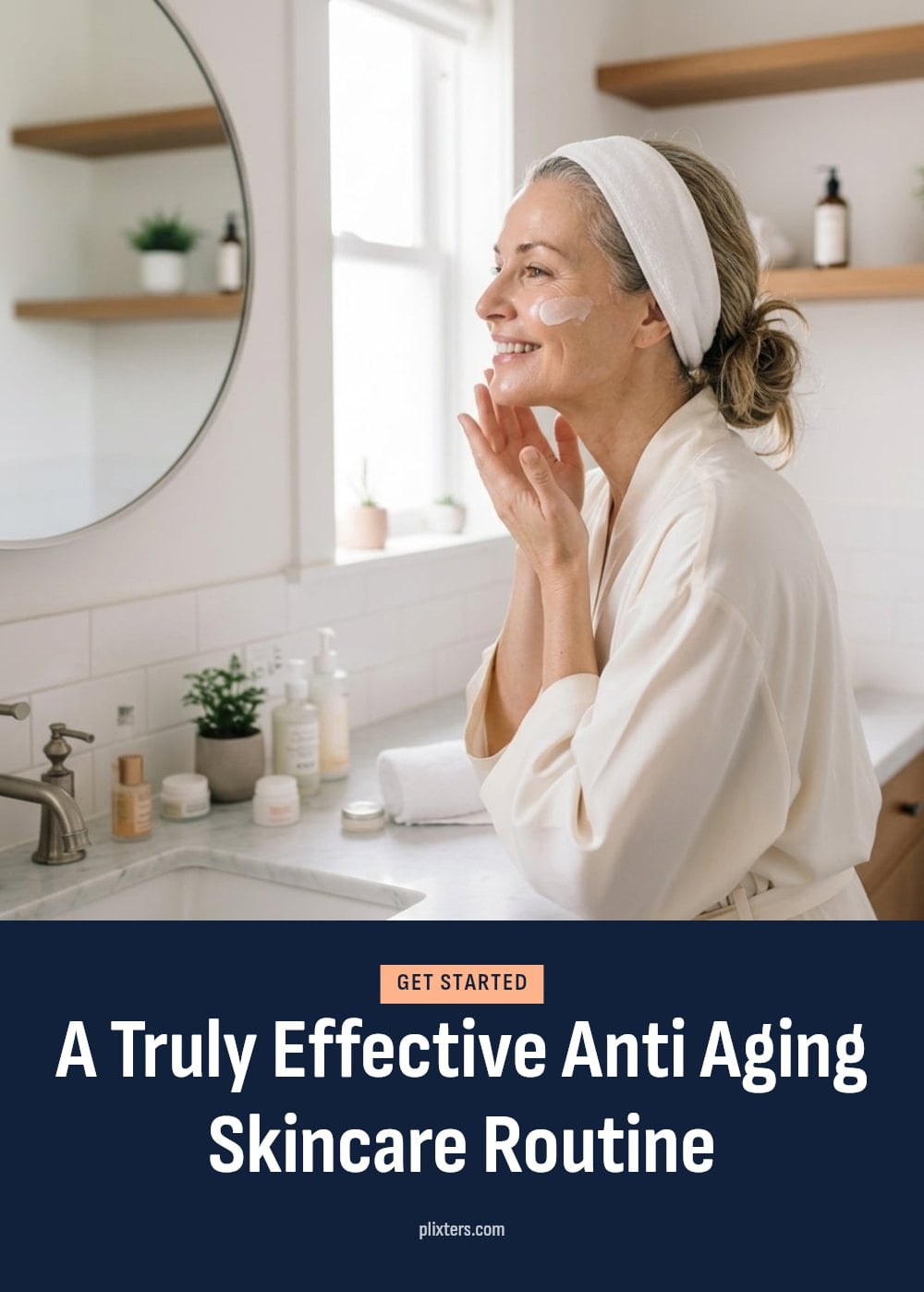
You’ve started noticing fine lines, a bit of dullness, or maybe a loss of that youthful bounce in your skin. It’s a natural part of aging, but the good news is you can absolutely support your skin with a routine that works. This article breaks down a practical, science-backed anti-aging skincare routine, from the essential products and steps to common mistakes and when you can expect to see real results.
Key Takeaways
- Sun exposure is the #1 cause of premature aging; use SPF 30+ daily.
- Retinoids are scientifically proven to reduce wrinkles and improve texture.
- Consistency matters more than using many products sporadically.
- Apply products from thinnest to thickest consistency for best absorption.
- Visible results often appear in 4-12 weeks, with more significant changes after 6 months.
10 ideas in this post
- What is an Effective Anti-Aging Skincare Routine?
- Why Our Skin Shows Signs of Aging
- Essential Products for Your Anti-Aging Skincare
- Your Daily Anti-Aging Skincare Routine: Step-by-Step
- Common Anti-Aging Skincare Mistakes to Avoid
- Expert Tips for Maximizing Your Anti-Aging Results
- When to Expect Results and General Costs
- When to Consult a Dermatologist
- Frequently Asked Questions
- Final Thoughts
What is an Effective Anti-Aging Skincare Routine?
An effective anti-aging skincare routine focuses on protecting your skin from environmental damage, stimulating cell turnover, and providing deep hydration. It is a consistent, multi-step process that includes cleansing, treating with active ingredients like retinoids and antioxidants, moisturizing, and daily sun protection. While no routine can stop aging entirely, a well-chosen regimen can significantly improve skin texture, tone, and reduce the appearance of wrinkles over time.
Why Our Skin Shows Signs of Aging
Why Our Skin Shows Signs of Aging
Sun exposure is the primary external factor contributing to premature skin aging, known as photoaging. Over time, UV rays break down collagen and elastin fibers in the skin, leading to wrinkles and sagging.
Internally, collagen and elastin production naturally decreases with age. This loss of structural support causes the skin to lose firmness and elasticity, making fine lines more visible.
Environmental stressors like pollution and UV radiation generate free radicals that damage skin cells. These unstable molecules accelerate the visible signs of aging, including uneven tone and dullness.
Essential Products for Your Anti-Aging Skincare
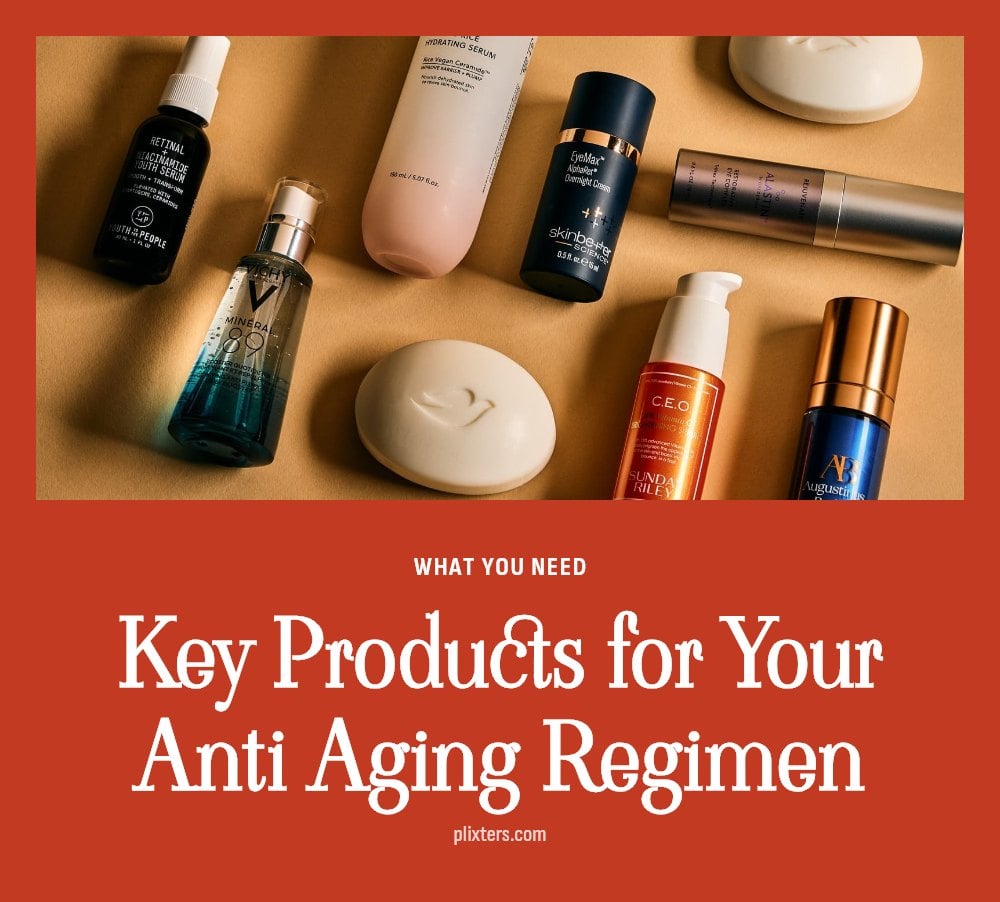
Building an anti-aging skincare routine starts with the right products. Each serves a specific purpose:
- Gentle cleanser: Removes impurities without stripping your skin’s natural moisture barrier.
- Antioxidant serum (like Vitamin C): Protects against environmental damage and brightens skin.
- Retinoid product (e.g., retinol): Scientifically proven to reduce wrinkles and improve texture by boosting cell turnover.
- Moisturizer: Maintains the skin’s barrier and provides essential hydration.
- Broad-spectrum sunscreen (SPF 30+): Crucial for daily protection against photoaging.
- Exfoliant (e.g., AHA/BHA): Promotes cell turnover for smoother, more radiant skin.
- Optional: Eye cream: Targets the delicate, thinner skin around the eyes, which is prone to early signs of aging, though a good moisturizer can also work for many people.
Your Daily Anti-Aging Skincare Routine: Step-by-Step

Building your routine step by step is the best way to get results without irritation. The golden rule is to apply products from thinnest to thickest consistency so each layer can absorb properly.
- Cleanse your face: Wash twice daily, morning and night. This removes impurities and preps your skin for the next products. If you are new to a routine, starting with once daily or as needed, especially in the morning, is fine; you can build up to twice daily as your skin tolerates it.
- Apply an antioxidant serum: In the morning, use a vitamin C serum to protect against environmental damage from free radicals.
- Moisturize: Use a moisturizer that matches your skin type to maintain the skin barrier and lock in hydration.
- Apply sunscreen: Every morning, finish with a broad-spectrum sunscreen of SPF 30 or higher. This is your most important anti-aging step.
- Incorporate a retinoid at night: If you are new to retinoids, start with a low concentration, applying every other night. This allows your skin to build tolerance and reduces the risk of redness or peeling.
- Exfoliate gently: Do this 1-3 times a week, depending on your skin type. Exfoliation removes dead cells and promotes smoother texture.
Common Anti-Aging Skincare Mistakes to Avoid
Even a great routine can be undermined by common mistakes. Here are the ones I see most often.
- Skipping sunscreen: Not using it daily or using a low SPF is the biggest mistake. UV damage is the top cause of premature aging.
- Expecting instant results: Anti-aging products take weeks or months to show visible changes. Patience and consistency matter more than anything.
- Overloading on actives: Using too many strong ingredients at once can cause irritation and break down your skin barrier.
- Neglecting basics: Skipping cleansing or moisturizing compromises the whole routine. Your skin needs a clean, hydrated base to benefit from treatments.
- Wrong product order: Applying thick creams before thin serums blocks absorption. Always go from thinnest to thickest.
- Ignoring other signs of aging: Uneven tone and texture are just as telling as wrinkles. Don’t focus only on lines.
- Forgetting your neck and chest: These areas show aging just as fast as your face. Extend your routine down to your décolletage.
Expert Tips for Maximizing Your Anti-Aging Results

Beyond your product lineup, a few smart habits can boost your results and protect your skin long-term.
- Be consistent: Using products regularly over time yields far better results than sporadic use of many different items.
- Patch test new products: Apply a small amount on your inner arm or behind your ear before using it on your face. This helps avoid irritation, especially if you have sensitive skin.
- Don’t pick or scrub aggressively: Rough handling can damage your skin barrier and cause inflammation, which accelerates aging.
- Watch your lifestyle: Smoking reduces blood flow and damages collagen, while sleep deprivation hinders skin repair. Both speed up visible aging.
- Eat for your skin: A balanced diet rich in fruits, vegetables, and healthy fats provides the nutrients your skin needs to repair and stay resilient.
When to Expect Results and General Costs
When you start a consistent anti-aging routine, visible improvements in skin texture and tone often appear within 4 to 12 weeks. More significant reduction in fine lines and wrinkles typically takes 6 months or longer of regular use.
Skincare product costs vary widely, from affordable drugstore options to high-end luxury brands. My tip: focus on effective ingredients rather than price alone. A drugstore retinol used consistently can outperform an expensive serum used only occasionally.
When to Consult a Dermatologist
If a product causes severe irritation, burning, or an allergic reaction, stop using it right away and see a dermatologist. When over-the-counter anti-aging products don’t give you the results you want after consistent use, a dermatologist can suggest stronger prescription options. You should also get professional advice for specific skin conditions, persistent acne, or any unusual changes in your skin.
Frequently Asked Questions
At what age should I start an anti-aging skincare routine?
There’s no single right age, but many people begin noticing changes in their late 20s or early 30s. The most important step at any age is daily sun protection. You can start with a simple routine of cleanser, moisturizer, and sunscreen, then add targeted products like antioxidants or retinoids as your skin’s needs evolve.
Can I use anti-aging products if I have sensitive skin?
Yes, but you need to be careful. Start with gentle, fragrance-free formulas. Patch test any new product on a small area of skin, like your inner arm, before applying it to your face. When using active ingredients like retinoids or exfoliants, begin with a low concentration and apply them only every other night to build tolerance.
Is it necessary to use a separate eye cream?
It’s not strictly necessary, but many people find it helpful. The skin around your eyes is thinner and more delicate than the rest of your face, making it more prone to showing signs of aging. An eye cream is often formulated to be gentler and more hydrating for that area, but a good moisturizer applied carefully can also work.
What lifestyle changes support anti-aging skincare?
Absolutely. A balanced diet rich in fruits, vegetables, and healthy fats supports overall skin health. Getting enough sleep helps your skin repair itself, and avoiding smoking is crucial since it accelerates aging by damaging collagen and elastin. These habits work alongside your topical routine for the best results.
What is the best anti-aging skincare routine for beginners?
Start simple: a gentle cleanser, a moisturizer, and a broad-spectrum sunscreen with SPF 30 or higher. Once you’re consistent with that, add a vitamin C serum in the morning for antioxidant protection. In the evening, you can introduce a retinoid, starting with a low concentration and using it every other night. Build up slowly.
Final Thoughts
My biggest piece of advice is to start with the basics: a gentle cleanser, a moisturizer, and a broad-spectrum sunscreen with SPF 30 or higher. Add one active ingredient at a time, like a vitamin C serum in the morning or a retinoid at night, and be patient. Real, visible changes in your skin’s texture and tone usually take a few months of consistent use. Stick with it, and your skin will thank you.
This article provides general information for educational purposes and is not a substitute for professional medical or dermatological advice. Every person’s skin is different, and what works for one may not work for another. If you have a persistent skin concern, severe irritation, or a reaction to a product, please consult a qualified dermatologist or healthcare provider.