 Save
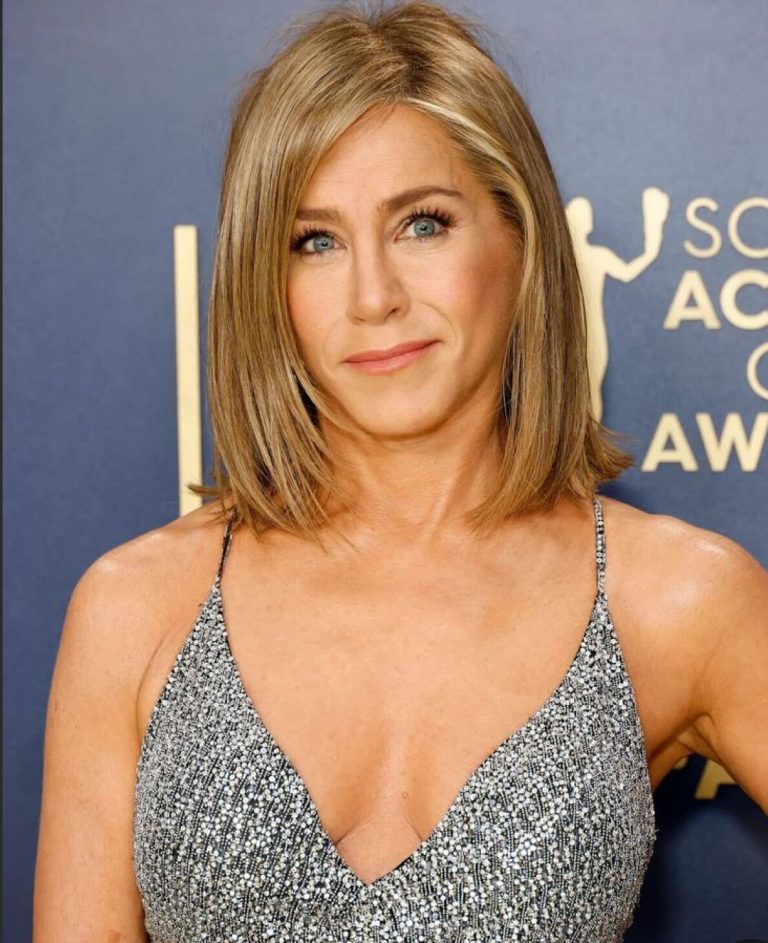
Collarbone-skimming waves with a curtain fringe and an ash blonde base set the tone for the current wave of lived-in color. Soft face-framing layers and glossy natural texture have replaced flat-ironed straight hair, and lived-in color means a root shadow stays intentional for weeks.
Here are 20 ideas for Aesthetic Blonde Wavy Hair, from a quick at-home gloss upgrade to a full salon balayage. Fine hair that falls flat gets subtle layers and air-dried waves. A visible grow-out line disappears with a root shadow or a beige-toned base. Curtain bangs work for round and long faces alike.
21 ideas in this post
- Collarbone Ash Blonde With Curtain Bangs
- Beige Blonde Collarbone Waves With Fringe
- Fine Wavy Shoulder Length Ash Blonde
- Shoulder Length Wavy Ash Blonde With Air Dried
- Collarbone Honey Blonde Waves
- Mushroom Blonde Bob With Waves
- Shoulder Honey Blonde Balayage
- Collarbone Platinum Blonde Waves
- Mid-Back Platinum Blonde With Layers
- Glossy Platinum Collarbone Lob
- Mid-Back Platinum Blonde With Root Shadow
- Mid-Back Beige Blonde Balayage Waves
- Mid-Back Dirty Blonde Balayage With Bangs
- Mid-Back Dark Blonde Highlights
- Mid-Back Champagne Blonde Waves
- Mid-Back Honey Blonde With Layers, Middle
- Mid-Back Golden Blonde Highlights, Layers
- Mid-Back Ash Blonde With Glossy Waves
- Mid-Back Blonde With Dimension
- Mid-Back Honey Blonde Balayage
- Final Thoughts
Collarbone Ash Blonde With Curtain Bangs
Wondering how to get that cool-toned, lived-in blonde without looking washed out? The answer is a collarbone-length ash blonde with soft waves and curtain bangs, a middle part letting the face-framing pieces do their job. This cut suits medium-density hair starting at collarbone length, and the curtain bangs can soften round and heart-shaped faces. Ask your colorist for: collarbone ash blonde with curtain bangs, soft waves. Use a medium round brush to blow-dry the waves for a polished finish, and plan on a trim every six to eight weeks to keep the ends healthy.
Beige Blonde Collarbone Waves With Fringe
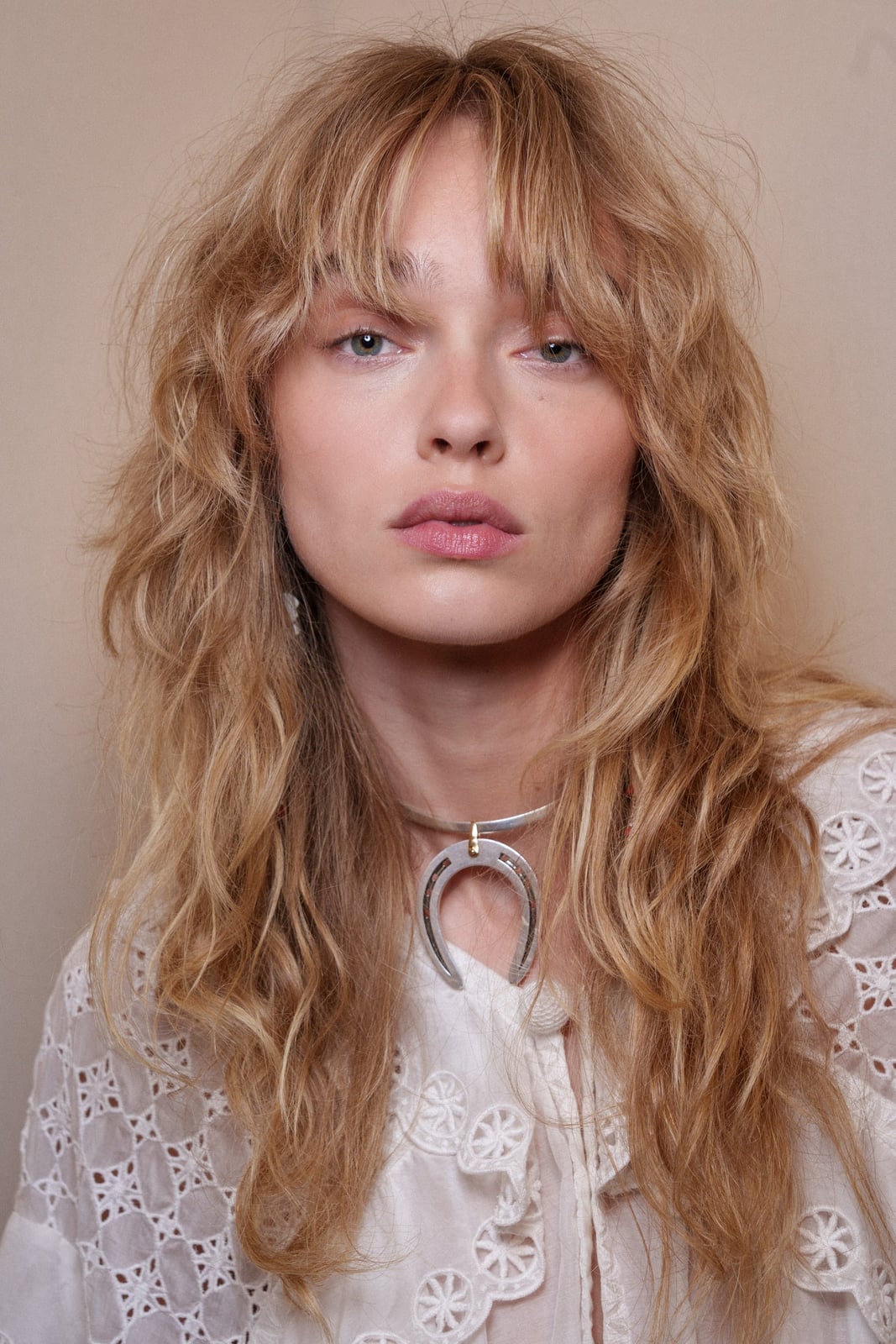
The beauty of this beige blonde is in its deliberate imperfection: soft, lived-in waves that look like they happened on their own, with a fringe that frames without demanding attention. It’s a collarbone-length cut with fine texture, the color lifted with subtle highlights for dimension. This style suits fine hair starting at collarbone length, the fringe and waves adding softness to square and oval faces. Ask your colorist for: collarbone beige blonde, lived-in waves, curtain bangs. Embrace air-drying or a rough blow-dry for that texture, and a trim every eight to ten weeks keeps the shape honest.
Fine Wavy Shoulder Length Ash Blonde
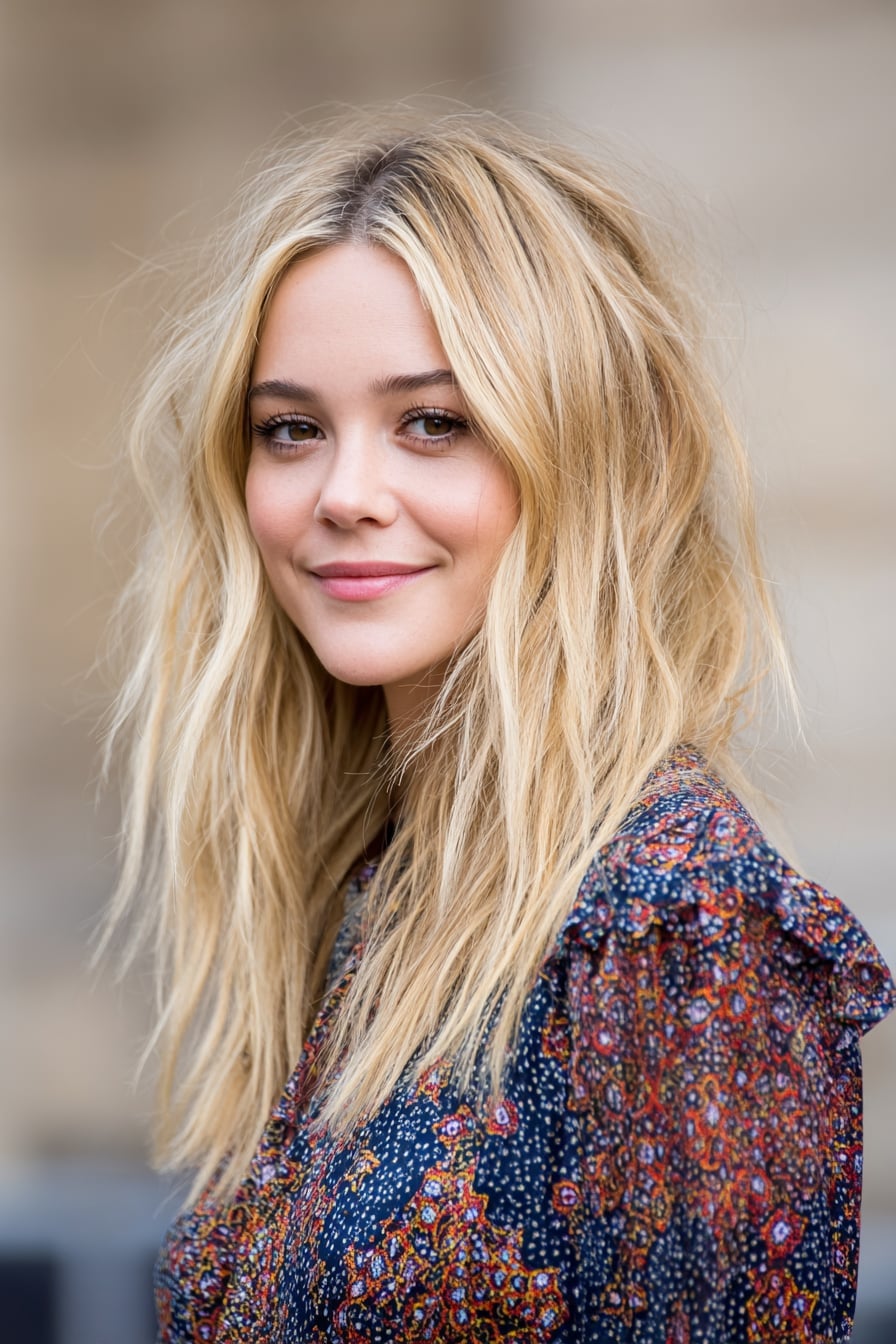
Fine hair and ash blonde can be a tricky pairing, but this shoulder-length cut with wispy bangs proves it works. The mistake is over-styling; air-drying with a texturizing spray gives the waves body without weighing them down. It’s a DIY-friendly look for fine hair starting at shoulder length, the wispy bangs flattering most face shapes. Ask your colorist for: shoulder-length fine ash blonde, wispy bangs, natural waves. The color has subtle highlights for a lived-in effect, and fine hair benefits from trims every six to eight weeks.
Shoulder Length Wavy Ash Blonde With Air Dried
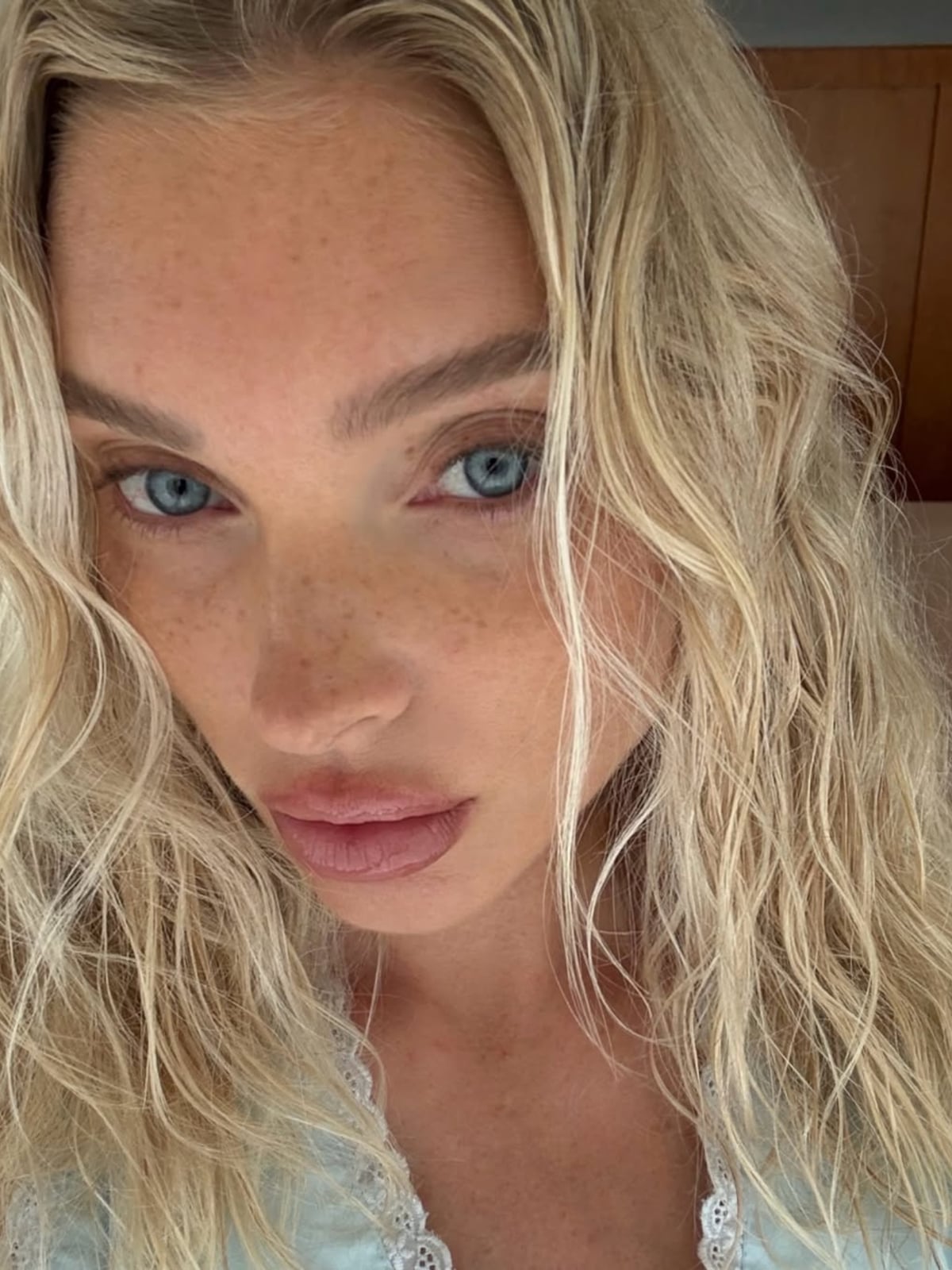
If you are torn between air dried ease and ash blonde coolness, this shoulder length style is the compromise: natural waves with a middle part that elongates round faces. Fine hair does not hold ash tones as stubbornly as thicker strands, so you will schedule gloss appointments more often. It suits fine hair starting at shoulder length, the air dried finish keeping things casual. Ask your colorist for: shoulder length ash blonde, natural waves, air dried finish. Scrunching gives definition, and trims every six to eight weeks maintain the shape.
Collarbone Honey Blonde Waves
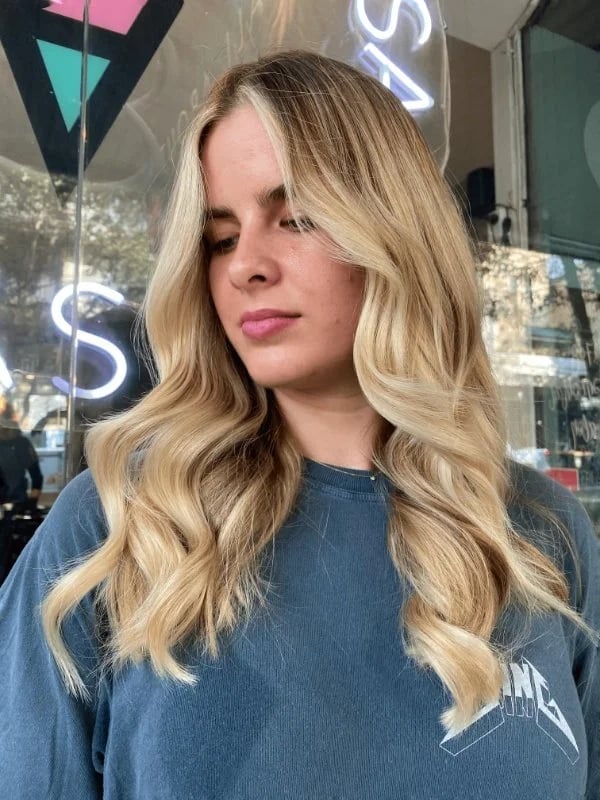
Who actually pulls off honey blonde? Anyone with thick, wavy hair starting at collarbone length, where the warmth adds richness without washing out the face. This style is a soft blowout with a middle part, the honey blonde shade glossy and dimensional. It’s a salon look that works for everyday, though the thick texture means more time with the dryer. Ask your colorist for: collarbone-length honey blonde, soft waves, glossy finish. Use a large barrel curling iron to enhance the waves, and trims every six to eight weeks keep the baseline sharp.
Mushroom Blonde Bob With Waves
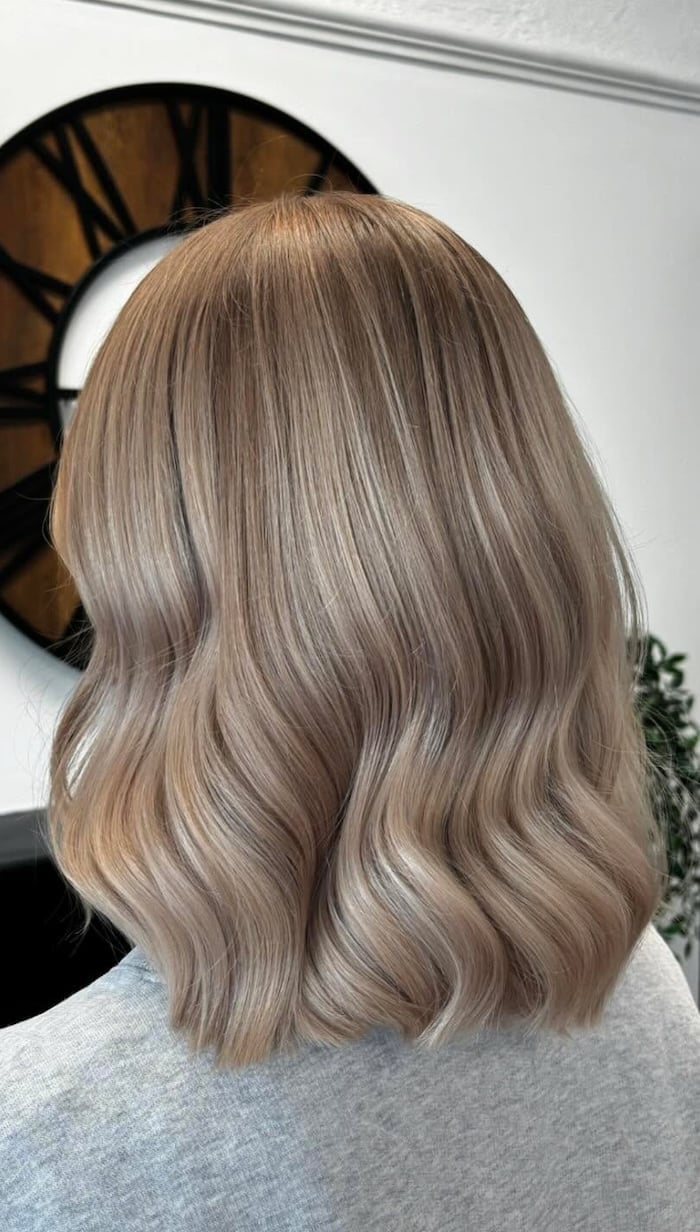
Mushroom blonde sits between beige and ash, a cool neutral that looks deliberate rather than faded. The chin length bob with soft waves gives a clean silhouette; highlights add enough dimension to keep the shade from looking flat. Medium density hair holds the shape best. Ask your colorist for: chin length bob, mushroom blonde, soft waves. A texturizing paste defines the wave pattern, and trims every six weeks maintain the bob’s precision.
Shoulder Honey Blonde Balayage
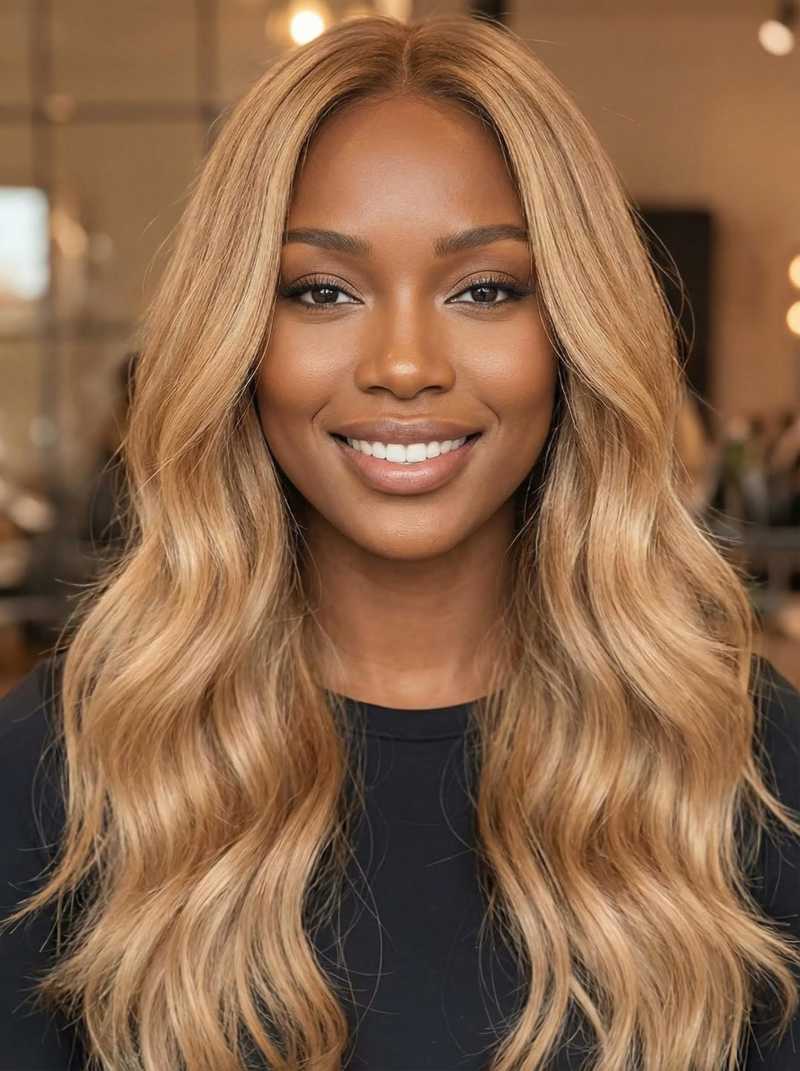
The balayage here starts below the ears, painting warm honey pieces through the mid-lengths and ends so the root stays soft. On shoulder-length hair with a middle parting, the technique creates a lived-in grow-out that does not need a salon visit every month. Medium density hair picks up the color variation well without it looking stripey. Ask your colorist for: shoulder length honey blonde balayage, natural waves. A texturizing spray refreshes the waves between washes, and the balayage only needs a touch-up every twelve to sixteen weeks.
That timeline is the real draw: you get a warm blonde effect with half the upkeep of a full foil.
Collarbone Platinum Blonde Waves
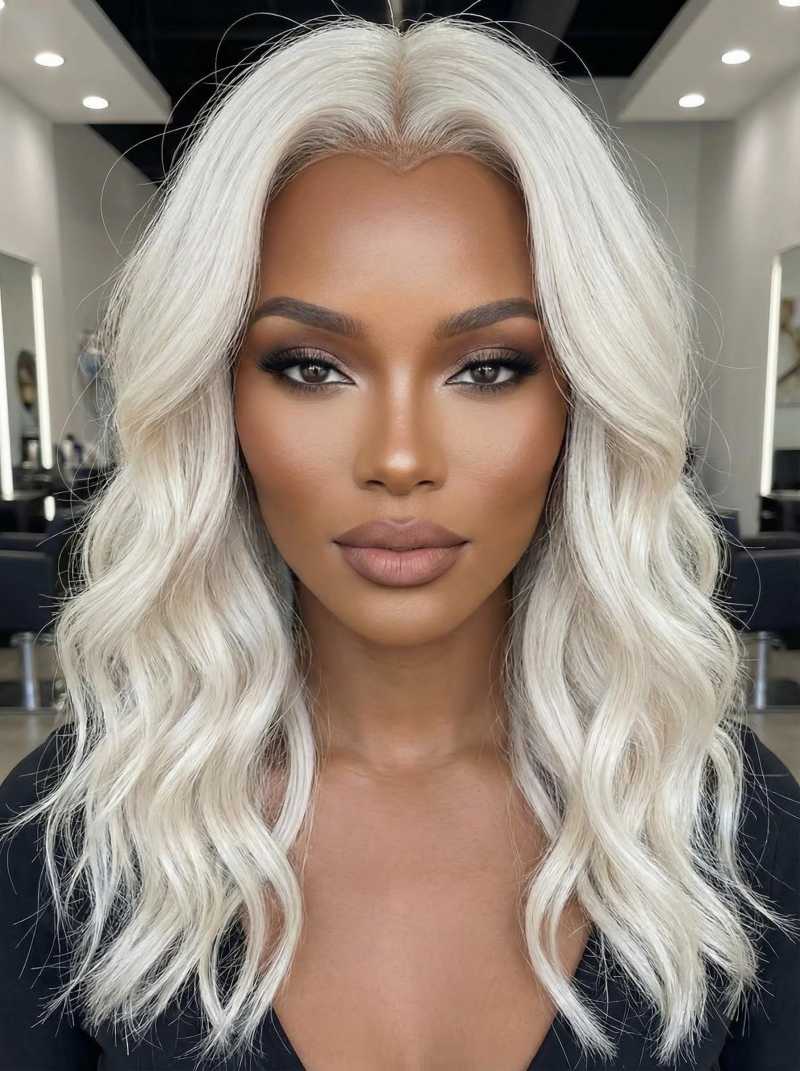
Platinum on collarbone-length fine hair reads sharp rather than heavy, which is the trick for pulling off a shade this bright in winter. The loose waves and side part break up the solid color so it does not look painted on. Fine texture keeps the wave light and the platinum pops against the darker months. Ask your colorist for: collarbone length platinum blonde, loose waves, side part. A purple shampoo used weekly stops the tone from warming up, and trims every six to eight weeks keep the ends from looking see-through.
Mid-Back Platinum Blonde With Layers
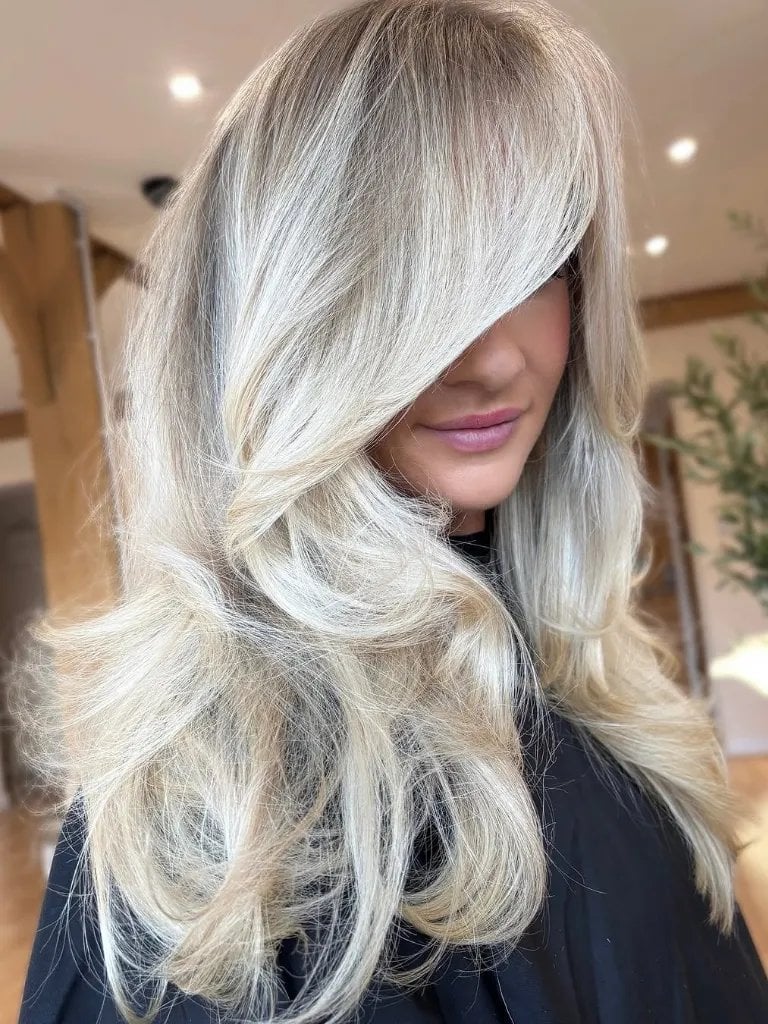
How do you keep platinum from reading as one flat block on thick wavy hair? Face-framing layers. The layers cut through the density so the waves have room to move, and the length gives the blonde enough surface area to show its cool tone. Thick hair soaks up color fast, which means the root line shows within three weeks. Ask your colorist for: mid-back platinum blonde, voluminous waves, face-framing layers. Deep condition every wash to combat the dryness that comes with high-lift color, and book trims every eight to ten weeks to keep the ends healthy enough to hold a wave.
Glossy Platinum Collarbone Lob
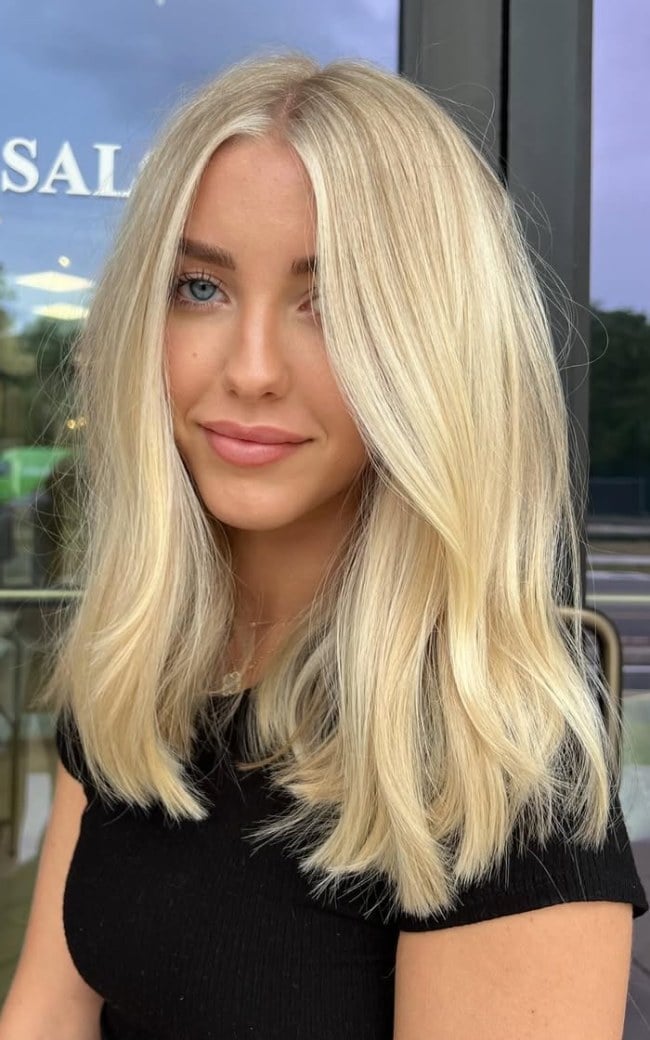
A collarbone lob with a glossy platinum finish is about the line as much as the color. The smooth blowout with subtle waves shows off the sharp cut, and the shine makes the platinum look liquid. Thick hair gives the lob weight so it swings cleanly. Ask your colorist for: collarbone length platinum blonde lob, smooth waves, glossy finish. A smoothing serum keeps the shine, and trims every six to eight weeks protect the blunt edge from fraying.
Mid-Back Platinum Blonde With Root Shadow
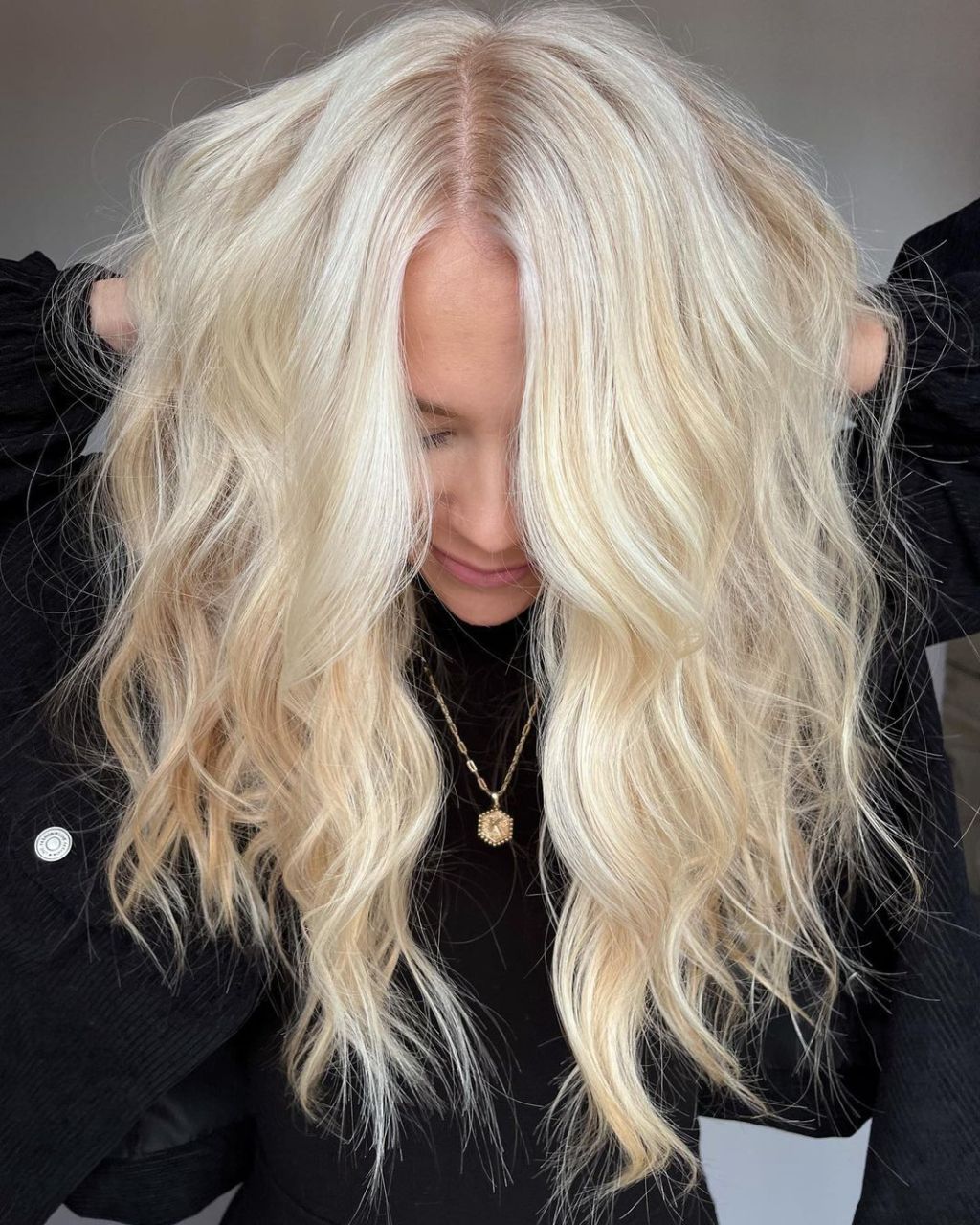
The root shadow here is a structural anchor that makes the platinum look deliberate. A soft ashy tone at the roots transitions into bright platinum through the ends, creating depth without sacrificing the high-impact blonde. On thick, wavy hair starting at mid-back, this technique prevents the color from looking flat and one-dimensional. The loose, natural waves catch the lighter pieces while the darker base adds weight.
Ask your colorist for: mid-back platinum blonde with root shadow, loose waves. The middle parting keeps the symmetry clean, and the face-framing layers soften the overall shape. A gloss treatment every four to six weeks keeps the platinum fresh and the root shadow from turning muddy. This is a salon-only color; the two-step process of shadow and lightener is not a kitchen-sink job.
Mid-Back Beige Blonde Balayage Waves
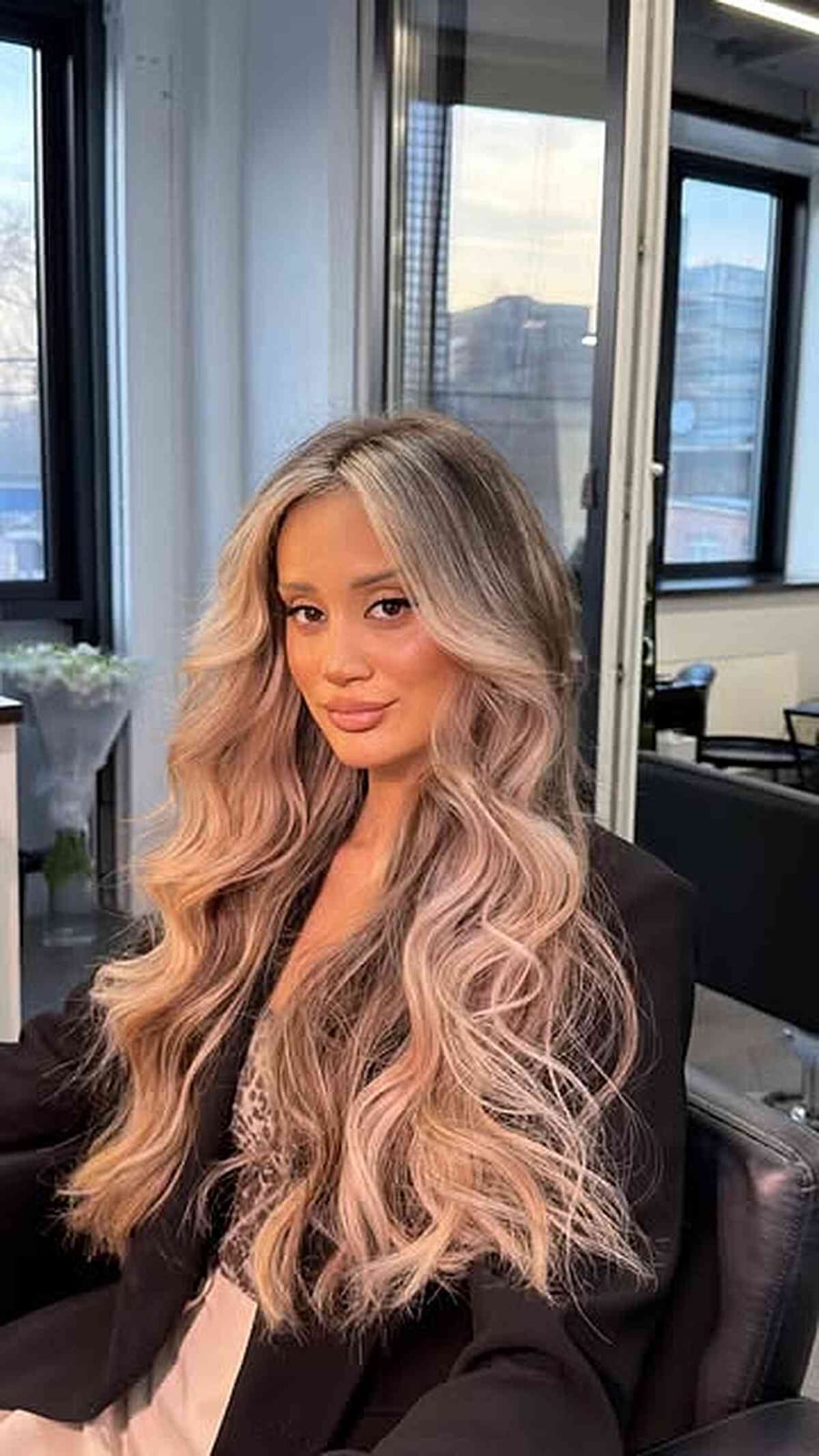
Wondering if a beige blonde balayage is really as low-maintenance as everyone says? Mostly yes, with one catch: beige sits close to neutral, so it can pull brassy faster than a cooler blonde. On thick, wavy hair at mid-back, the balayage technique paints lighter pieces from the mid-lengths down, leaving the roots untouched for a softer grow-out window of twelve to sixteen weeks.
A purple shampoo becomes a regular, not occasional, part of your wash day. Ask your colorist for: mid-back beige blonde balayage, loose waves, side part. The side parting adds volume at the crown, and the loose waves show off the color transition. If you hate toning, this shade will eventually turn warm instead of beige, something to factor in before booking.
Mid-Back Dirty Blonde Balayage With Bangs
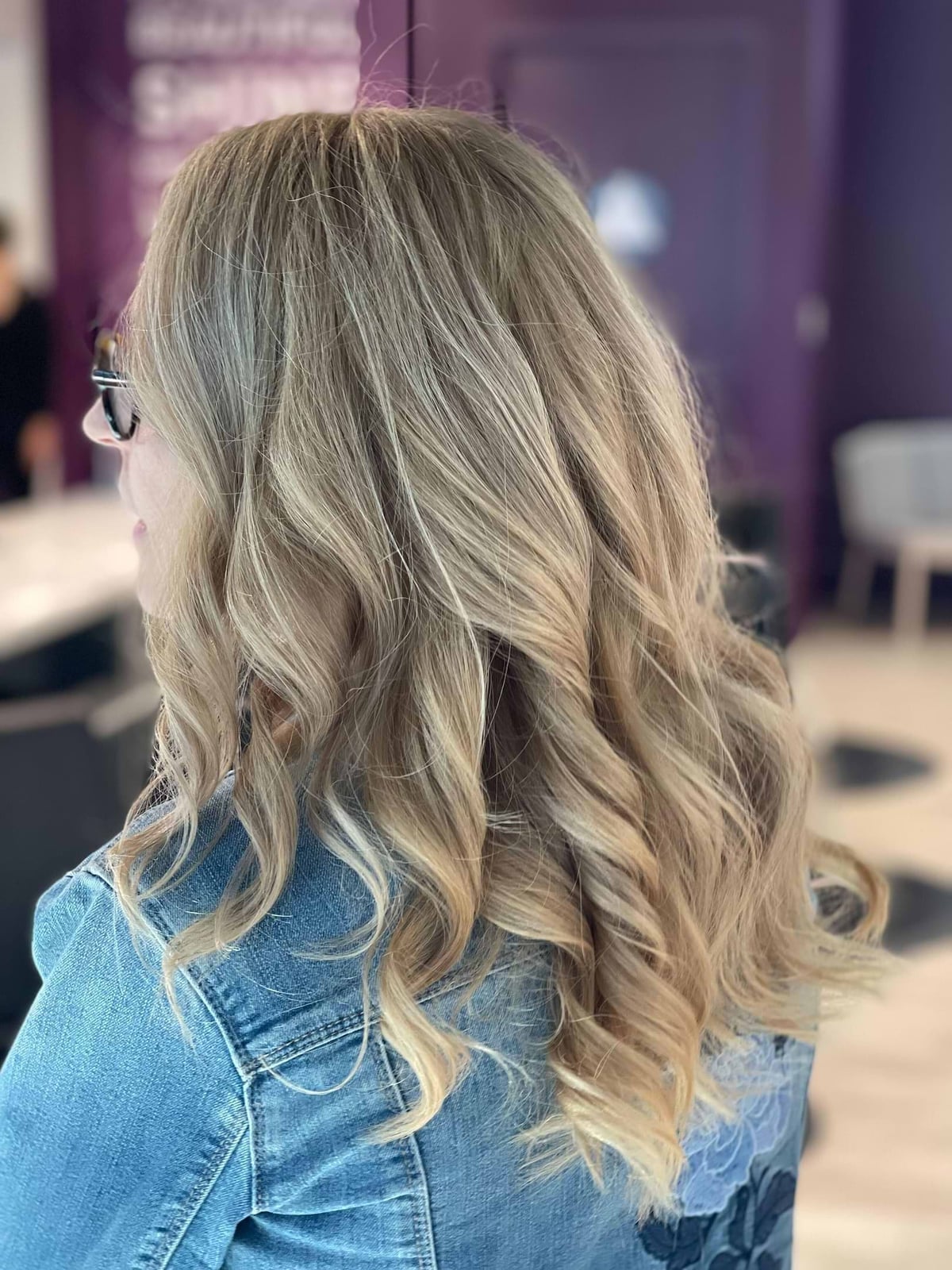
The dirty blonde base here works as a neutral backdrop for the soft balayage, so the lighter pieces stay subtle. They just shift the color. Fine hair at mid-back benefits from the subtle dimension, because it mimics the depth that thicker hair has naturally. The curtain bangs are cut to graze the cheekbones, which draws attention to the face without requiring heavy styling. Ask your colorist for: mid-back dirty blonde balayage, curtain bangs, blowout waves. The blowout keeps the texture smooth and the bangs in place. This look suits fine hair because the balayage adds visual weight without adding actual bulk.
Mid-Back Dark Blonde Highlights
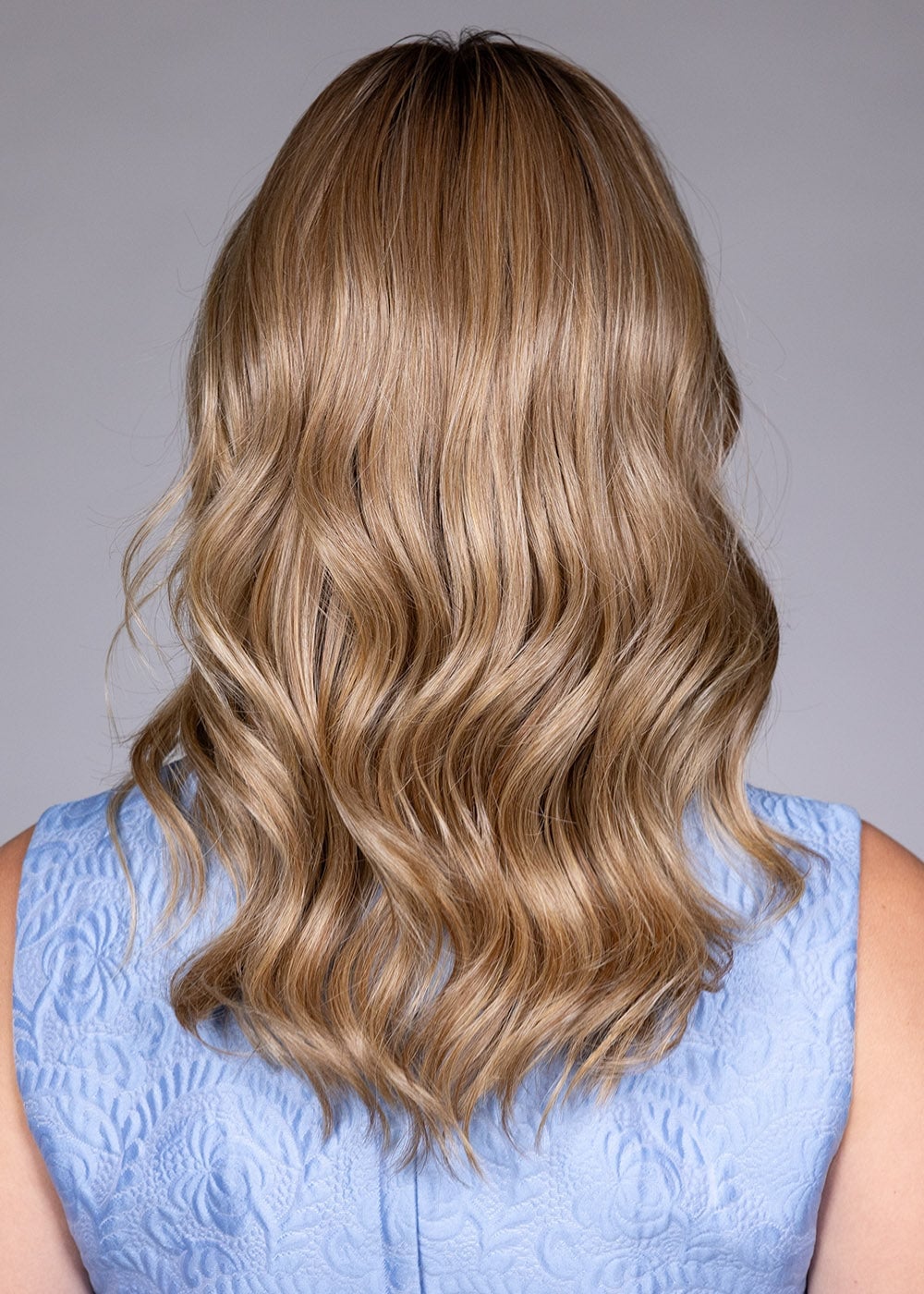
A dark blonde base with lighter highlights is one of the lowest-maintenance color formulas going. The contrast is subtle enough that new growth blends in, not stands out, for a good eight to ten weeks. On mid-back length hair with medium density, the layers here are cut to keep the ends light while the darker base sits at the crown. The back view shows how the soft waves catch the highlights evenly through the length.
Ask your colorist for: mid-back dark blonde with highlights, soft waves. The middle parting and glossy finish keep the cut looking polished. A shine spray or serum enhances the dimension, and a trim every eight to ten weeks prevents the layers from losing their shape. No root shadow needed, no toning every three weeks, just a straightforward color that works with your natural grow-out.
Mid-Back Champagne Blonde Waves
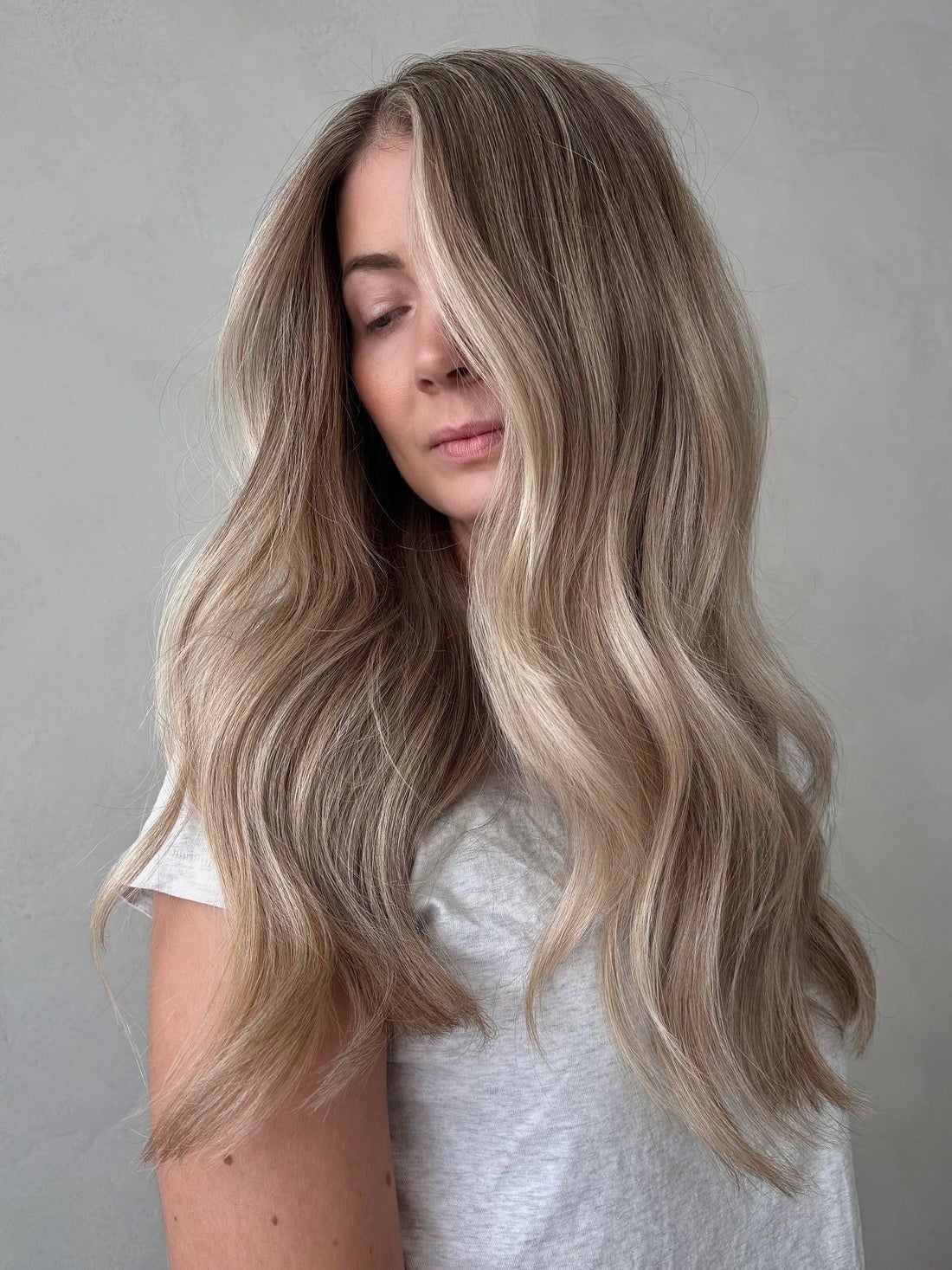
How do you ask for a champagne blonde that doesn’t look yellow or icy? The trick is subtle highlights, a few lighter pieces woven through the mid-lengths and ends, not a full bleach. On medium density hair at mid-back, the air-dried texture here keeps the color from looking overly polished, which is the whole point of champagne: it should feel soft and natural. Ask your colorist for: mid-back champagne blonde with subtle highlights, natural waves. The layers around the face prevent the length from weighing down the finer texture at the crown. Low heat from a diffuser encourages the wave pattern without frizz. The result is a blonde that works with your natural hair, not against it.
Mid-Back Honey Blonde With Layers, Middle
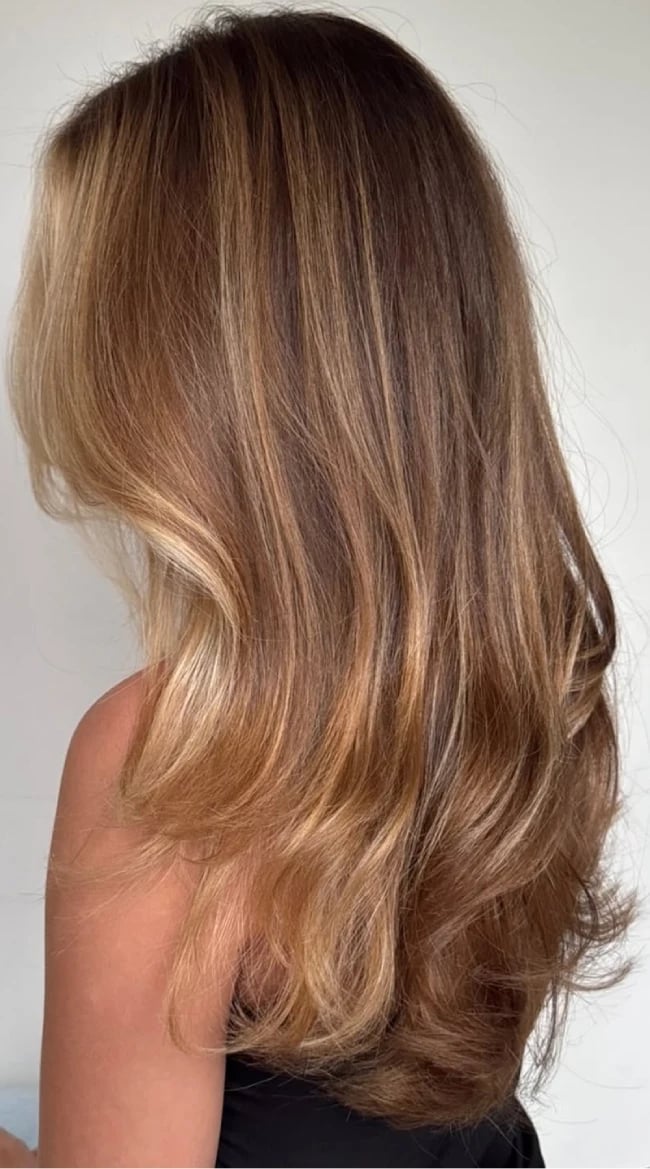
The honey blonde highlights here show warm against the mid-back length, not brassy. The difference is placement: the lighter pieces stay mostly around the face and ends, so the base does the work of keeping the whole thing grounded. Thick hair with some weight to it benefits from long layers, which stop the density from sitting like a solid block. Ask your colorist for: honey blonde with highlights, mid-back length, long layers. A side view shows how the middle parting lets each side fall evenly. The blowout gives the waves a polished shape, but the real value is the balance between warmth and dimension. It is a salon finish that requires a professional appointment.
Mid-Back Golden Blonde Highlights, Layers
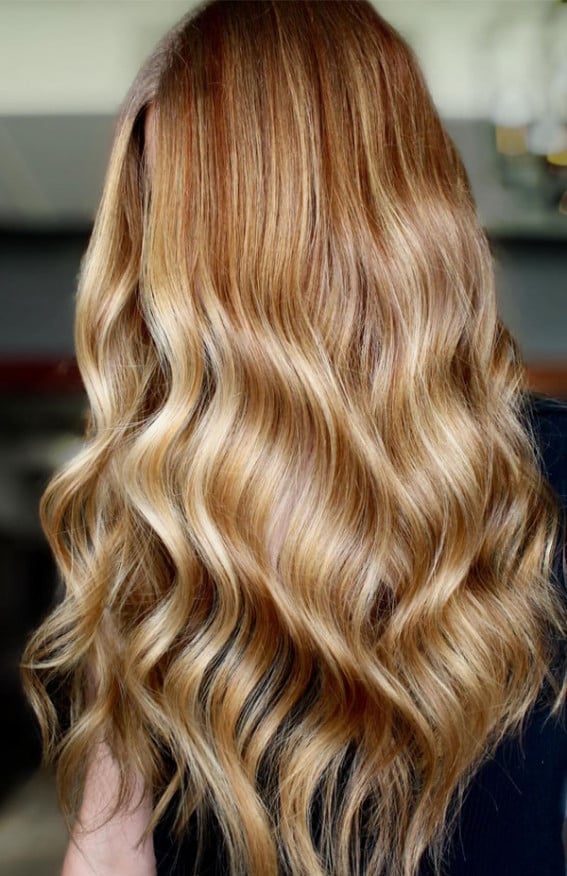
Golden blonde highlights are built on a technique of fine woven sections, not thick ribbons. The colorist paints narrow pieces from mid-length down, leaving the root area darker for a soft grow-out. Thick hair starting at mid-back length gives the stylist enough canvas to spread the highlights evenly without them looking sparse. Ask your colorist for: mid-back golden blonde with highlights, loose voluminous waves. The back view here shows how the layers catch the lighter strands, creating movement that a single block of color cannot match.
The layers in this cut are subtle, not choppy. They remove bulk while keeping the overall shape full. A volumizing mousse before blow-drying lifts the roots, and a large round brush smooths each section. The result is a texture that holds the wave without heavy product. This is a salon technique; the placement alone takes about two hours, and the foiling requires a trained eye to avoid stripes.
Mid-Back Ash Blonde With Glossy Waves
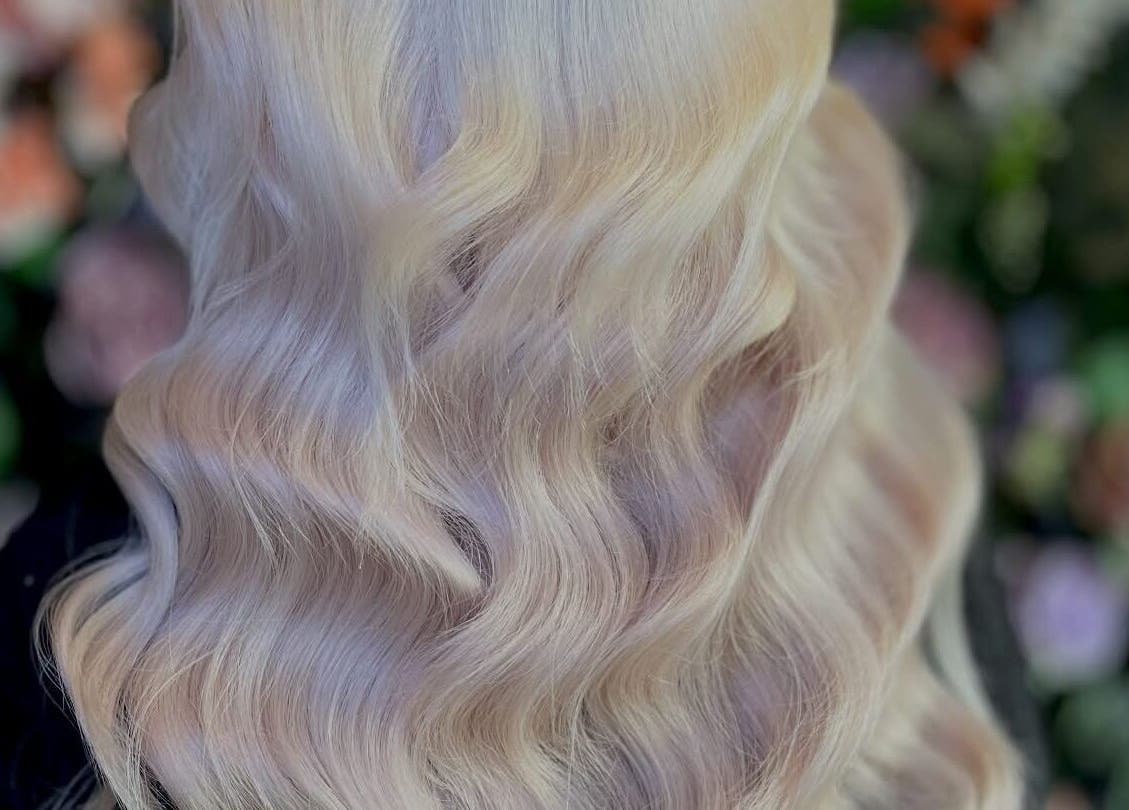
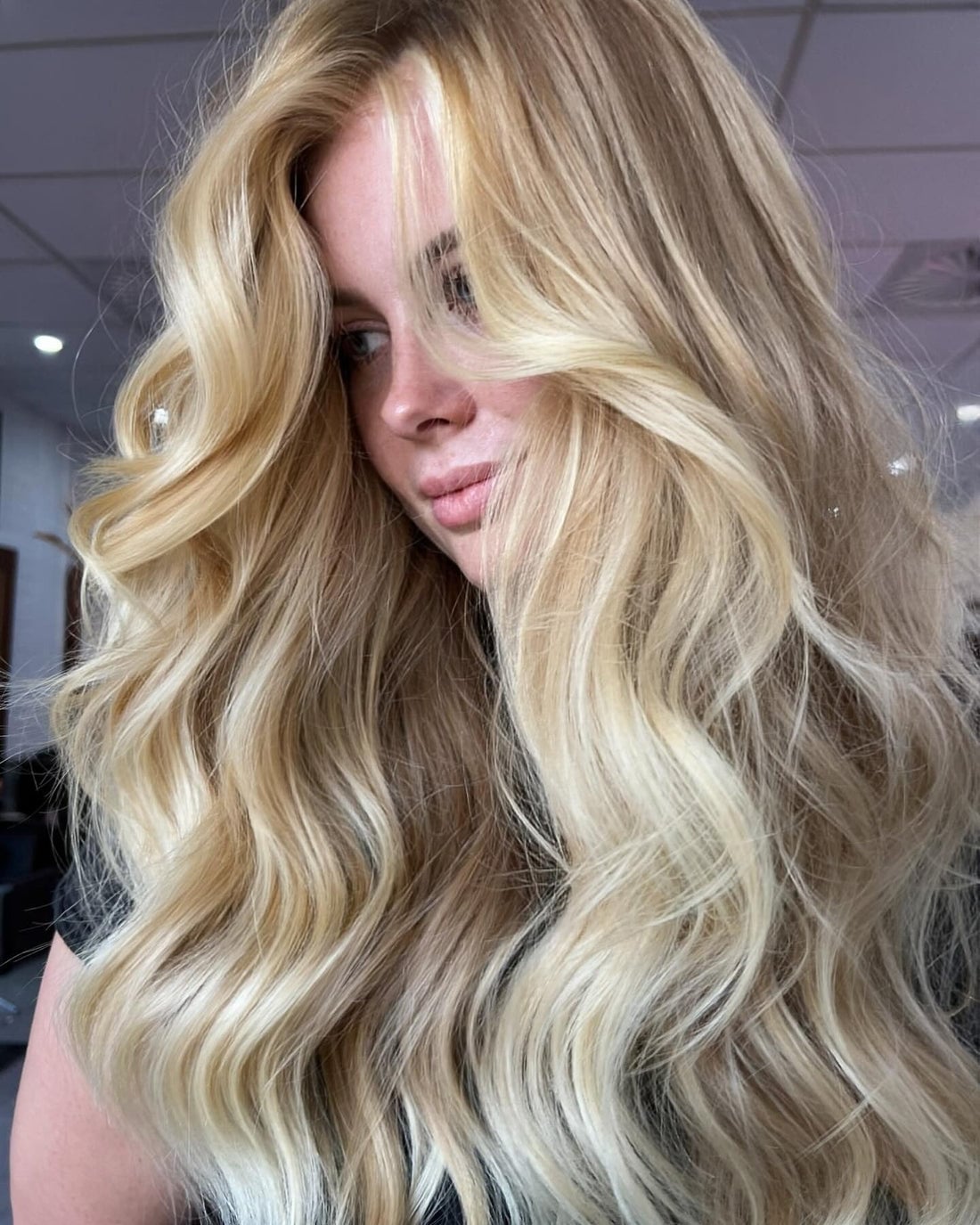
Ash blonde with a glossy finish lands somewhere between polished and understated, which is why it works for autumn events and everyday wear. The cool tone avoids the yellow cast that shorter blonde shades can pick up, and the gloss seals the cuticle so the wave pattern reflects light evenly. Thick hair at mid-back length carries the color well; the density keeps the ash tone from washing out against lighter clothing. Ask your colorist for: mid-back ash blonde with highlights, glossy loose waves. The middle parting and the layers let each section fall into its own S-curve without tangling.
A finishing serum or a lightweight oil adds the shine without weighing the wave down. The subtle highlights in this version are a few shades lighter than the base, just enough to break up the solid ash tone. This is a salon color; the gloss is typically applied as a toner after the highlights, and it fades gradually over about six weeks.
Mid-Back Blonde With Dimension
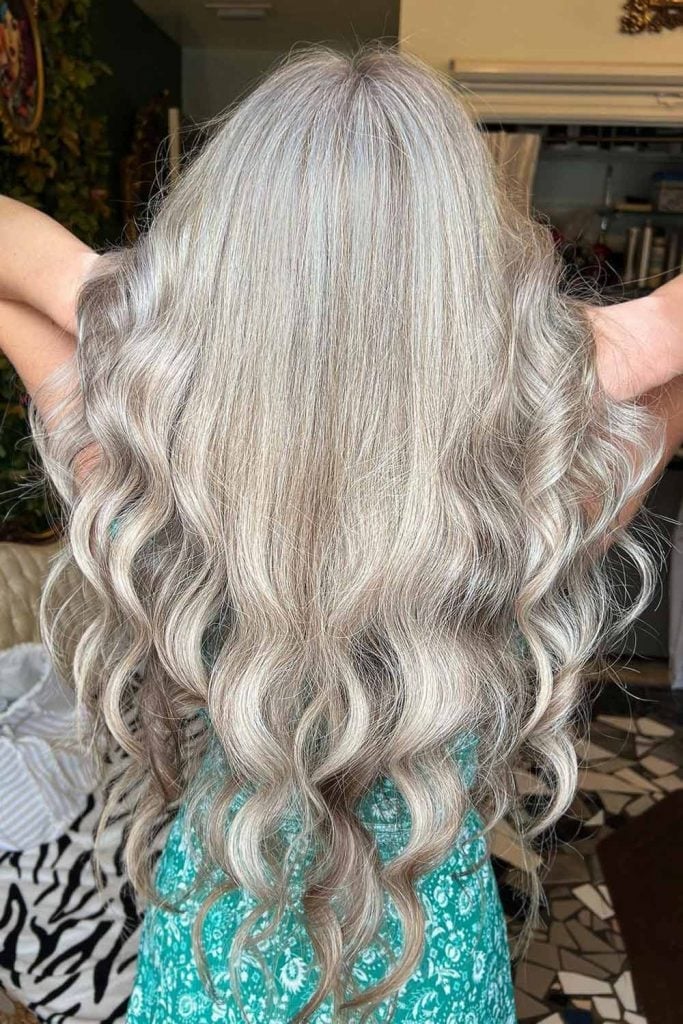
Dimensional blonde is the result of highlights placed at alternating depths, not a single all-over lift. The face-framing pieces here are a few shades lighter than the rest, which draws attention to the jawline without needing heavy contouring. Thick hair at mid-back length provides the weight for a voluminous blowout that holds the wave pattern until the next wash. Ask your colorist for: mid-back blonde with highlights, voluminous waves, face-framing pieces. The middle parting keeps the front sections symmetrical, and the layers stop the length from dragging the shape down.
This level of dimension is a salon project. The colorist needs to paint each section separately, which takes about three hours. A DIY kit cannot replicate the staggered placement that creates the natural shadow effect. The payoff is a color that does not look flat under fluorescent office lights or in the sun.
Mid-Back Honey Blonde Balayage
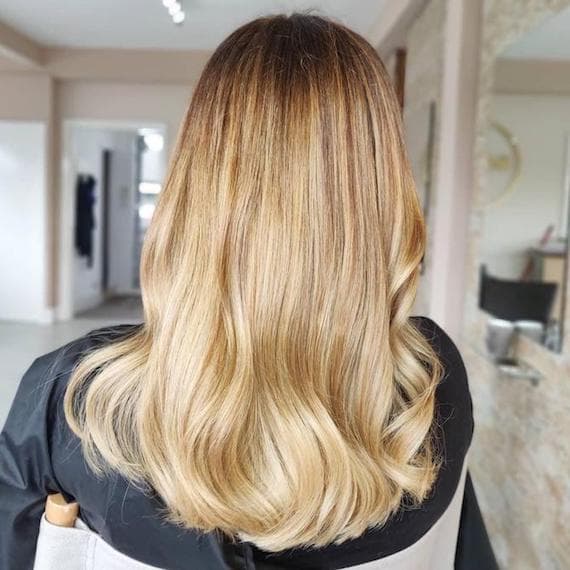
Honey blonde balayage is built on hand-painted sections that start below the root area, so the grow-out line stays soft for months. The back view here shows the color melting from a darker root into a warm honey tone at the ends, with no harsh demarcation. Thick hair at mid-back length is ideal for balayage; the density carries the gradient without the lighter pieces looking too sparse. Ask your colorist for: mid-back honey blonde balayage, loose waves, voluminous blowout. Layers let the wave pattern spread evenly down the length.
The upkeep is what makes this approach practical. A balayage needs a touch-up every twelve to sixteen weeks, compared to the six-week rhythm of full highlights. The grow-out looks deliberate because the root area is always slightly darker. A smoothing serum keeps the wave glossy, and a blowout with a round brush adds the volume without heat damage. This is a salon technique; the hand-painting requires skill and about two hours in the chair.
Final Thoughts
For fine hair, keep one blunt baseline and skip heavy layers to avoid flattening the wave. For thick hair, embrace richer color dimensions and a voluminous blowout to let the texture show. Find the blonde wave that suits your style and maintenance level.
- Trim hair every 6-10 weeks to maintain shape and prevent split ends.
- Tone blonde hair every 4-8 weeks to counteract brassiness and maintain coolness.
- Use heat protectant spray before styling with hot tools to preserve hair health.
- Wash hair 2-3 times a week, using color-safe shampoos and conditioners.
Find the blonde wave that suits your style and maintenance level.