 Save
Tribal braids have moved past purely casual territory, settling into a space where intricate scalp patterns meet clean, polished finishes. The current shift favors geometric cornrow designs and subtle accents like small beads or tonal highlights, steering clear of chunky, uneven sections.
These 20 Classy Tribal Braids Hairstyles range from low-maintenance thick box braids to elaborate Fulani-inspired patterns with detailed part work. They work for medium to long starting lengths and any hair density, solving the common struggle of wanting a protective style that looks intentional rather than thrown together.
21 ideas in this post
- Geometric Cornrows With Long Curly Box Braids
- Sleek Fulani Braids With Geometric Scalp Design
- Mid-Back Tribal Braids With Colorful Beads
- Fulani Braids With Circular Cornrows And Silver Beads
- Small Box Braids With Geometric Scalp Pattern
- Thick Straight Box Braids With Geometric Scalp
- Long Numerous Box Braids With Geometric Crown
- Large Uniform Box Braids Mid-Back Length
- Thin Tribal Braids With Geometric Scalp Pattern
- Box Braids With Zig-Zag Scalp Pattern
- Thick Long Box Braids With Defined Parts
- Box Braids With Intricate Parting
- Copper Box Braids With Blonde Highlights And Curls
- Fulani Braids With Side Part And Wavy Ends
- Box Braids With Geometric Parting Mid-Back
- Cornrows Into Dark Brown Box Braids
- Blonde Box Braids With Loose Wavy Ends
- Cornrows And Box Braids With Wavy Ends
- Cornrows Into High Ponytail With Blue Accents
- Geometric Cornrows With Dark Brown Braids
- Final Thoughts
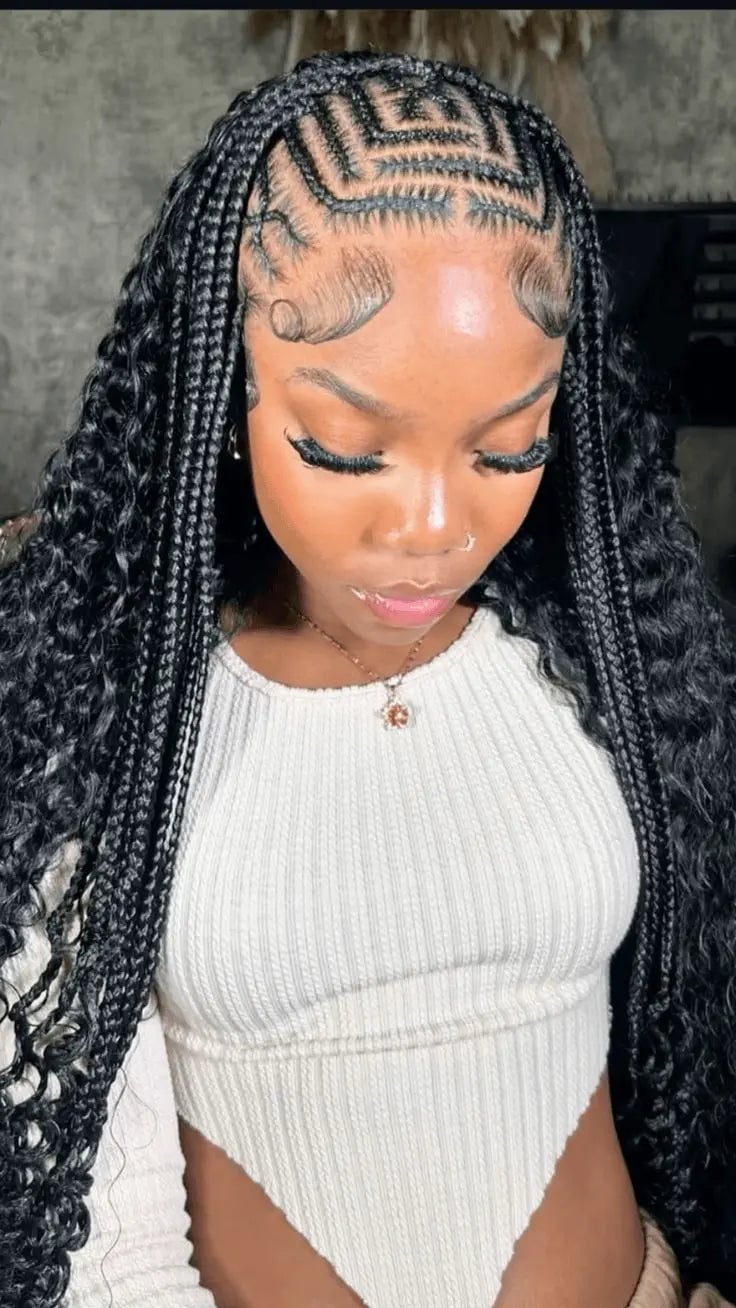
Geometric Cornrows With Long Curly Box Braids
The genius of this style is the contrast between the tight, precise geometric cornrows at the front and the loose, curly ends that follow. The braids fall to mid-back in black with subtle blonde tips, and the middle part keeps the scalp design the star. This works for most hair densities, as long as your natural length reaches mid-back for the braid extension to anchor properly. Ask your stylist for: long box braids with curly ends and geometric cornrows at front, subtle blonde tips. Apply a light serum to those curly ends daily to keep definition and shine intact; plan for a trim of any loose strands every 10 to 12 weeks.
Sleek Fulani Braids With Geometric Scalp Design
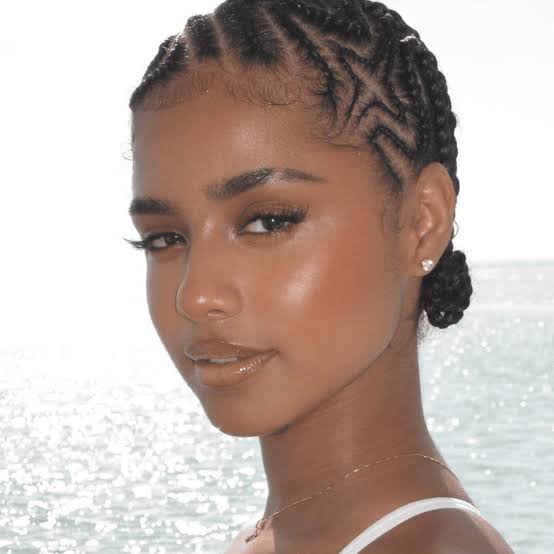
Wondering if the sleek Fulani braid look works on you? It is best on thick, straight textures, since the shine and definition come from hair that lies flat against the scalp without frizz. The shoulder-length finish keeps the geometric pattern visible, and the middle part gives it a balanced frame. Thinner hair can still carry it, but the braids will read as smaller and more delicate. Ask your stylist for: shoulder length sleek Fulani braids with geometric scalp pattern. Keep the scalp clean with a light mist of dry shampoo; trim braid ends as needed every 12 weeks.
Mid-Back Tribal Braids With Colorful Beads
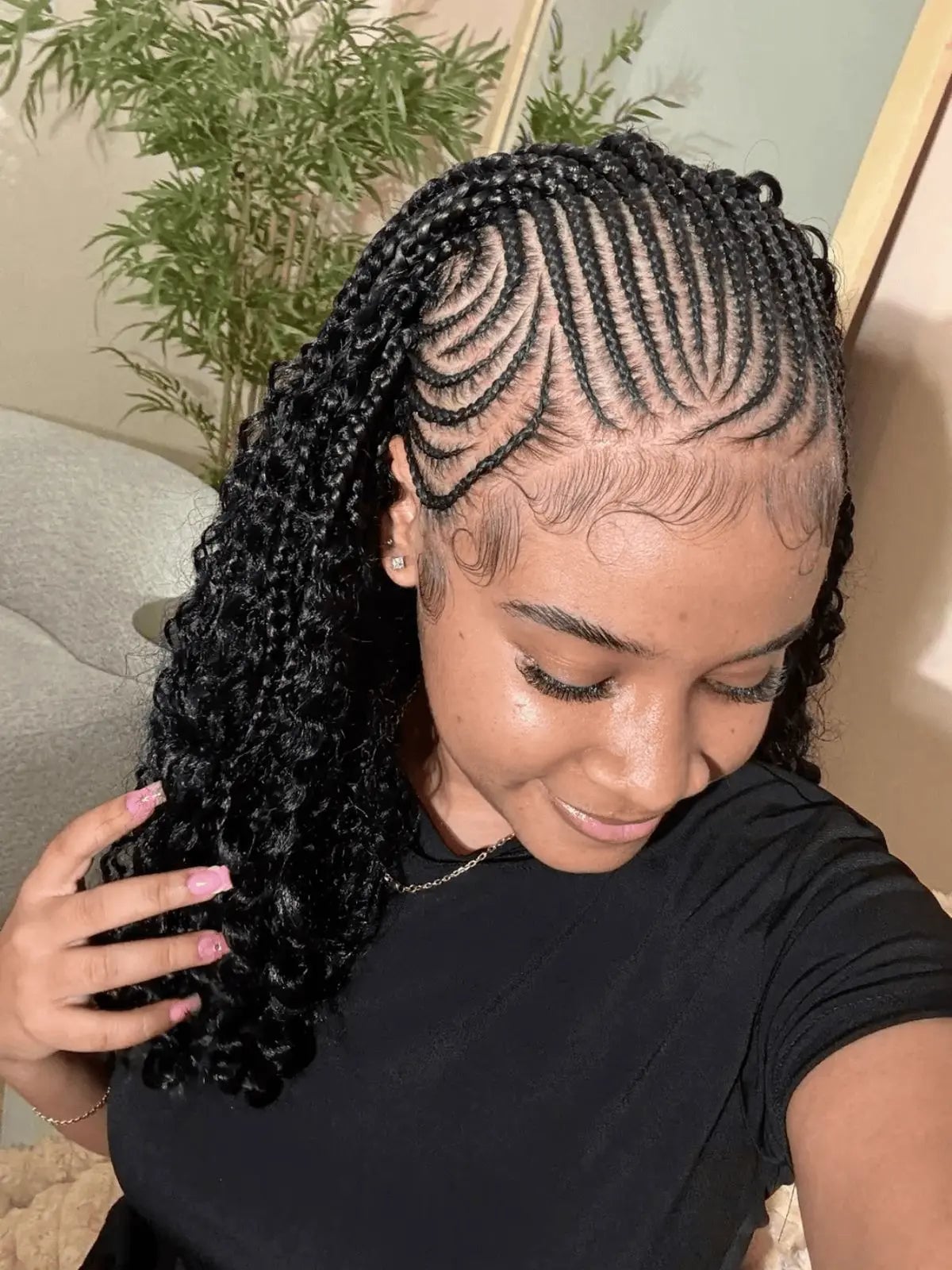
Beads versus no beads is the real question here, and the answer depends on how much movement you want. Solid braids swing silently; beaded ones add sound and visual weight. These mid-back tribal braids are thick and straight, with a middle part and colorful beads threaded through the shafts. The beads create a bolder silhouette, ideal for thick hair that can support the extra heft without pulling at the roots.
Ask your stylist for: mid-back tribal braids with colorful beads. Before you sit, decide on bead placement: concentrated at the ends or scattered throughout. Clustered beads near the scalp draw the eye upward, while beads at the ends pull focus to the length.
Fulani Braids With Circular Cornrows And Silver Beads
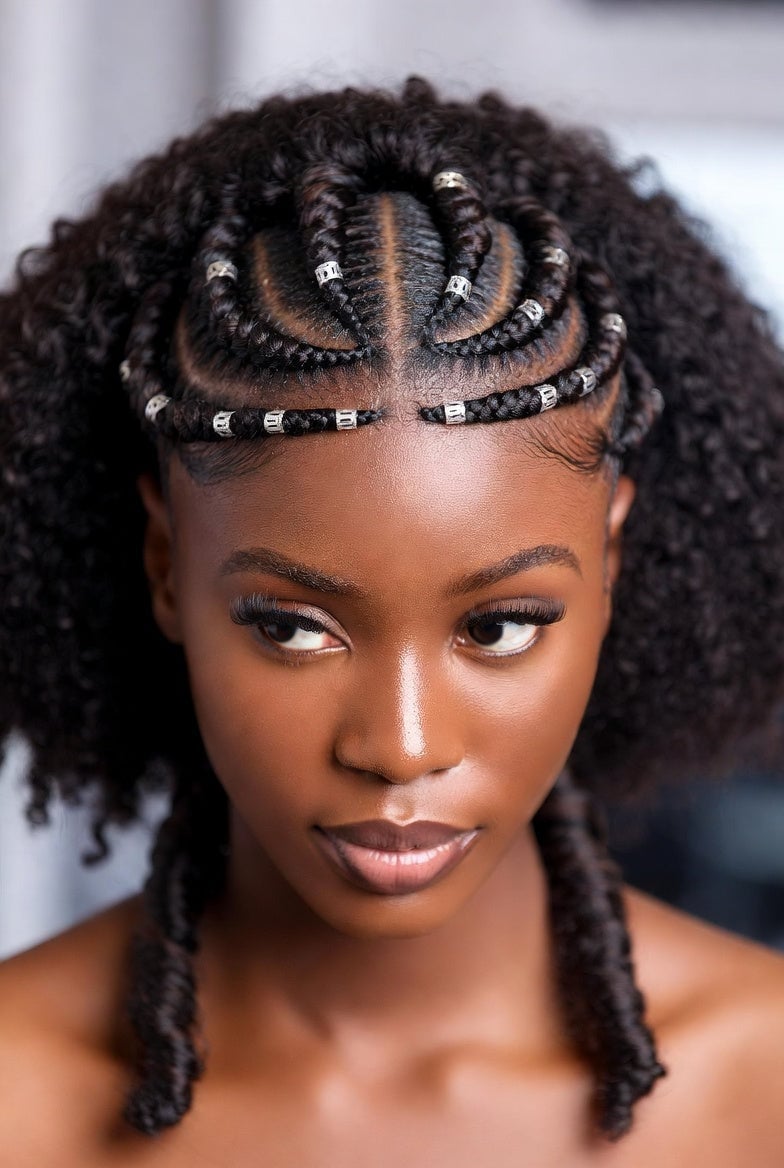
How do you ask for that circular scalp pattern? Start with the shape: neat cornrows that curve around the crown, not straight lines. These Fulani braids are shoulder length and black, with small silver beads placed along the cornrows and the braids finishing in curly ends. The circular design suits anyone with shoulder-length hair who wants a decorative, intricate finish, especially if your natural texture is wavy or curly. Ask your stylist for: Fulani braids with circular cornrows and small silver beads. Be gentle with the beaded sections to prevent snagging, and keep the curly ends moisturized.
Small Box Braids With Geometric Scalp Pattern
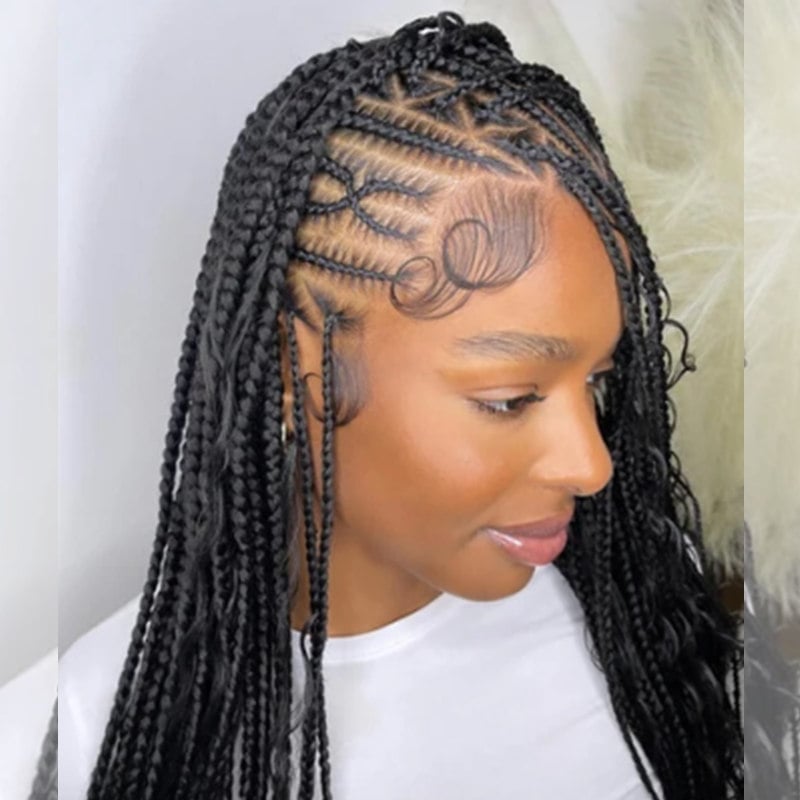
The geometric scalp pattern here is the kind of detail that rewards a second look. Small box braids fall to mid-back in black, with wavy, loose ends and decorative curls along the hairline that soften the overall shape. The smaller the braid, the more the pattern shows, so fine to medium hair textures actually have an advantage here.
Ask your stylist for: small box braids with wavy ends and geometric scalp pattern with hairline curls. Use a mousse on the wavy ends for definition, and keep the scalp clean with a braided hair spray. The small braids hold their shape well, but the wavy ends need refreshing with water and product every few days to stay defined.
Thick Straight Box Braids With Geometric Scalp
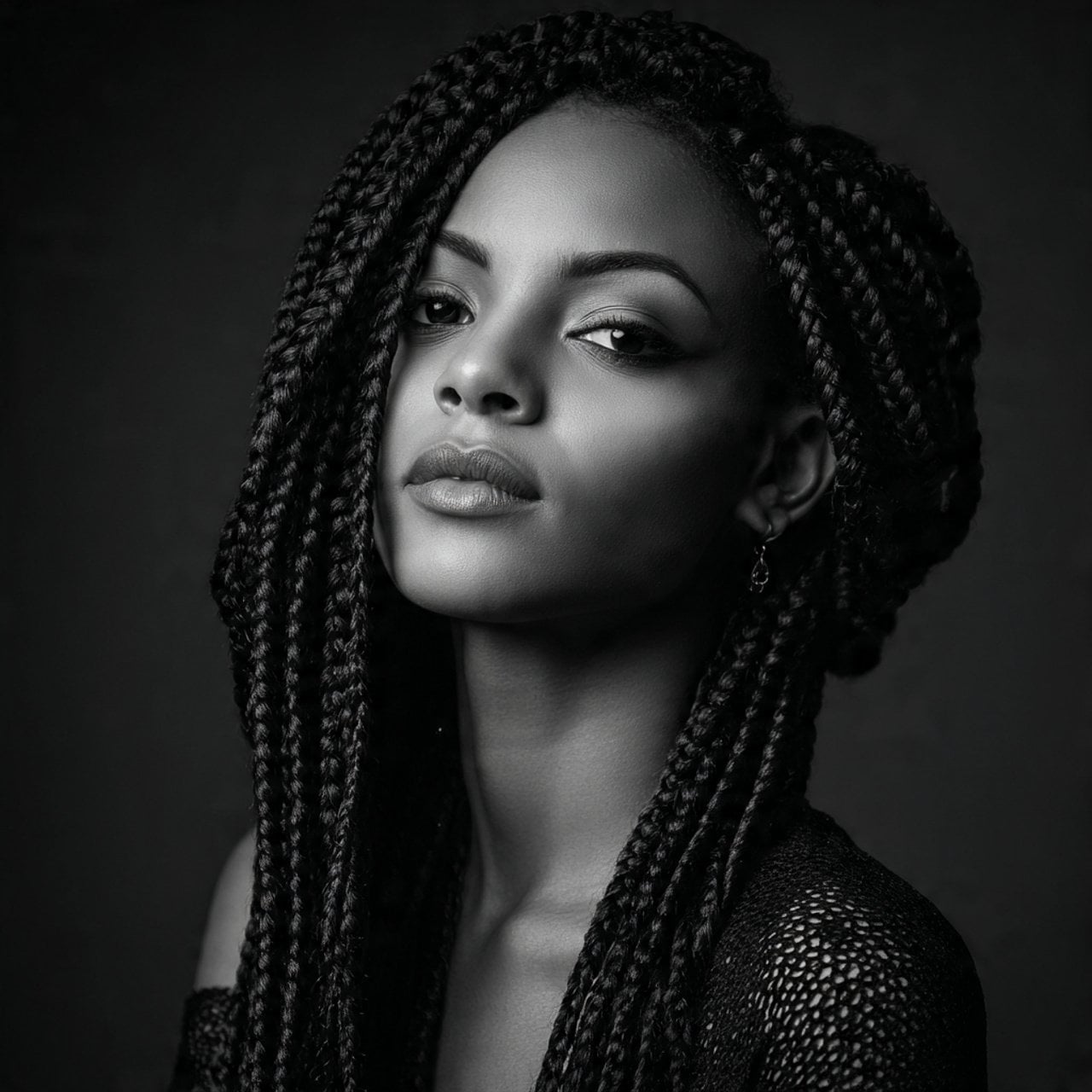
Thick box braids can sit heavy on the head, and this style leans into that weight with intention. The geometric scalp pattern and middle parting give the whole design a structured, almost architectural feel. Ask your stylist for: thick straight box braids with geometric scalp pattern.
This works best on natural hair that reaches at least the mid-back, where the thickness of each braid won’t look stubby. The straight texture keeps the silhouette clean and uniform, but the real trade-off is time: achieving this even density across every braid takes a full day in the chair, no shortcuts. The black color stays crisp with a braid spray used every few days, and a trim at the ends every six weeks prevents fraying. It’s a committed look, and the commitment is not small.
Long Numerous Box Braids With Geometric Crown
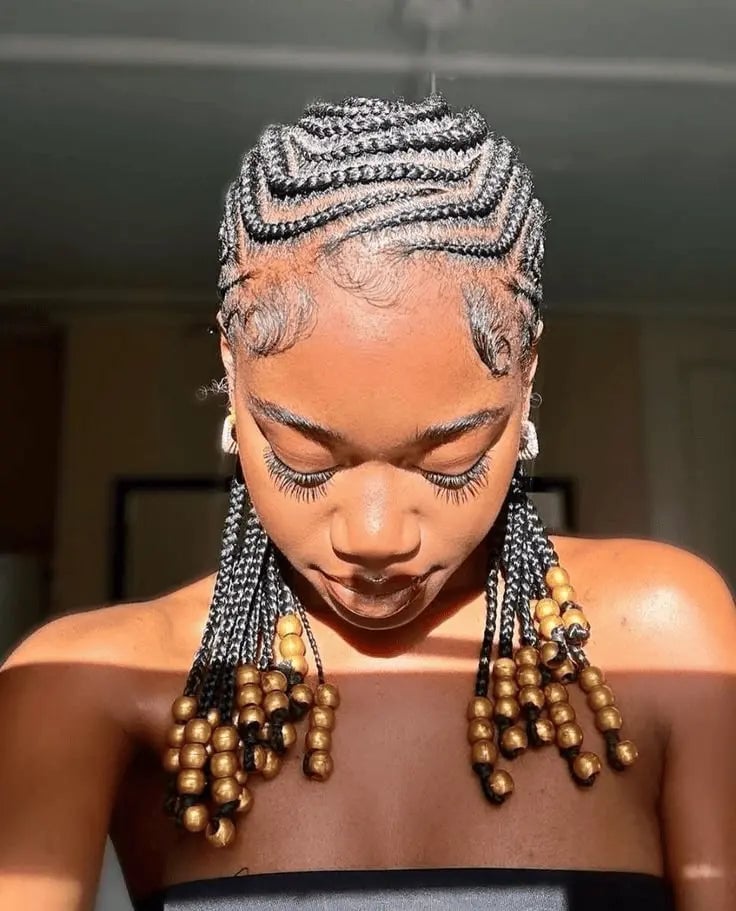
The geometric crown pattern here is built by braiding the scalp sections in concentric shapes before dropping into the long box braids. Each braid is thin and uniform, which creates the volume through sheer density rather than thickness. Ask your stylist for: long numerous box braids with a geometric crown pattern. The middle parting keeps the pattern symmetrical, and the black color makes the scalp design the focal point. For hair that reaches the mid-back, the braider sections the crown separately and works outward, so the pattern stays intact as the braids fall. The hold is solid for weeks, and the weight distributes evenly across the scalp.
Large Uniform Box Braids Mid-Back Length
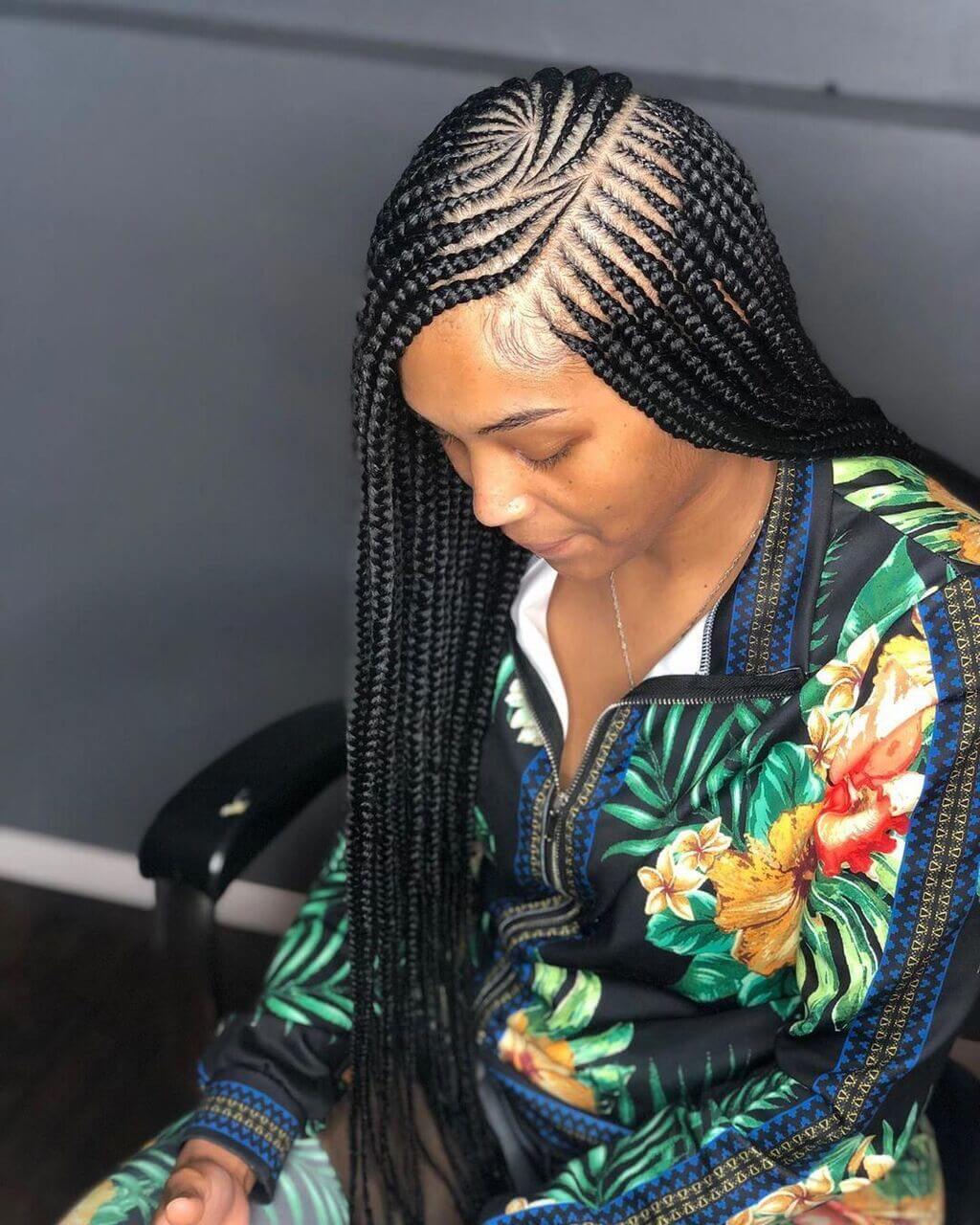
Do you want fewer braids and a bolder silhouette? Large uniform box braids skip the delicate look entirely. Each braid is thick and clearly defined, with square scalp parts that show the precision of the sectioning. Ask your stylist for: large uniform box braids to mid-back. This works best if your natural hair is on the thicker side, because the braids sit heavier and can pull at fine hair over time. The black color stays solid, and the mid-back length gives the style enough weight to hang straight. The hold is low-maintenance: a quick spray of braid sheen every few days keeps the shafts smooth, and stray ends get trimmed every eight weeks.
Thin Tribal Braids With Geometric Scalp Pattern
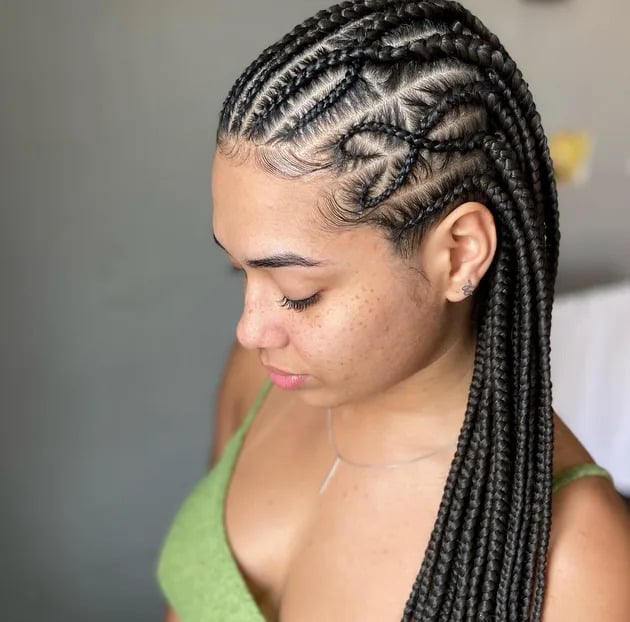
Thin tribal braids rely on repetition: dozens of fine braids, each one exactly the same width, arranged in a geometric pattern across the scalp. The coily texture at the roots blends into the straight extensions, creating a seamless transition. Ask your stylist for: thin tribal braids with a geometric scalp pattern. Daily wear means keeping the scalp clean to avoid buildup, since the braids are dense and air doesn’t move through easily. A light oil on the shafts every few days stops frizz from creeping in at the part lines. The hold is strong for about four weeks before the new growth needs attention, and the mid-back length swings freely without tangling when the ends are sealed properly.
Box Braids With Zig-Zag Scalp Pattern
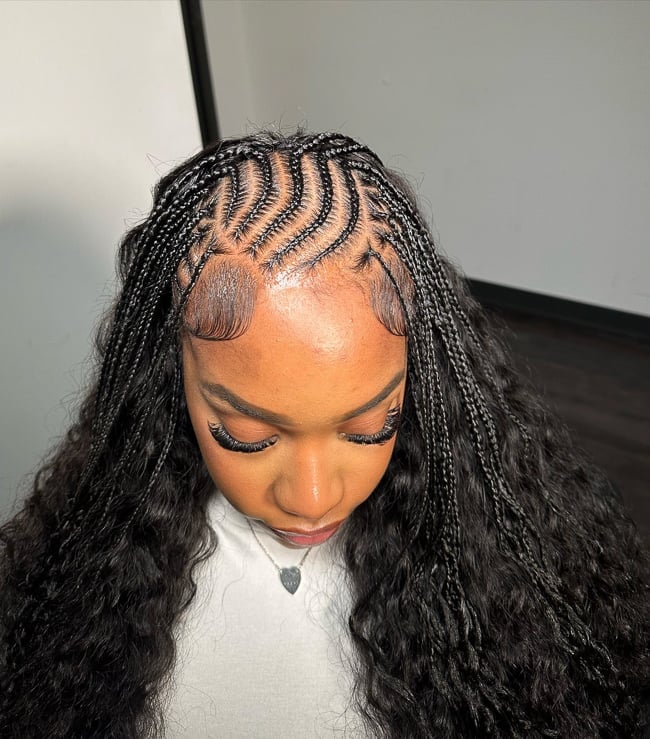
How do you describe a zig-zag parting without using your hands? Say the words: zig-zag scalp pattern, starting at the middle part and extending outward. The braider creates this by alternating the direction of each cornrow at the root before dropping into wavy-ended box braids. Ask your stylist for: box braids with wavy ends and a zig-zag scalp pattern. This is a salon-only style, because the precision of the parting takes two trained hands and a clear plan before the first braid goes in. The wavy ends add movement to the mid-back length, and the black color keeps the scalp pattern readable from a distance. The hold lasts about three weeks before the zig-zags start to soften at the hairline.
Thick Long Box Braids With Defined Parts
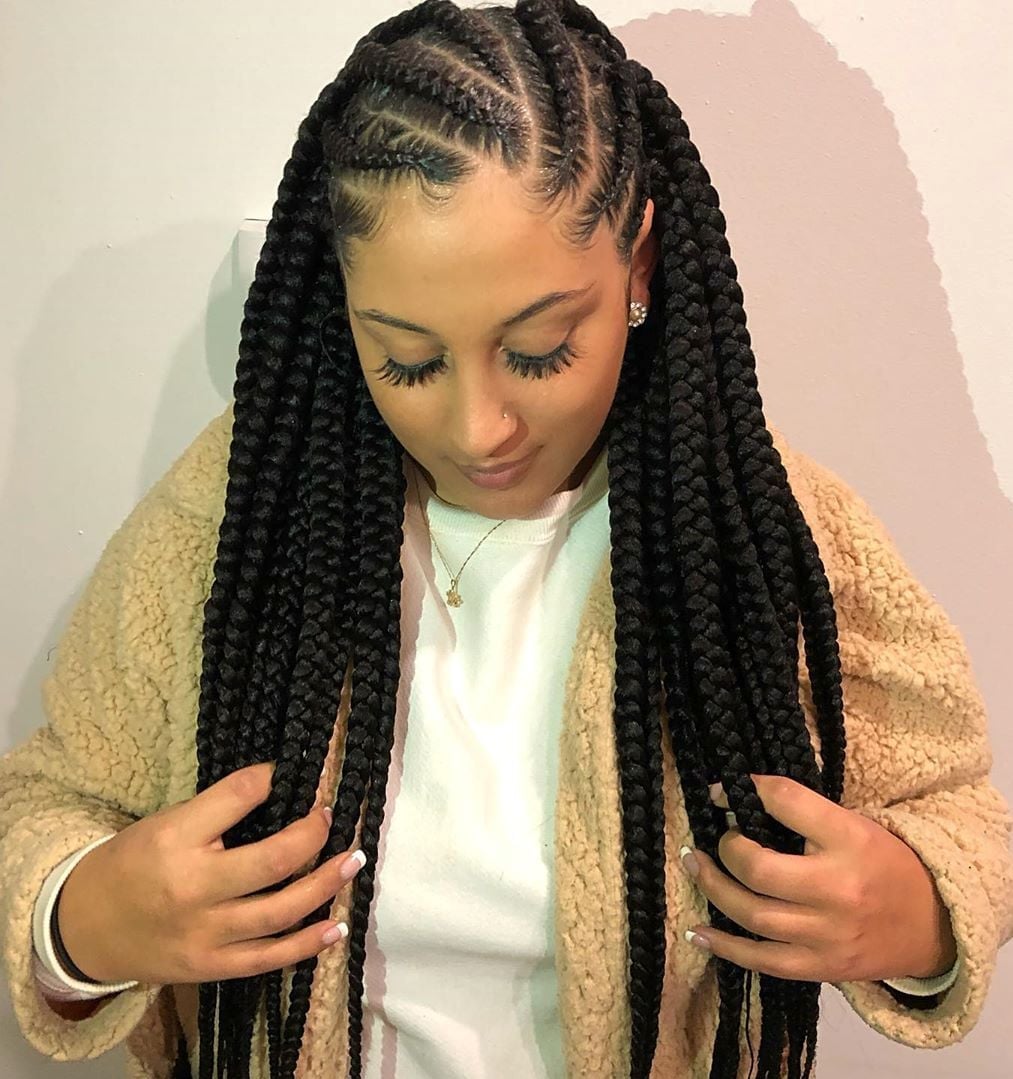
Thick box braids carry a different kind of weight than their thinner cousins, literally and visually. Where smaller braids read as delicate and detailed, these large, dense sections of black hair dropping to mid-back announce themselves with presence. The defined square parts at the scalp make the geometry of the style legible even from across a room. This is the look for anyone with naturally thick hair who wants a structure that holds its shape and doesn’t shrink into itself.
Ask your stylist for: thick, long box braids with defined square parts. The trade-off for that substantial feel is that each braid takes more time to install, and the overall density means the style feels heavier on the neck for the first day or two. A braid sheen keeps the shafts looking glossy rather than dusty, and regular trims at the ends prevent fraying on a style this noticeable.
Box Braids With Intricate Parting
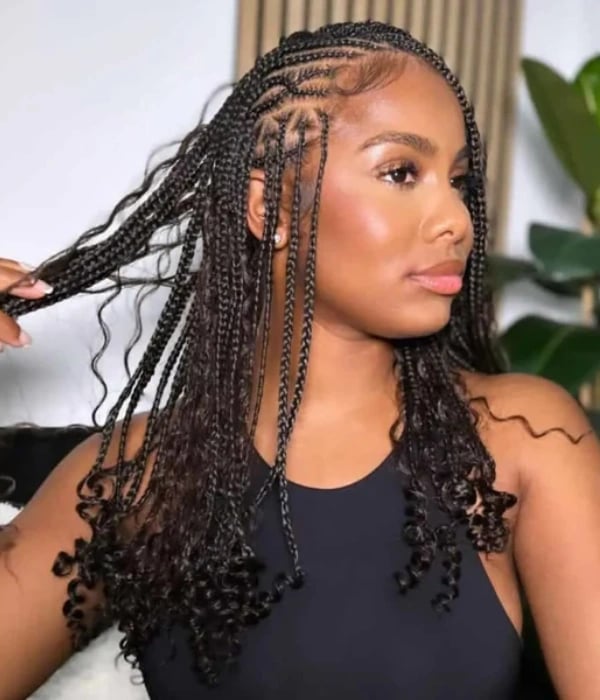
The scalp work here is the real achievement, those meticulous middle partings and the polished finish along the hairline take a steady hand and a lot of patience. Small box braids with wavy, curly ends extend to mid-back, but the eye goes first to the parting patterns that create a kind of map across the crown. This level of detail works best on fine to medium textures, where the braids stay manageable without becoming too heavy. Ask your stylist for: small box braids with wavy curly ends and intricate parting. A lightweight gel along the hairline keeps the sleek finish from lifting during the day.
Copper Box Braids With Blonde Highlights And Curls
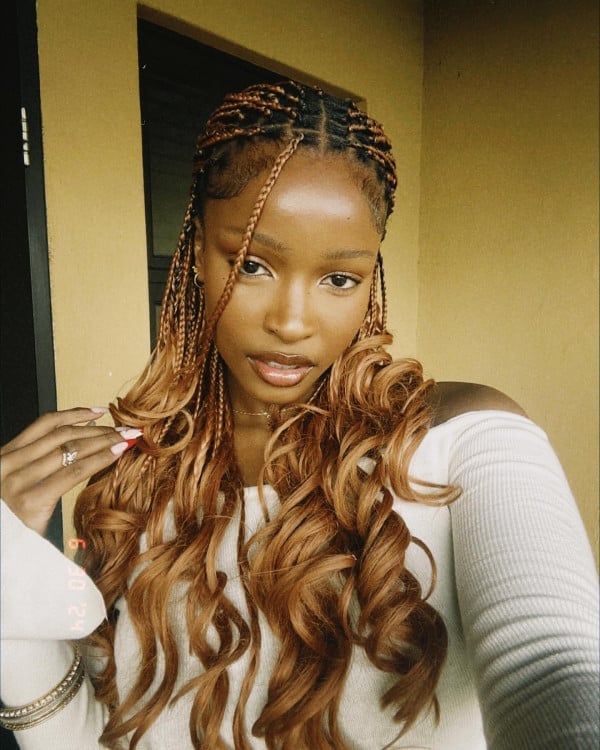
This is a fall color palette turned into hair. The warm copper base with lighter blonde highlights running through the braids catches the kind of low autumn light that makes everything look richer. Mid-back length box braids are finished with loose, voluminous curls at the ends, which softens the geometric precision of the middle part. The thick texture carries the multi-tonal color well. The copper and blonde combination creates a dimensional finish.
Ask your colorist for: copper box braids with blonde highlights and loose curls at the ends. The contrast between the structured braid shaft and the relaxed curl at the bottom gives the style movement that photographs well. A curl-defining cream on the ends keeps the shape intact, and a UV-filtering product protects the copper from fading into brassiness.
Fulani Braids With Side Part And Wavy Ends
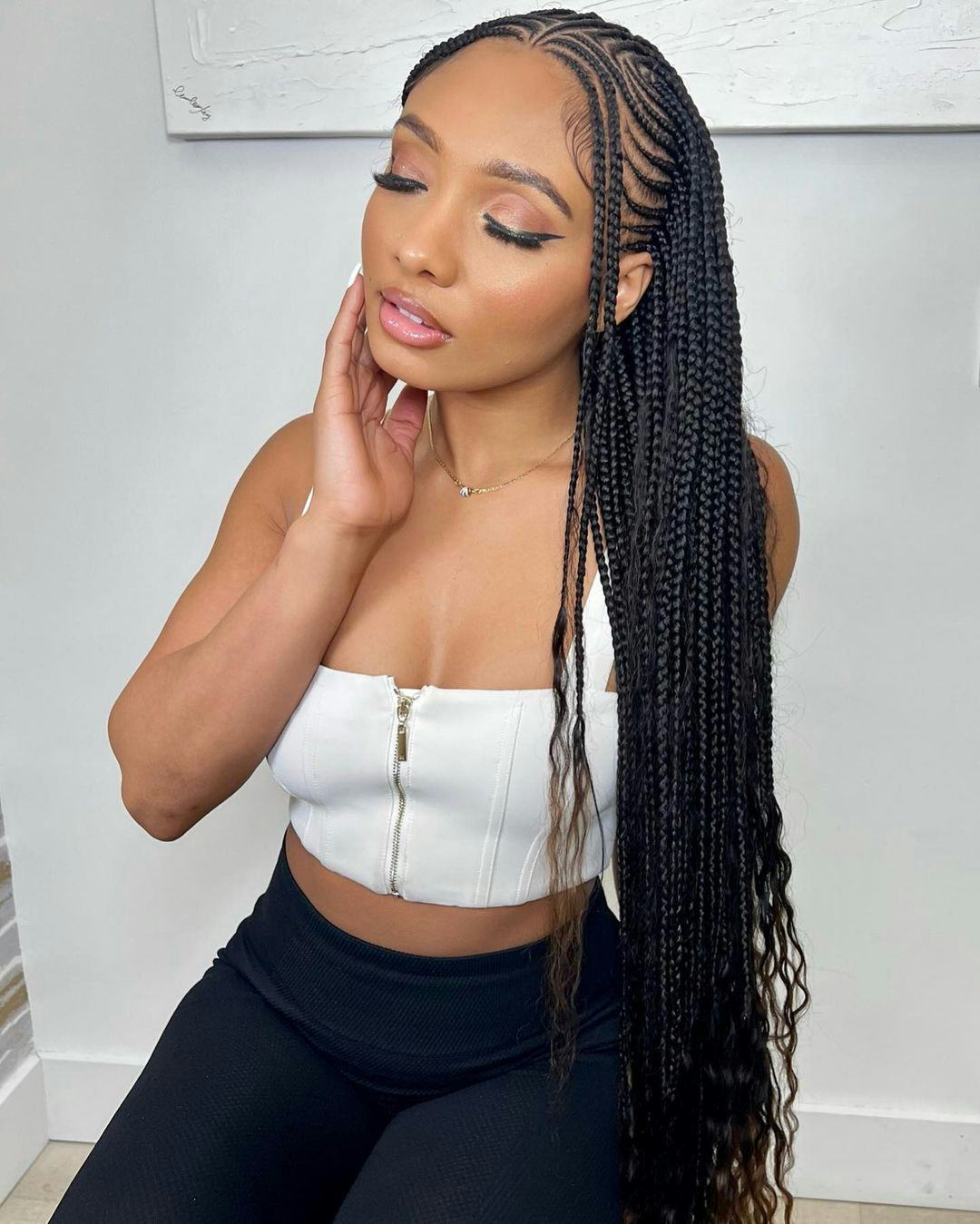
Fulani braids with a side parting and side-swept bangs change the way the style frames the face. The asymmetry draws attention outward instead of straight down. Long black braids with subtle brown highlights end in loose waves, giving the silhouette a softer finish than ruler-straight versions. The side-swept bangs frame the forehead without requiring daily pinning or gel work.
Ask your stylist for: long Fulani braids with a side parting, side-swept bangs, and wavy ends. The upkeep here is about maintaining the wave pattern at the ends and keeping the bangs from shifting toward your eyes as the week goes on. A light hold spray sets the bangs in place, and a lightweight oil on the braid shafts prevents the hair from looking dry by day three.
Box Braids With Geometric Parting Mid-Back
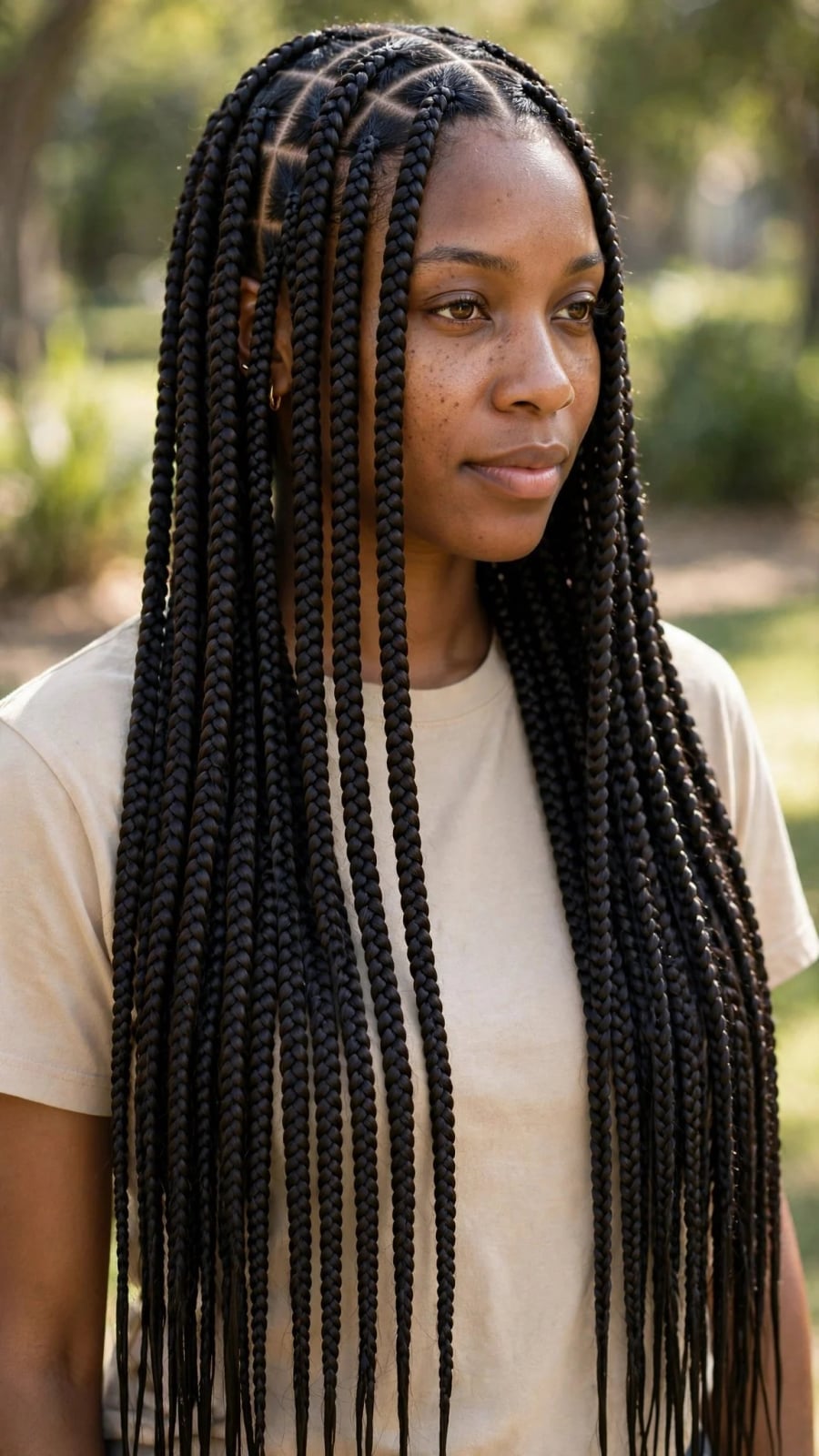
What exactly do you say when you want that clean, mapped-out look at the scalp? The key phrase is “geometric middle parting”. It tells your stylist you want the sections to be precise enough that the pattern is visible even when the braids are down. Thick, straight black box braids reach mid-back, and the parting creates a grid that repeats from the hairline to the crown. The effect is polished without needing any product shine.
Ask your stylist for: mid-back box braids with a geometric middle parting. This is a salon-only request: the time it takes to map out and braid the sections correctly is not something to rush. A braid sheen spray keeps the straight shafts from catching frizz, and a clean scalp is the best maintenance for keeping the parting lines crisp.
Cornrows Into Dark Brown Box Braids
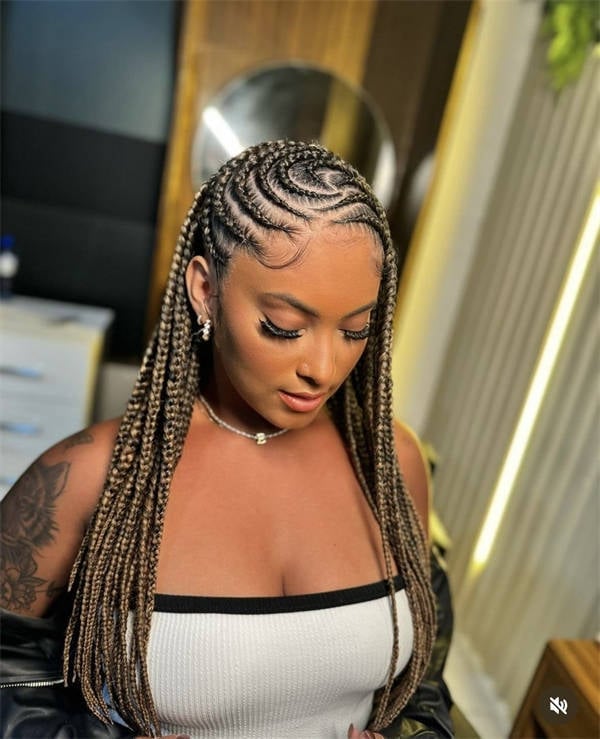
Where a full head of box braids can feel uniform, cornrows that transition into box braids split the difference neatly. The scalp work here is the anchor: a geometric pattern of cornrows that feeds directly into long, thick box braids with wavy ends, all in a dark brown base with subtle highlights. The middle part keeps the geometry precise. Ask your stylist for: cornrows leading into dark brown box braids with wavy ends. Those with mid-back length hair who want both scalp intricacy and textured movement at the ends get the best of both approaches.
The pattern stays sharp for roughly four weeks before the cornrows begin to lift at the edges. A light oil on the braid shafts keeps the shine even, and a curl cream on the wavy ends stops them from frizzing into a single mass. The dark brown base with highlights means the grow-out line is soft enough to push the style closer to six weeks before a refresh feels necessary.
Blonde Box Braids With Loose Wavy Ends
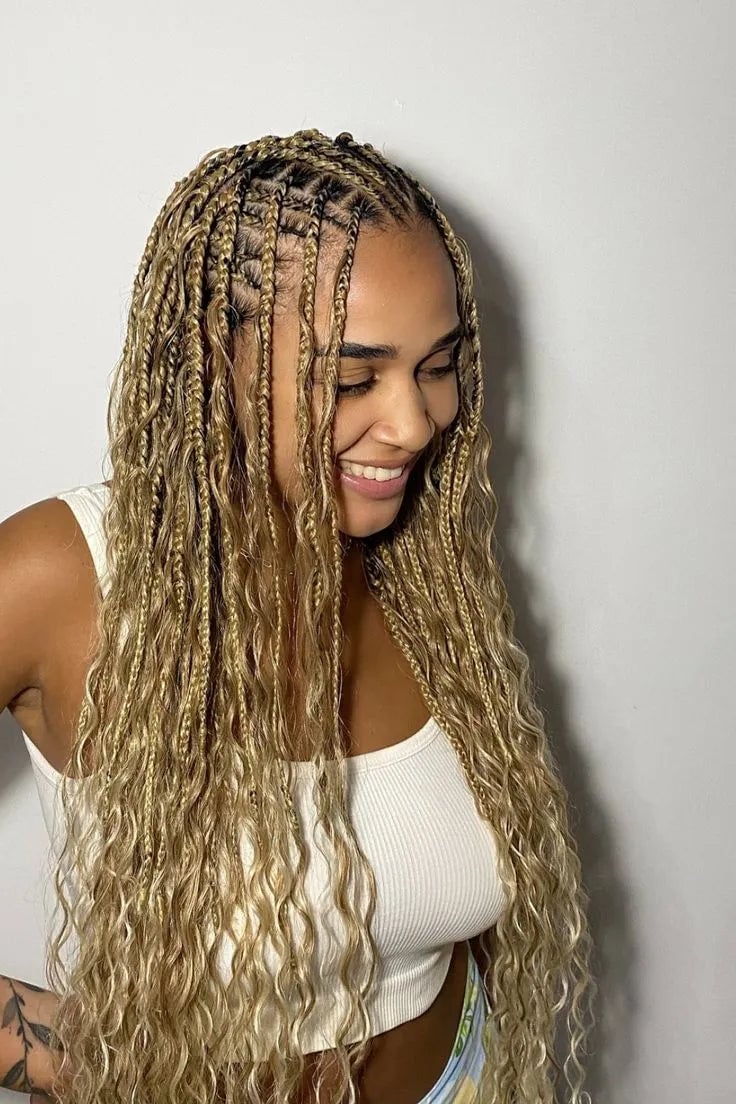
The thin box braids here hit mid-back and are blonde with lighter highlights woven through, so the overall effect is lighter in weight and tone than a dark braid set. The loose wavy ends break up what could be a rigid line, and the clean middle part lets the scalp show through without competing. Ask your colorist for: thin blonde box braids with loose wavy ends. This works for anyone with mid-back length hair who wants a softer silhouette, but the lighter shade does demand a cooler-toned purple shampoo every other wash to keep the highlights from turning brassy. The wavy ends hold their shape best when set after washing.
Cornrows And Box Braids With Wavy Ends
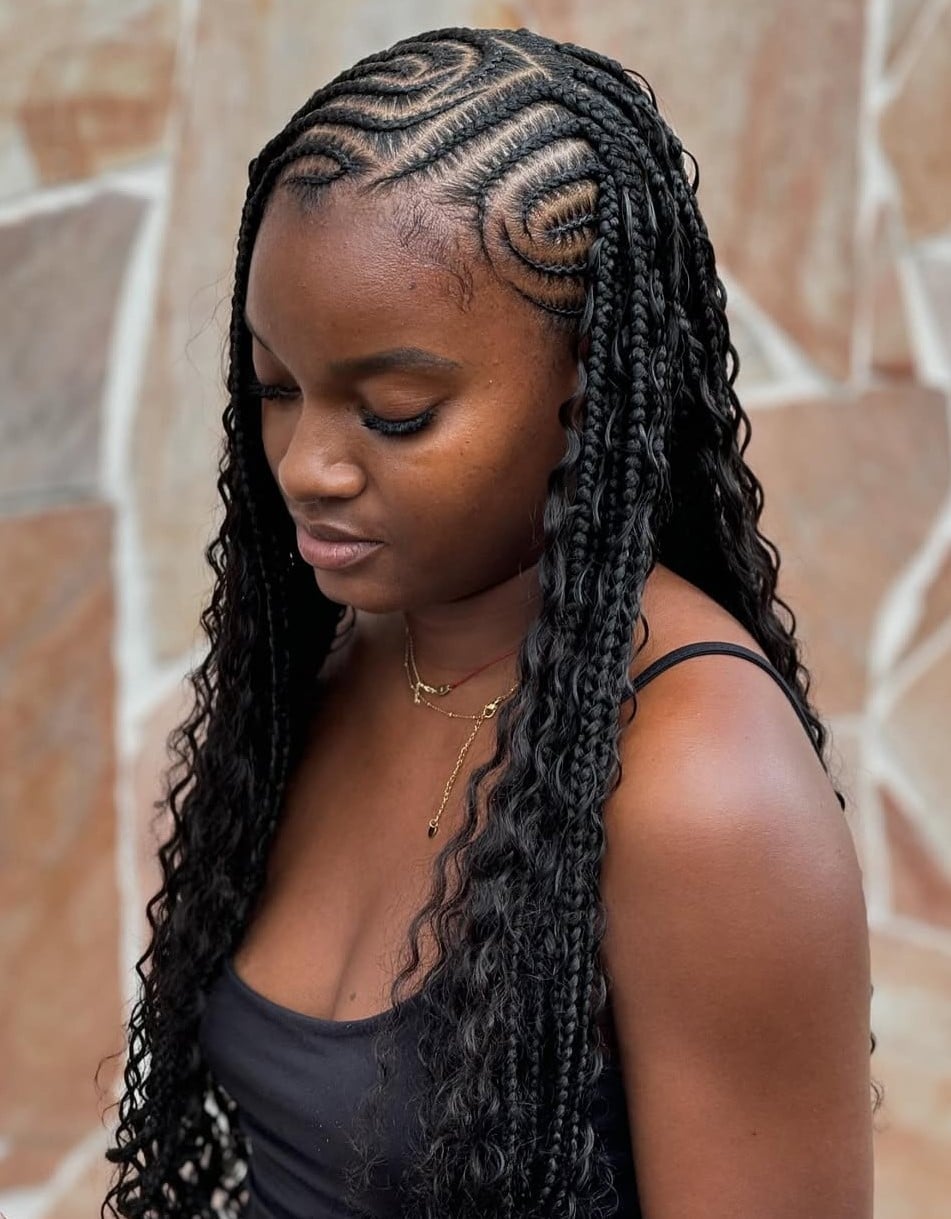
The technique here layers two braid methods: tight cornrows carved into geometric patterns on the scalp, then box braids that continue down to mid-back with wavy ends. The side parting breaks the symmetry just enough to keep it from feeling like a blueprint. Ask your stylist for: cornrows with long wavy box braids and a side parting. Each cornrow is fed into a box braid section, so the transition line is invisible if the tension stays consistent. The deep black color makes the scalp patterns read clearly, and the wavy ends add volume without extra bulk at the root. This structure holds for about four weeks before the wavy ends need re-dipping in hot water or a curl refresher to keep their form.
Cornrows Into High Ponytail With Blue Accents
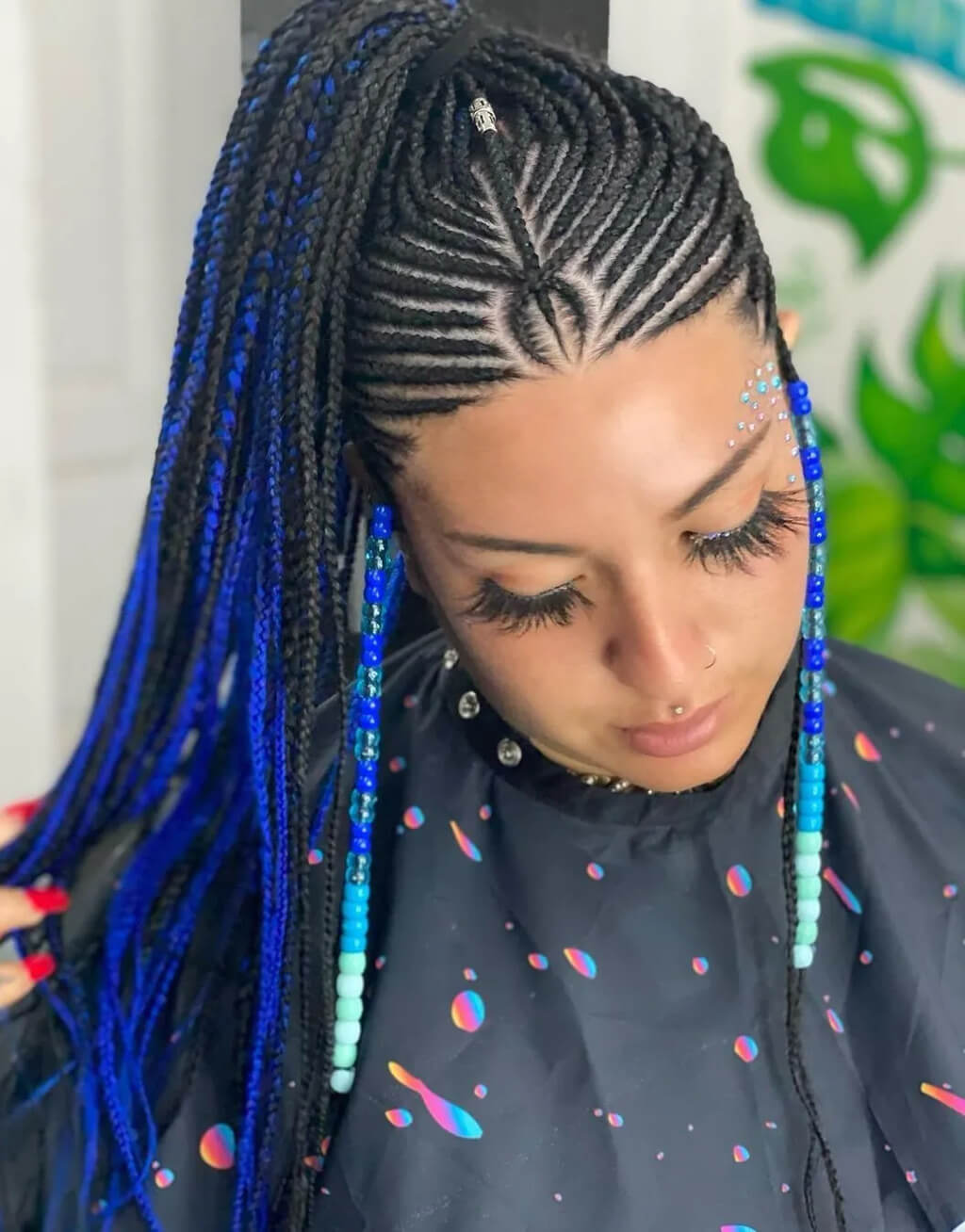
The cornrows here form a central pattern on the scalp before gathering into a high ponytail of long, straight braided extensions, with vibrant blue streaks and blue and turquoise beads threaded throughout. Ask your stylist for: cornrows into a high ponytail with blue streaks and beads. The blue streaks require a pre-lightening step that adds two to three hours to the install, and the beads can snag on scarves and collar edges if you move fast. The ponytail sits high enough to swing freely, but the beads mean the base needs to be braided tightly to avoid tugging at the scalp after week two. This style requires a salon visit, and the color commitment is real: the blue will fade to a pale green-blue in about four weeks without a color-depositing conditioner.
Geometric Cornrows With Dark Brown Braids
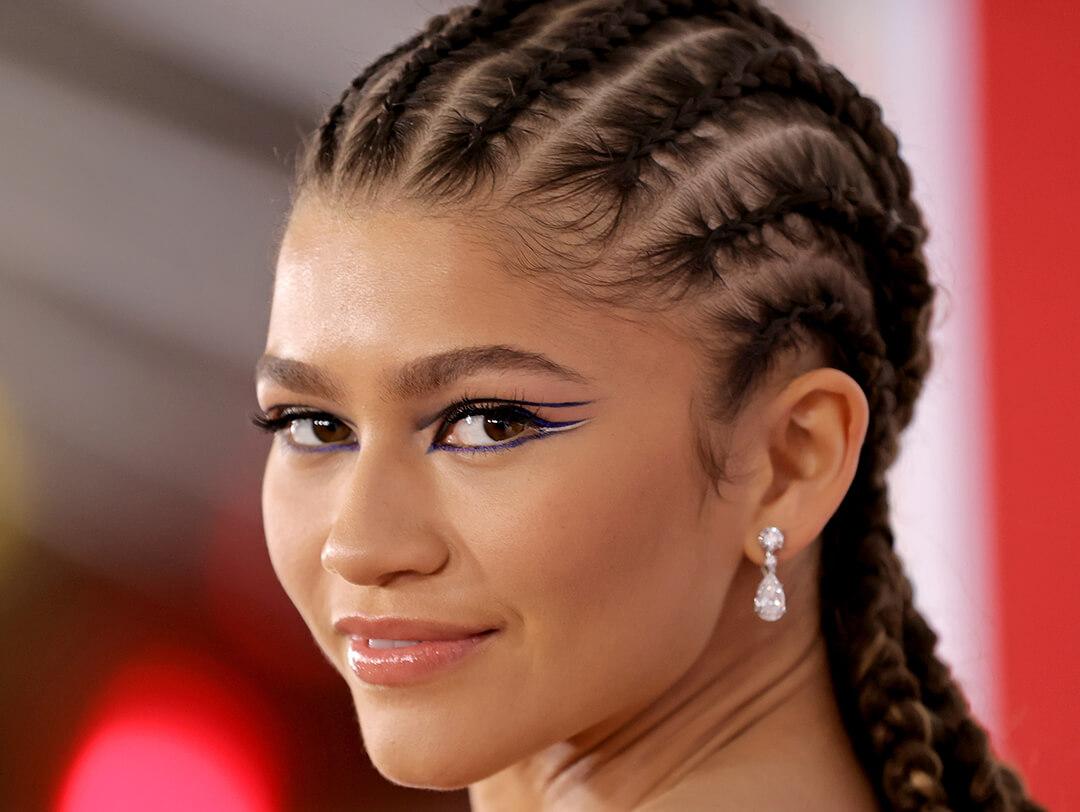
The cornrows here are carved into clean geometric lines across the scalp, then transition into long, thick braids that fall past mid-back in a deep dark brown with a sleek, polished finish. The middle part keeps the geometry centered and readable. Ask your stylist for: geometric cornrows transitioning into long dark brown braids. The scalp pattern stays defined for roughly three to four weeks before new growth softens the edges, but the dark brown base means the grow-out is less obvious than on a lighter color. A satin scarf or bonnet at night protects the sleek finish from friction, and a light oil on the braid shafts prevents the strands from looking dry by week three. The thick braids hold their weight well without excessive tugging at the root.
Final Thoughts
For a lower-maintenance option that still reads as put-together, go with larger box braids and a straightforward scalp pattern. If you want the full effect, choose an intricate geometric cornrow layout and add a few small silver beads or a single highlight shade.
- Keep scalp clean with a cotton pad and diluted witch hazel between braids.
- Apply a light oil to braid shafts daily to prevent frizz.
- Sleep in a silk or satin bonnet to reduce friction.
- Avoid tight pulling to protect edges and scalp.
- Schedule re-braiding every 6 to 10 weeks as hair grows.
Classy tribal braids offer refined artistry and lasting style.