 Save
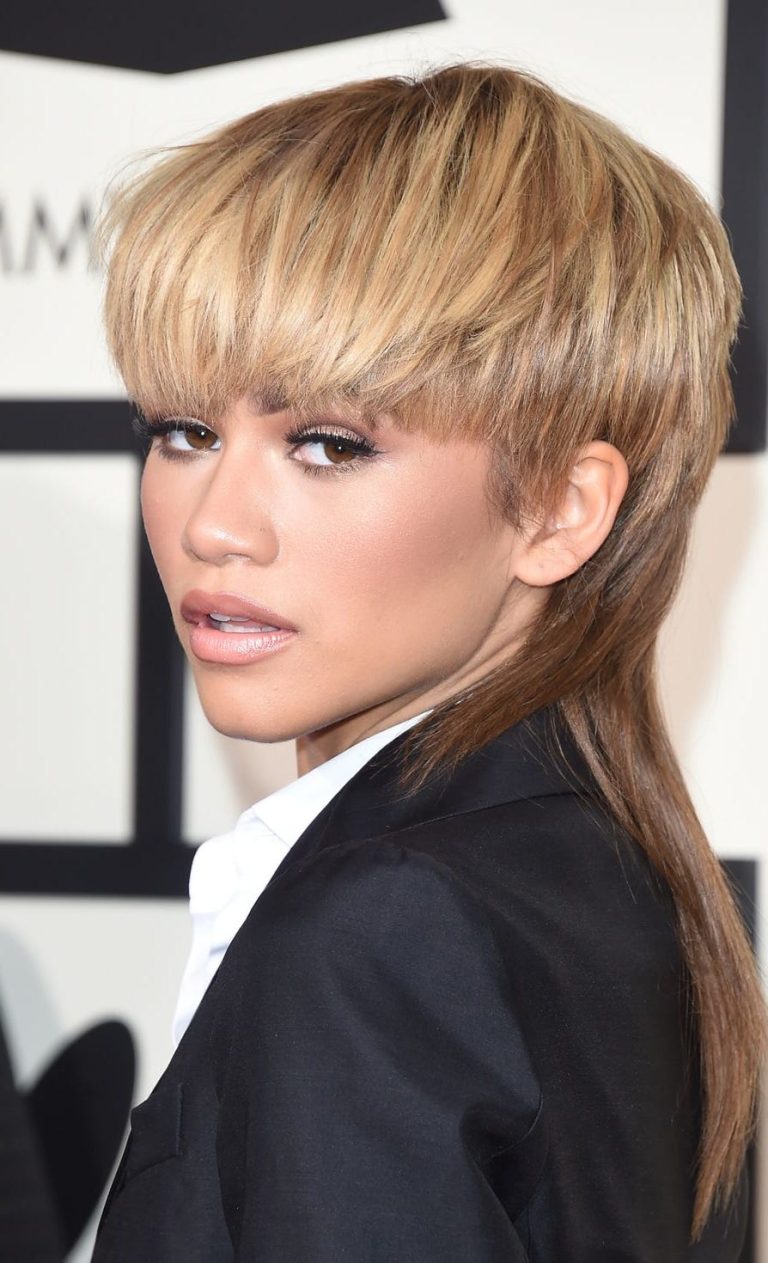
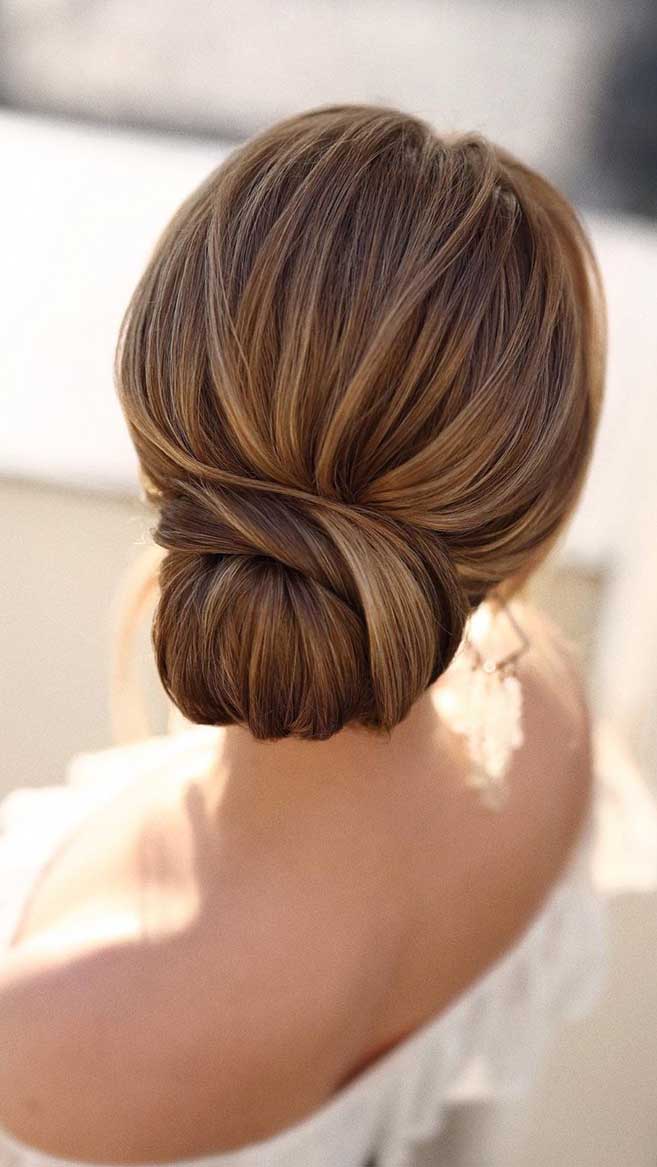
This collection of haircuts focuses on shape, length, layers, and bangs, with a clear shift toward soft face-framing sections and lived-in color that does not demand a salon visit every four weeks. The photos move from short, textured pixies to long, cascading layers, so you can see how the same fringe or layering technique translates across different lengths.
Trendy Hair Pictures gives you 20 looks that solve specific problems: fine hair that needs density without bulk, a blunt bob that shows every split end, or a fringe that refuses to sit still. Each section tells you who the cut suits, what to ask for, and how often you need a trim to keep it honest.
21 ideas in this post
- Textured Pixie Cut Ear Length
- Ash Blonde Textured Pixie With Fringe
- Air-Dried Fine Curly Bob
- Air-Dried Wavy Bob With Textured Ends
- Sleek Chin Length Black Bob
- Dark Brown Blunt Bob With Face Framing
- Chin Length Bob With Curtain Bangs
- Shoulder Length Blunt Cut With Full Bangs
- Collarbone Lob With Blunt Ends
- Collarbone Layers With Face Framing
- Ash Blonde Lob With Side Swept Bangs
- Layered Lob With Curtain Bangs
- Vivid Teal Collarbone Cut With Curtain Bangs
- Textured Shag With Curtain Bangs
- Collarbone Layers With Dark Blonde Highlights
- Mid-Back Wavy Hair With Balayage
- Mid-Back Wavy Hair With Curtain Bangs
- Mid-Back Sand Beige Blonde With Balayage
- Mid-Back Dark Brown With Blonde Balayage
- Long Cascading Layers Deep Chocolate Brown
- Final Thoughts
Textured Pixie Cut Ear Length
A pixie cut that ends around the ear uses deliberate texture to keep the shape from looking like a uniform helmet. Fine, straight hair that is short or willing to go short gets the most movement out of this approach, and it works well with oval and square face shapes. Ask your stylist for: short textured pixie, ear length, straight finish. Apply a texturizing paste or wax to damp hair and style upwards or to the side; you will need salon cuts every four to six weeks to keep the silhouette precise.
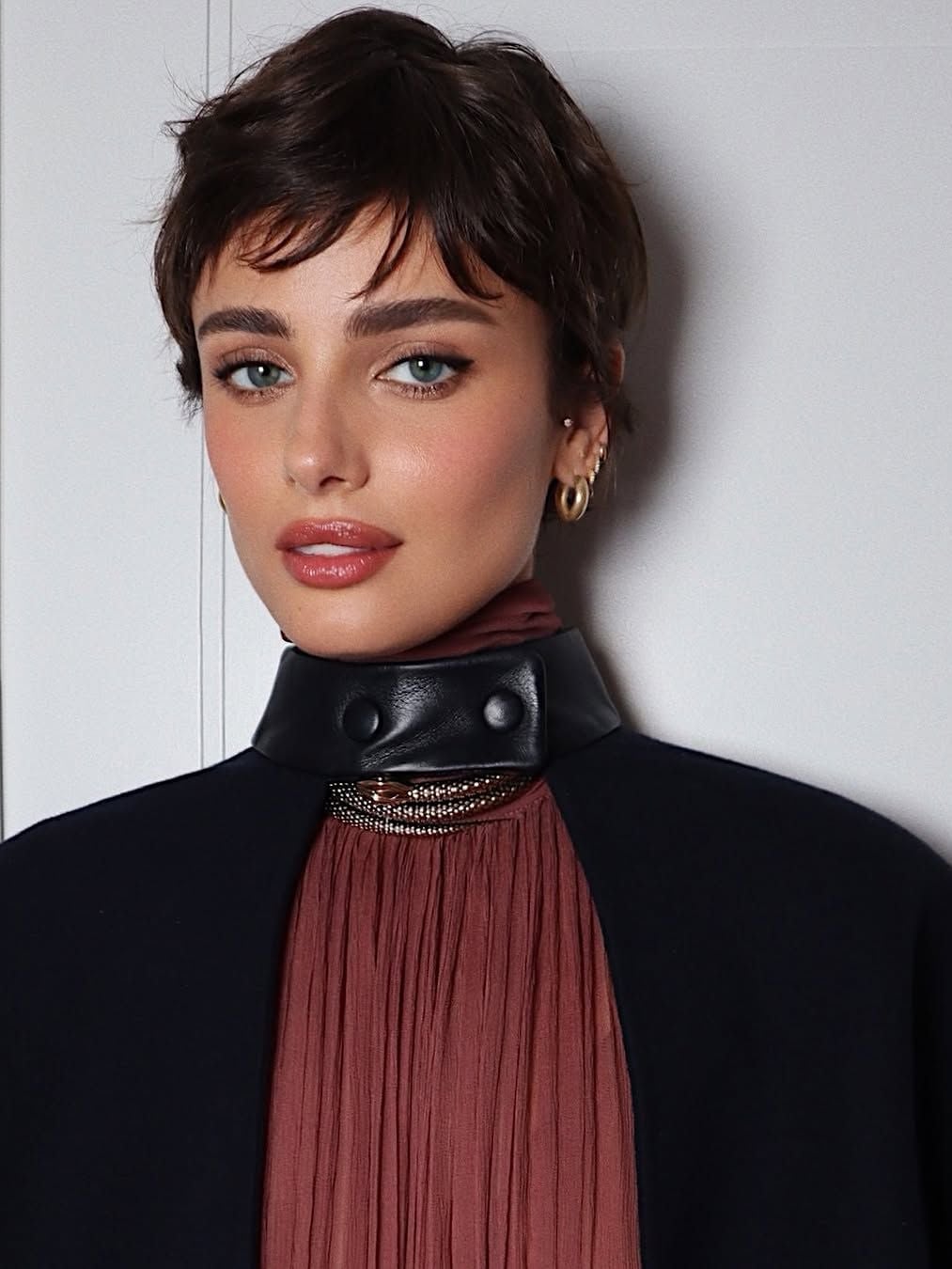
Ash Blonde Textured Pixie With Fringe

The ash blonde shade here is cool and matte, which reads as modern rather than brassy. The styling technique creates that swept-back effect on the fringe by working a matte wax or pomade through damp hair from front to crown, directing everything back. Ask your stylist for: textured pixie, ash blonde, short fringe, swept back. A trim every four to six weeks maintains the sharp perimeter, and the side parting adds lift at the root for fine, straight textures.
Air-Dried Fine Curly Bob
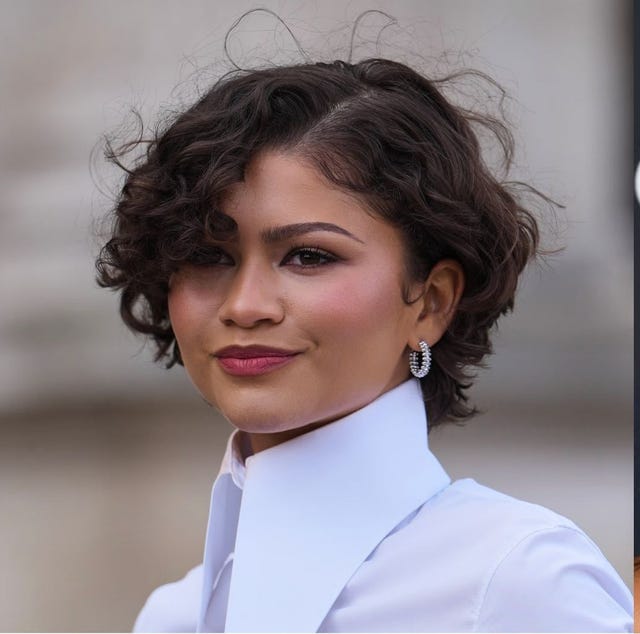
Can fine curls hold a shape at ear length without product overload? Yes, when the cut is layered to release density and the styling routine stops at a curl cream on damp hair. The air-dried finish here lets the natural S-pattern do the work, and the subtle lighter tones add dimension to the dark brown base. Ask your stylist for: short curly bob, air-dried finish, ear length. Avoid brushing when dry to prevent frizz, and plan for a trim every six to eight weeks to keep the curl shape bouncy rather than weighed down.
Air-Dried Wavy Bob With Textured Ends
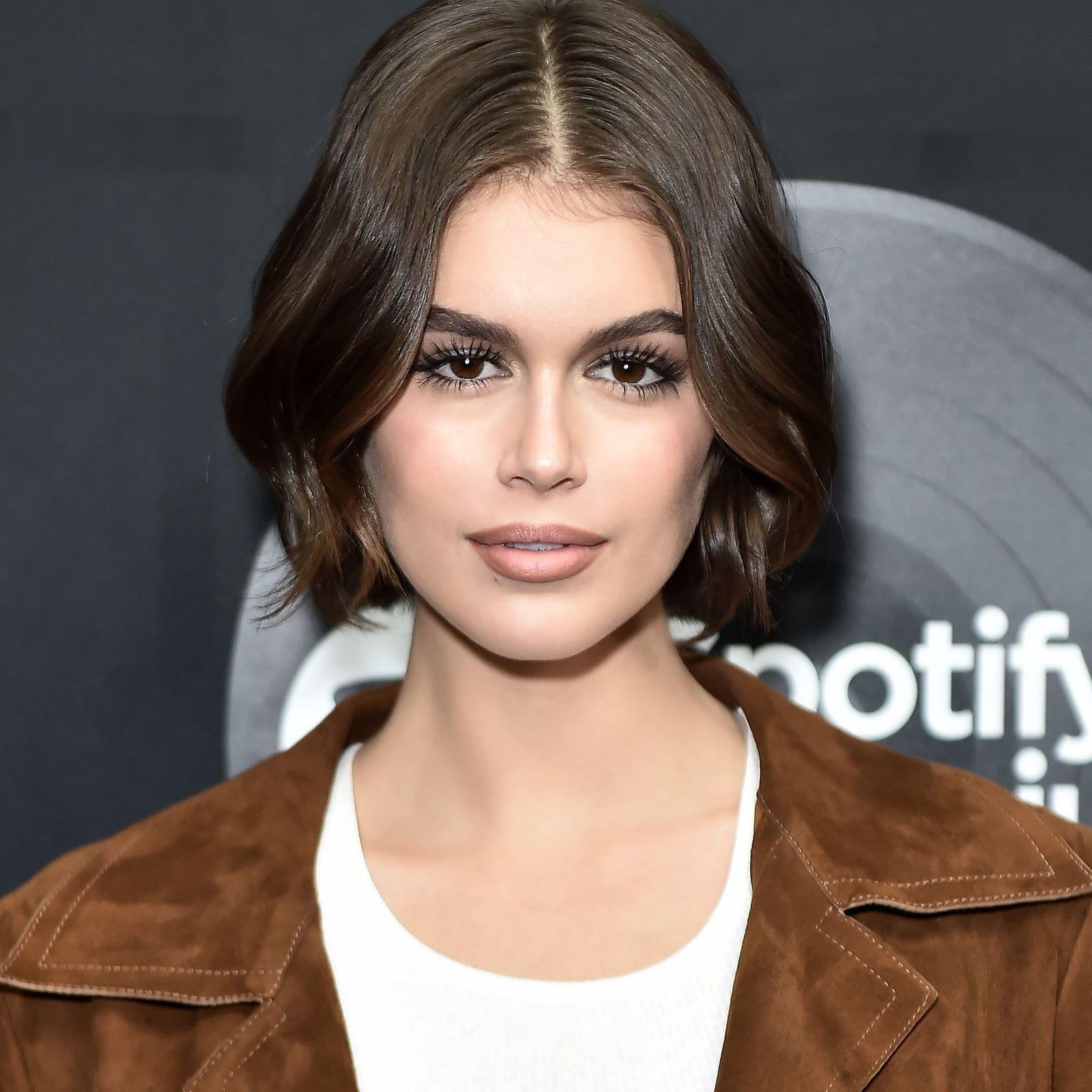
The textured ends on this ear-length bob are what separate it from a blunt line that can look heavy on fine wavy hair. Ask your stylist for: ear length bob, textured ends, air-dried finish. The key is subtle internal layering that removes weight without creating visible choppy steps. A sea salt spray on damp hair, followed by a scrunch and air dry, encourages the wave to bend at the softened ends. A trim every eight to ten weeks keeps the texture intentional and crisp.
Sleek Chin Length Black Bob
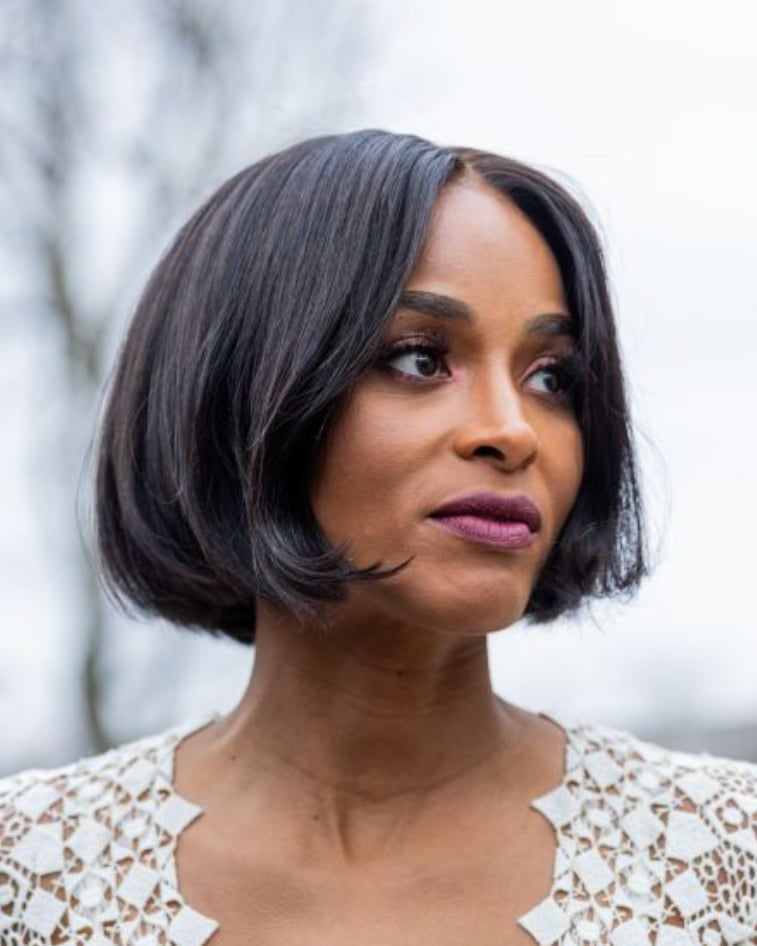
A chin length black bob with a sharp, clean line is the opposite of a soft, blended lob. That uncompromising edge works best on fine, straight hair to maintain a crisp silhouette without flipping. Ask your stylist for: chin length sleek bob, sharp line, no bangs. Apply a smoothing serum and flat iron for a glassy finish. Expect to book a trim every six to eight weeks, because even a quarter inch of growth dulls the precision that makes this cut work.
Dark Brown Blunt Bob With Face Framing
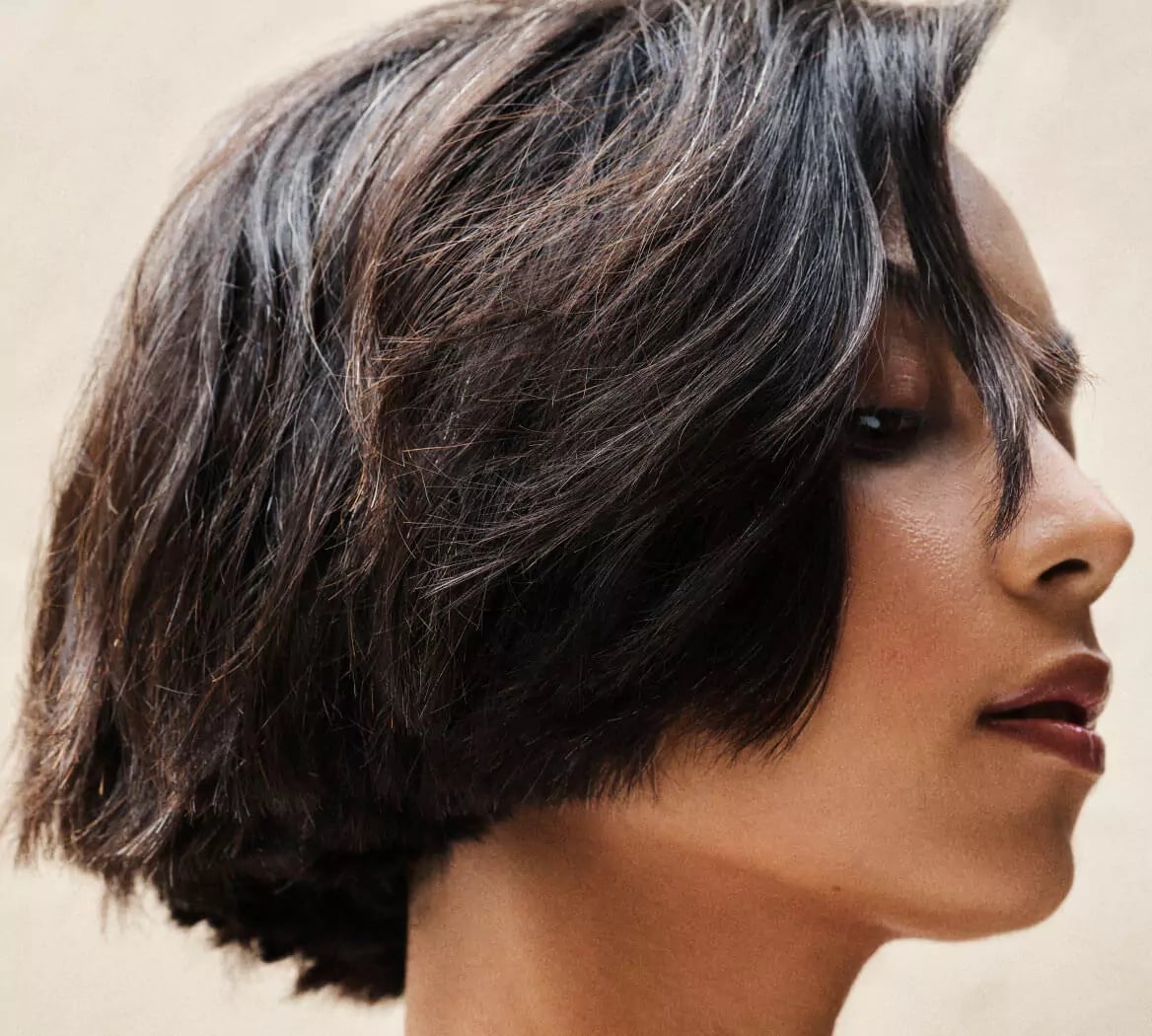
A blunt bob that ends at the chin relies on a clean, unbroken line, which means medium density straight hair can support it without looking heavy. The face-framing pieces tucked behind one ear add asymmetry that keeps the shape from reading as too severe. Ask your stylist for: chin length blunt bob, face framing pieces. This cut works best if your hair starts at chin length and you want a softener for a square jaw. A round brush and a blow dryer are your main tools to keep those tucked ends smooth.
Chin Length Bob With Curtain Bangs
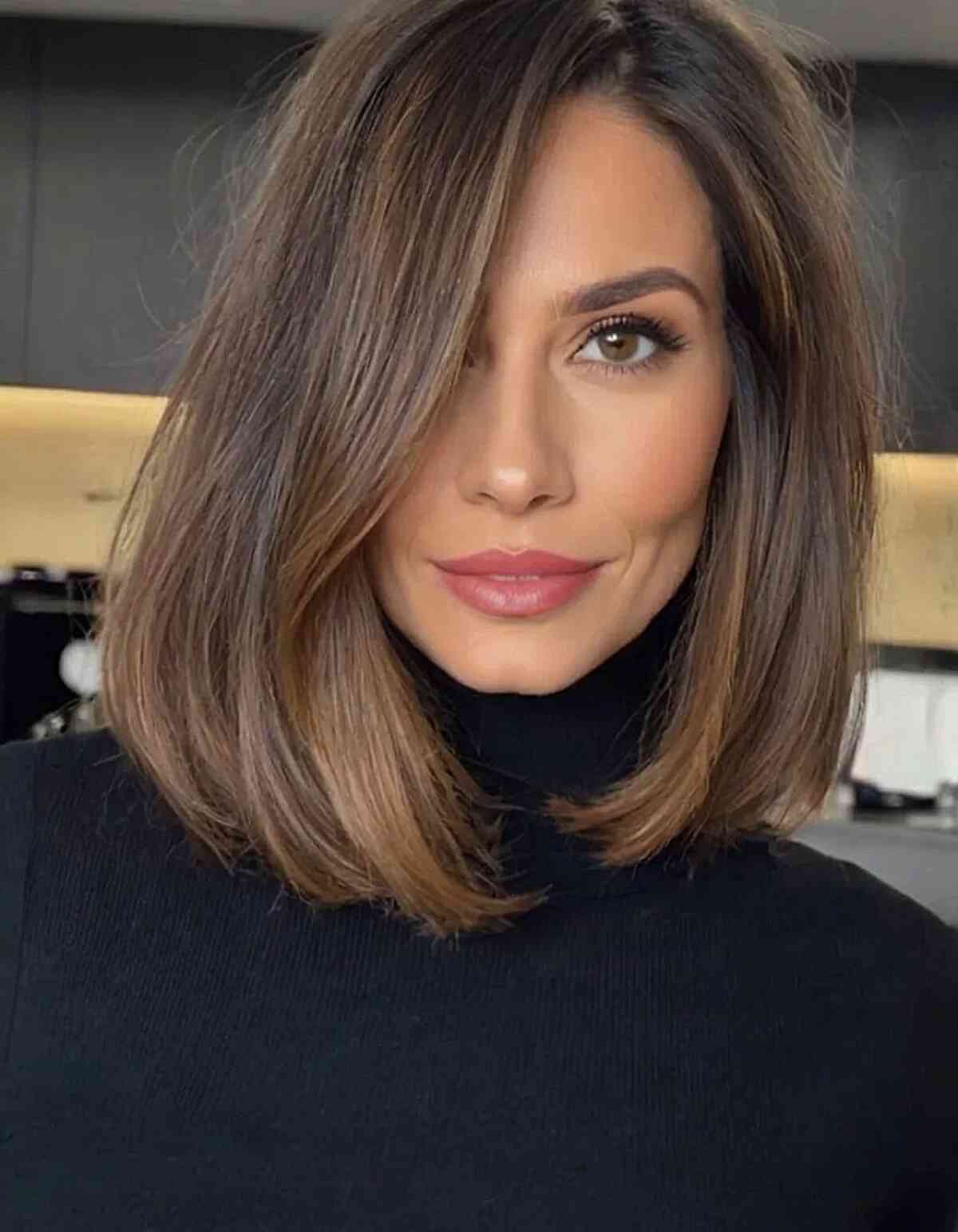
Can you have curtain bangs with a bob that short? Yes, if the pieces are cut to graze the cheekbones and blend into the length. The technique involves cutting the bangs so they open around the center part and feather into the sides, which creates a soft frame instead of a hard line. For fine hair, this prevents the bangs from looking sparse.
Ask your stylist for: chin length bob, soft layers, curtain bangs. The subtle balayage highlights add depth so the curtain pieces catch a little light. A round brush and a quick blow-dry are all you need to sweep them into place.
Shoulder Length Blunt Cut With Full Bangs

A shoulder-length blunt cut with full bangs is a high-maintenance commitment disguised as a low-effort look. Those bangs fall just above the eyes, which means a trim every three to four weeks unless you enjoy poking yourself in the lashes. The blunt line through the body of the hair keeps the shape strong even as the bangs grow out, but you will want a smoothing cream to stop the ends from fluffing. Ask your stylist for: shoulder length blunt cut, full straight bangs. Fine, straight hair starting at shoulder length carries this cut best, and the full bangs balance a longer face nicely.
Collarbone Lob With Blunt Ends
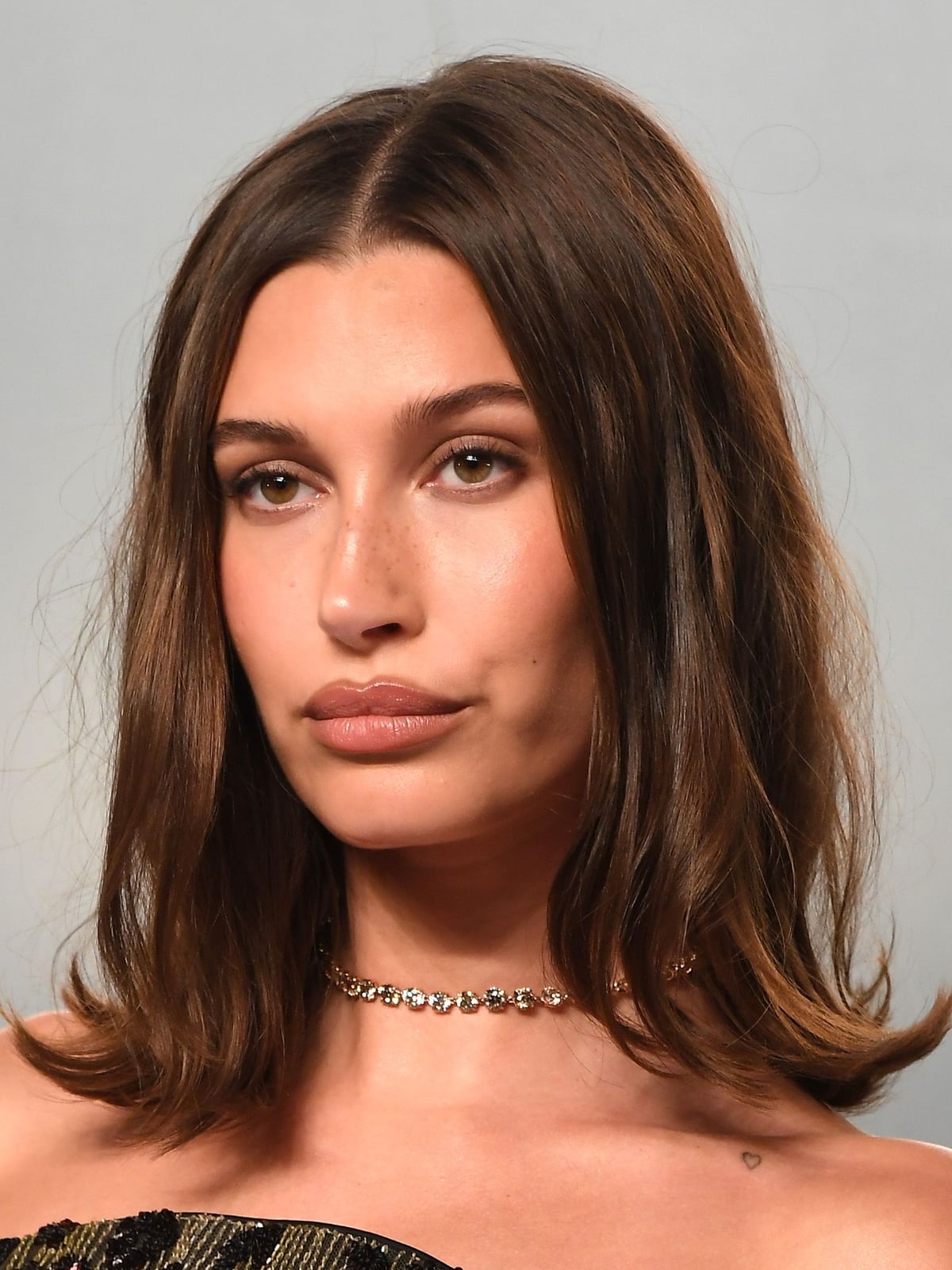
A collarbone length lob with blunt ends is a cut that looks finished with minimal styling. The air dried finish here still looks polished because the blunt ends create a single weight line, so a slight bend at the ends is enough. The subtle balayage adds a bit of dimension without demanding a highlight appointment every month.
Ask your stylist for: collarbone length lob, blunt ends, air dried finish. This is a solid DIY option: wash, apply a shine product, and walk out the door. The trade off is that the blunt ends show every split end, so plan for a trim every eight weeks. Fine, straight hair starting at collarbone length gets the most mileage from this shape.
Collarbone Layers With Face Framing
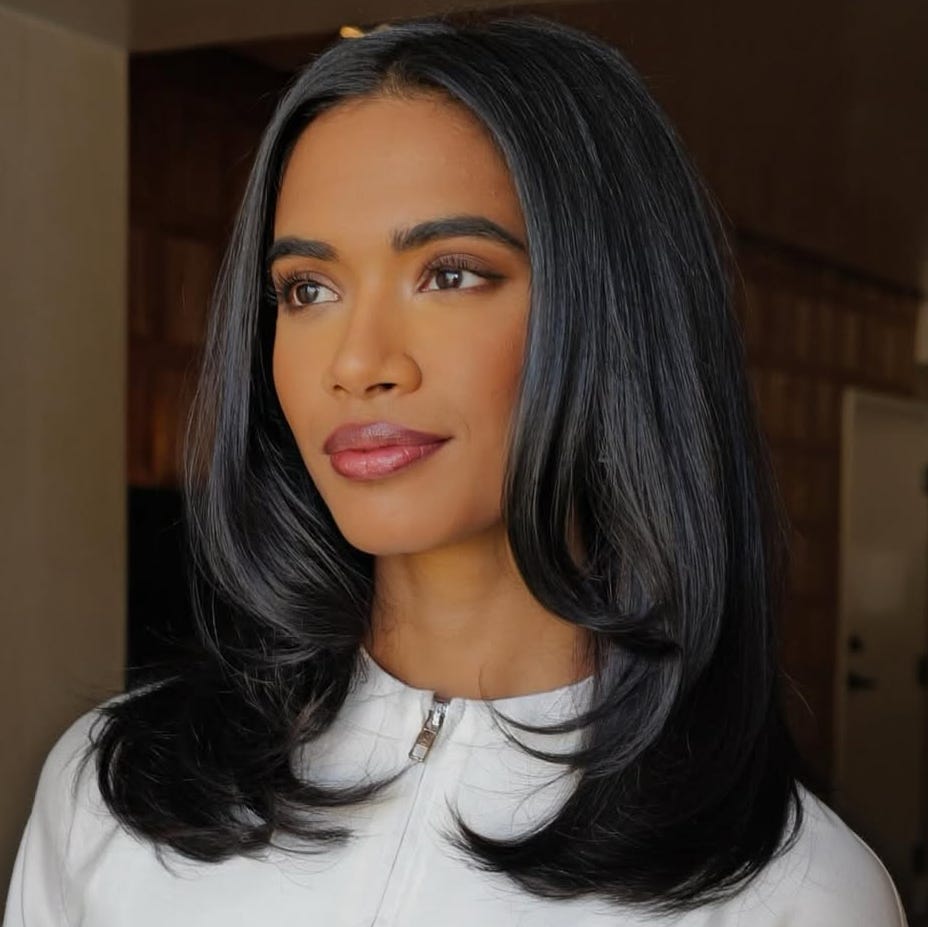
How do you ask for face-framing layers that actually frame your face? Specify the length: the shortest piece should hit around the chin or jaw, then cascade into the collarbone. The middle parting here lets the layers fall symmetrically on both sides, which softens the perimeter of the cut without losing the overall length.
Ask your stylist for: collarbone length with face-framing layers. Medium density wavy hair is ideal because the layers keep the waves from piling up into a triangle shape. A round brush on the face-framing pieces is enough to give them direction; the rest can air-dry into its natural wave.
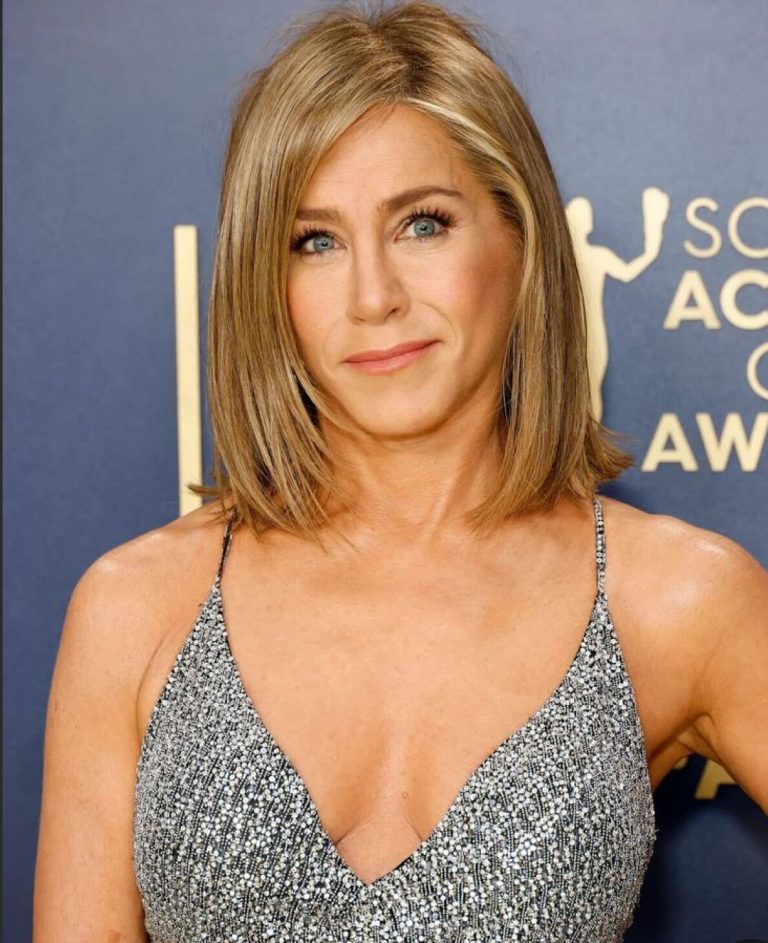
Ash Blonde Lob With Side Swept Bangs
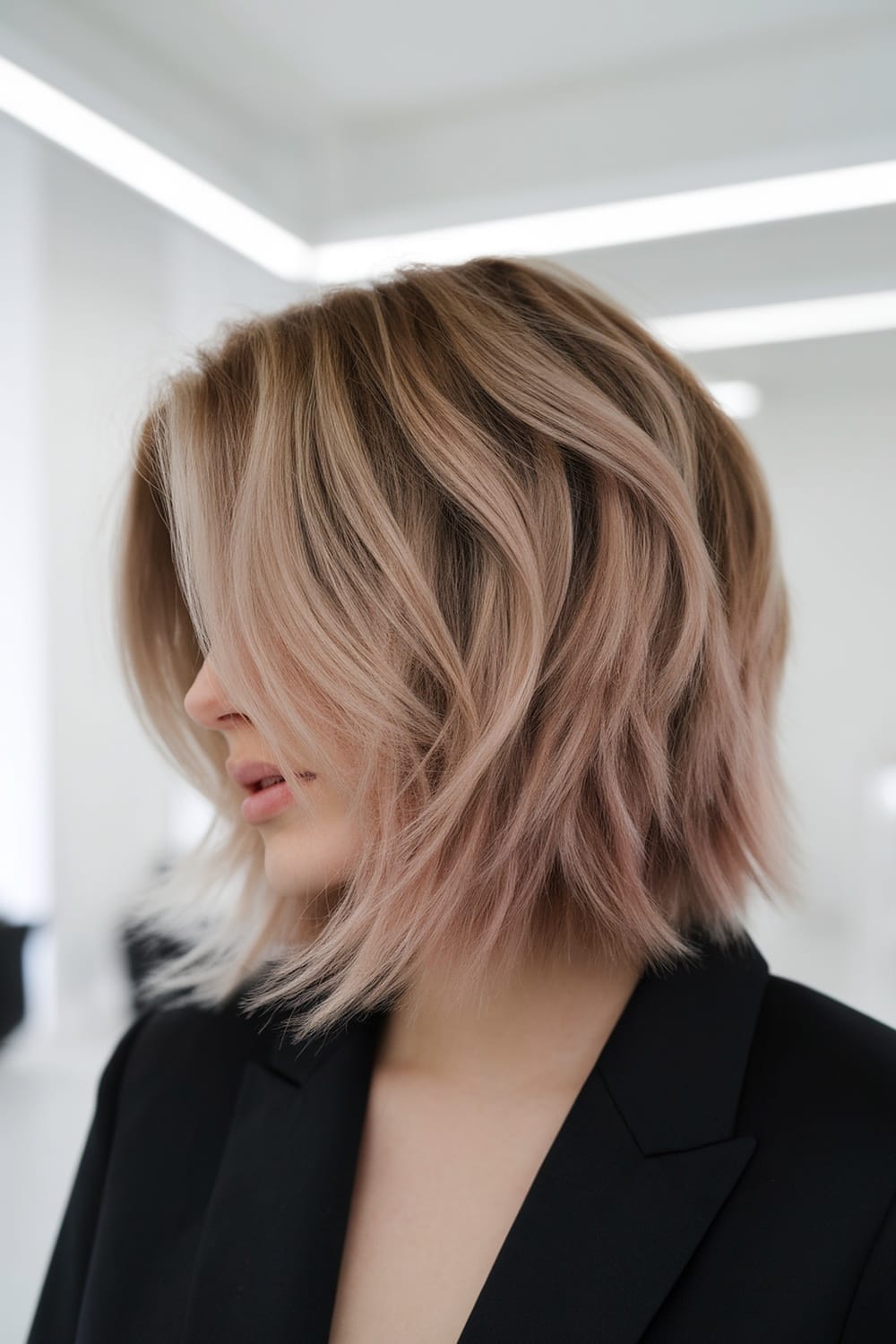
This is a collarbone-length cut with soft layers and side-swept bangs, anchored by an ash blonde base with a root shadow and subtle babylights. The side part and gentle waves keep it from reading as overly polished, which is the point for spring. Medium-density wavy hair starting at collarbone length works best here, and the bangs help balance a round face. Ask your stylist for: collarbone lob, soft layers, side swept bangs, ash blonde with root shadow. To style the bangs, use a small round brush and a blow-dryer. The babylights will need a toning appointment every six to eight weeks to keep the ash tone from drifting warm.
Layered Lob With Curtain Bangs
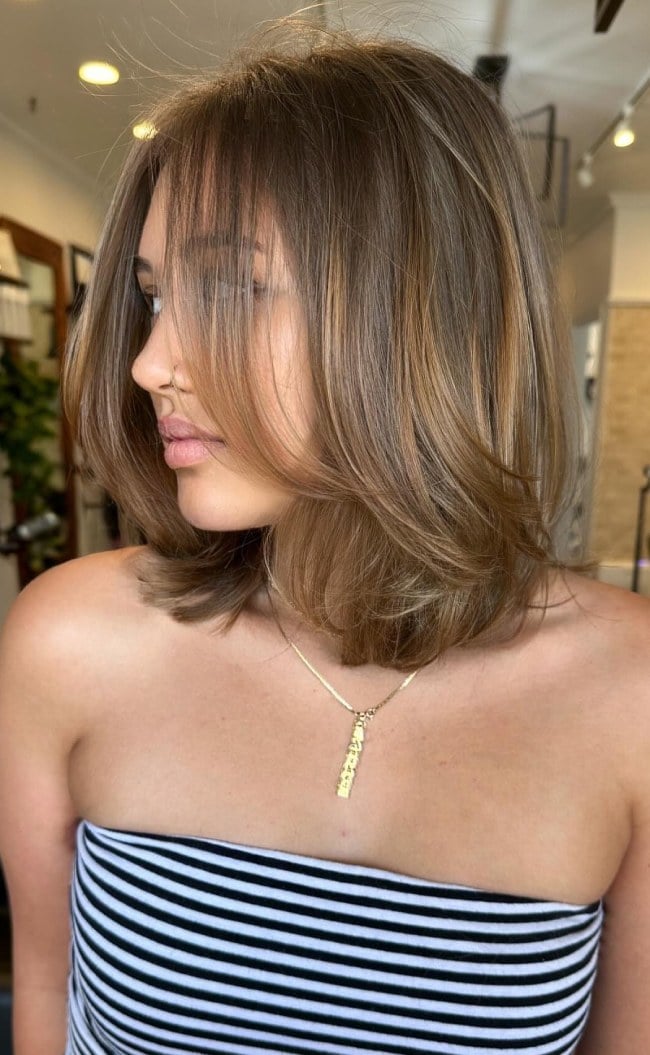
The layering here does the work. A collarbone-length lob with internal layers removes weight through the midsection, so the hair moves without looking stringy. Curtain bangs soften the perimeter and blend into the face-framing pieces, while the mocha bronde base with subtle highlights adds depth without a harsh regrowth line. Medium-density wavy hair starting at collarbone length is ideal, and the curtain bangs help soften a square or angular jaw. Ask your stylist for: layered lob, collarbone length, curtain bangs, mocha bronde. Blow-dry the bangs with a large round brush, directing them outward, and plan a trim every eight to ten weeks to keep the shape.
Vivid Teal Collarbone Cut With Curtain Bangs
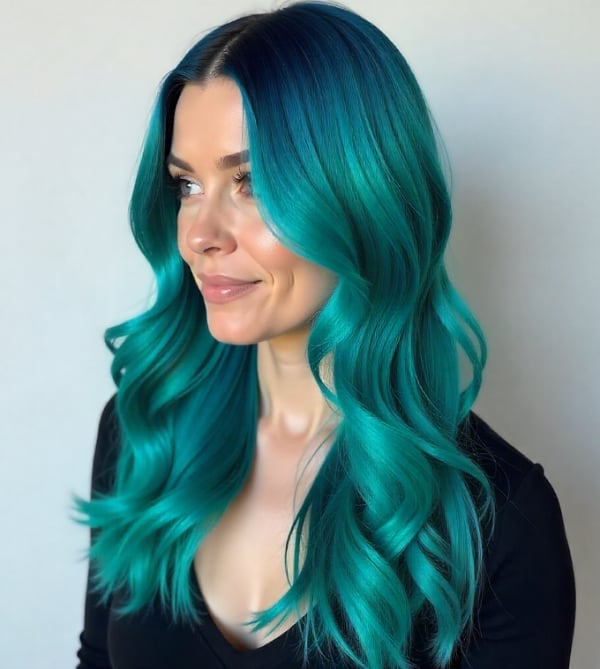
The dark roots ground the vivid teal, so the color looks deliberate. A shoulder-length cut with long layers and curtain bangs keeps the silhouette soft enough that the bright shade doesn’t overwhelm the shape. This is a salon-only proposition, and the trade-off is that vivid teal demands more maintenance than a neutral tone. Ask your colorist for: vivid teal color with dark roots, curtain bangs. A color-safe shampoo and weekly deep conditioning will slow the fading, but expect to refresh the shade every four to six weeks to avoid a washed-out green. Medium-density wavy hair starting at shoulder length can handle this, but be prepared for stained pillowcases and a longer salon visit.
Textured Shag With Curtain Bangs
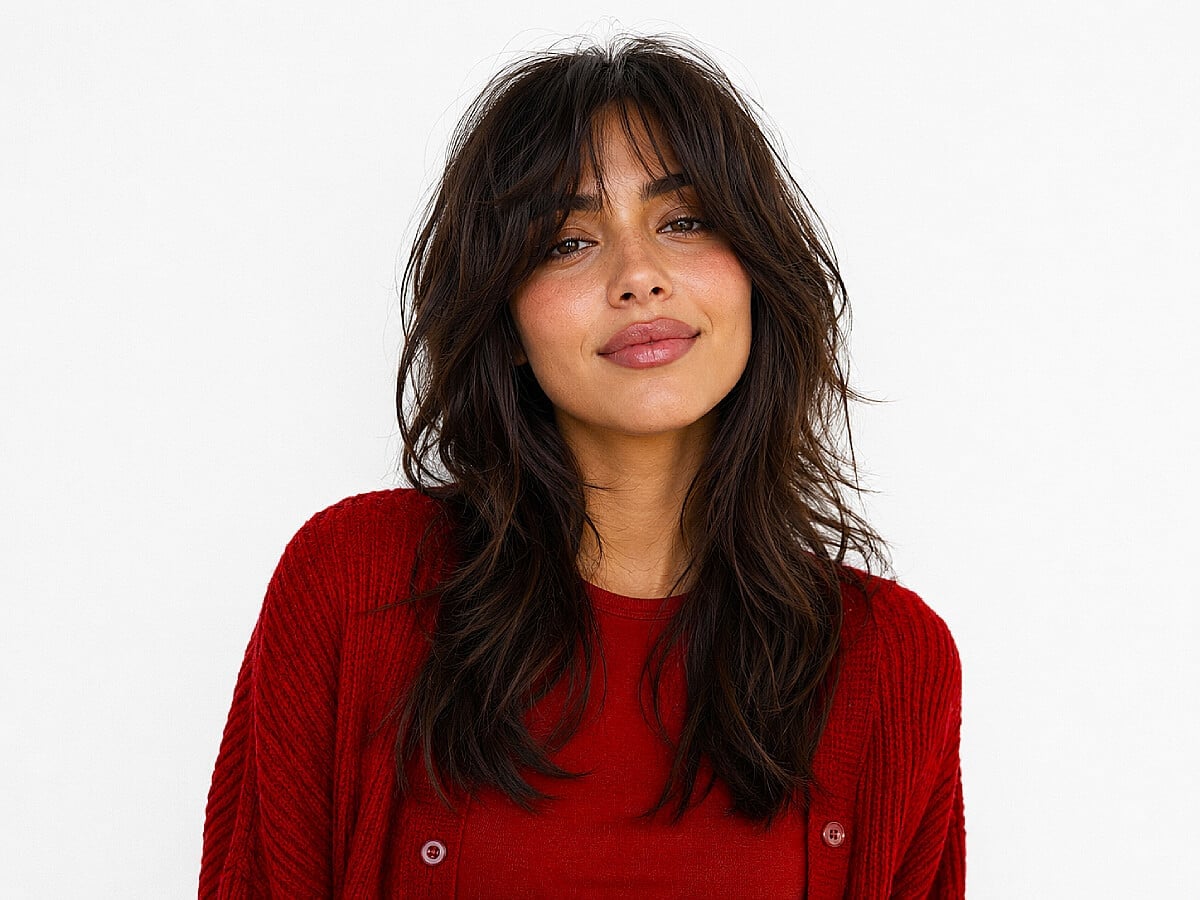
Does your thick, wavy hair tend to sit like a triangle? A textured shag solves that. This collarbone-length cut uses short, stacked layers through the crown and longer pieces through the front, with curtain bangs that blend into the face-framing sections. The dark brown base with subtle highlights adds dimension without competing with the cut’s shape. Thick, wavy hair starting at collarbone length is the sweet spot, and the shag’s graduated layers suit most face shapes. Ask your stylist for: textured shag, collarbone length, curtain bangs. To style, apply a volumizing spray to damp hair and diffuse or air-dry to let the natural wave do the work.
Collarbone Layers With Dark Blonde Highlights
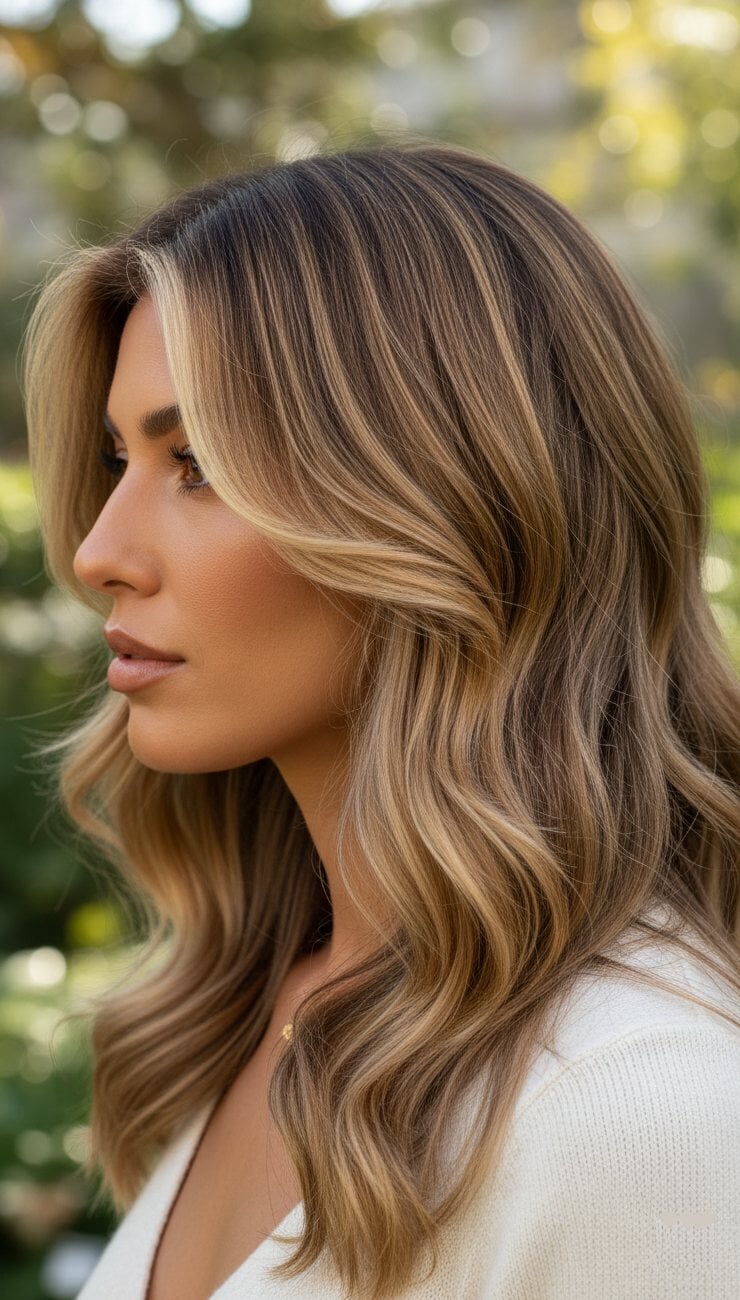
The face-framing layers here are cut to graze the jaw, which draws attention to the collarbone line. A collarbone-length cut with long layers and curtain bangs, finished in a dark blonde base with lighter highlights, creates a soft contrast without a stark root line. Fine, straight hair starting at collarbone length benefits from the layers, which add the illusion of volume. Curtain bangs also help soften a square face. Ask your stylist for: collarbone length layers, curtain bangs, dark blonde with highlights. To style, apply a smoothing serum for shine, then blow-dry the fringe forward with a round brush. Finish with a flat iron for a polished, glossy surface.
Mid-Back Wavy Hair With Balayage
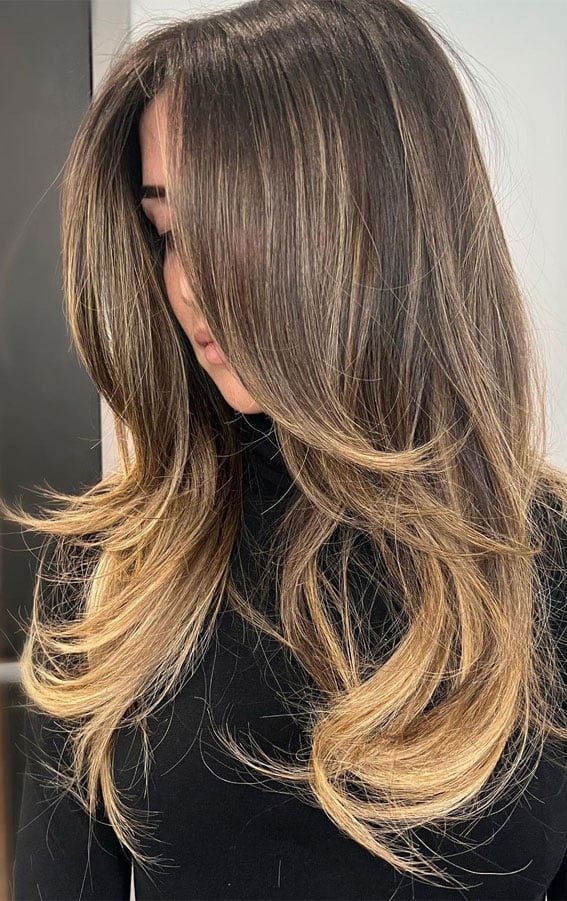
Balayage is the rare technique that makes dark hair look lighter without a harsh root line. On this mid-back length, the blonde highlights are painted on thick, wavy strands, so they catch the light in a lived-in way. The loose waves and face-framing pieces soften the whole effect, which is why it works so well on thick hair that tends to look heavy. Ask your colorist for: mid-back length with loose waves, blonde balayage. A curl cream scrunched through damp hair keeps the wave pattern defined, and a gloss every 8 to 12 weeks refreshes the brightness.
Mid-Back Wavy Hair With Curtain Bangs
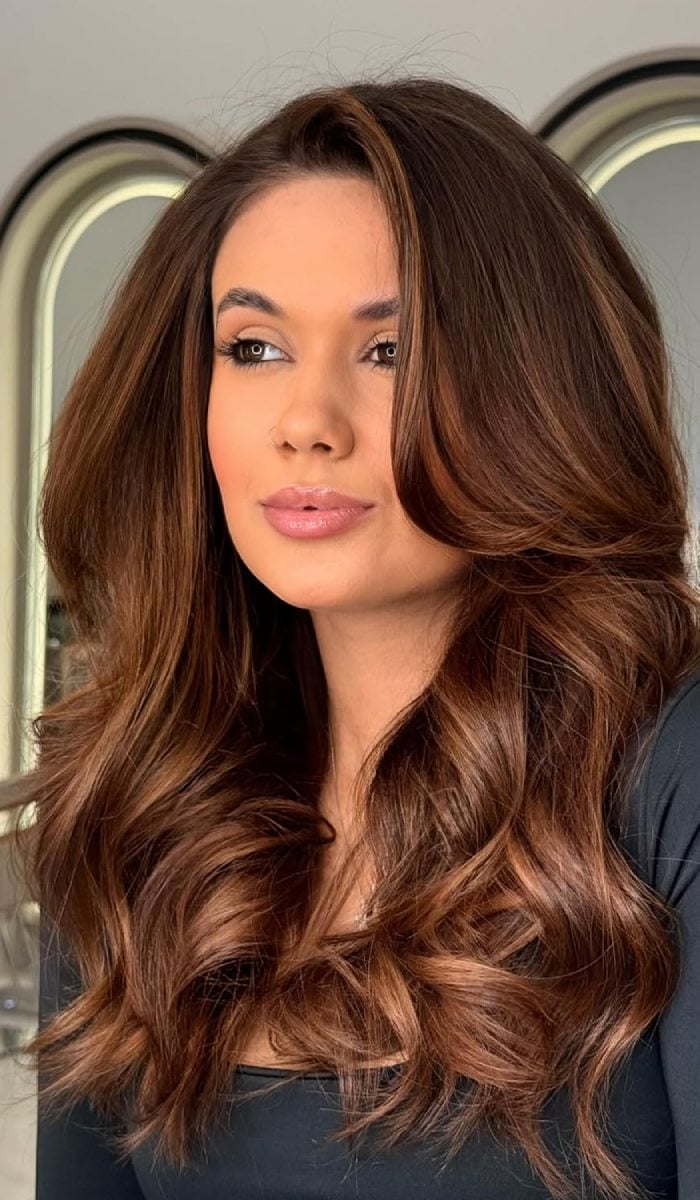
How do you ask for curtain bangs that actually blend with long layers? Start with the exact length: mid-back, with the bangs hitting cheekbone level. The key is asking for them to be cut dry, so the stylist can see how your thick, wavy texture falls. On this warm brown base with subtle lighter highlights, the soft waves and side parting keep the curtain bangs from looking stuck on. Ask your stylist for: mid-back length wavy hair, curtain bangs, warm brown with highlights. A volumizing mousse and round brush give the blowout lift, and a trim every 10 to 12 weeks keeps the layers from losing their shape.
Mid-Back Sand Beige Blonde With Balayage
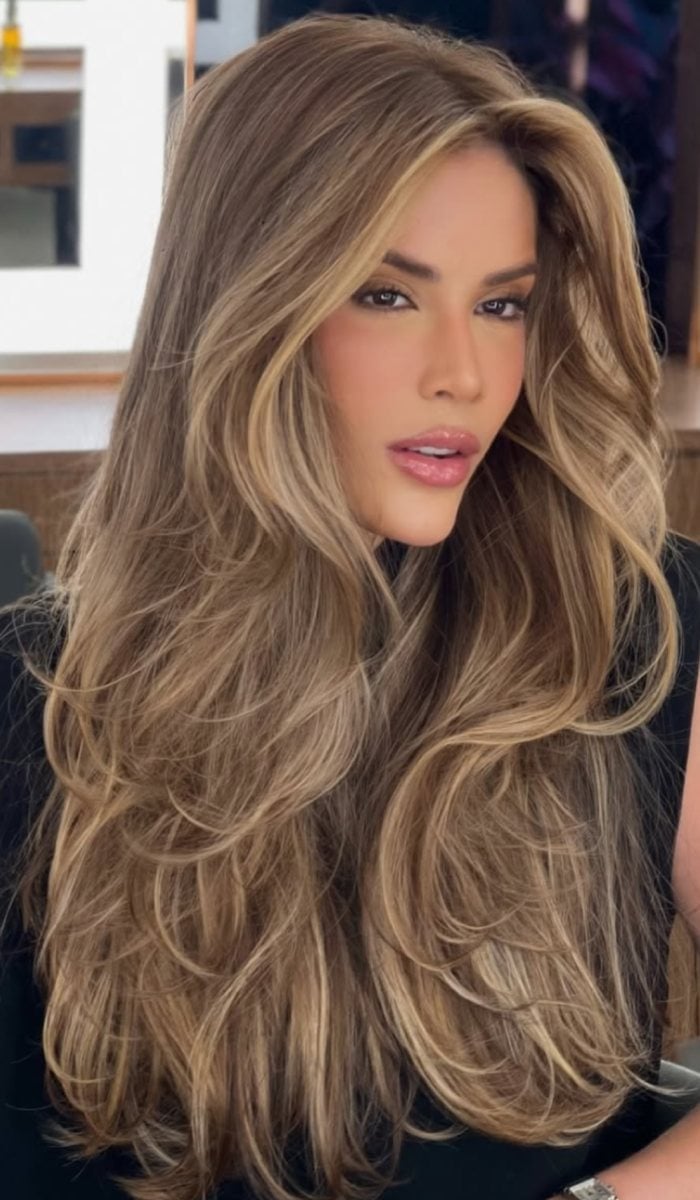
Sand beige blonde sits somewhere between a warm honey and a cool ash, which makes it a useful middle ground if you want dimension without the upkeep of a brighter blonde. The balayage on this mid-back length is painted to look sun-kissed, not striped, and the soft waves help it blend. Curtain bangs frame the face without committing to a blunt fringe. Ask your colorist for: mid-back length wavy hair, curtain bangs, sand beige blonde balayage. A purple shampoo once a week keeps the beige tone from turning brassy, and a trim every 10 to 12 weeks keeps the layers moving.
Mid-Back Dark Brown With Blonde Balayage
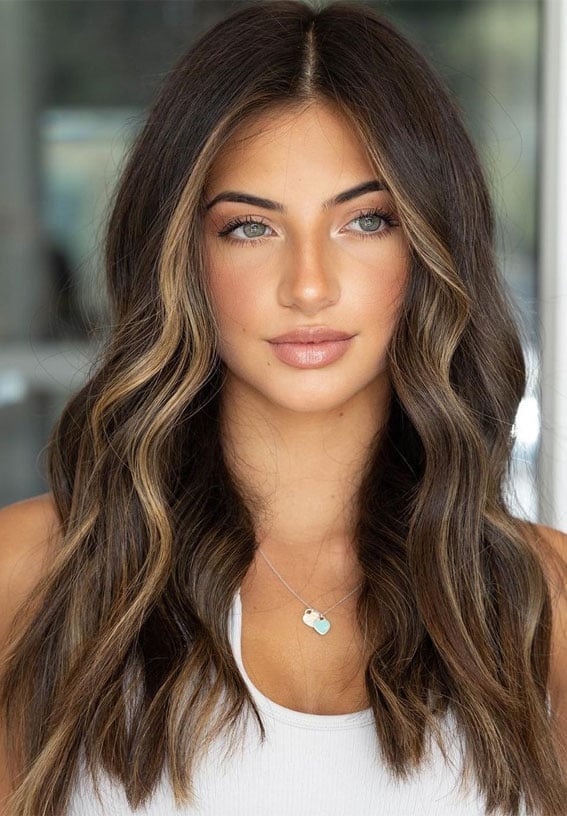
Dark roots with blonde balayage is a low-maintenance color strategy, because the grow-out line is already part of the design. Here, the dark brown base runs through the mid-back length, with blonde highlights concentrated around the face and ends. The face-framing layers and loose waves show off the contrast, and the middle parting keeps the front view balanced. Ask your colorist for: mid-back length wavy hair, face-framing layers, dark brown with blonde balayage. A shine serum on the ends adds polish, and refreshing the balayage every 3 to 4 months is enough to keep the brightness alive.
Long Cascading Layers Deep Chocolate Brown
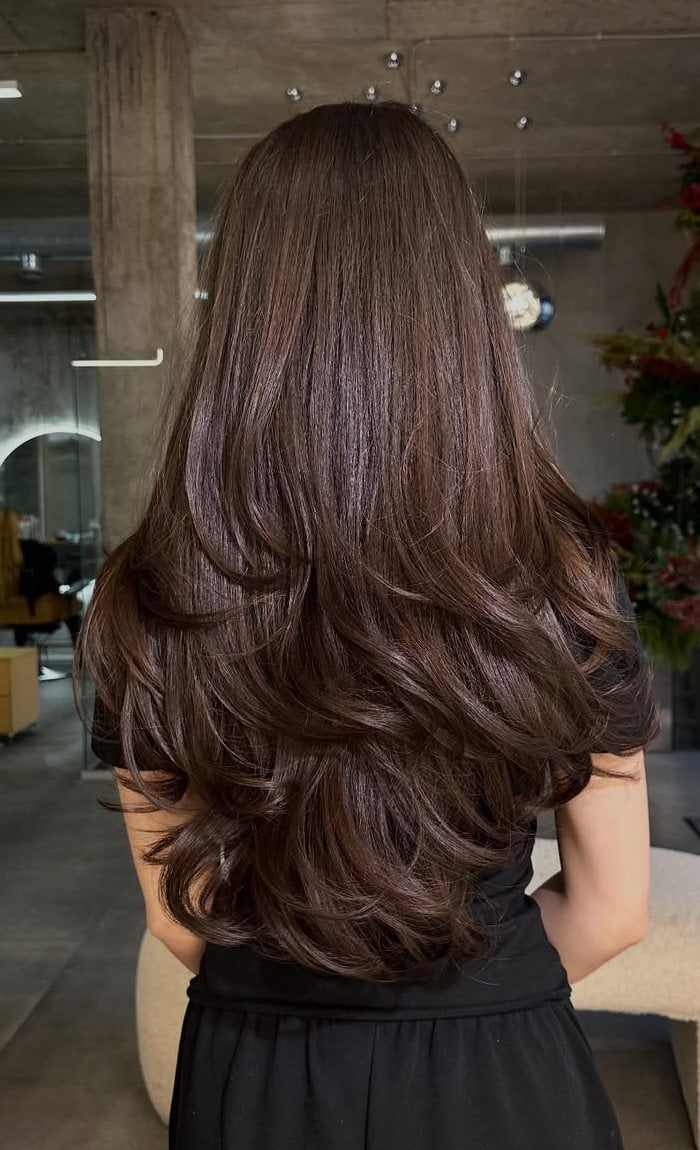
Does long, thick hair always feel heavy? Long cascading layers are the fix. The cut removes weight from the interior while keeping the overall length at mid-back, so the hair moves instead of sitting flat. From the back, the long, soft layers create a waterfall effect that adds volume at the crown and a slight wave at the ends. This is a cut for thick hair that tends to triangle out, since the layers let it fall in a more vertical line. Ask your stylist for: mid-back length with long, soft layers, deep chocolate brown. A large barrel brush gives a smooth blowout, and a trim every 10 to 12 weeks keeps the layers from turning into one blunt block.
Final Thoughts
Fine hair: keep a blunt baseline and skip heavy layers to hold density. Thick hair: let layers do the work of reducing weight and adding movement. Match the cut to your texture and your routine, not just the photo.
- Trim every six to ten weeks to maintain shape.
- Use texturizing spray on waves and layers.
- Condition weekly for glossy, healthy color.
- Apply heat protectant before styling.
- Tone every four to six weeks to keep color fresh.
Choose the cut that best suits your lifestyle and hair texture.