 Save
Ombre hair is a color technique where the ends are lighter than the roots, creating a gradient effect. For 2027, the trend leans toward softer transitions and lived-in color, with less contrast between the base and the lighter sections.
This collection of 20 Ombre Hair Ideas covers everything from subtle, natural blends to bold fantasy shades. You will find options for fine hair that needs volume, a visible grow-out line that requires low upkeep, and bangs that need to sit right. The range moves from short collarbone cuts to mid-back lengths, with both salon-only and more DIY-friendly approaches.
21 ideas in this post
- Dark Blonde To Platinum Blonde Ombre Waves
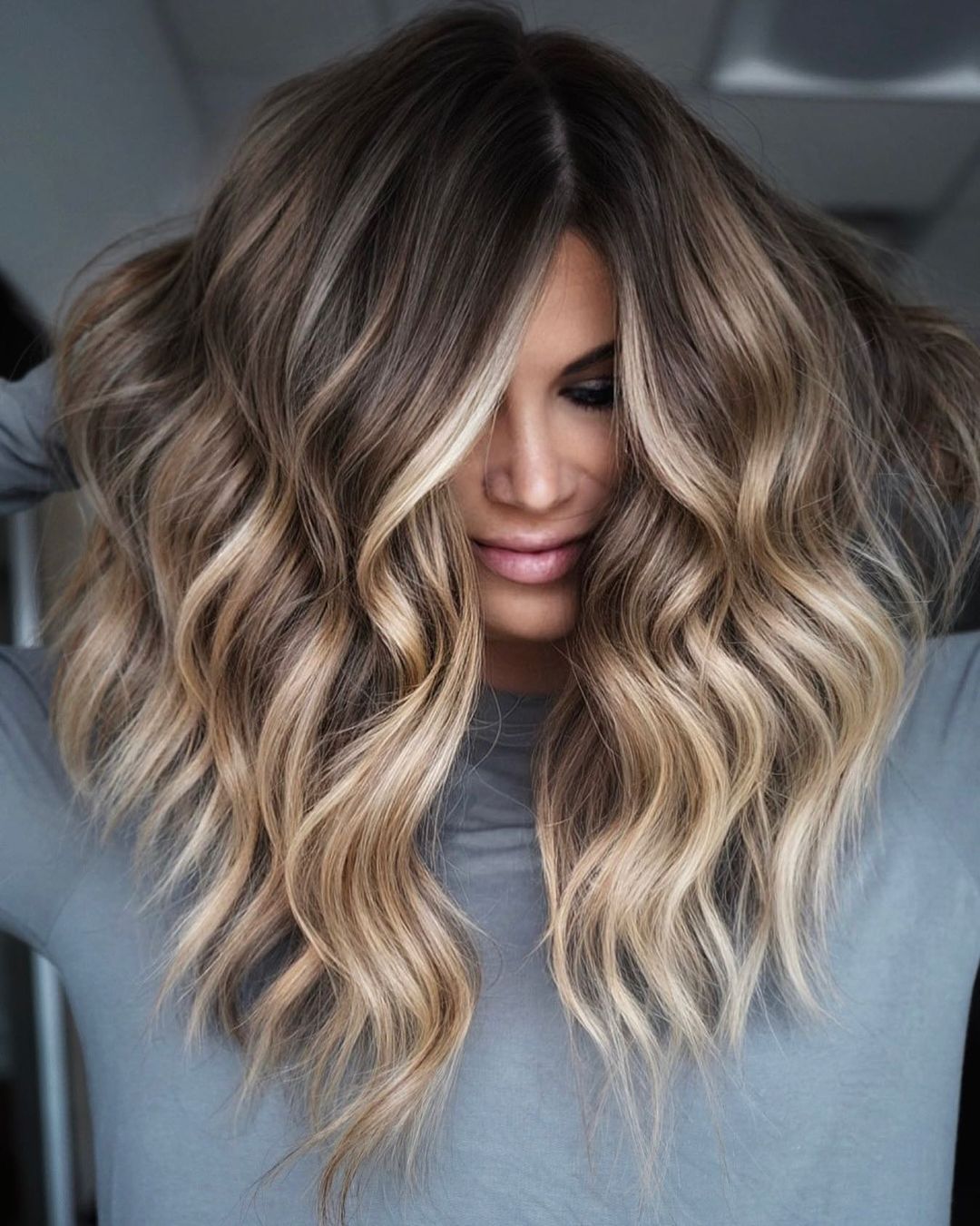
- Dark Brown To Blonde Ombre With Loose Waves
- Collarbone Lob Dark Blonde Light Blonde Ombre
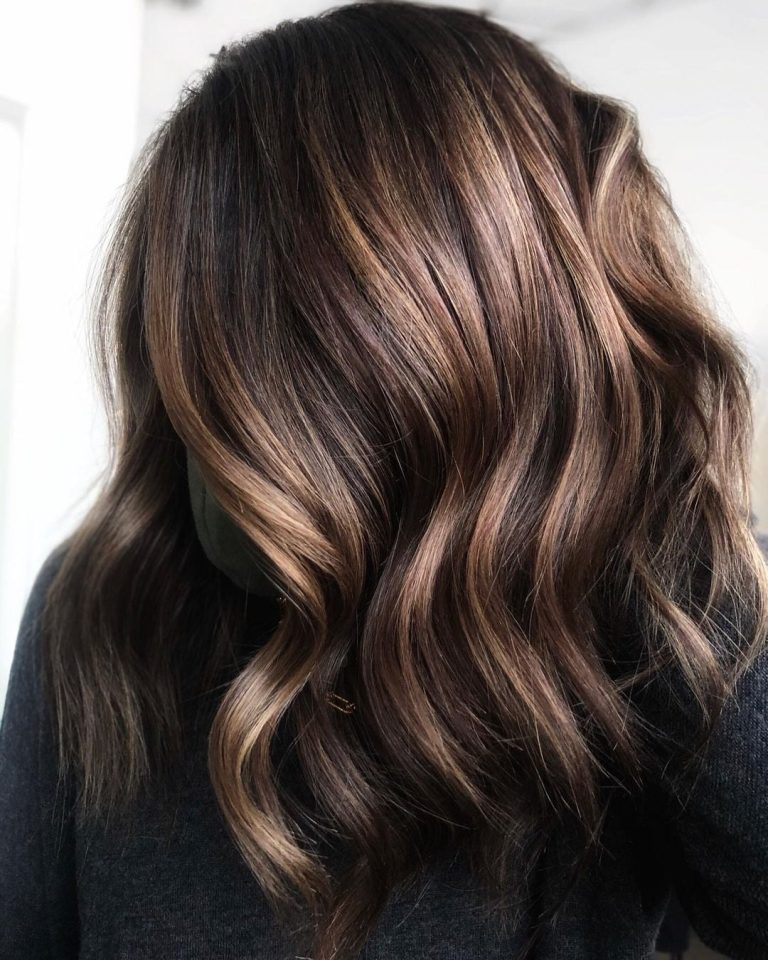
- Shoulder Length Dark Brown Blonde Ombre
- Mid-Back Dark Brown To Blonde Ombre
- Black To Dark Blonde Ombre Collarbone Lob With Wavy Medium
- Medium Brown To Light Blonde Wavy Ombre
- Dark Brown To Blonde Collarbone Ombre
- Dark Brown Lob With Blonde Full Bangs Ombre
- Dark Blonde To Golden Blonde Wavy Ombre
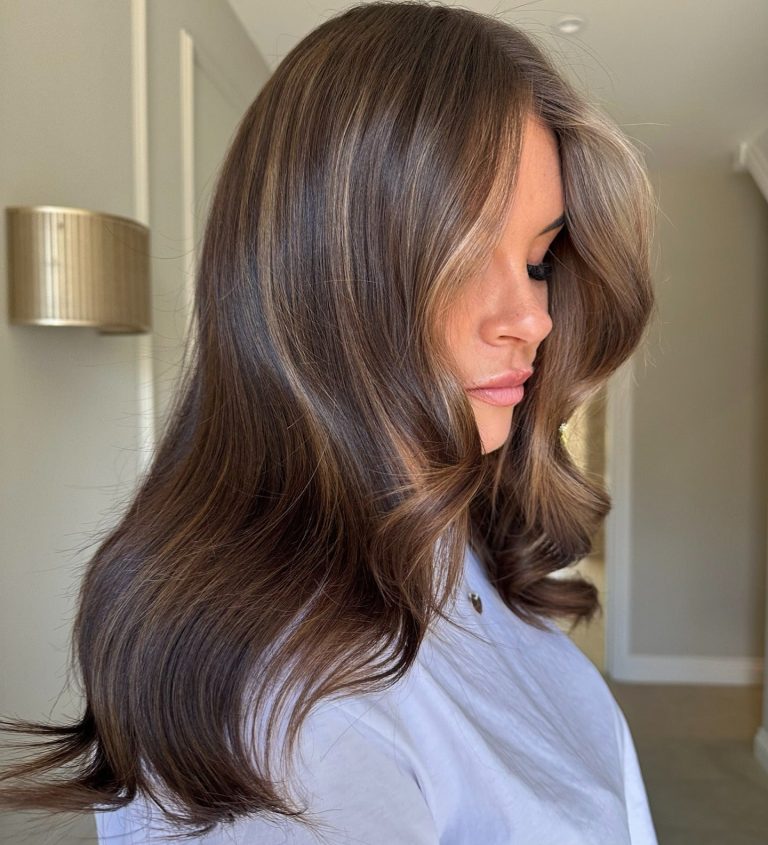
- Medium Brown To Light Brown Ombre
- Dark Red To Copper Red Ombre Lob
- Dark Brown To Fiery Red Ombre
- Black To Silver Ombre With Loose Waves
- Dark Brown To Silver Grey Ombre Bun
- Dark Brown Base With Teal Ombre Curls
- Black To Bright Blue Ombre Long Layers
- Shoulder Length Dark Blue Electric Blue Ombre
- Collarbone Pink To Yellow Ombre Waves, Close-Up Take
- Mid-Back Dark Brown Yellow Ombre, Wavy, Close-Up Take
- Final Thoughts
Dark Blonde To Platinum Blonde Ombre Waves
A dark blonde base that slides into platinum blonde ends is the kind of high-contrast move that announces itself before you turn around. The mid-back length and voluminous waves give the color room to travel, so the transition looks deliberate rather than grown out. Thick, wavy texture holds the shape best; fine hair may need a volumizing product to keep the waves from falling flat under the weight of the lighter ends.
Ask your colorist for: dark blonde to platinum blonde ombre, voluminous waves. The platinum sections require a purple shampoo every second wash to stay cool-toned and avoid brassiness. Plan for a toning appointment every six to eight weeks, plus a trim at the same interval if the ends start feeling dry.
Dark Brown To Blonde Ombre With Loose Waves
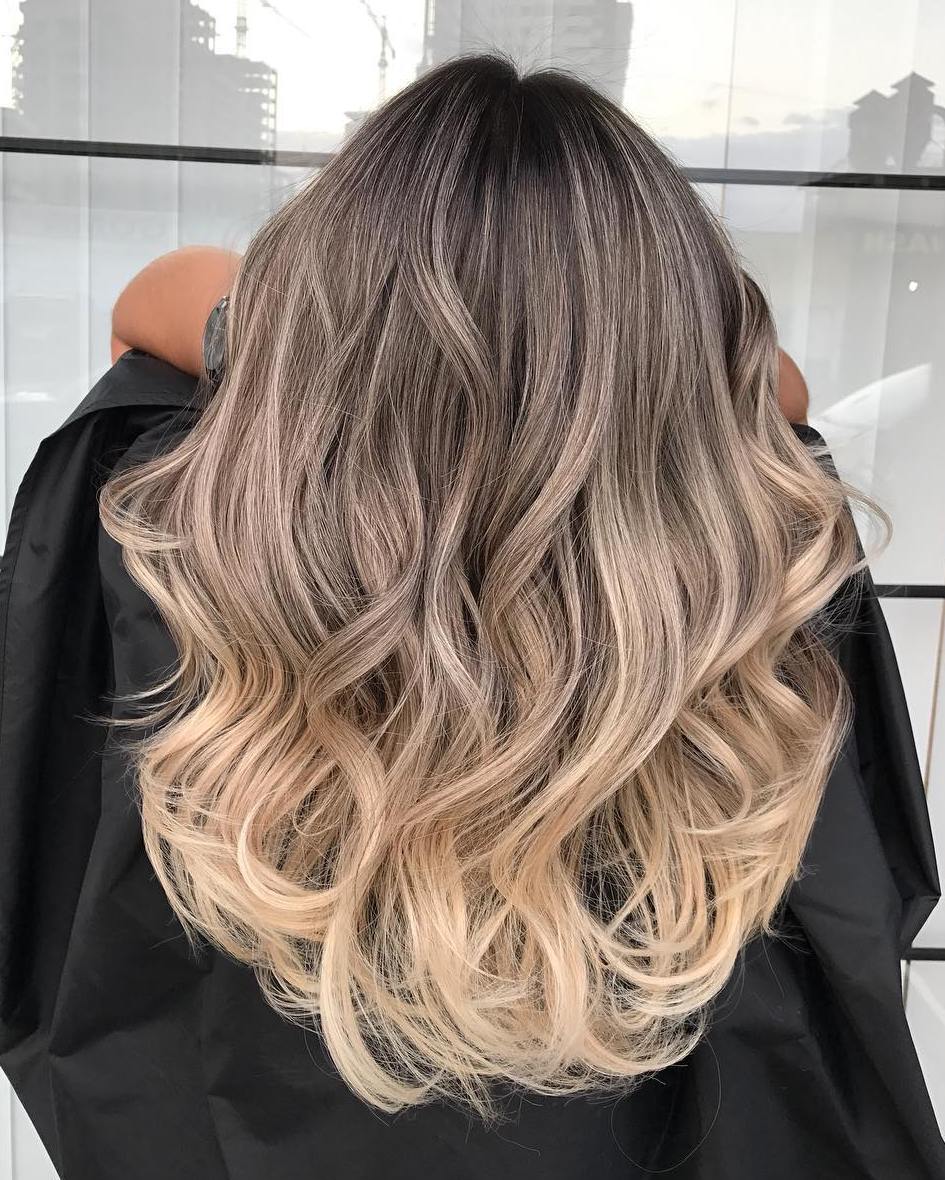
The hand-painted transition from dark brown to bright blonde creates a gradient that looks like the color was poured from root to tip. A middle part lets the ombre run symmetrically down both sides, and the loose waves soften the line where dark meets light. This works best on mid-back length or longer, since a shorter canvas would compress the gradient into a stripe.
Ask your colorist for: dark brown to bright blonde ombre, loose voluminous waves. The application is done freehand, so the blend avoids harsh bands. Because the base is dark brown, the grow-out is forgiving; you can stretch toning to ten weeks if you keep the ends conditioned.
Collarbone Lob Dark Blonde Light Blonde Ombre
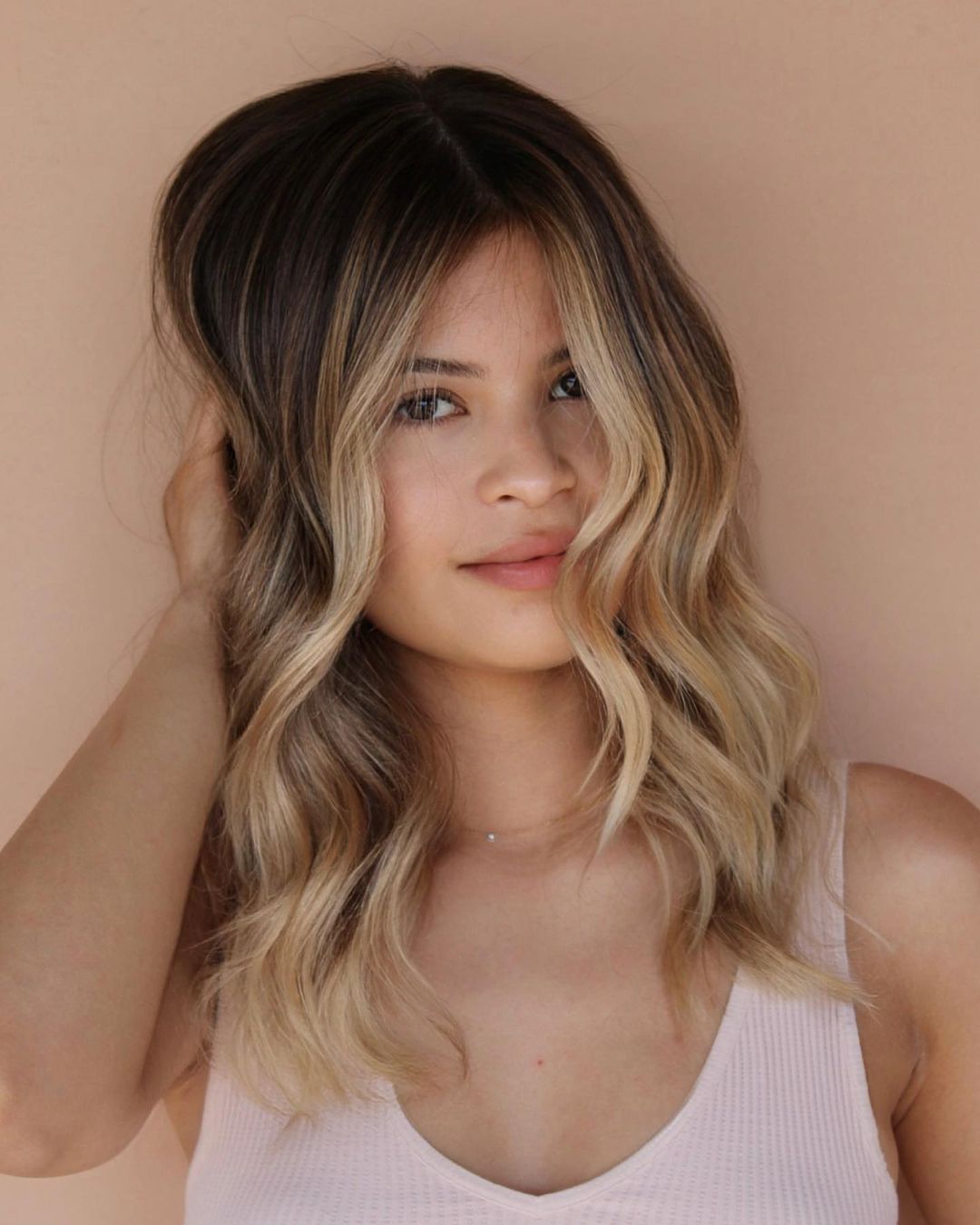
How do you get an ombre that doesn’t chop the collarbone length in half? Keep the transition subtle. This lob moves from dark blonde at the roots to a lighter blonde at the ends, and the curtain bangs pull the lighter pieces forward around the face. The middle part and wavy blowout give the color a soft, blended look rather than a hard line.
Ask your colorist for: dark blonde to light blonde ombre lob, curtain bangs. The bangs should hit just past the cheekbones to frame the face without shortening it visually. A round brush and a medium heat setting are enough to recreate the blowout at home.
Shoulder Length Dark Brown Blonde Ombre
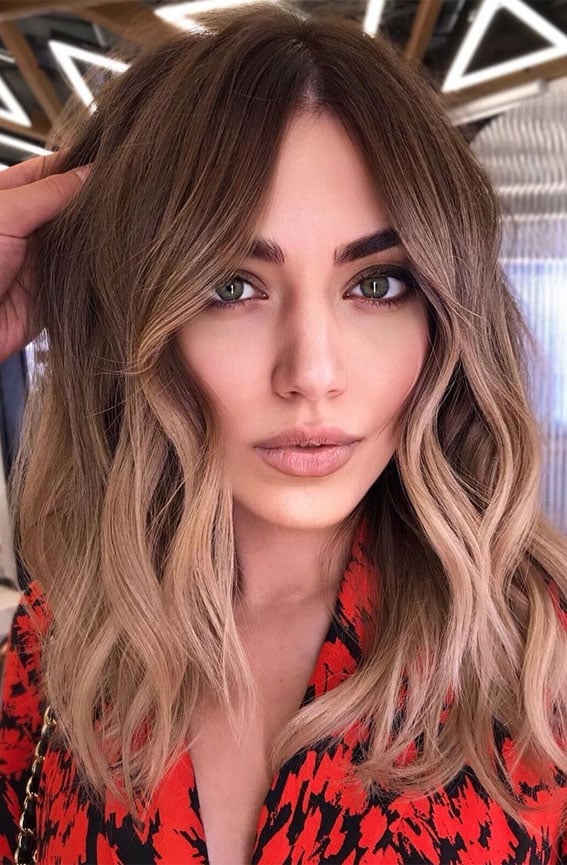
Shoulder-length ombre sits in a different category from its longer cousin. Where mid-back ombre stretches the gradient over inches, the collarbone length compresses it, making the blonde ends feel bolder and more graphic. The dark brown base here keeps the roots grounded while the lighter ends add lift around the curtain bangs and face-framing layers.
Ask your stylist for: dark brown to blonde ombre, shoulder length, curtain bangs. The layers should start below the jaw to keep the ombre visible through the length. If you prefer less contrast, ask your colorist to feather the light pieces higher into the mid-shaft.
Mid-Back Dark Brown To Blonde Ombre
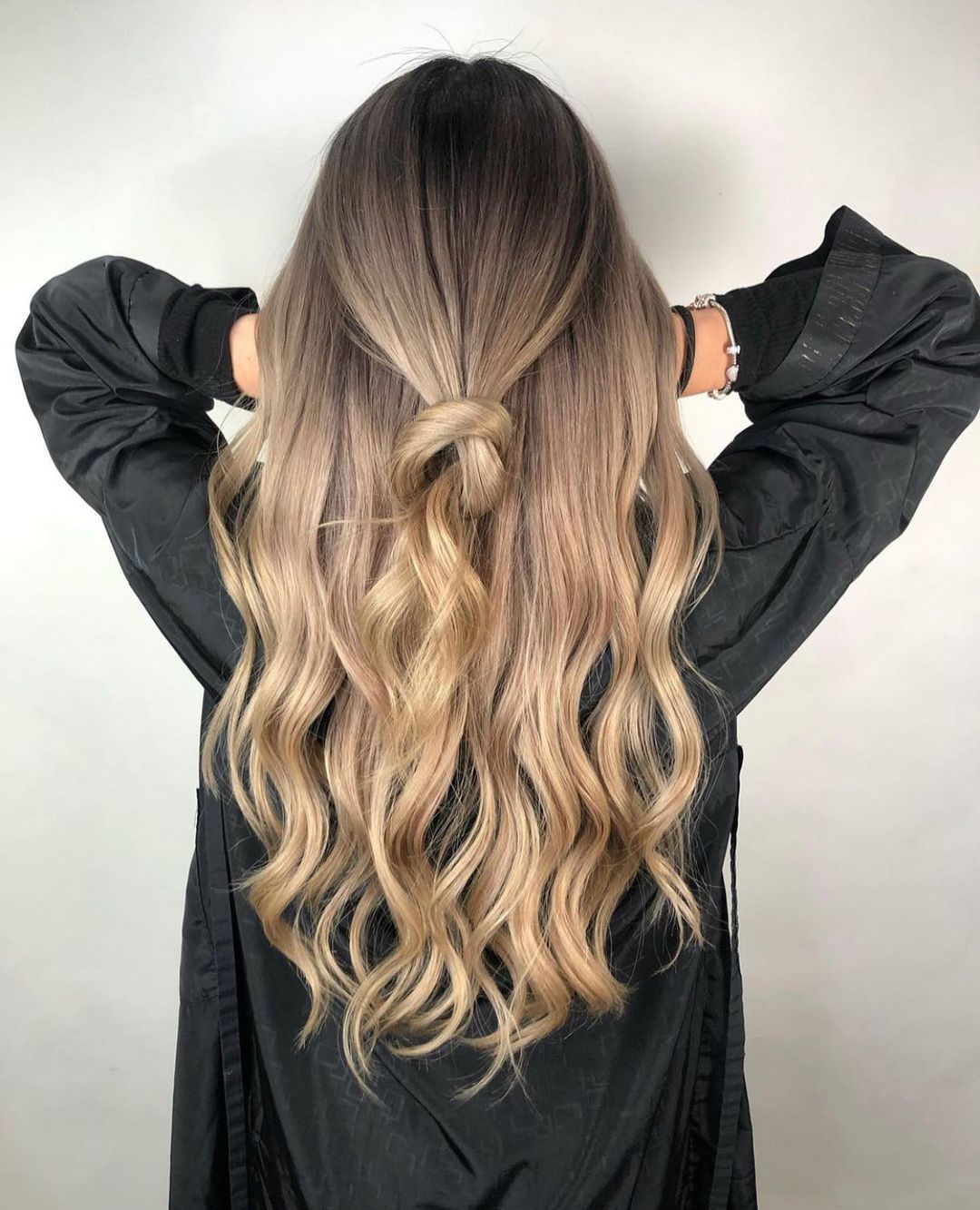
Mid-back length gives an ombre room to breathe. The dark brown base sits near the roots, then a smooth blowout and loose waves carry the blonde through the lower half without a hard stop. The transition is gradual enough that new growth blends in without a hard line.
Ask your colorist for: dark brown to blonde ombre, loose waves. The lightest pieces should start around the shoulders to keep the roots low-maintenance. A trim every eight to ten weeks keeps the ends healthy and the gradient from looking straggly. Use a heat protectant before any blowout to preserve the color.
Black To Dark Blonde Ombre Collarbone Lob With Wavy Medium
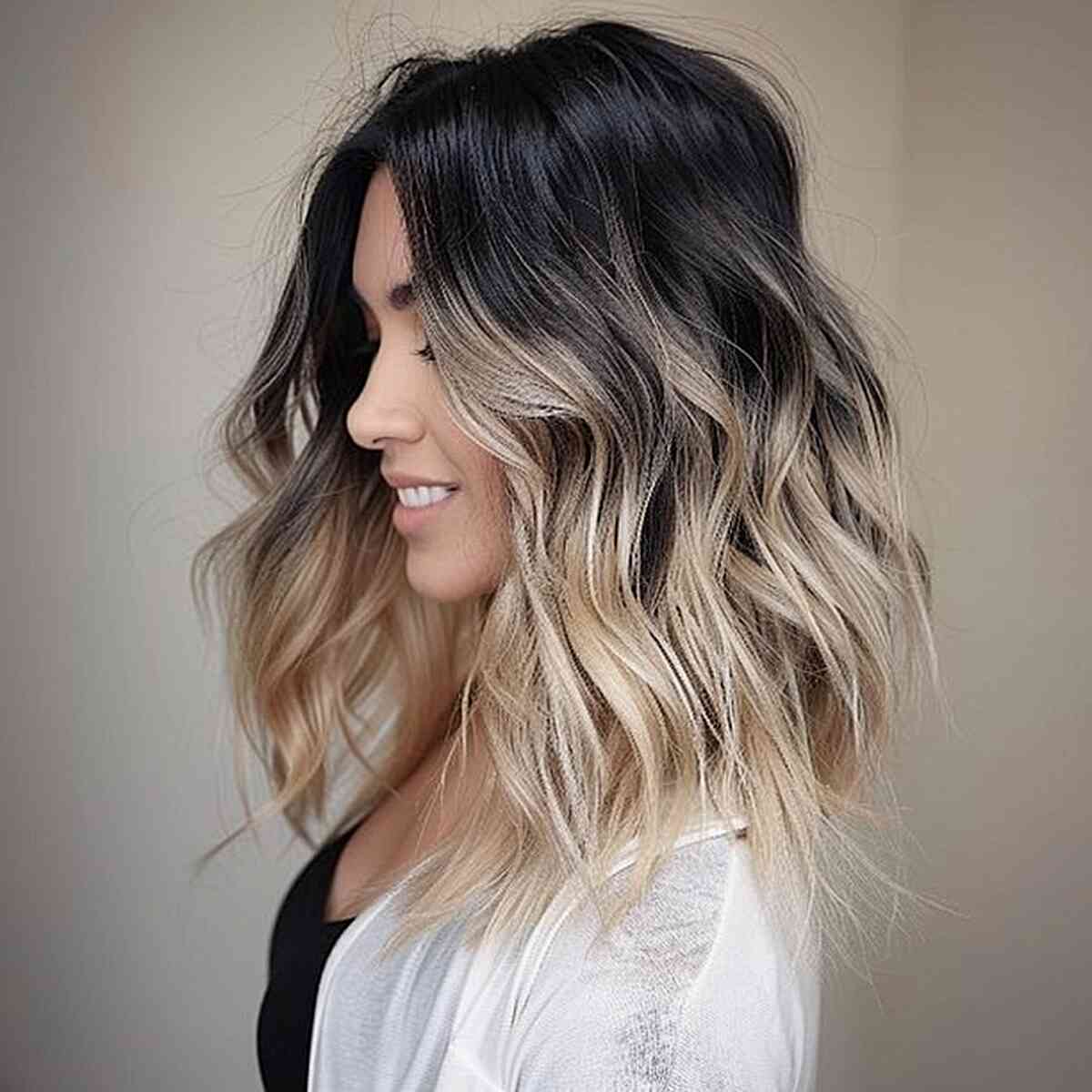
A collarbone-length lob with a middle part starts black at the roots and eases into dark blonde, the contrast showing clearly from the back. Medium wavy texture carries the transition well, and the loose waves keep the two tones from looking like separate haircuts. It suits medium-density hair that can handle a visible shift without the ends turning brassy. Ask your colorist for: black to dark blonde ombre lob. The honest catch is that dark brown or black bases lifted to blonde can pull warm within a few weeks, so a purple shampoo once a week keeps the ends from drifting orange. A smoothing serum tames any frizz, and a trim every six to eight weeks keeps the lob from losing its shape.
Medium Brown To Light Blonde Wavy Ombre
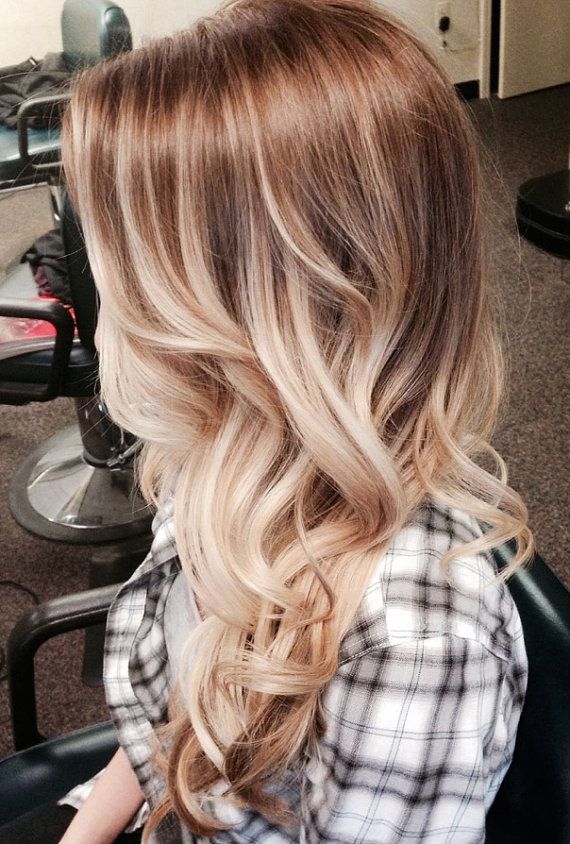
Wondering what to do with hair that feels flat by late spring? A medium brown to light blonde ombre in soft waves gives fine hair a reason to move. The collarbone-length layers catch air, and the lighter ends add the dimension that a single flat color cannot. The middle part keeps the gradient visible from the side, so the color transition stands out clearly. It suits fine, wavy hair and most face shapes, since the length lands below the chin. Ask your colorist for: medium brown to light blonde ombre, soft waves. This is the summer transition: darker roots ease upkeep while the blonde ends brighten the overall tone. Diffuse with a volumizing mousse and trim every eight to ten weeks to keep the ends healthy.
Dark Brown To Blonde Collarbone Ombre
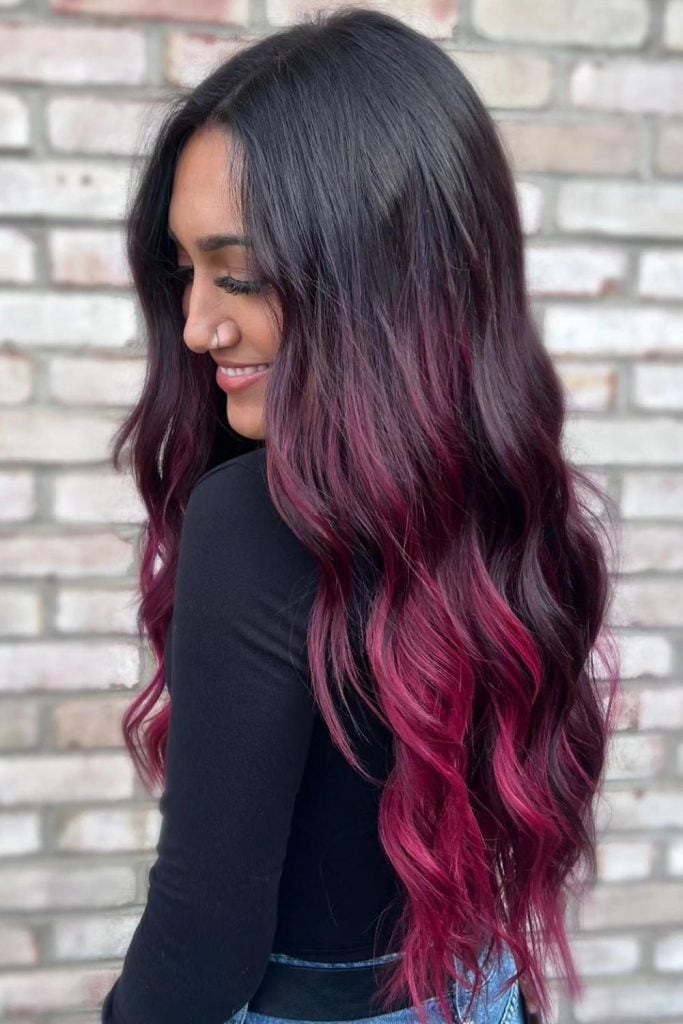
The soft ombre here is not a stark line but a gradual fade from dark brown roots to lighter blonde ends, and that subtlety is what makes it wearable. Medium-density wavy hair at collarbone length holds the transition without looking heavy, and the middle part lets the color melt down each side evenly. This blend suits oval and heart-shaped faces, where the length below the chin and the gentle lightening draw the eye downward without adding width. A middle part and collarbone length also elongate round faces, so the cut works for more than one face shape. Ask your colorist for: soft dark brown to blonde ombre, collarbone length. The key is asking for the fade to start lower, around the ears, so the roots stay dark and the grow-out stays forgiving.
Because the hair is medium density, the color lands evenly without needing extra layers. Wavy texture helps the blonde catch light naturally, so you skip the flat-iron and let it air-dry with a smoothing cream. A trim every six to eight weeks keeps the ends from splitting, which matters more here because blonde is more porous and prone to breakage. This is a low-commitment ombre that works for everyday wear and doesn’t demand constant toning.
Dark Brown Lob With Blonde Full Bangs Ombre
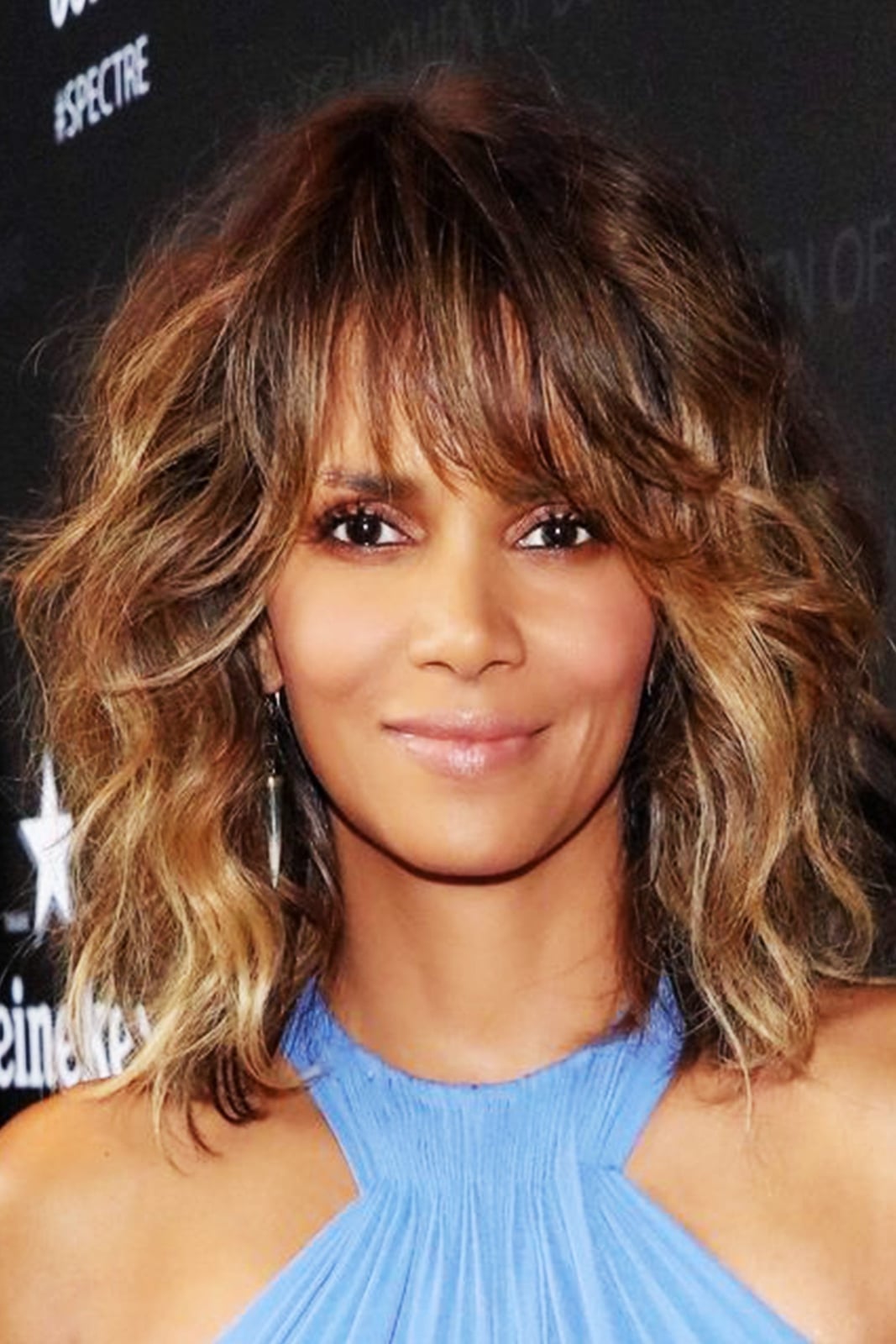
How do you ask for full bangs without sounding like you want a helmet? Start with the cut: a dark brown lob that fades to blonde toward the ends, with full bangs that sit at the brow. The bangs are the focal point, so be precise about density and placement. Ask your stylist for: dark brown to blonde ombre lob, full bangs, side part. The side part softens the bluntness of the full fringe, and the wavy texture keeps the bangs from falling flat against the forehead.
This suits oval and long faces, where full bangs shorten the visual length of the face. The ombre transition starts lower, so the bangs stay dark and frame the face without competing with the lighter ends. A lob at collarbone length works with the bangs to balance proportion. Use a flat iron on the bangs and waves for a polished finish. Trim the lob and bangs every four to six weeks, since bangs grow out fast and lose their shape quickly.
Dark Blonde To Golden Blonde Wavy Ombre
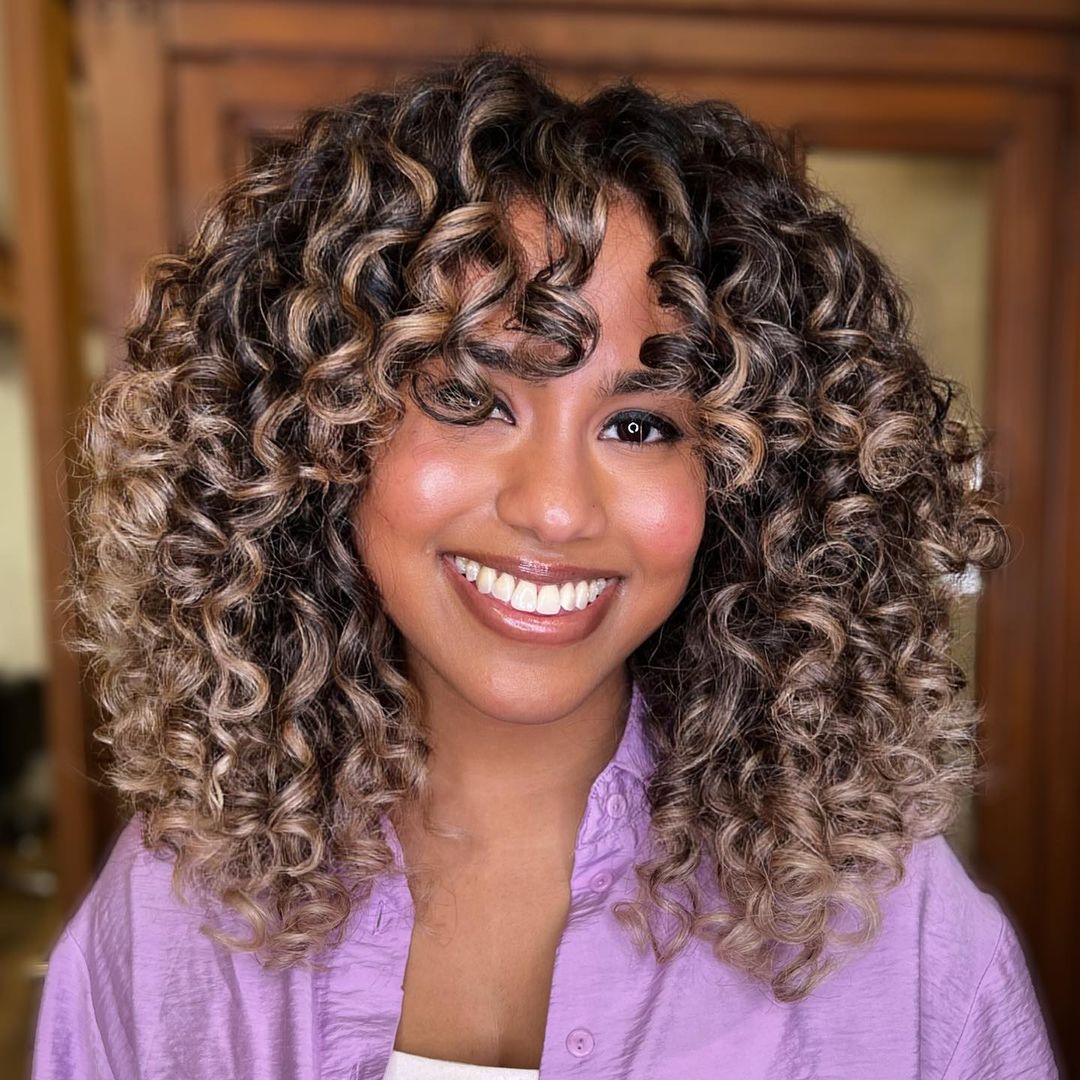
A classic ombre gets a warm upgrade here: dark blonde at the roots melts into a golden blonde at the ends, with soft waves carrying the gradient down to mid-back. The technique is all about placement. The colorist applies the lightener starting around the ears and blends it downward, then tones the ends with a warm golden gloss to avoid the ashy or brassy in-between. This warm blonde tone suits thick, wavy hair because thick hair holds the wave pattern and shows off the color shift.
Ask your colorist for: dark blonde to golden blonde ombre, soft waves. The mid-back length gives the ombre room to breathe; the transition feels gradual, not abrupt. A shine serum on the ends helps the golden tones catch light, which is the point. Trim every eight to ten weeks to keep the ends from splitting, especially since blonde ends are more fragile. This is a low-maintenance ombre that does not need frequent toning, though a purple shampoo every couple of weeks keeps the blonde from going dull.
Medium Brown To Light Brown Ombre
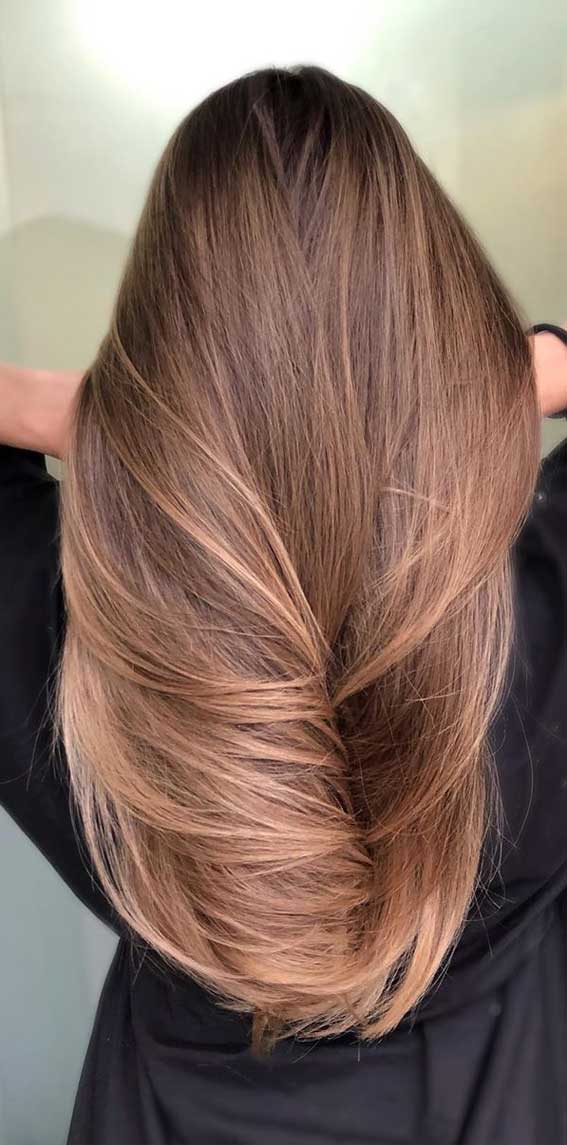
If platinum transitions feel like a commitment, this medium brown to light brown ombre is the quieter cousin who still shows up. The color shift is subtle enough that you might mistake it for natural sun-lightening, which is exactly the point. It suits thick, straight hair that starts at mid-back, and it works best when you want a change without the drama of a blonde overhaul.
Ask your colorist for: medium brown to light brown ombre, straight style. A flat iron gives the sleek finish that shows off the gradient, and a trim every eight to ten weeks keeps the ends healthy. It is not a look that screams, but it does the job for work and everyday wear.
Dark Red To Copper Red Ombre Lob
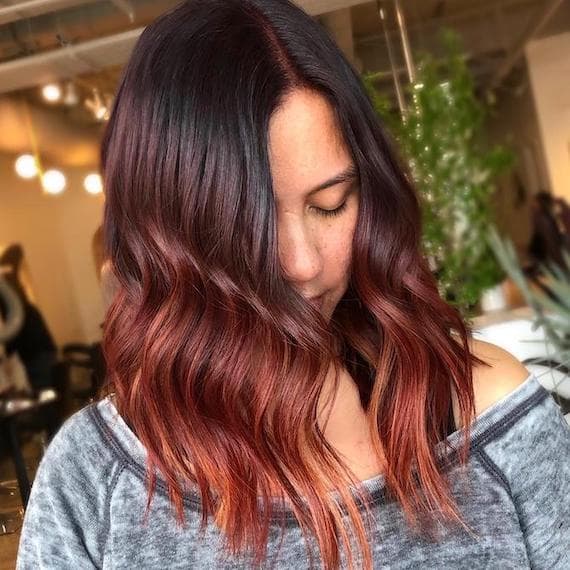
The lob cuts off at the collarbone, which means the copper red ends land right where they catch the most movement. A deep red base melts into a vibrant copper that looks glossy, not brassy, thanks to the smooth gradient. Medium density wavy hair carries the color well, and the middle part lets the shift show evenly on both sides.
Ask your colorist for: dark red to copper red ombre lob. Red tones are notorious for fading, so a color-depositing conditioner every couple of washes keeps the copper from turning murky. Plan on a trim every six to eight weeks, because the lob shape relies on that clean line.
Dark Brown To Fiery Red Ombre
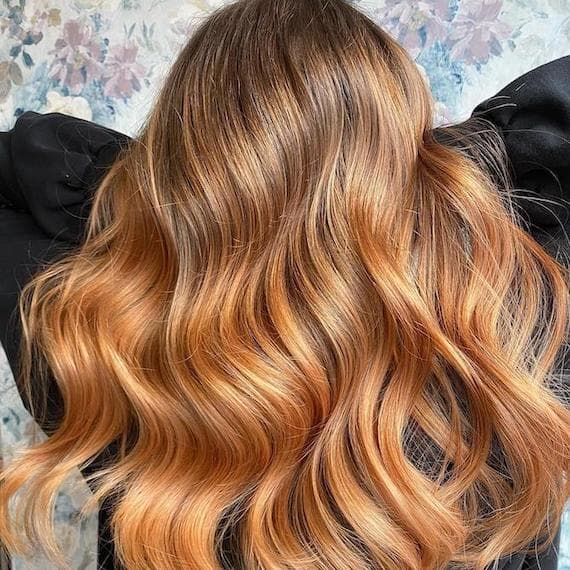
The transition from dark brown roots to fiery red lengths is not a subtle whisper; it is a shout that starts around mid-back and builds to a full blaze at the ends. Soft waves give the color room to move, and the long layers keep the volume from turning into a triangle. Thick, wavy hair starting at mid-back is the ideal canvas, because the density lets the red show its depth.
Ask your colorist for: dark brown to fiery red ombre, long layers. This is a salon-only job, and for good reason: getting a vibrant red to land evenly over dark brown at home usually ends in patchwork. The honest drawback is that the red will fade fastest where it is lightest, so commit to sulfate-free shampoo or watch the fire dim.
Black To Silver Ombre With Loose Waves
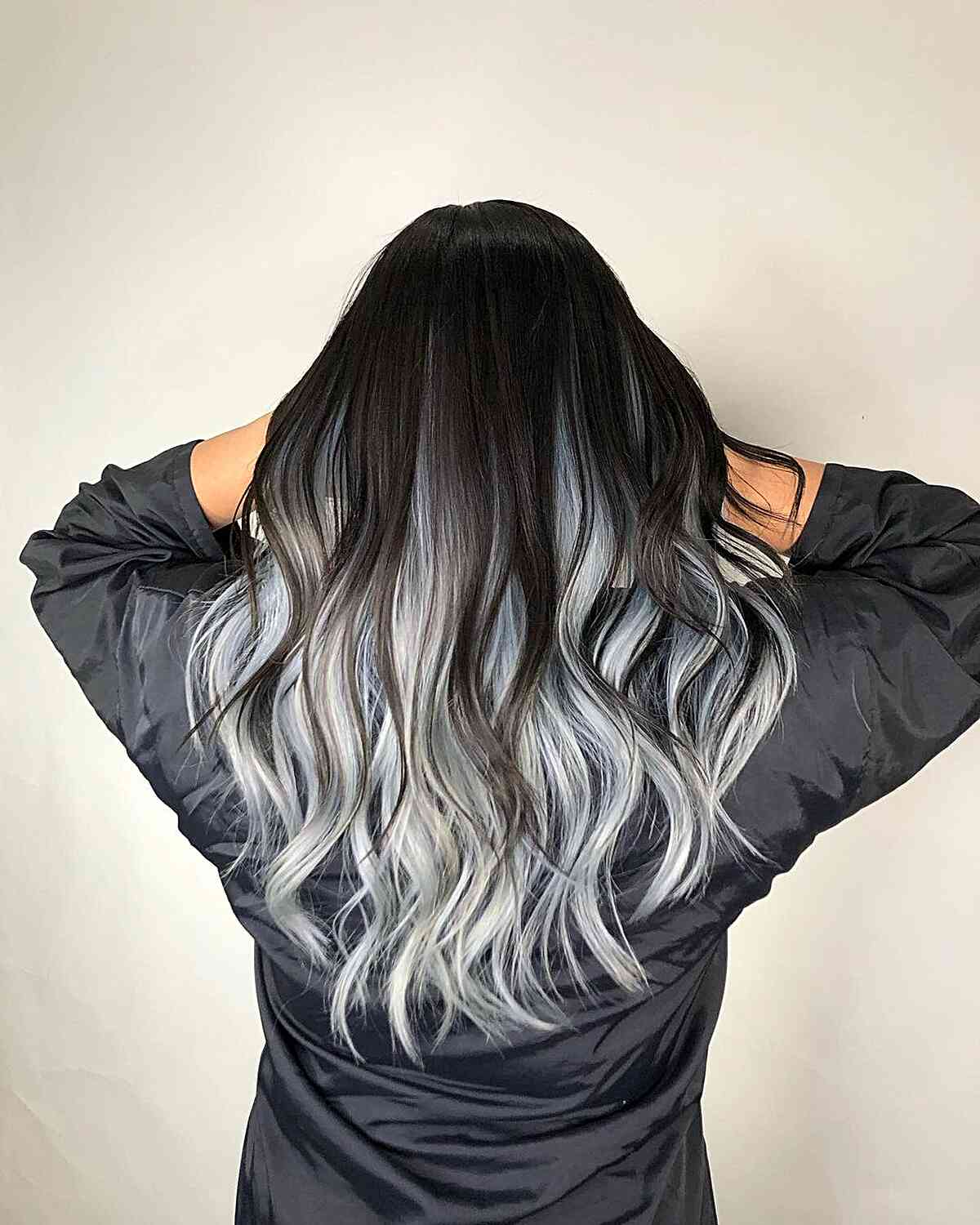
Why would anyone trade a warm brown for this icy contrast? Because black to silver ombre lands like a fashion statement that autumn and winter actually support. The deep black roots ground the look while the silver ends catch the low-angle light of colder months, and the loose waves give the transition a soft, voluminous finish. Thick, wavy hair starting at mid-back carries the color without looking washed out.
Ask your colorist for: black to silver ombre, loose waves. The middle part keeps the gradient symmetrical, and a purple shampoo used occasionally is what keeps the silver from drifting toward yellow. This one is a salon commitment, but the payoff is a head of hair that looks like it belongs on a runway.
Dark Brown To Silver Grey Ombre Bun
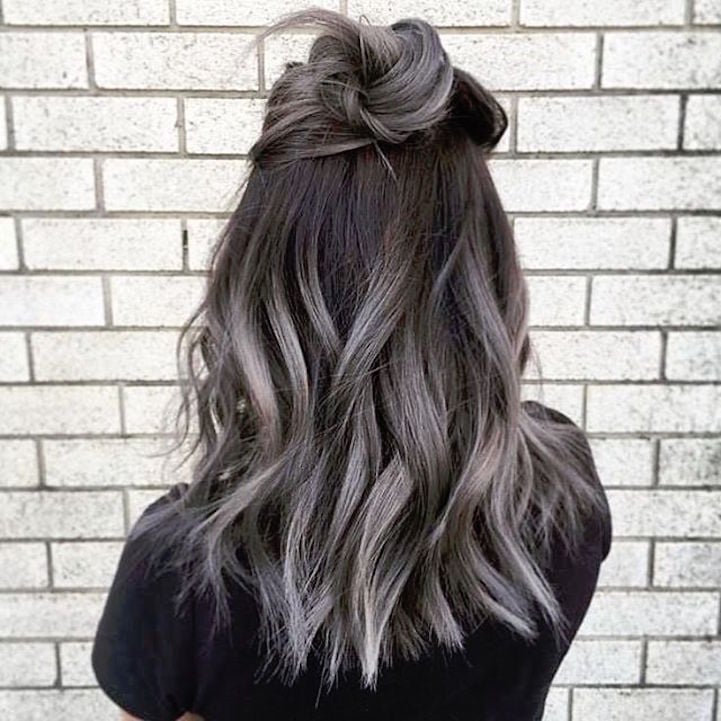
Starting with a dark brown base and letting it fade into silver grey from the collarbone down gives this ombre a cool, collected feel that suits a loose high bun. The flowing waves soften the transition, so the lighter shade looks like a deliberate gradient. Thick, wavy hair at mid-back length is what makes the bun hold its shape without pins doing all the work.
Ask your colorist for: dark brown to silver grey ombre, styled in a bun. A texturizing spray helps the bun grip, and a trim every eight to ten weeks keeps the ends from splitting. This is a casual, everyday look that still manages to look polished.
Dark Brown Base With Teal Ombre Curls
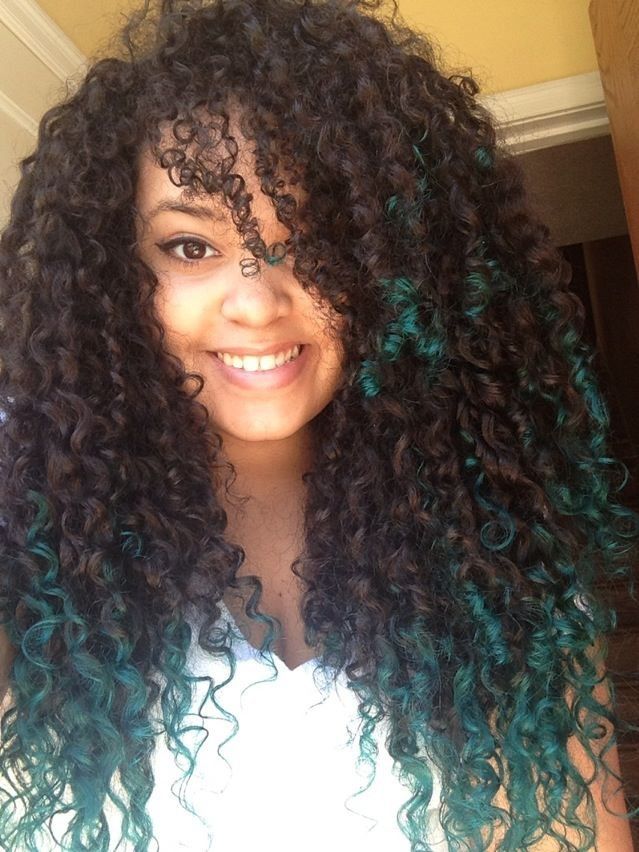
Ever wondered how to get a teal that looks deliberate rather than a box dye gone rogue? The key is starting with a dark brown base that grounds the whole thing, then letting the color graduate into a vibrant teal only at the ends. For thick, curly hair at mid-back length, the middle part keeps the transition visible without requiring perfect symmetry. Ask your colorist for: dark brown to teal ombre, natural curl placement. The technique uses a gentle lightener on the lower sections, so the curl pattern stays intact and the air-dried texture provides natural volume. A curl-defining cream and a diffuser on low speed are all the styling you need.
Before you book, know that this is a salon-only project. The teal shade needs a pre-lightened canvas to hold its saturation, and the gradient from brown to blue-green is a custom blend, not a single formula. A trim every eight to ten weeks keeps the ends healthy and the color fresh.
Black To Bright Blue Ombre Long Layers
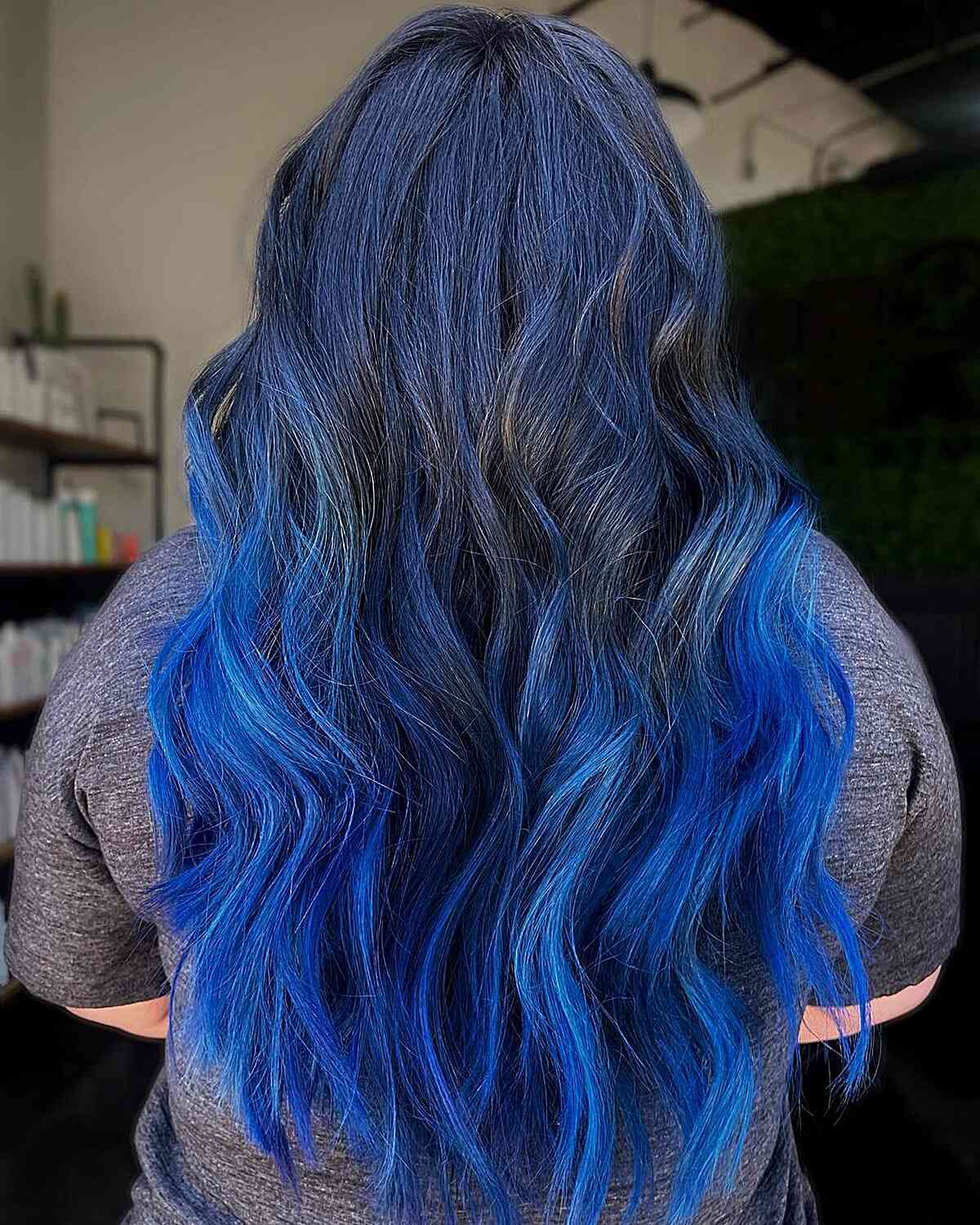
Getting black hair to a true bright blue is a process, not a quick gloss. The design starts with long layers cut to mid-back, which gives the color room to travel from deep black roots into an intense blue at the ends. The contrast is sharp, not blended, so the blue shows up as a separate color from the black. Ask your colorist for: black to bright blue ombre, long layers. Because the base is black, expect at least two lightening sessions to lift the ends enough for the blue to hold its vibrancy. The loose waves in the back view help distribute the color visually, making the transition look clear.
This is not a look that happens in one afternoon. The lift from black to pale yellow is the hard part; the blue toner is the reward. A color-safe shampoo and cool water during rinses will extend the life of the shade.
Shoulder Length Dark Blue Electric Blue Ombre
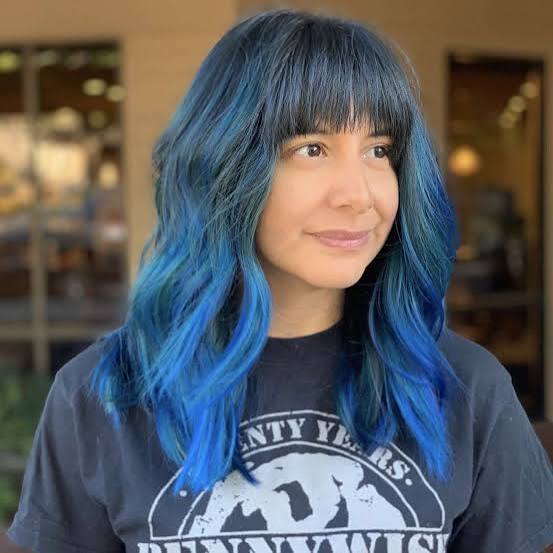
A longer ombre lets the gradient stretch, but a shoulder-length version like this one packs the color into a tighter space, making the electric blue feel more concentrated. The dark blue roots anchor the look, while the curtain bangs catch the light and show off the transition even at the front. Ask your colorist for: dark blue to electric blue ombre, curtain bangs. The wavy texture softens what could be a stark color block, and the middle part keeps both sides even. If you want the blue to last past the first wash, a color-depositing conditioner in a cool blue tone is your best friend.
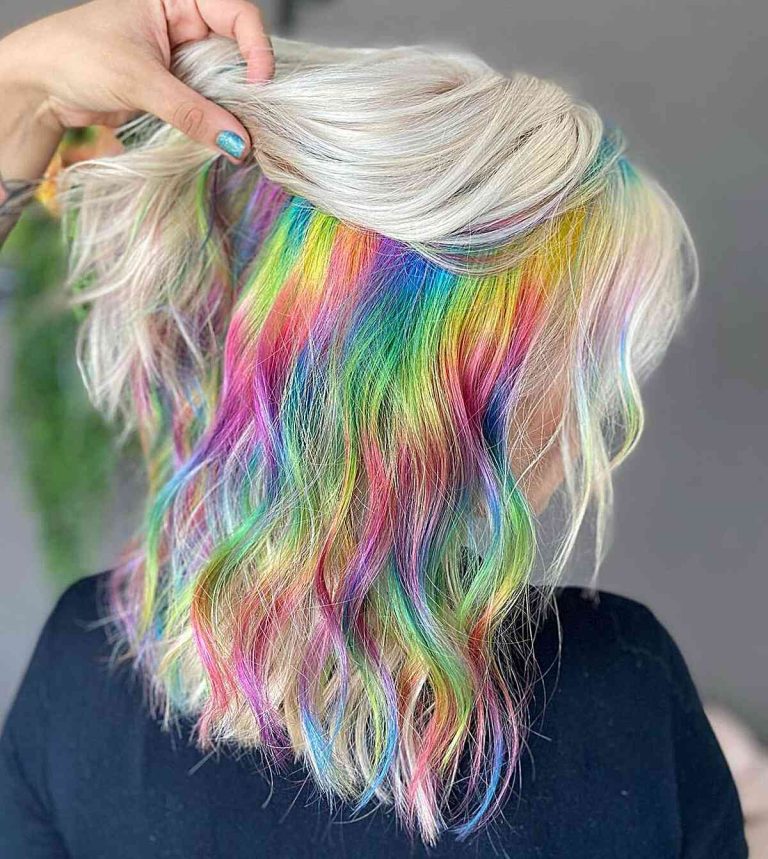
Collarbone Pink To Yellow Ombre Waves, Close-Up Take
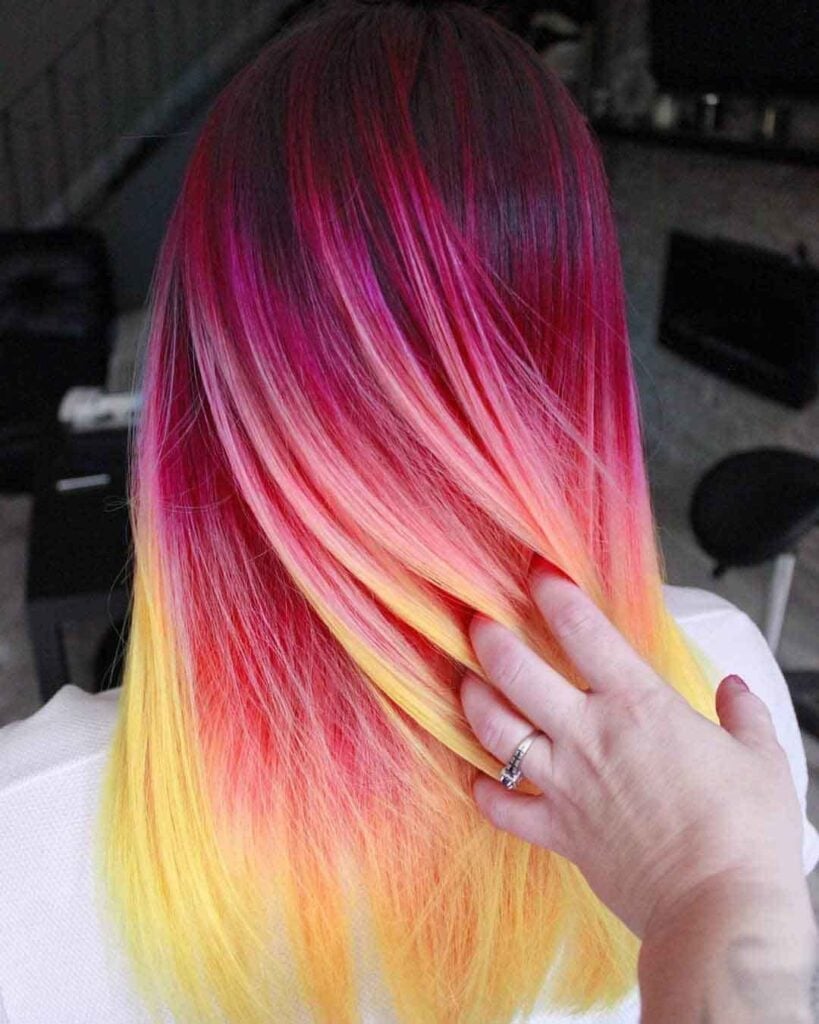
Ombre in pink and yellow is a commitment that announces itself before you turn around. The soft waves let the gradient travel from pink roots down to yellow ends, and the middle part keeps the two-tone effect balanced from the back. This works best on medium wavy hair at collarbone length, since the layers give the color movement without tangling. Ask your colorist for: pink to yellow ombre, collarbone length.
The upkeep is the part nobody warns you about. Pink and yellow are fashion shades, so they fade faster than natural colors, and a color-safe shampoo becomes your weekly ritual. A color-depositing conditioner in a cool pink or yellow tone refreshes the brightness between salon visits, which you will want every six to eight weeks. The trim rhythm is the same as any layered cut, so plan for a dusting at the same appointment. The payoff is a gradient that looks like a sunset got trapped in your ends, but only if you treat it like the high-maintenance friend it is.
Mid-Back Dark Brown Yellow Ombre, Wavy, Close-Up Take
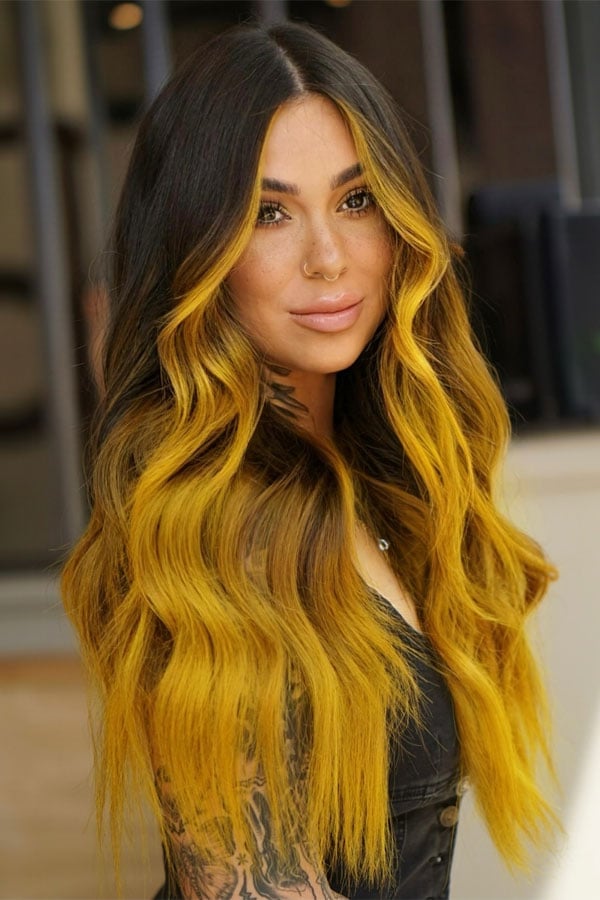
Getting a dark brown base to a bright yellow end is not a single-sitting project. The lightener has to lift the mid-back length through several stages before the yellow can take, and a toner usually follows to pull out the brassy orange that dark brown always reveals. The loose waves help by breaking up the line where the brown hands off to the yellow, so the transition looks like a deliberate gradient, not a grow-out. It suits thick, wavy hair that starts at mid-back, because the density holds the color and the length gives the fade room to stretch. Ask your colorist for: dark brown to bright yellow ombre, layers.
The trade-off is the brassiness. Yellow is a cool tone, and warm undertones from dark hair fight it for weeks; a purple shampoo is not optional, it is the difference between sunflower and school-bus orange. This is a salon job, so do not try it at home unless you enjoy uneven patches. The color will fade faster than a natural blonde, and the upkeep means a gloss or refresh every four to six weeks to keep the yellow sharp. If you are not ready for that rhythm, this dark brown yellow ombre is a look you admire on someone else.
Final Thoughts
For a low-maintenance ombre, ask for a blend that starts lower on the hair shaft, focusing lighter tones on the ends, and opt for shades close to your natural base color. This way, the grow-out is softer, and you can stretch the time between touch-ups.
- Wait 24-48 hours before washing after color.
- Use color-safe shampoos to preserve tone.
- Deep condition weekly to keep ends healthy.
- Tone every 6-10 weeks to fight brass.
- Trim ends every 8-12 weeks for freshness.
Embrace the blend: ombre offers endless possibilities for personalized color.