 Save
You have dark hair and a color consult coming up. The question is not whether to lighten it but how to do it without looking like you went at it with a foil comb and a tube of bleach. Balayage on a dark base stays low-regret because the root stays dark and the grow-out line is a soft fade, not a stripe.
These 34 ideas cover the spectrum from ash to copper to caramel, on fine strands and thick waves, with the kind of upkeep you can actually keep. Which is why Elegant Balayage on Dark Hair 2027 fill so many saved boards: the hard part is picking one tone, not living with it later.
35 ideas in this post
- Ash blonde balayage on dark brown hair with soft waves
- Subtle caramel balayage on thick wavy dark brown hair
- Copper balayage on thick wavy dark brown hair
- Caramel balayage with side-swept fringe on layered dark brown
- Subtle caramel balayage and soft waves on layered dark brown
- Caramel balayage with loose waves on thick dark brown hair
- Warm copper balayage on layered thick wavy dark brown
- Caramel face-framing highlights on fine wavy dark brown
- Ash blonde balayage on fine wavy dark brown hair
- Warm caramel balayage on layered thick wavy dark brown, close-up take
- Ash blonde balayage on a fine wavy lob, side
- Auburn tones blended into dark brown hair for subtle dimension
- Caramel balayage through face-framing layers on thick wavy hair
- Contrasting blonde balayage on thick wavy layered dark brown
- Caramel balayage transition with face-framing pieces, close-up take
- Ash blonde balayage on thick wavy layered dark brown, everyday version
- Caramel balayage highlights on fine wavy dark brown, close-up take
- Smooth caramel balayage on thick wavy dark brown, everyday version
- Warm caramel balayage highlights on thick wavy, softer variation
- Caramel balayage highlights framing the face, office-safe version
- Blonde strands create contrast on dark brown hair with waves
- Rich caramel balayage on thick curly dark brown hair
- Warm copper balayage on thick wavy dark brown, office-safe version
- Contrasting blonde balayage on fine wavy layered dark, close-up take
- Face-framing blonde highlights on fine wavy dark, everyday version
- Face-framing blonde highlights on thick wavy layered dark brown
- Blue balayage creates a dramatic effect on wavy hair
- Caramel balayage highlights on thick wavy layered dark brown
- Smooth caramel balayage blend on thick wavy dark, close-up take
- Caramel balayage transition on thick wavy dark brown, bolder variation
- Ash blonde balayage with face-framing layers on fine wavy
- Caramel balayage highlights on fine wavy layered, everyday version
- Ash blonde balayage transition on fine straight dark brown
- Face-framing blonde balayage on thick wavy layered dark, close-up take
- Final Thoughts
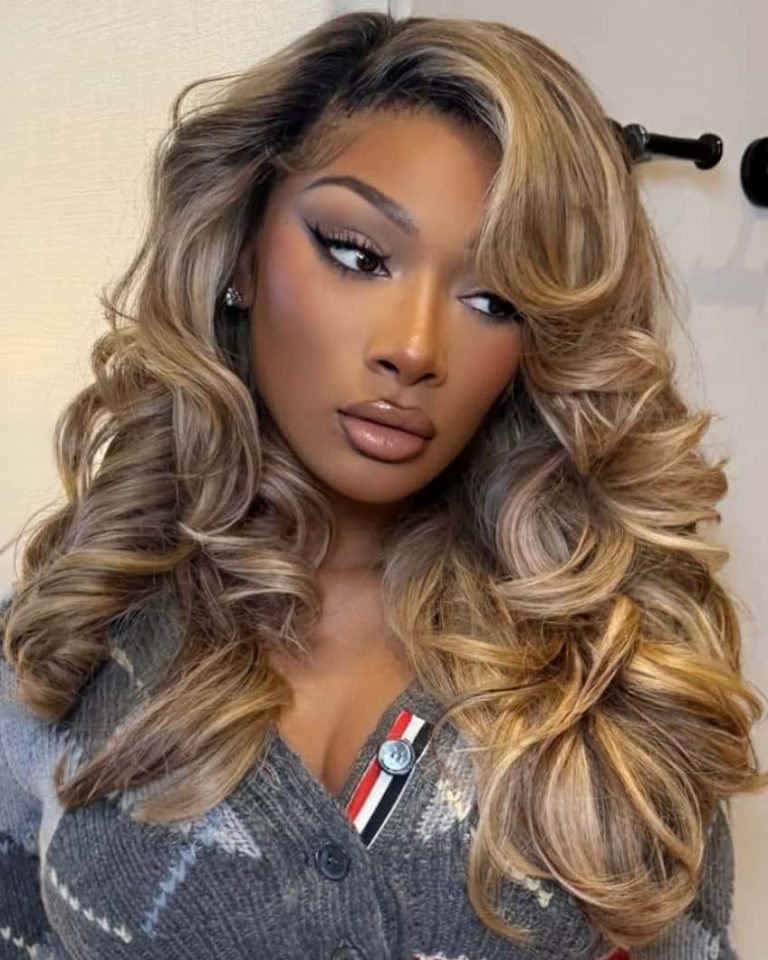
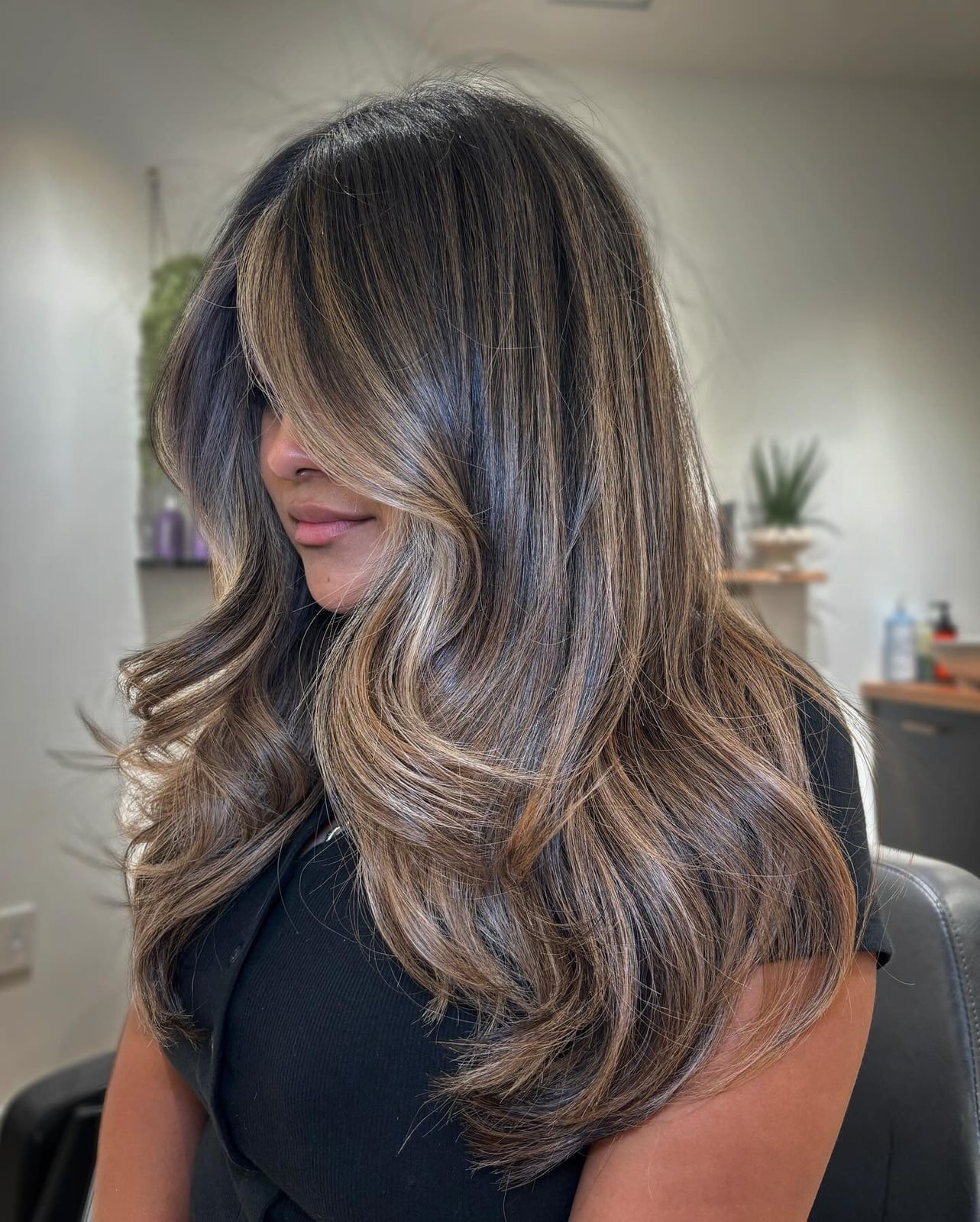
Ash blonde balayage on dark brown hair with soft waves
Dark brown base meets ash blonde balayage in a design that looks planned. The side part lets the cooler strands fall forward, drawing the eye. Fine hair benefits here. The soft waves hold the lighter pieces in plain view, which is exactly the point. It suits those who prefer cool tones and have fine to medium hair. A wavy blowout lasts two to three days before a refresh is needed.
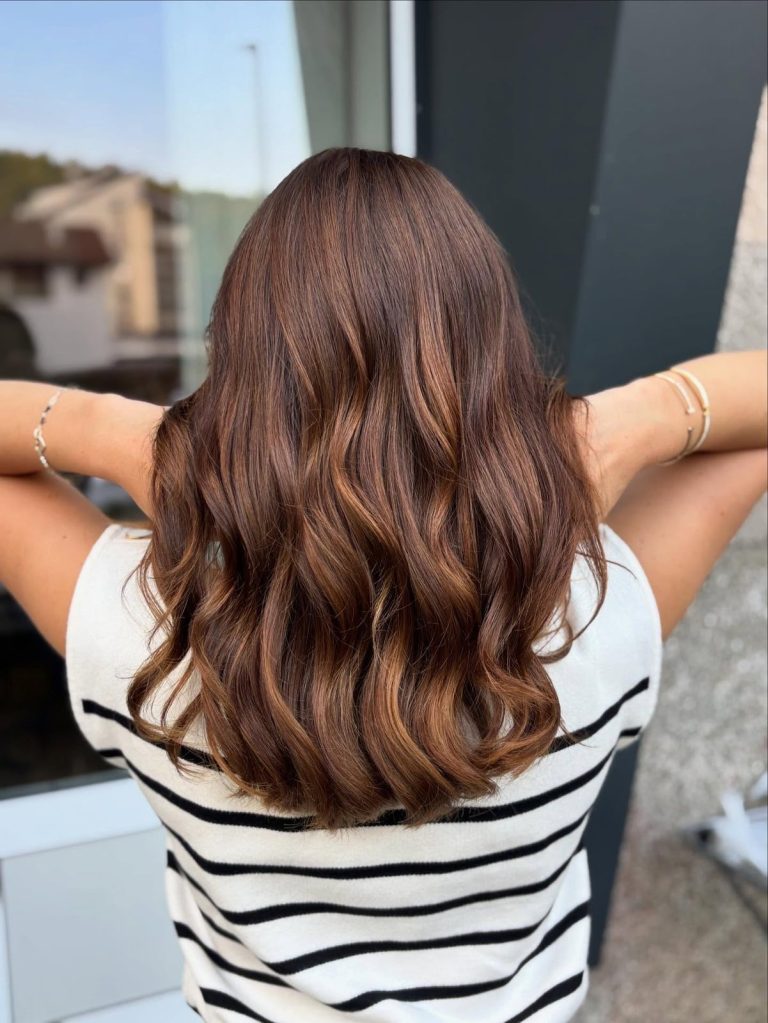
Subtle caramel balayage on thick wavy dark brown hair
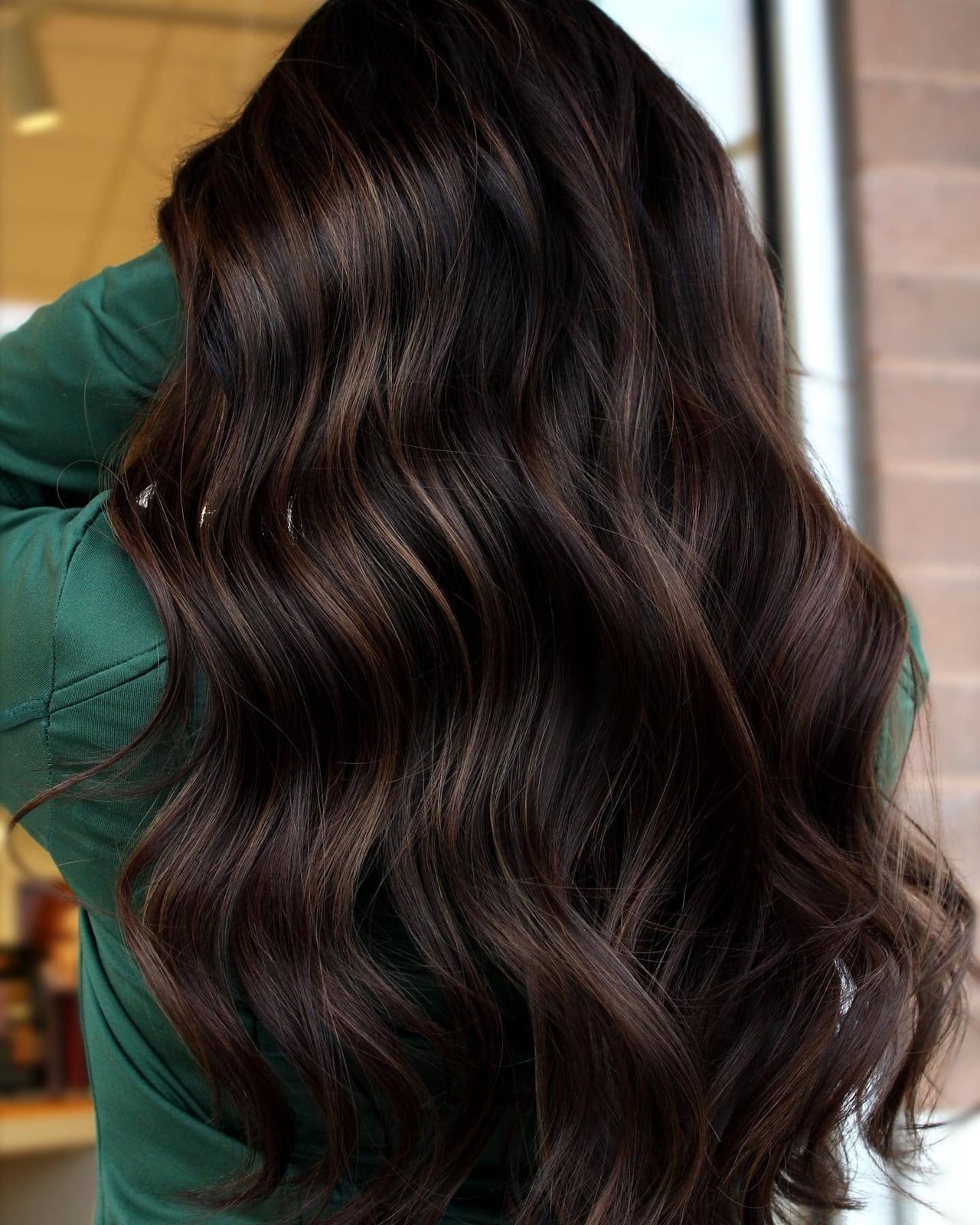
Wondering exactly what to say at the appointment? Tell your colorist: dark brown base with subtle caramel balayage. The back view in this design shows how the warmth spreads through the mid-lengths, leaving the roots dark and low-maintenance. Thick, wavy hair takes the blend well. The texture keeps the caramel from looking painted on. A texturizing spray on damp waves helps the color catch the light.
Copper balayage on thick wavy dark brown hair
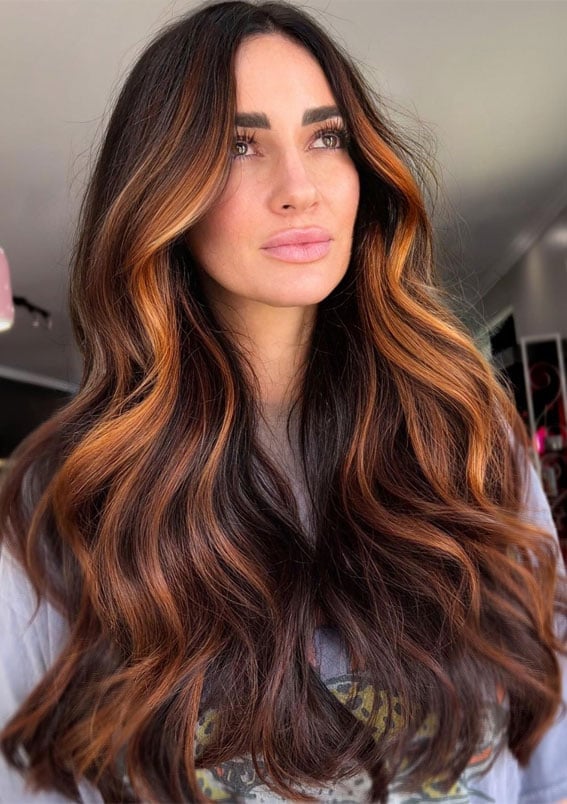
Copper balayage versus caramel: the first runs warmer, the second runs richer. This version places the copper from mid-lengths to ends, letting the dark base stay cool and anchoring the whole look. Thick, wavy hair can handle the contrast without the color feeling heavy. The ends need a smoothing serum to keep the wave pattern defined. Copper shows up, so it is not for anyone who wants a subtle shift.
Caramel balayage with side-swept fringe on layered dark brown
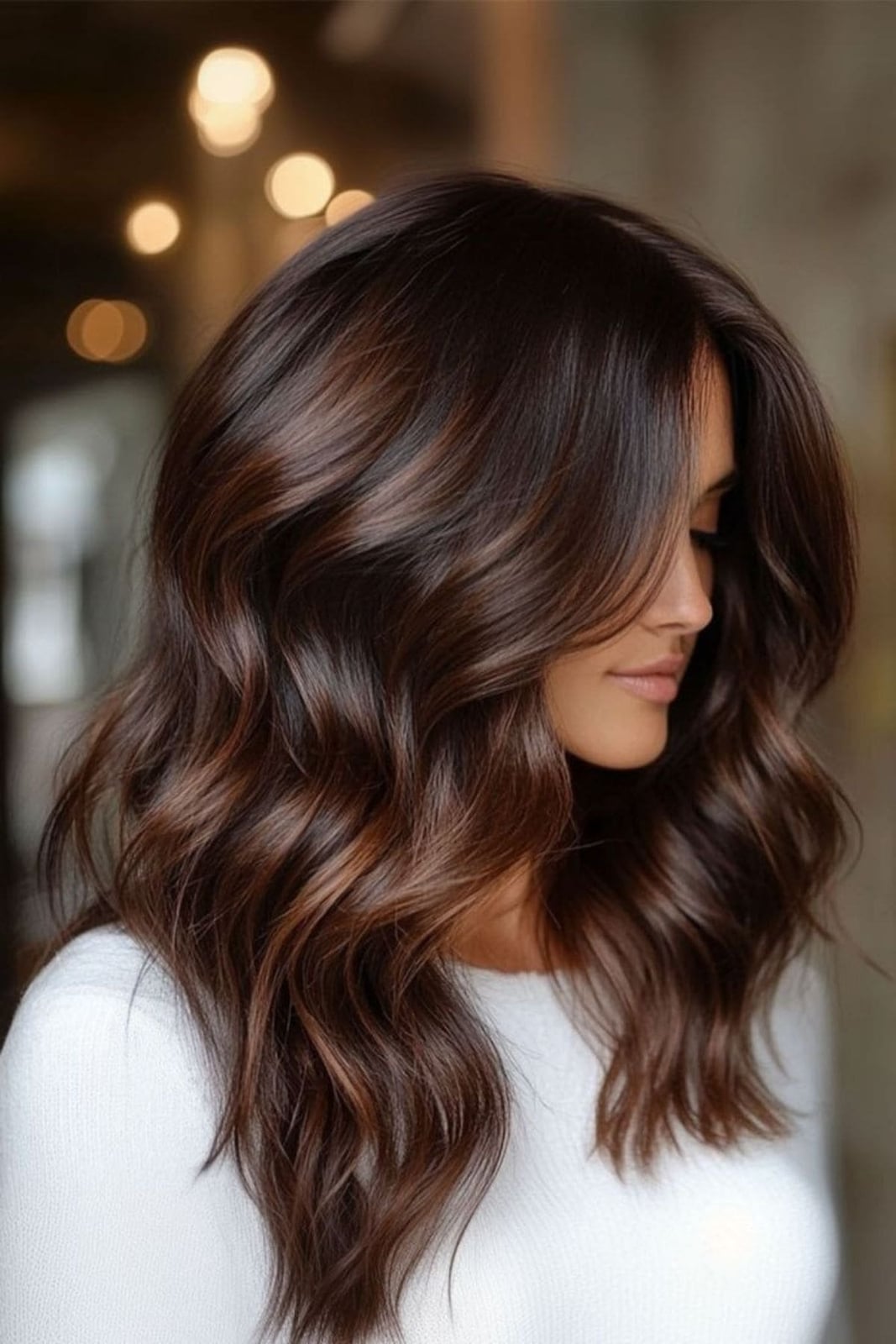
A side-swept fringe changes how the caramel balayage reads. The fringe catches the lighter pieces first, softening the line between dark base and warm tone. Square or round faces benefit from the diagonal line the fringe creates. Thick hair holds the voluminous blowout without deflating. Trim the fringe every three weeks to keep the shape precise.
Subtle caramel balayage and soft waves on layered dark brown
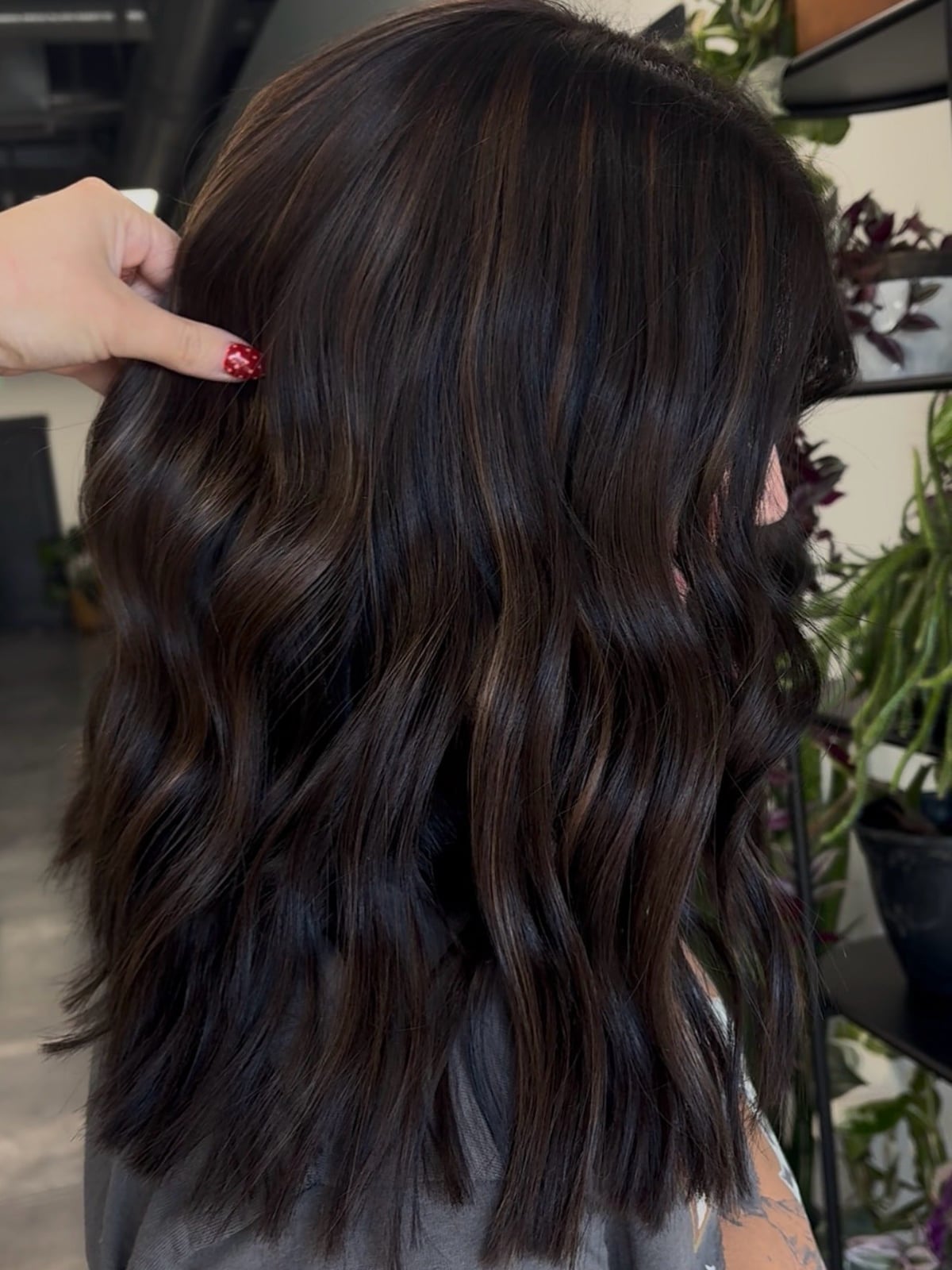
Soft layers and a wavy blowout do the revealing work here. The caramel balayage sits low enough that straight hair hides it, which is the point: the color shows when you style it. Thick hair in a side part lets the waves fan out, exposing the lighter strands in sections.
Upkeep is simple. A texturizing spray on dry waves redefines the shape between washes. Trim every six to eight weeks keeps the layers from growing heavy. The color fades gently, so toning appointments can stretch to ten weeks.
Caramel balayage with loose waves on thick dark brown hair
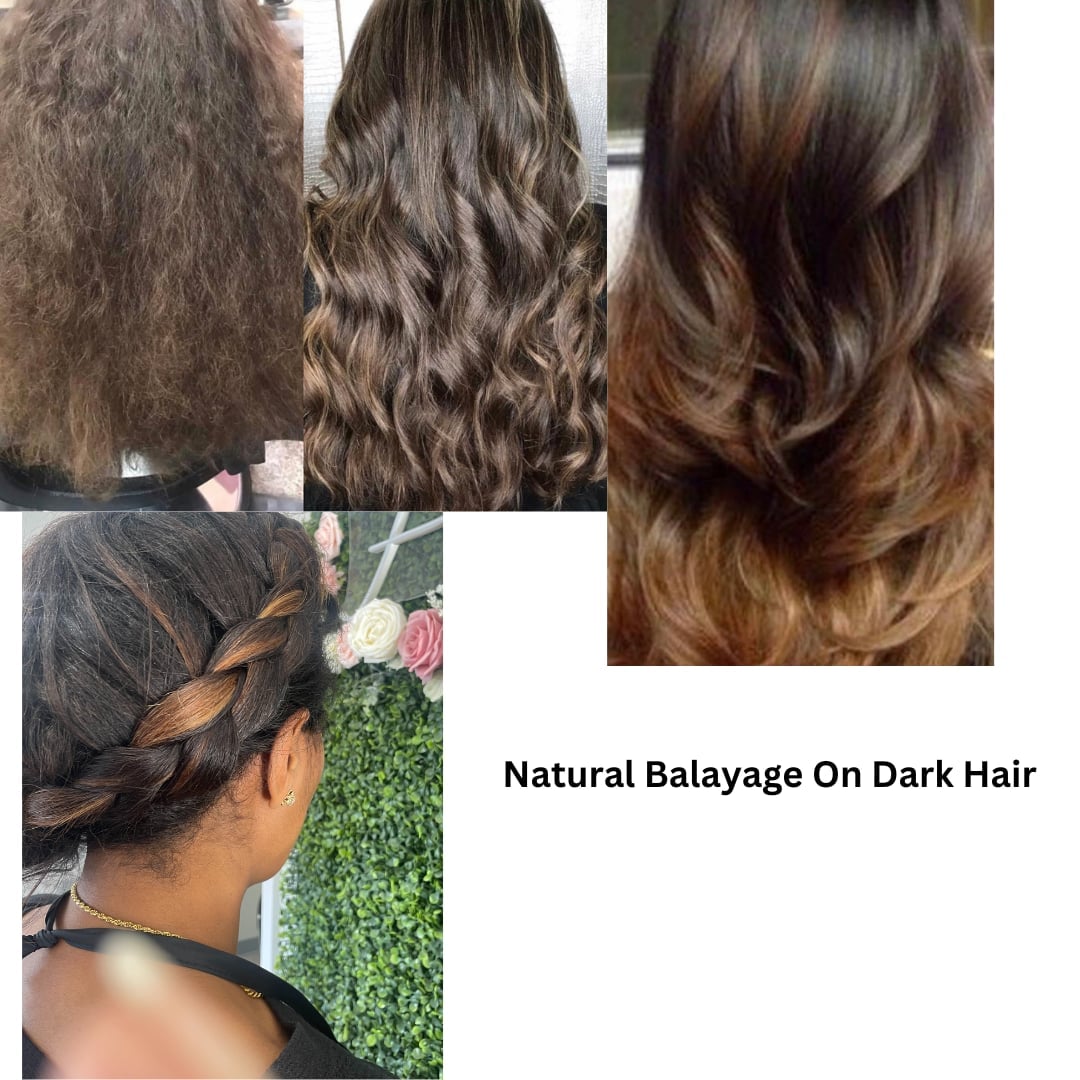
A dark brown base gets caramel balayage painted through the mid-lengths and ends, soft enough that the blend is barely there. Loose waves carry the warmth without turning brassy. Thick hair holds the wave pattern for a full day, no re-curl needed. Tell your colorist: dark brown base with caramel balayage, loose waves. The catch: fine hair struggles to keep this shape past noon.
Warm copper balayage on layered thick wavy dark brown
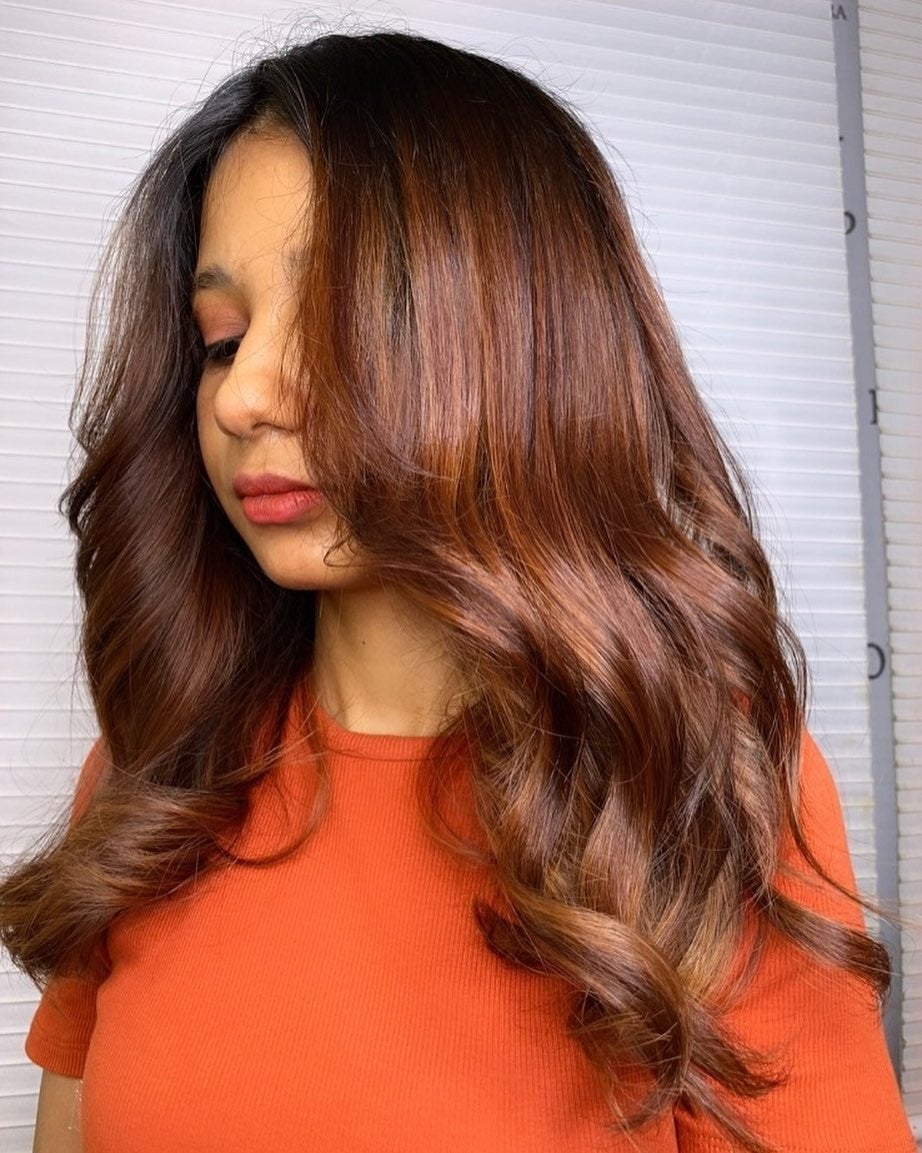
Layers cut into thick wavy dark brown create the canvas; warm copper balayage builds the depth on top. The colorist paints from mid-length down, leaving the root zone untouched so the grow-out is soft rather than striped. Side-part blowout lifts the wave, and the copper catches the light differently at every angle. Thick texture is the prerequisite. This technique relies on density to spread the tone. Not for anyone who keeps their hair above the chin.
Caramel face-framing highlights on fine wavy dark brown
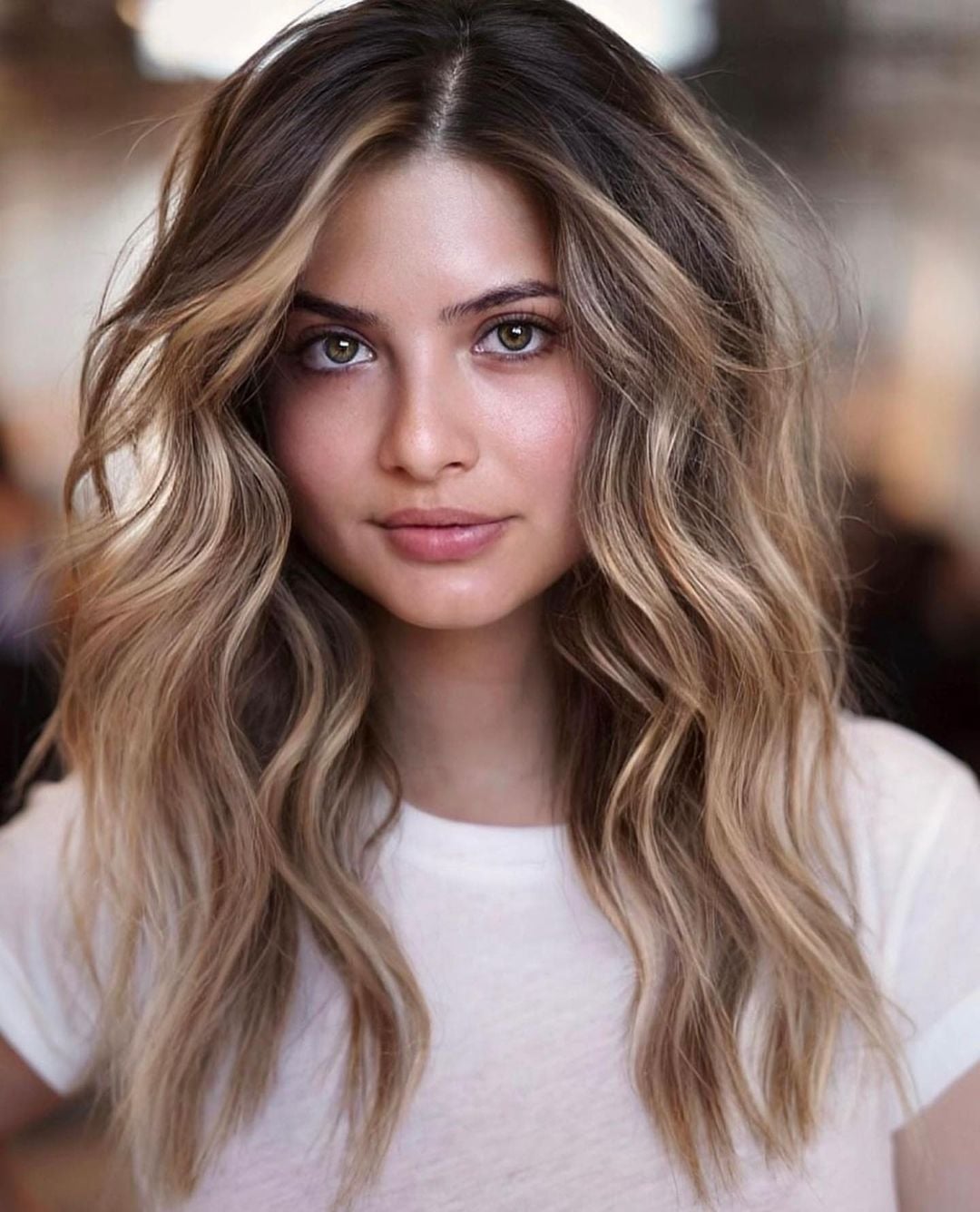
Can a fine hair look carry face-framing color without looking sparse? Yes, when the caramel balayage starts at the cheekbone and thickens toward the ends. The dark brown base stays untouched at the root. Middle part lets the lighter sections fall forward evenly. Wavy blowout adds the volume that fine texture lacks on its own. Book it as: dark brown base with caramel balayage, face-framing highlights. This technique works best for those who want dimension rather than a solid block of color.
Ash blonde balayage on fine wavy dark brown hair
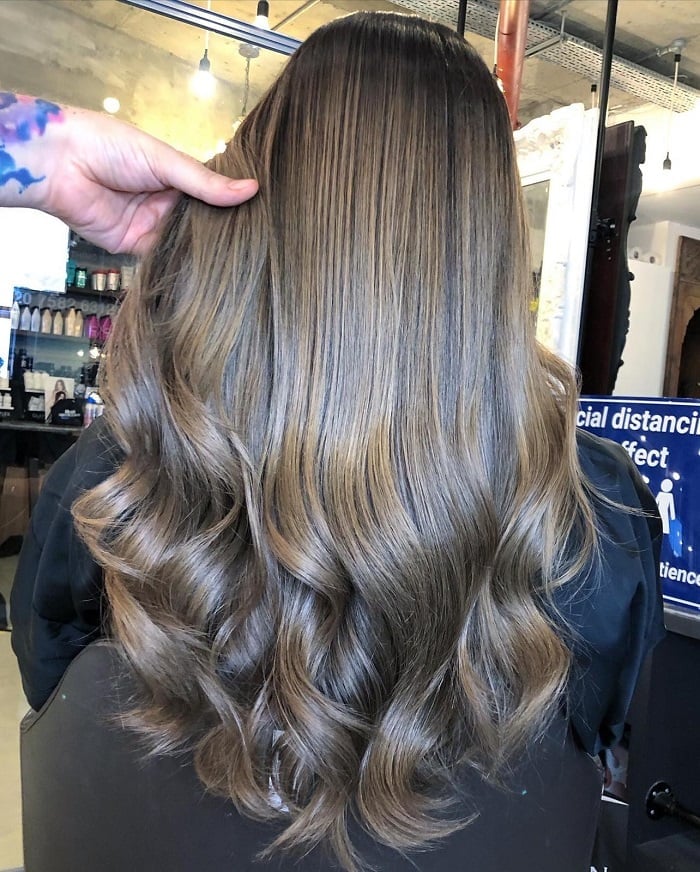
Warm caramel versus ash blonde, pick the one your wardrobe already leans toward. Ash blonde balayage on a dark brown base reads cooler and more muted. The smooth blend from root to tip keeps the contrast soft rather than stark. Fine wavy texture diffuses the lighter pieces so they never look chunky. A blowout with a round brush smooths the wave and shows the tone best. Pass when you already have a warm-toned gloss on the shelf.
Warm caramel balayage on layered thick wavy dark brown, close-up take
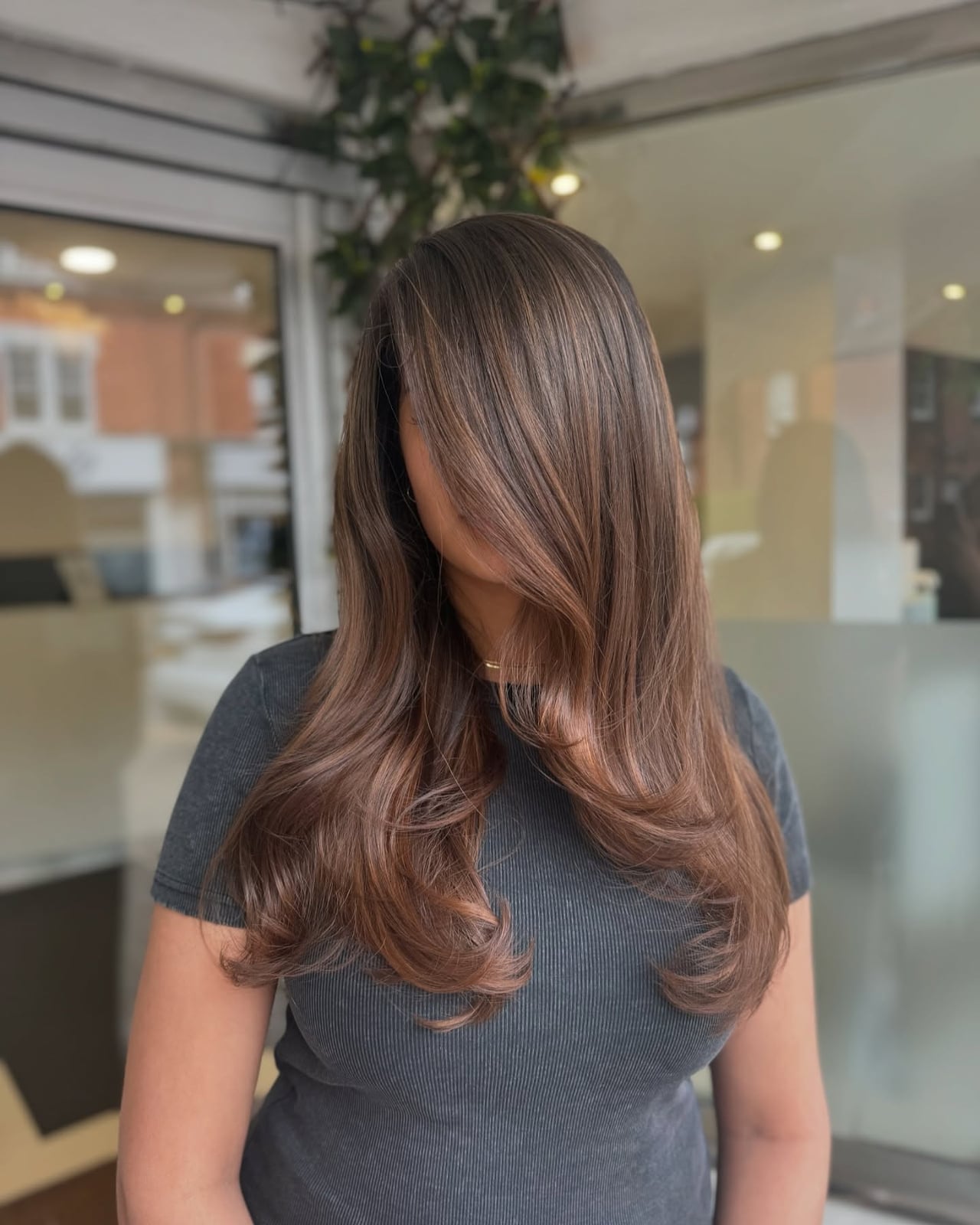
Dark brown base with warm caramel balayage, long layers cut to follow the wave. This is texture-led color. The balayage starts low, so the root stays dark and the caramel looks a natural sunlift. Side parting shifts the weight and lets the lighter sections wrap around the face. Thick wavy hair benefits from the visual break that layers provide. Tell your colorist: dark brown base with warm caramel balayage, long layers.
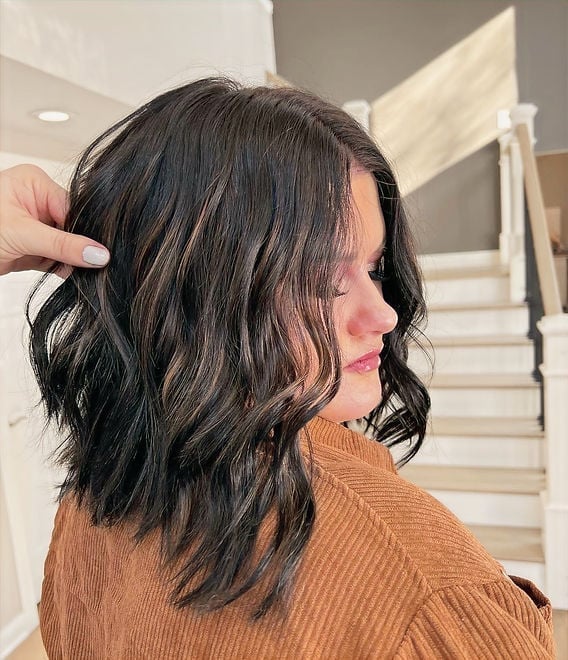
Ash blonde balayage on a fine wavy lob, side
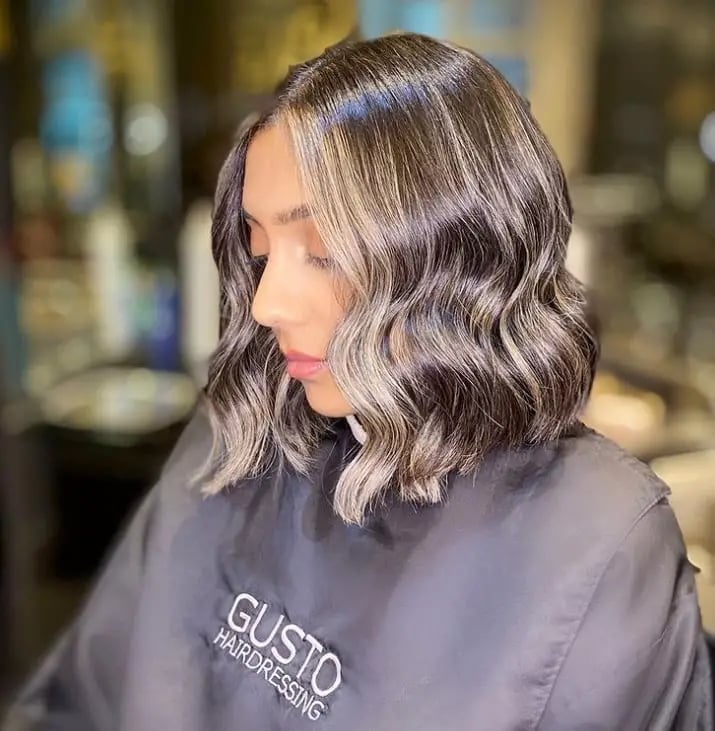
A lob lands at a practical length: short enough to feel light, long enough to pull into a low knot. The dark brown base holds ash blonde balayage streaks that sweep through the front and side sections. Fine texture keeps the blonde from looking heavy. Each piece looks deliberate, not dense. Wavy blowout styling adds volume at the crown without weighing down the ends. Side parting lets the lighter pieces fall where they catch the most light. The catch: ash tones need a purple shampoo once a week to stay cool and avoid pulling green. Pass when you want a warmer blonde that needs less toning maintenance.
Auburn tones blended into dark brown hair for subtle dimension
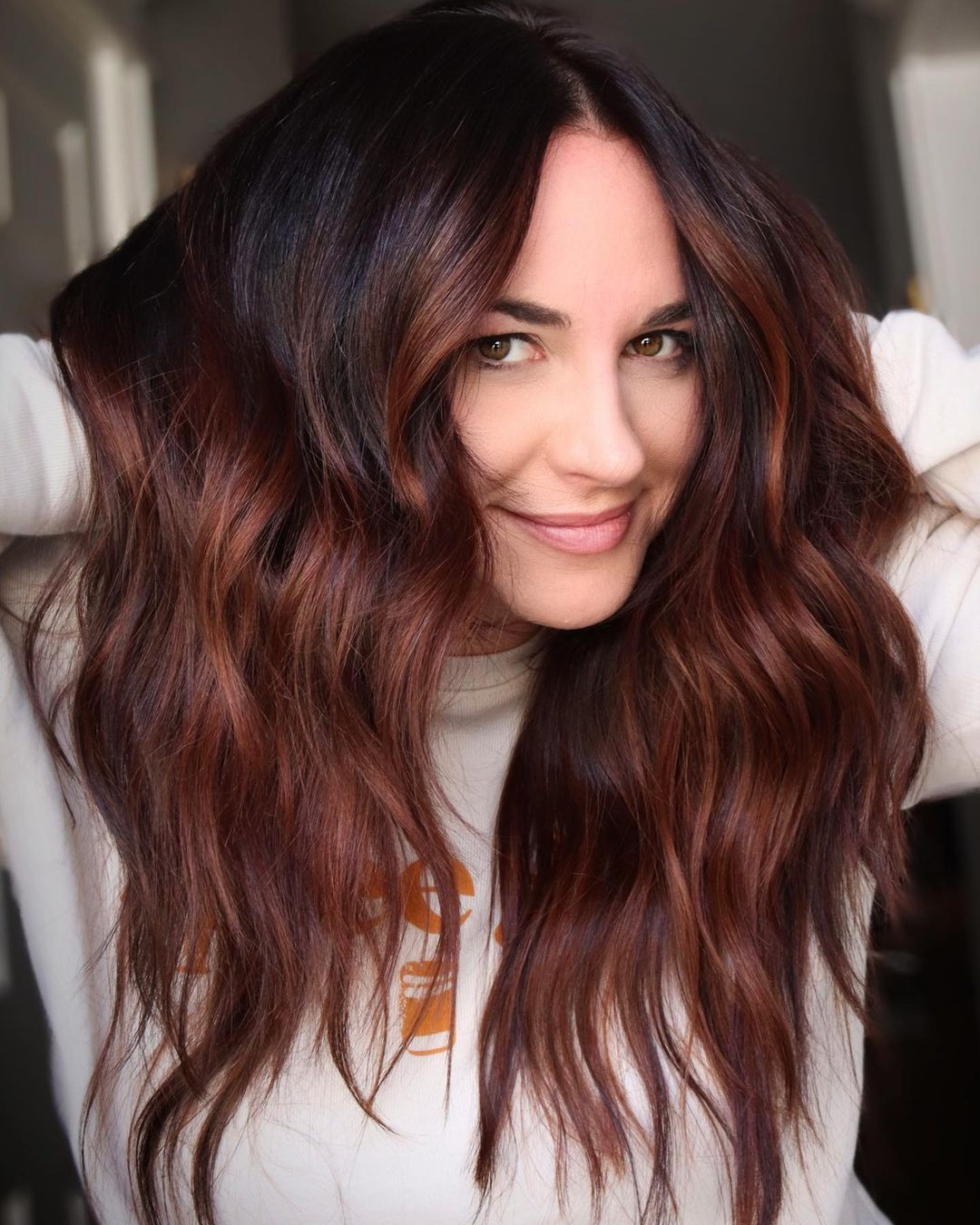
Copper gets the attention, but auburn is the version that works with a dark base instead of fighting it. The dark brown carries subtle auburn tones that surface in the waves rather than sitting on top. Fine texture lets the color blend look a shift in light, not a stripe. Middle parting keeps the transition even on both sides. Not for anyone committed to cool ash tones, auburn warms everything up, and that warmth will intensify with each wash. This one lands naturally in autumn, when the rest of your wardrobe already leans into rust and burgundy.
Caramel balayage through face-framing layers on thick wavy hair
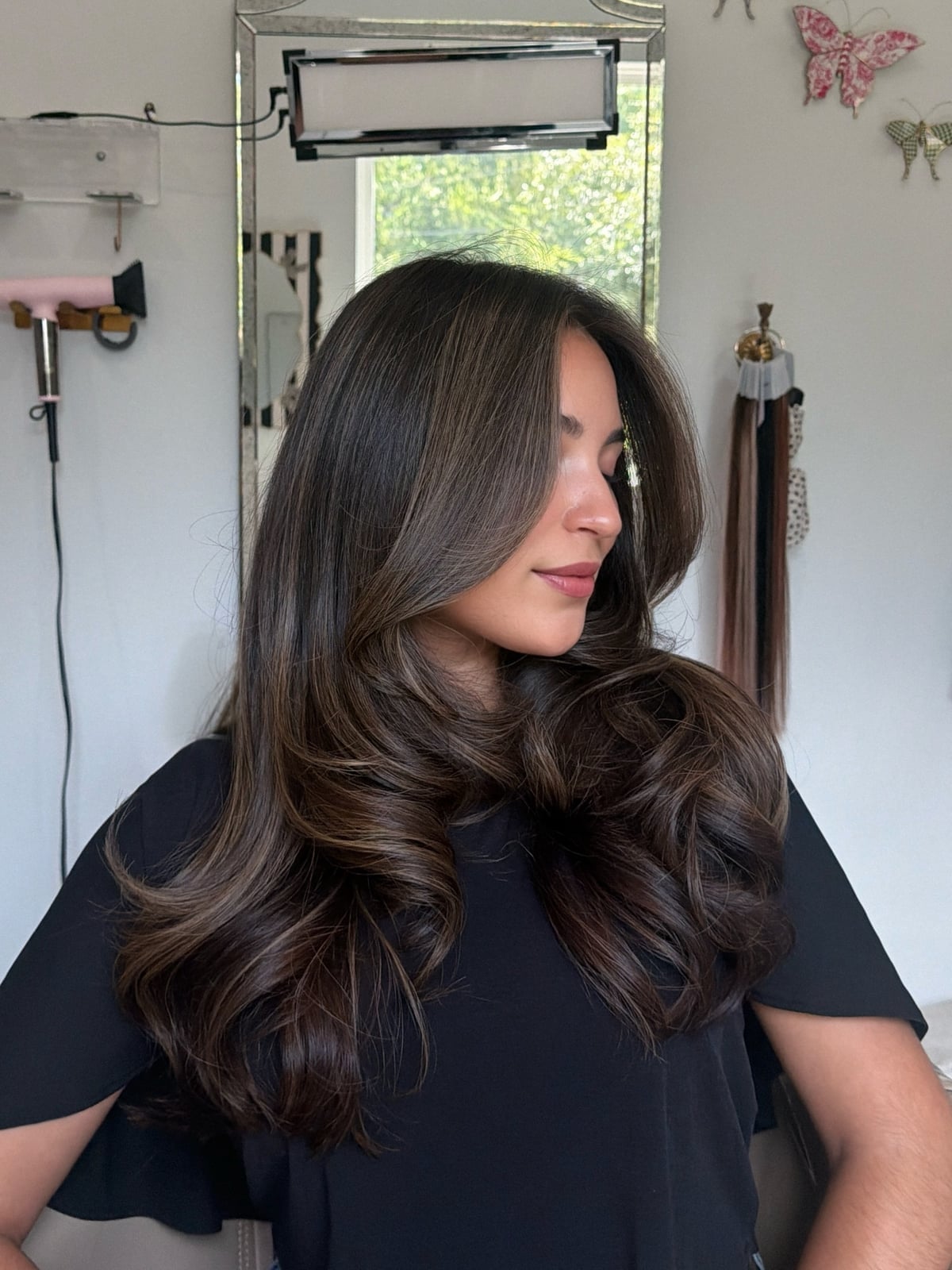
Face-framing layers work because the caramel balayage follows the cut, not the other way around. The dark brown base stays deep at the roots while lighter pieces wrap around the cheekbone area. Thick, wavy texture holds the shape without product, the layers stack naturally when air-dried. Side parting shifts the weight so the shorter front pieces sit forward. The technique relies on the colorist painting the caramel through the layer lines, so the transition looks movement, not a hard line. Layers start above the chin and graduate down, which softens a square jaw without losing length.
Contrasting blonde balayage on thick wavy layered dark brown
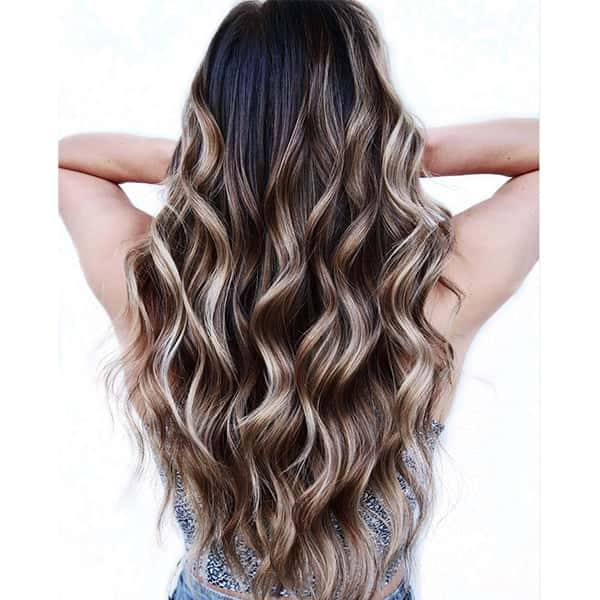
Tell your colorist: dark brown base with contrasting blonde balayage, loose layers. The goal is contrast, not blend. The blonde stands out against the dark rather than fading into it. Thick wavy texture needs the layers cut first, so the colorist can see where the wave breaks and place the lightest pieces there. Back view shows the pattern best: the blonde runs through the ends, leaving the roots dark. Wavy blowout styling is required here; straight styling flattens the contrast into two flat blocks of color. Ask your colorist for: “Keep the root dark and make the blonde pieces wide enough to read from across the room.”
Caramel balayage transition with face-framing pieces, close-up take
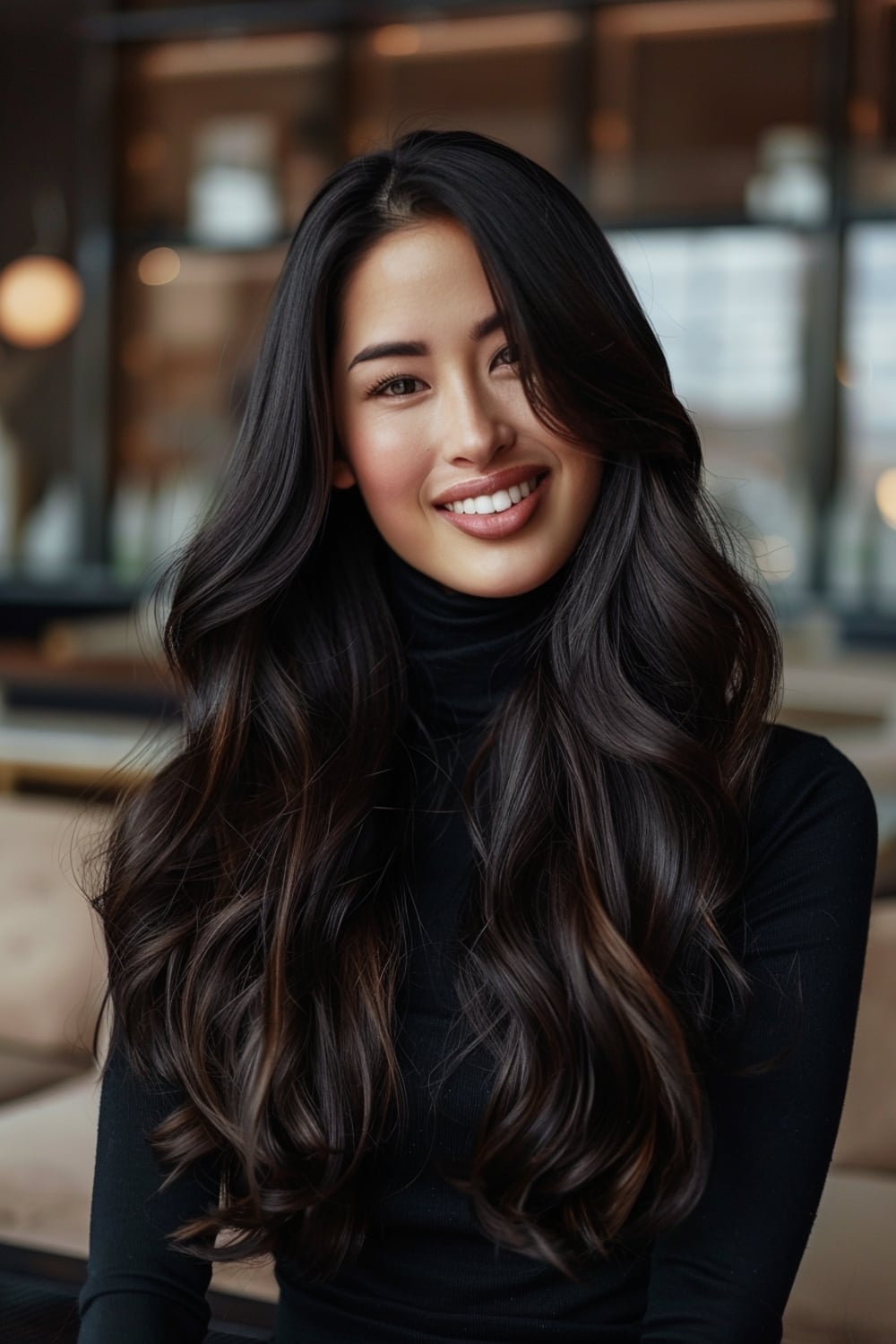
Close-up reveals what a full-length shot hides: the transition from dark brown to caramel happens in gradations, not stripes. Face-framing pieces start lighter at the cheek and soften toward the jaw, so the color draws the eye inward. Thick, wavy texture catches the caramel in the wave bends, creating the illusion of more dimension than the actual number of highlights. Middle parting keeps the transition symmetrical. This is the version to choose when you want balayage that grows out without a visible root line. The caramel fades into the dark base instead of sitting against it.
Ash blonde balayage on thick wavy layered dark brown, everyday version
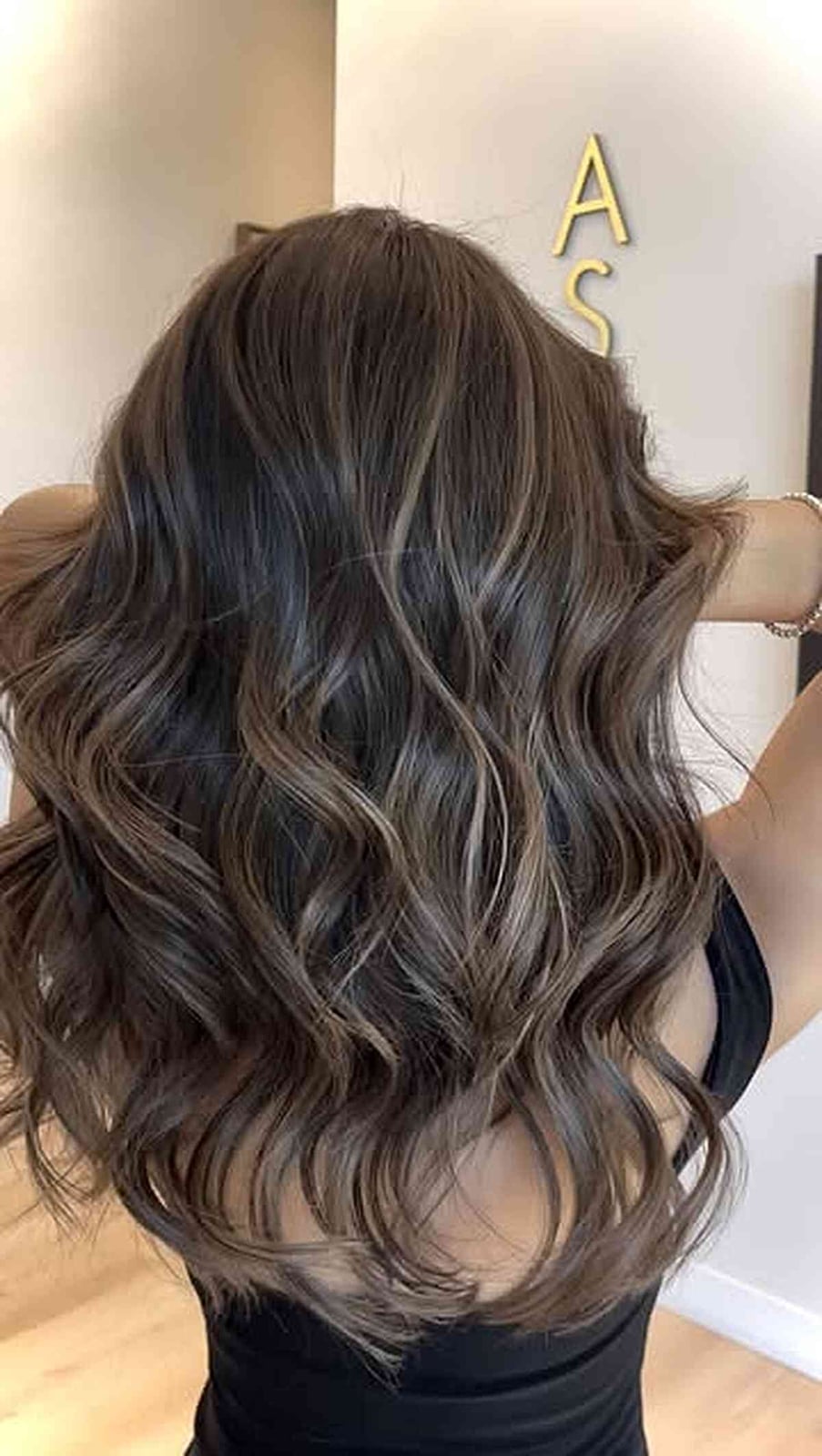
Ash blonde against a dark brown base appears deliberate on thick, wavy layers. The neutral tone softens the contrast between light and dark, so the blend feels gradual instead of striped. Fine hair may not hold the wave pattern that makes this work. A texturizing spray at the roots keeps lift for a second day. The layers shape the wave into a styled look even when you are not.
Caramel balayage highlights on fine wavy dark brown, close-up take
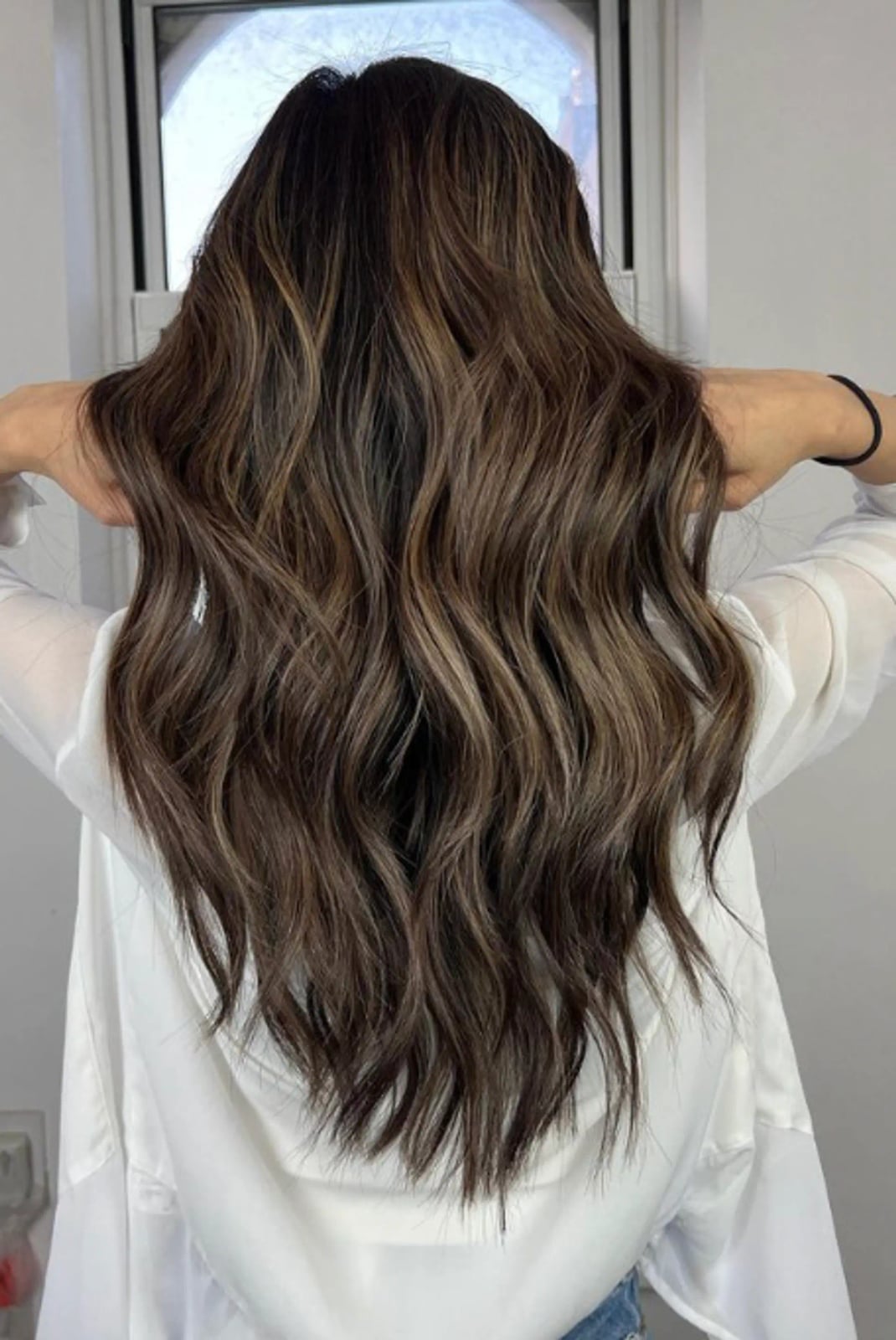
Caramel placed on fine wavy dark brown works because the tone is warm enough to read against the base without overwhelming it. The loose wave pattern matters here: it breaks up the highlights so they do not sit in a solid line. A sea salt spray applied to damp hair will reinforce that texture without weighing the strand down.
The middle part keeps the color distribution even on both sides, so the face-framing effect stays balanced. A gloss every fourth week will stop the caramel from pulling brassy against the dark base.
Smooth caramel balayage on thick wavy dark brown, everyday version
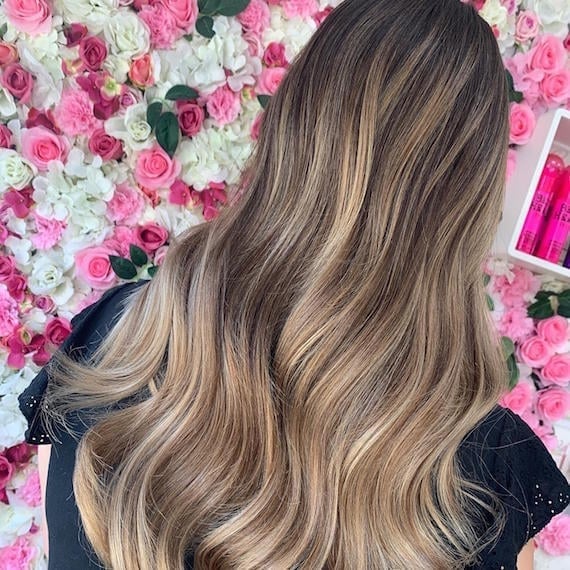
Where a chunky highlight announces itself, this smooth caramel balayage on thick wavy dark brown prefers to whisper. The transition from the dark base into the warm tone is soft enough that the line between natural and colored disappears. It lands somewhere between a grow-out and a deliberate style, which makes it a strong choice for anyone who does not want a sharp root line. The side view shows how the waves catch the lighter pieces without the color looking painted on. A leave-in conditioner will keep the wave pattern defined without adding weight.
Warm caramel balayage highlights on thick wavy, softer variation
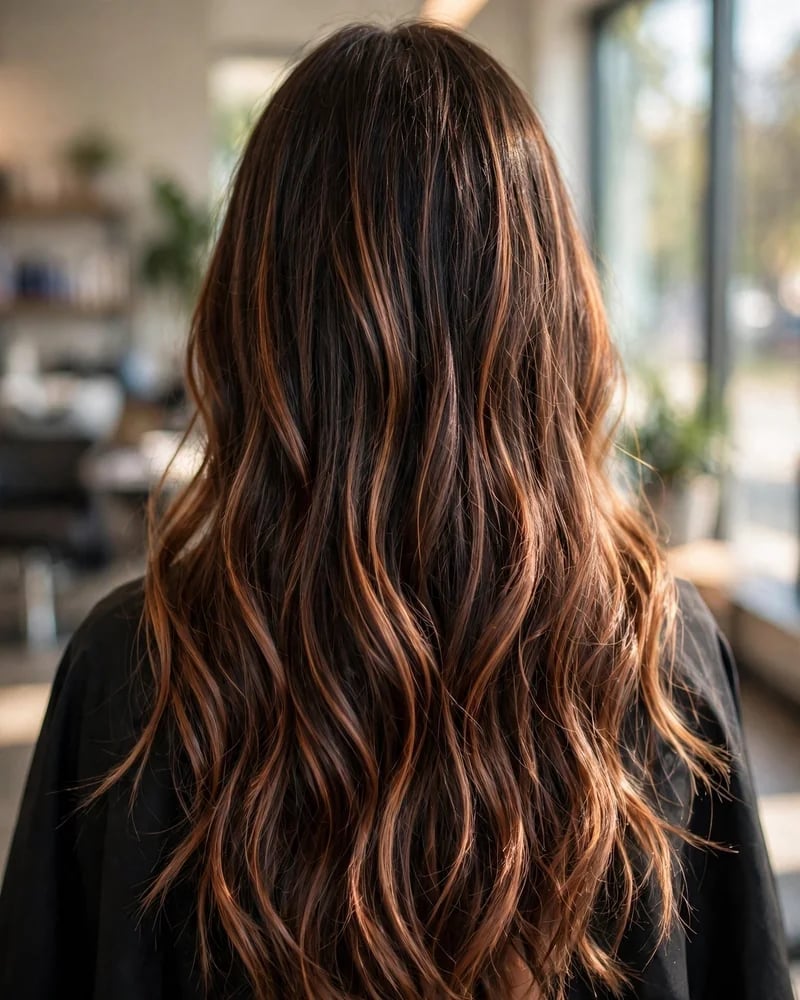
Warm caramel balayage on thick wavy dark brown relies on the base to anchor the lighter pieces. The caramel is placed to follow the natural wave, so the color moves with the curl. The middle part lets the highlights fall evenly on both sides, creating a frame that balances the face. Layers are cut to remove bulk without sacrificing the wave pattern. It suits those who prefer a warm palette. The technique keeps the root area dark, which extends the time between touch-ups by several weeks.
Caramel balayage highlights framing the face, office-safe version
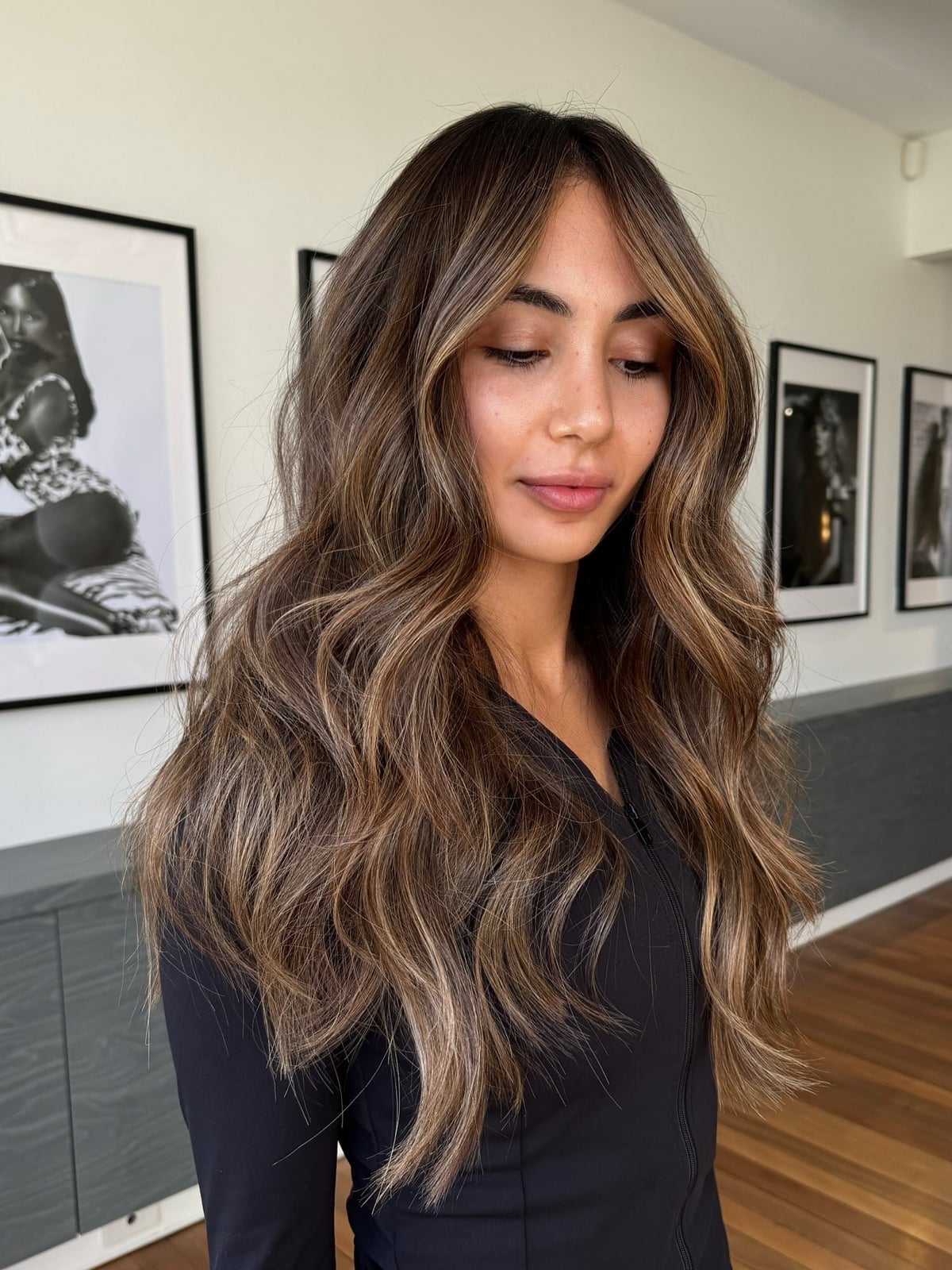
Tell your colorist: dark brown base with soft caramel balayage highlights placed around the face. The key is keeping the darkest pieces at the nape so the brightness stays forward where it works hardest. The fine wavy texture here benefits from the lighter sections because they add visual weight without actual bulk.
The middle part splits the highlights evenly, which avoids the lopsided effect that can happen when face-framing pieces are placed unevenly. A volumizing mousse applied to the roots before blow-drying will lift the wave pattern without making it stiff. This version works for a professional setting because the color looks a natural sun-lightened effect rather than a salon statement. Round and oval face shapes get the most out of this placement.
Blonde strands create contrast on dark brown hair with waves
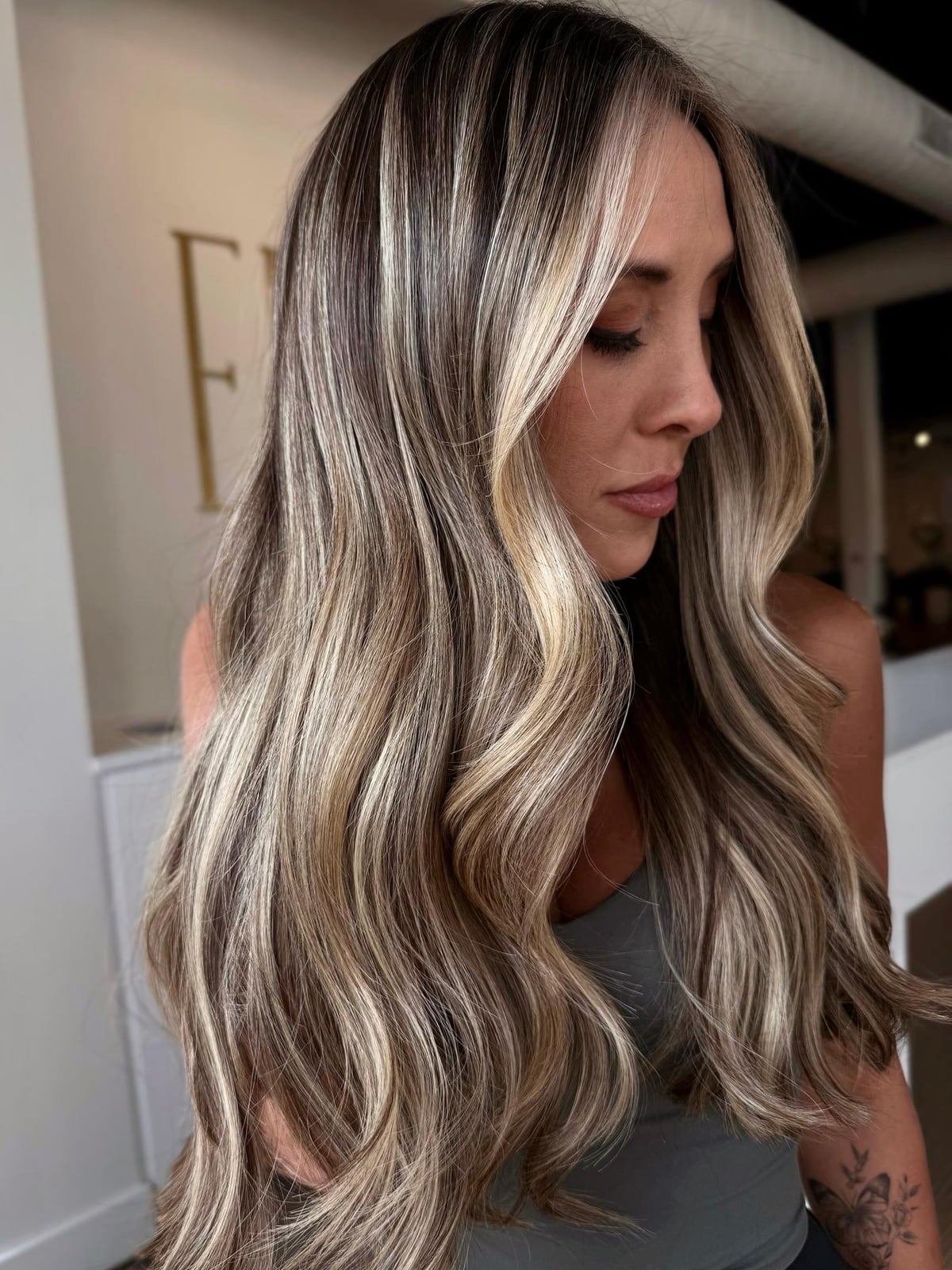
Contrast this with a subtler caramel balayage. A dark brown base meets striking blonde balayage, the light strands painted onto fine wavy texture in long layers. A side part lets those blonde pieces fall forward. Fine hair gains the illusion of density from the contrast, and most face shapes work with long layers. Thick hair may not hold this particular wave pattern. A texturizing spray defines the waves after styling.
Rich caramel balayage on thick curly dark brown hair
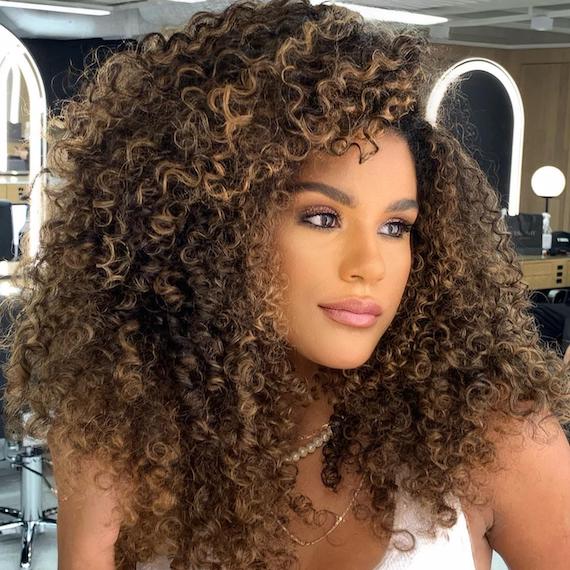
A dark brown base holds a rich caramel balayage that lands on thick curly texture. Side part and a voluminous blowout let the curls show every tone. Balayage sits in the mid-lengths and ends, leaving the root area dark. Thick curly hair can support that volume without falling flat. Suits most face shapes. A straight-styled color or fine hair that won’t hold the curl and blowout shape are not ideal for this look. Tell your colorist: dark brown base with rich caramel balayage. A curl-defining cream and a diffuser keep the shape.
Warm copper balayage on thick wavy dark brown, office-safe version
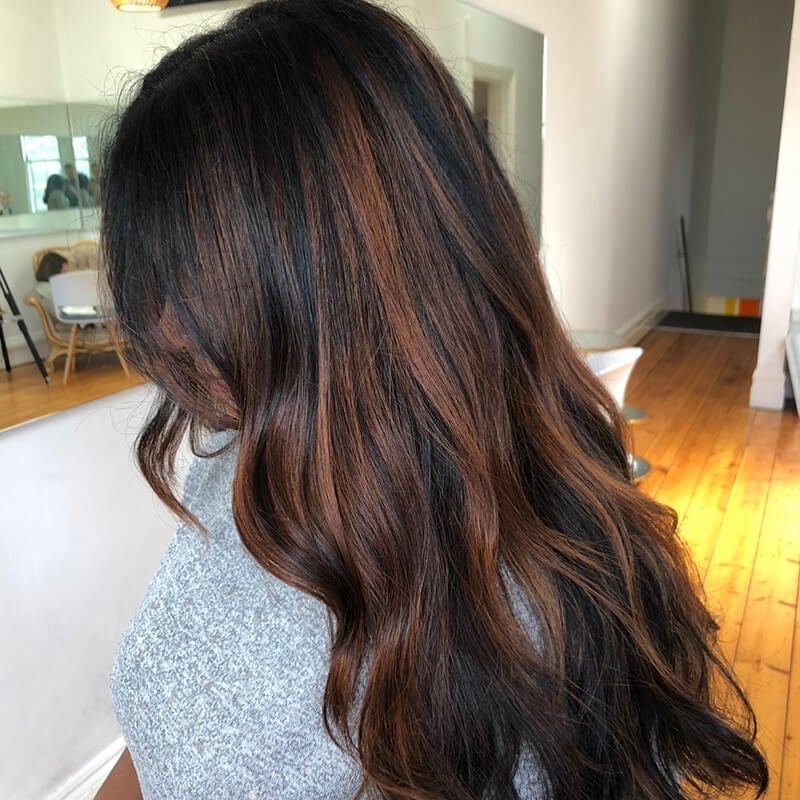
Warm copper balayage on a dark brown base, painted through the mid-lengths and ends of thick wavy texture. The tone sits just bright enough to look copper without crossing into orange. Loose waves help the color transition look smooth.
The upkeep reality: copper fades faster than caramel or ash tones. A color-depositing conditioner used once a week keeps the warmth from turning brassy. Thick wavy hair holds the wave pattern well, so a smoothing serum controls frizz without flattening the texture. No root line to manage. The dark base grows out cleanly.
Contrasting blonde balayage on fine wavy layered dark, close-up take
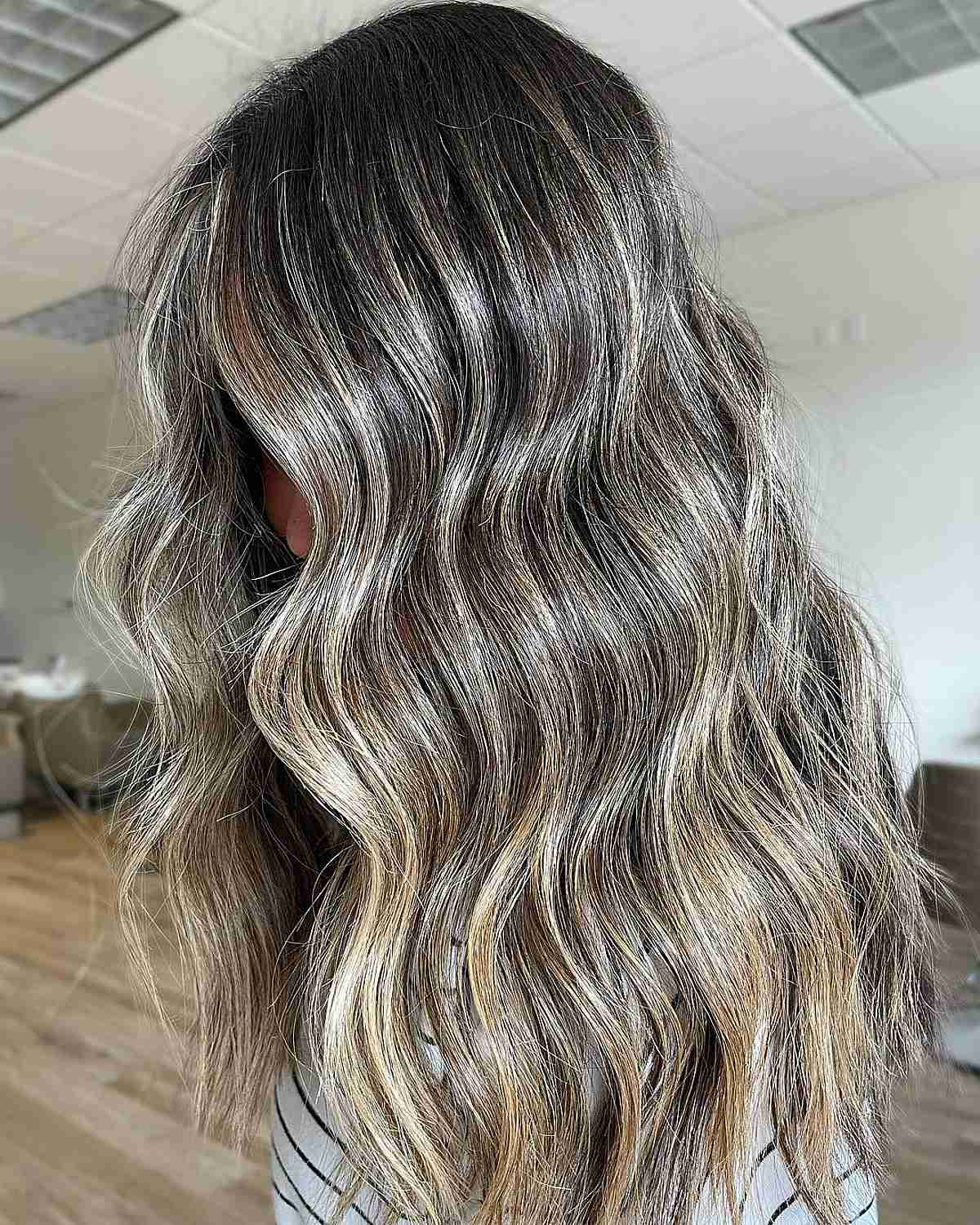
This one lands in late summer best. A dark brown base carries striking blonde balayage woven through a layered cut on fine wavy hair. Middle part and a wavy blowout let the lighter pieces read clearly against the dark. The contrast gives fine hair a denser look. The decision: layered cut suits round and oval faces; the middle part elongates a round face. The layered cut and high-contrast balayage work best on fine to medium hair. Ask your colorist for: dark brown base with striking blonde balayage, layered cut. A texturizing spray adds grip for the waves.
Face-framing blonde highlights on fine wavy dark, everyday version
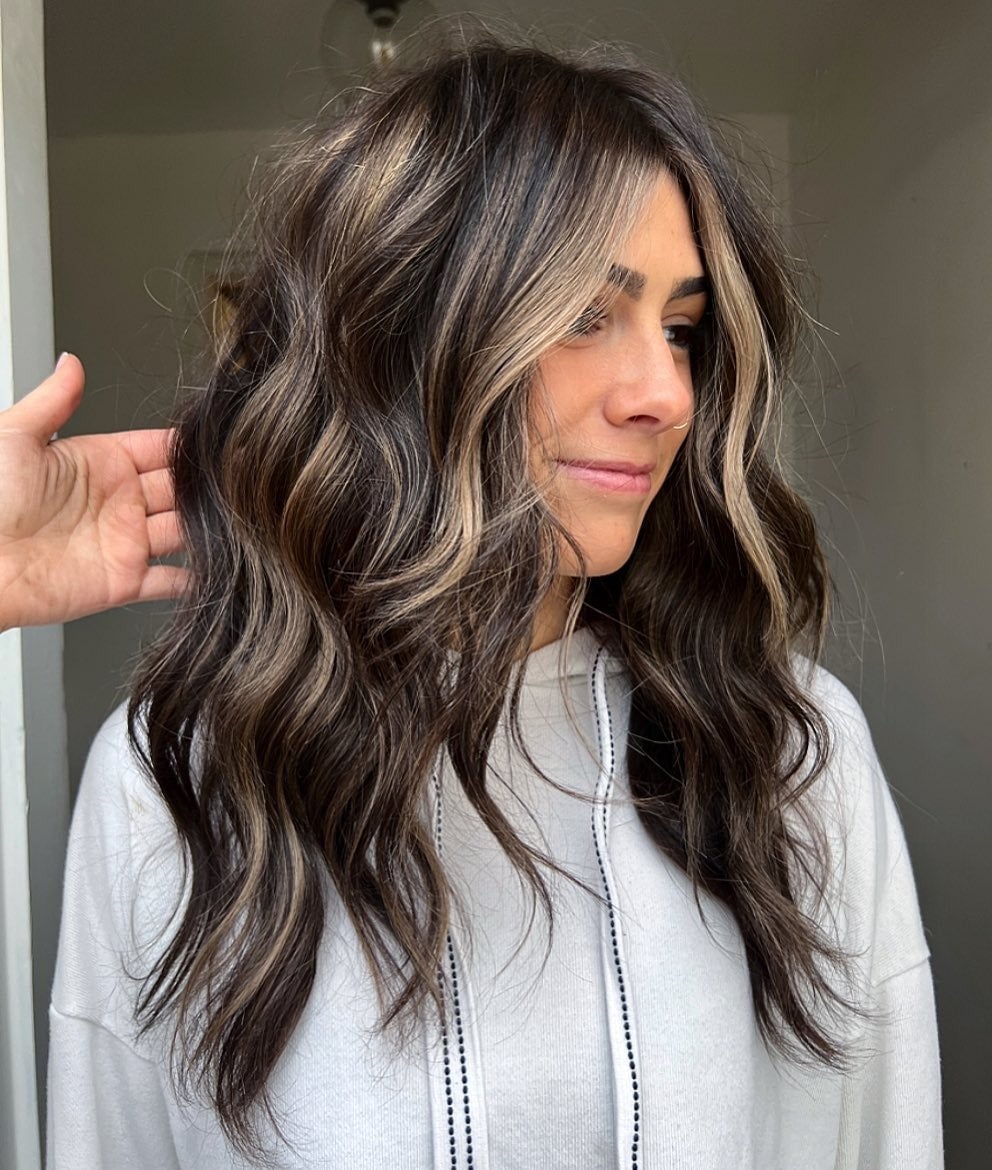
Placement rule: lighter pieces at the front, darker base everywhere else. A dark brown base gets face-framing blonde highlights painted onto fine wavy texture. Side part and a wavy blowout let those front pieces catch the eye. The decision: fine hair benefits from the lighter strands around the face, and the technique adds the illusion of fullness. Suits round or oval faces best. This style works well for those who prefer a subtle face-framing effect rather than all-over color, especially if hair is not very thick. A volumizing mousse before blow-drying gives the waves lift at the root.
Face-framing blonde highlights on thick wavy layered dark brown
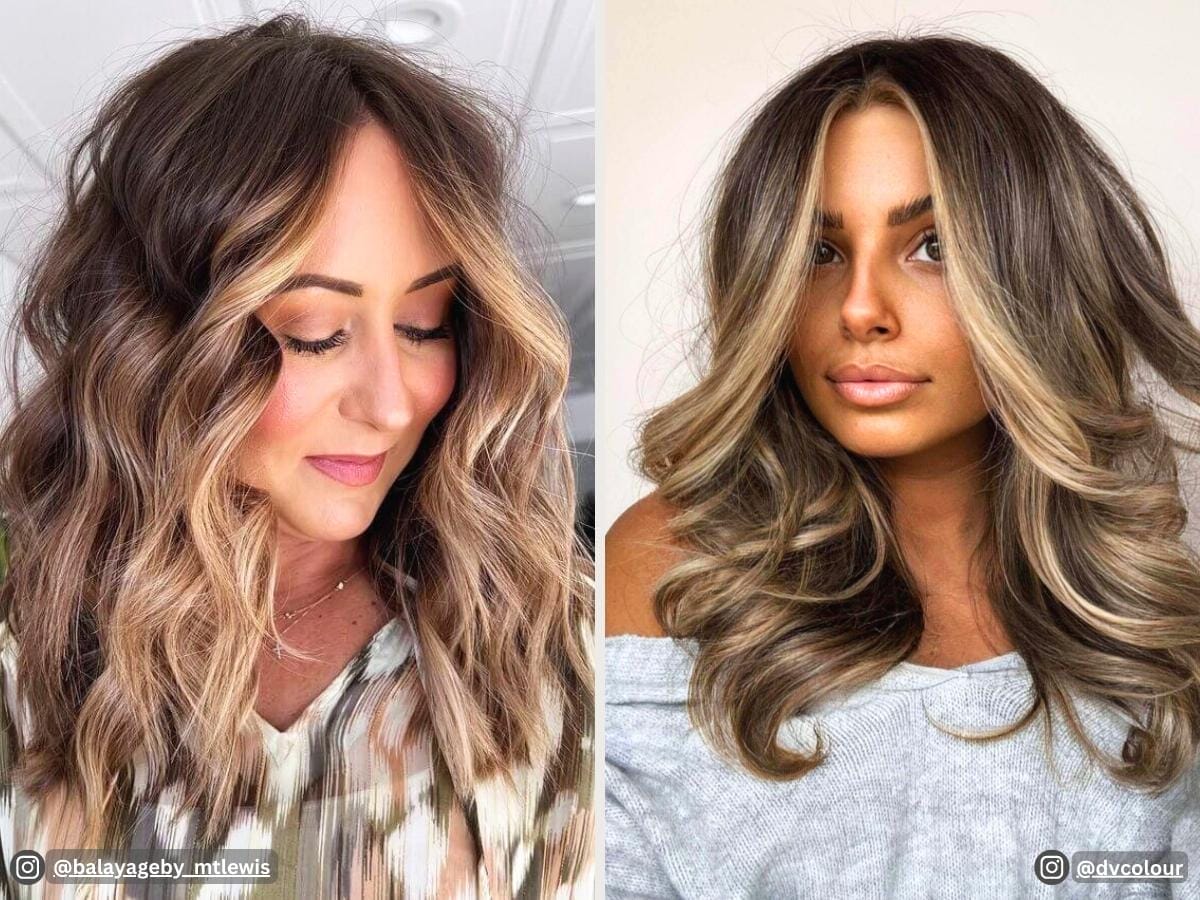
A round brush and a blow-dryer are your main tools for the first five minutes. The waves soften the contrast between base and highlight, so the grow-out stays wearable.
Blue balayage creates a dramatic effect on wavy hair
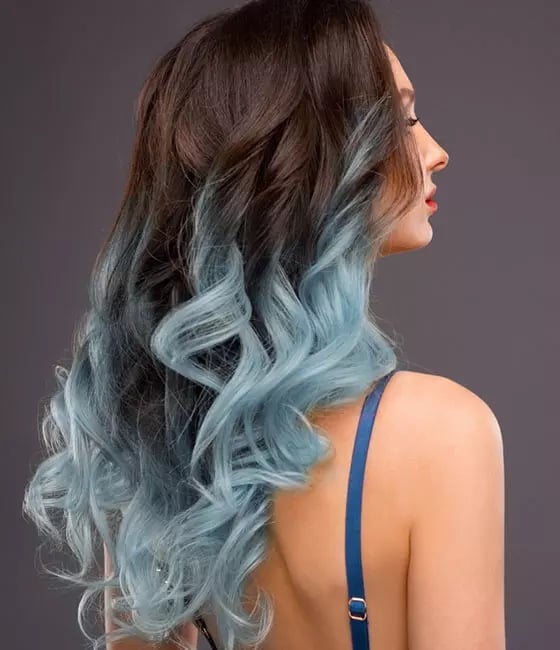
Blue reads bolder than copper or caramel, but the balayage technique keeps it from feeling like a costume. The dark brown base anchors the color at the roots, so the shift only starts at the mid-lengths. Thick, wavy texture helps the blue tones look movement rather than a solid block. Pass when you want a low-maintenance tone: blue fades faster than warm shades, and the refresh schedule is shorter. A color-safe shampoo and cooler water will stretch the time between toning appointments.
Caramel balayage highlights on thick wavy layered dark brown
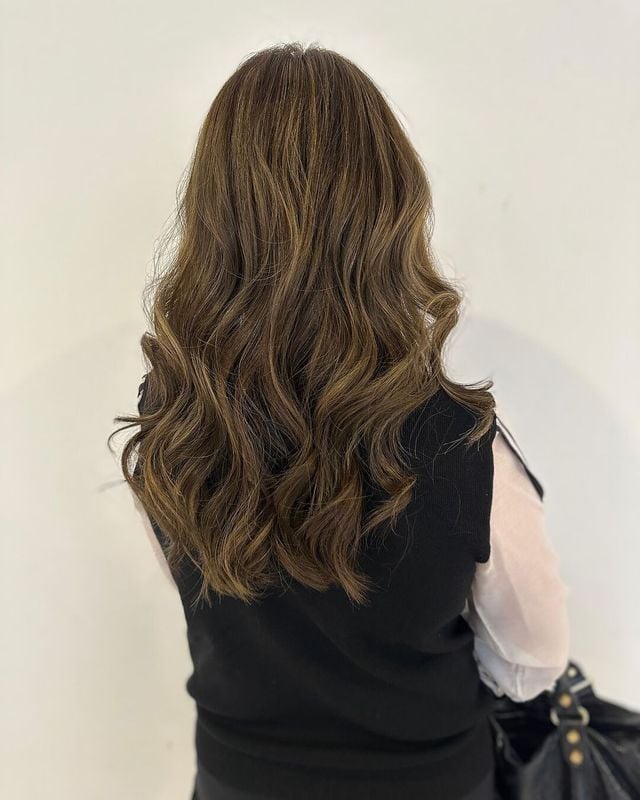
Caramel against dark brown creates a warm dimension that reads natural, not brassy. The layers are visible through the waves, so each highlight has room to land on a different plane. Thick hair carries the blend well, fine hair would lose the separation. Skip it if you want a single-process color: balayage on thick, layered hair takes more chair time than a root-to-end gloss. The result is a finish that looks lived-in from day one, with no hard line at the root.
Smooth caramel balayage blend on thick wavy dark, close-up take
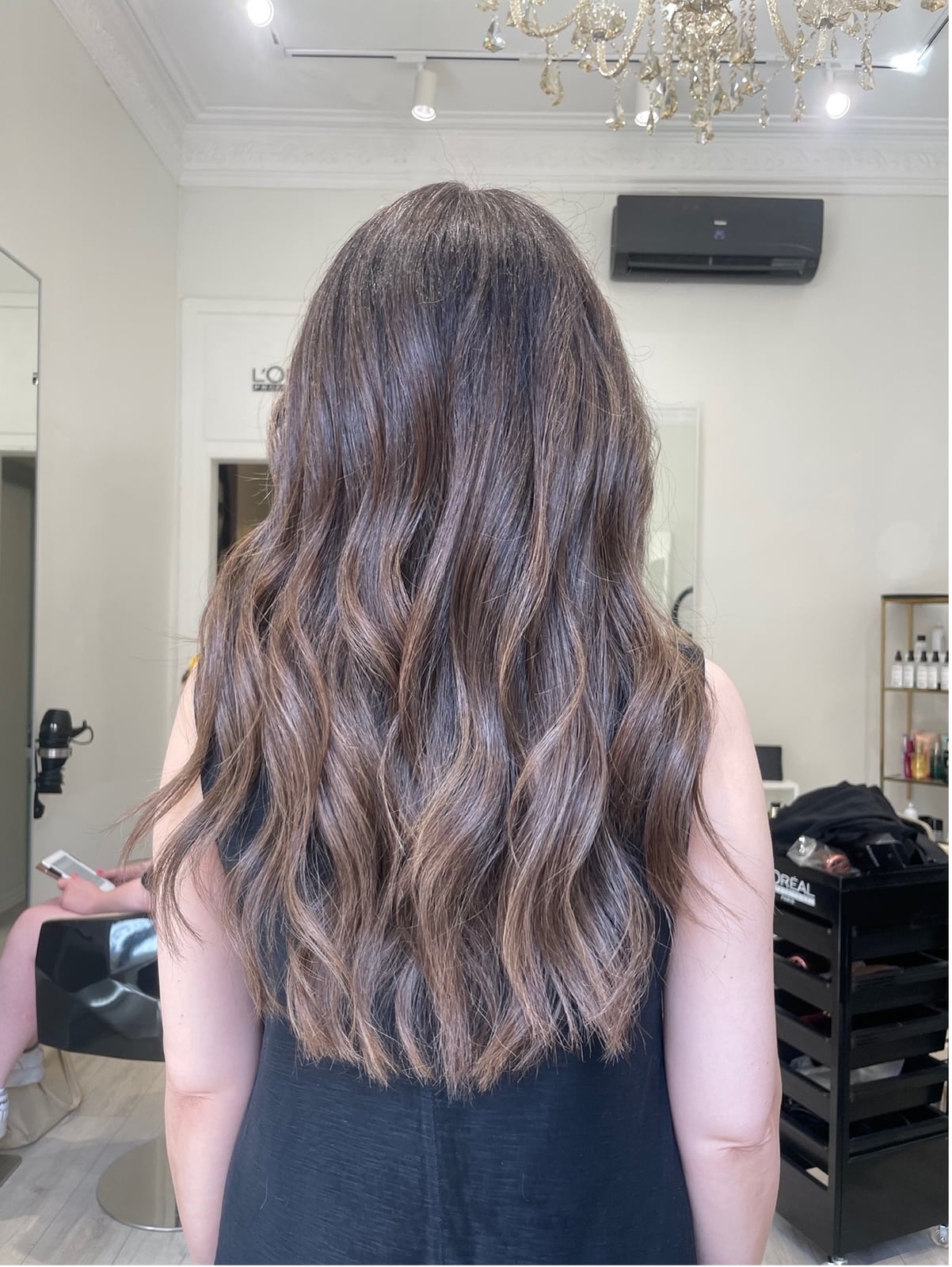
A smooth blend means no stripe, no demarcation line, just a gradual lift from dark brown into caramel. On thick, wavy hair, the soft waves break up the color further, so the transition looks even more natural. A leave-in conditioner prevents the mid-lengths from feeling dry after the lightening process.
The close-up view shows how the color wraps around each wave. That softness is the point. It mimics how sunlight would naturally lighten hair over a summer.
Caramel balayage transition on thick wavy dark brown, bolder variation
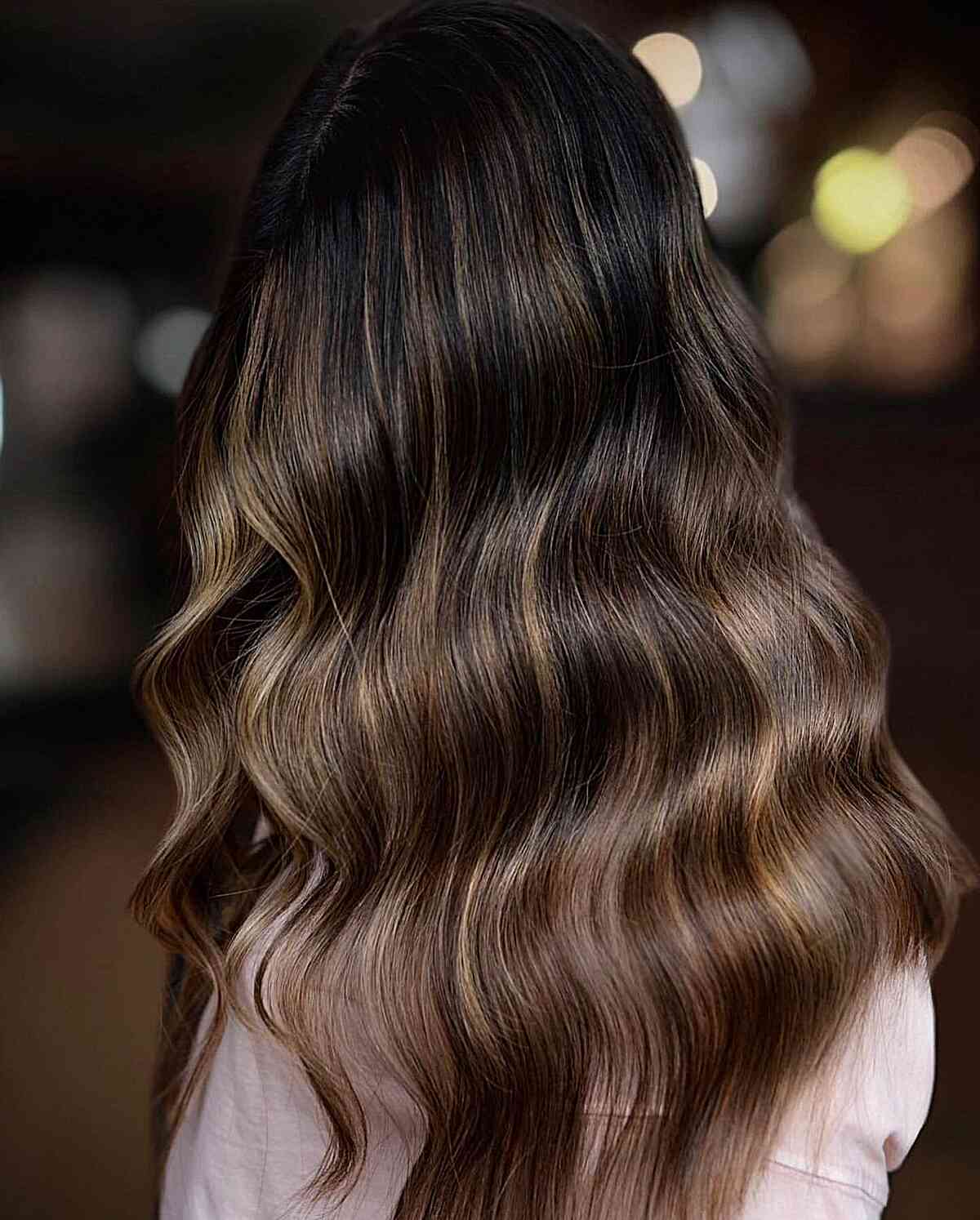
Summer is the season for this color story. The caramel transition from dark brown reads like a gradual sun-lightening, but the sweeping strokes are deliberate, no natural sunburn at the ends. Thick, wavy texture amplifies the depth, making the caramel strands look richer than they would on straight hair. The bolder variation means the caramel starts higher than a subtle version, so you get more visible color without full highlights. A texture spray on damp waves is all the styling it needs.
Ash blonde balayage with face-framing layers on fine wavy
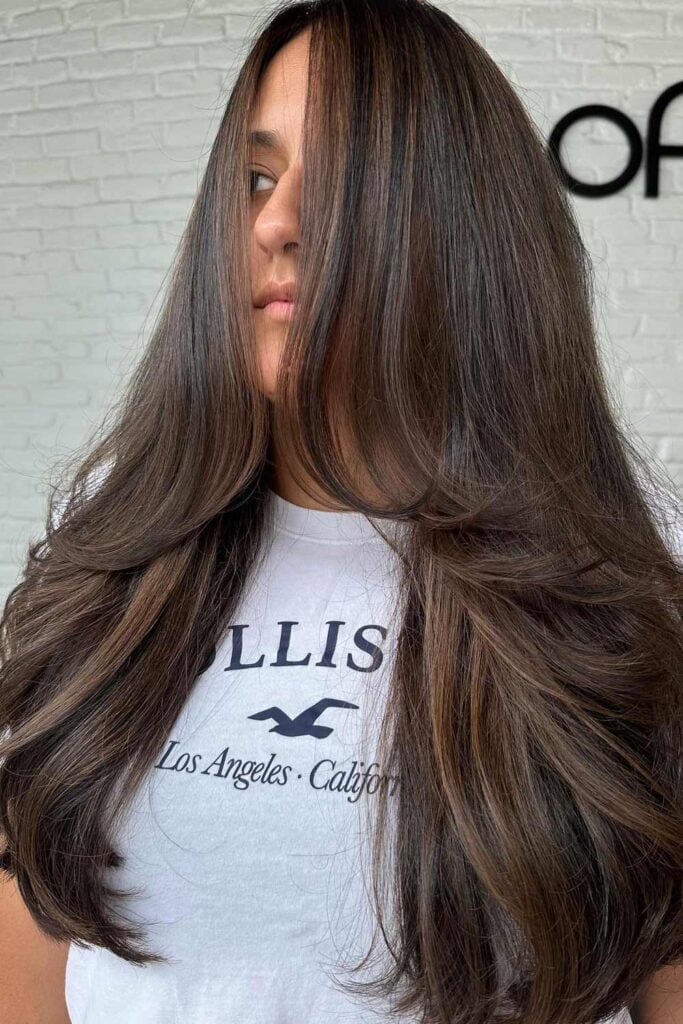
Fine hair gets a genuine structural upgrade here. The dark brown base keeps depth while subtle ash blonde balayage lands on the face-framing layers only, so the lighter pieces stay where they catch the most light. Waves soften the contrast further. It suits round or oval faces best, since the layered front creates vertical lines. Ask your colorist for: dark brown base with subtle ash blonde balayage, face-framing layers. A round brush during blow-dry defines the shape without extra heat passes.
Caramel balayage highlights on fine wavy layered, everyday version
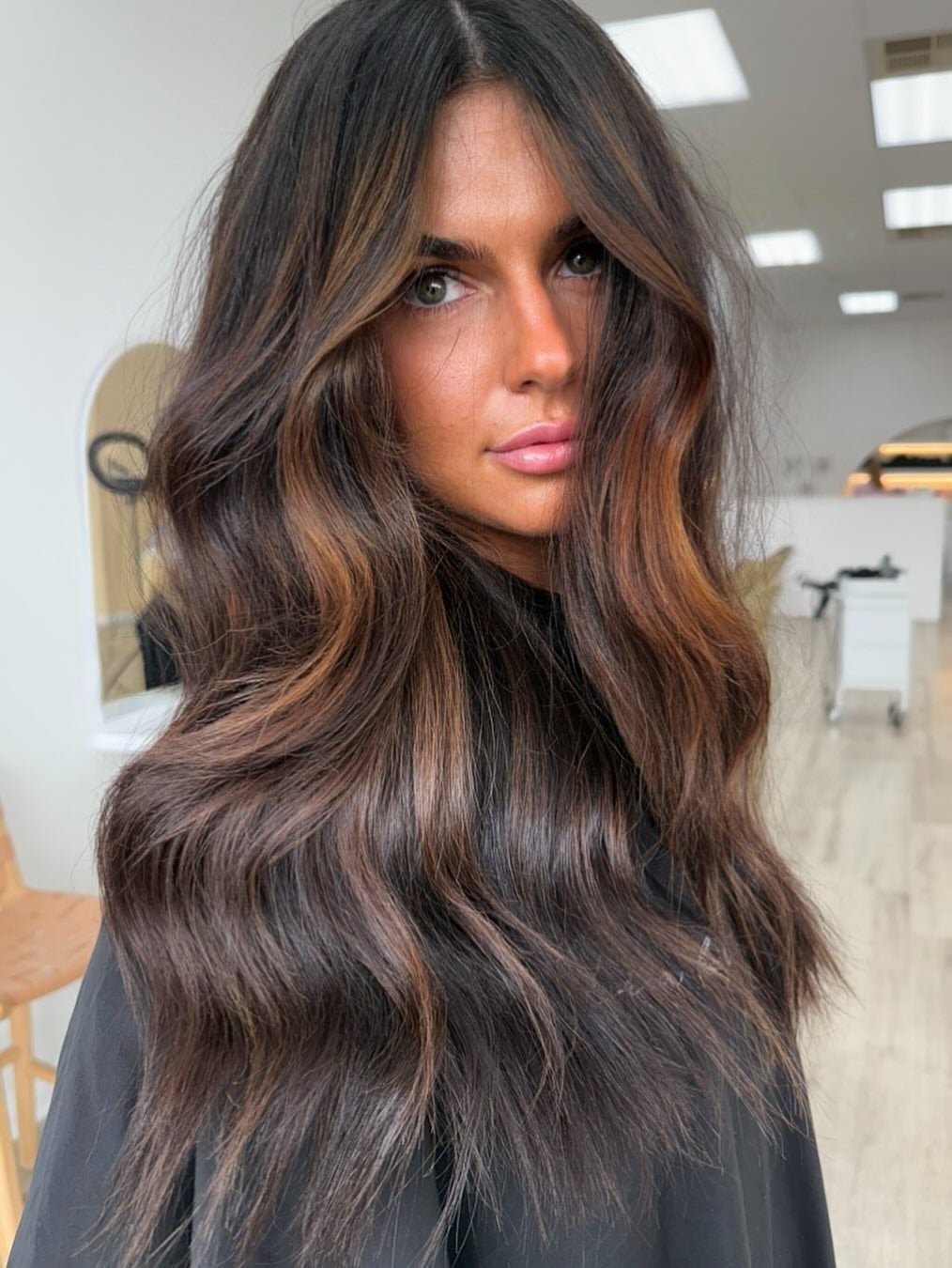
One rule for caramel on fine hair: keep the base dominant. Here the dark brown foundation holds the structure while caramel highlights sit sparingly through the layers, never overwhelming the texture. The loose waves let the warm strands surface and recede naturally. Suits most face shapes because the placement avoids a heavy concentration at the roots. Skip it if you prefer straight styles or high-contrast color, subtlety is the point. A sea salt spray at the mid-lengths adds texture without weighing the fine strands down.
Ash blonde balayage transition on fine straight dark brown
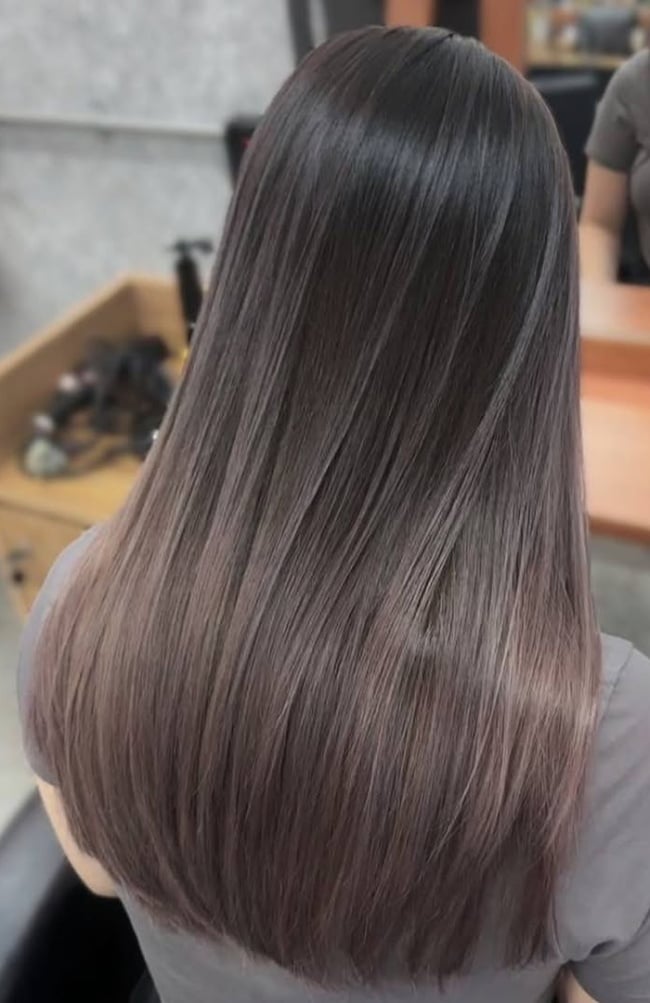
Compared to a warm caramel fade, this ash version keeps the color cool from root to tip. The dark brown base transitions into an ash blonde balayage with no visible line, relying on fine straight texture to show the smooth gradient. A middle part exposes both sides evenly. Suits most face shapes because the symmetry needs no rebalancing. Skip it if you prefer warm tones or textured styles, straight ash reads cooler and flatter than its wavy counterpart. A lightweight smoothing serum keeps the surface reflective between trims.
Face-framing blonde balayage on thick wavy layered dark, close-up take
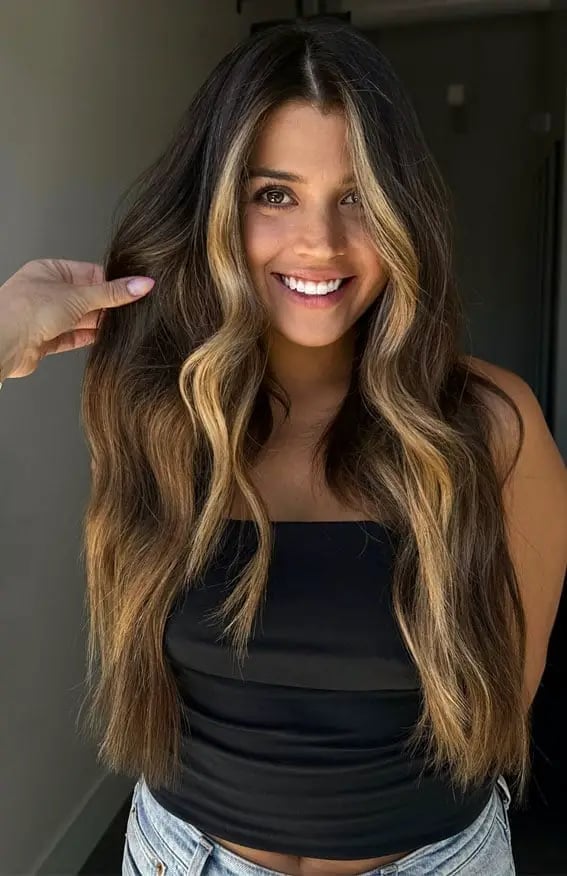
Thick wavy hair can handle a stronger lift around the face. The dark brown base stays deep through the back while blonde balayage concentrates on the front layers, creating a lighter frame. The wavy blowout adds volume that keeps the lighter pieces visible from every angle. Suits most face shapes because the placement wraps forward. It works best with layered cuts and regular styling. The layers need a regular refresh to keep the frame defined. Ask your colorist for: long layered dark brown hair, face-framing blonde balayage. A round brush during blow-dry sets the wave direction without extra heat.
Final Thoughts
Pick the tone that fits your calendar and your base shade.
- Fine hair: choose ash or caramel for soft lift without bulk.
- Ten minutes of styling: go with face-framing pieces that work air-dried.
- Cool base that pulls brassy: ash blonde or auburn tones hold cooler longer.
- Thick, wavy texture: warm copper or caramel balayage shows the dimension best.
Find the perfect balayage to enhance your dark hair’s natural beauty.