 Save
You are scrolling saved photos, trying to tell one layered cut from another. The shape that keeps showing up, a few shorter pieces around the jaw that sweep forward or tuck behind the ear, has a practical reason behind it: those pieces cut the grow-out line in half and give a blowout something to hold onto.
Which is why Cute Face Framing Layers 2027 fill so many saved boards. 34 real examples, from low-upkeep air-dried versions to glossy blowouts, for straight, wavy, fine and thick hair. The struggle is finding the version that works with your natural texture and your morning timer. This collection narrows it down.
35 ideas in this post
- Prominent layers that sweep away from the face
- Curtain bangs that blend smoothly into layers
- When you want volume with blonde highlights
- Voluminous blowout with face-framing layers
- Thick straight hair with face-framing layers
- Honey blonde with lighter highlights and curtain bangs
- Subtle caramel highlights on a dark brown base
- Brunette with ash blonde highlights and gentle waves
- A shag with choppy layers and ash blonde
- Ash blonde with subtle highlights and side part
- Copper red shag with wispy bangs
- Curtain bangs blend into layers with highlights, wavy
- Relaxed vibe with curtain bangs and dark brown
- Dark brown with blonde highlights and air-dried texture
- Blonde with highlights and natural waves
- Side part with wispy curtain bangs and waves
- Dark brown with caramel highlights and soft waves
- Auburn highlights with fine straight texture
- Honey highlights add dimension to dark brown
- Dark brown base with honey highlights and waves
- Blunt bangs and caramel highlights
- Long layers with curtain bangs and subtle highlights
- Dark brown with wispy curtain bangs and soft blowout
- Thick wavy hair with curtain bangs and highlights
- Copper balayage on long layered hair
- Blonde with subtle highlights and natural waves and wavy and fine
- Dark brown with air-dried texture, close-up take
- Blonde with fine highlights and air-dried waves
- Dark blonde base with lighter highlights and waves
- Dark brown with subtle highlights and curtain bangs
- Dark brown with fine highlights and air-dried, everyday version
- Choppy layers that frame the face
- Shag with choppy layers and blonde highlights and curtain bangs
- Ash blonde with subtle highlights and side part, close-up take
- Final Thoughts
Prominent layers that sweep away from the face
Dark brown with subtle gray highlights creates a refined look. The cut uses prominent face-framing layers that start high and sweep outward, so the color hits in streaks rather than a solid block. Fine to medium straight hair starting at the collarbone holds this shape best. Square and round faces read softer here because the layers break up the perimeter. This design needs a smooth blowout to make the sweep read. Tell your stylist: prominent face-framing layers, subtle gray highlights. Trim every six weeks keeps the line crisp.
Curtain bangs that blend smoothly into layers
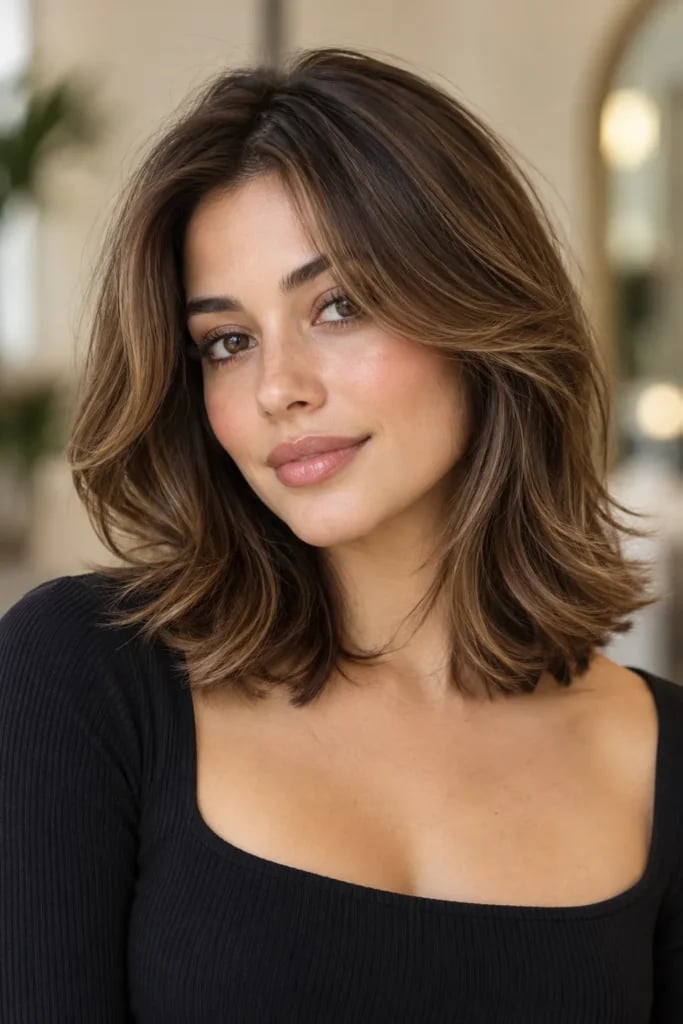
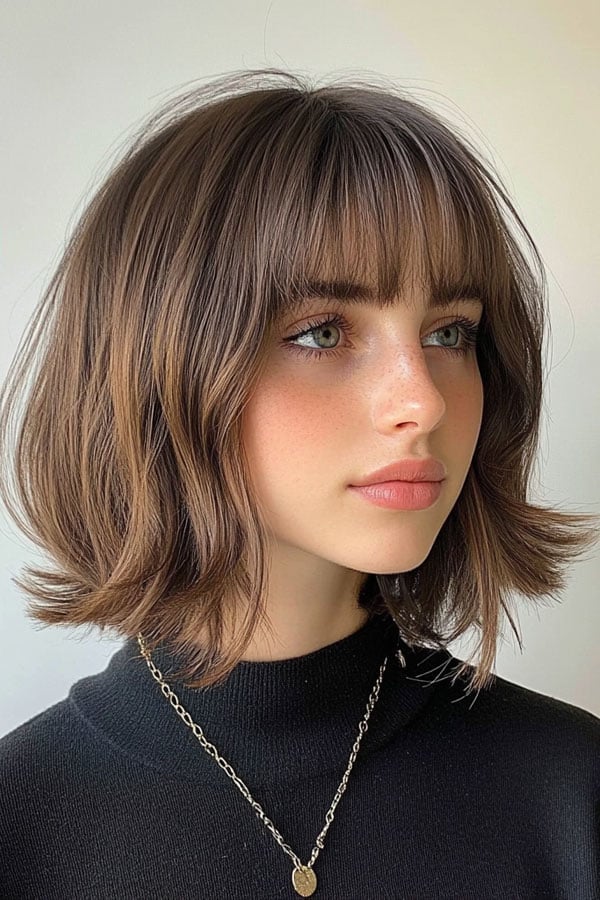
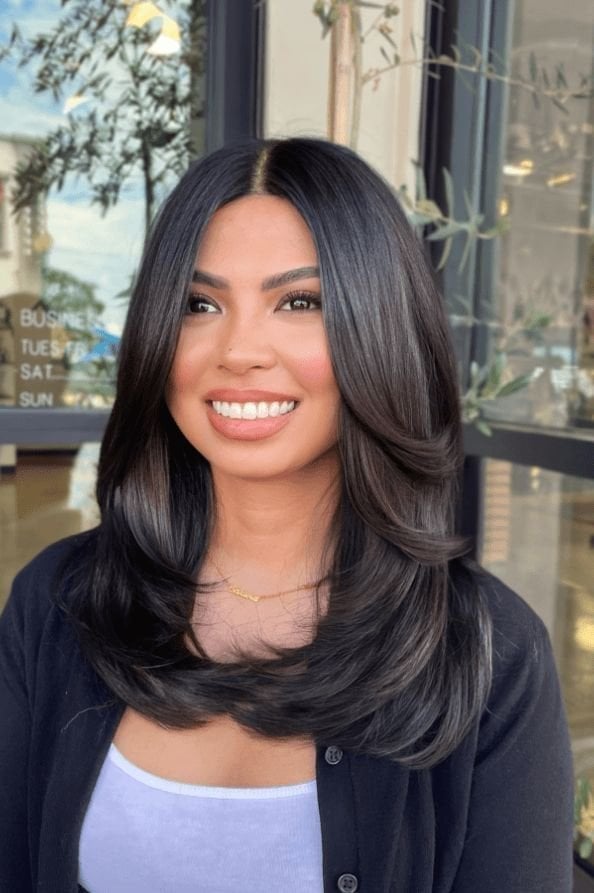
Curtain bangs that blend into face-framing layers. You see it on every feed, but the execution is specific. The bangs sweep to the sides, not straight down, and the layers below continue that angle rather than dropping abruptly. Fine hair at the collarbone or longer works. Round and oval faces get the most out of the softness. Skip it if you dislike daily fringe styling or have very thick hair that fights the sweep. A round brush on damp bangs keeps them moving in the right direction.
When you want volume with blonde highlights
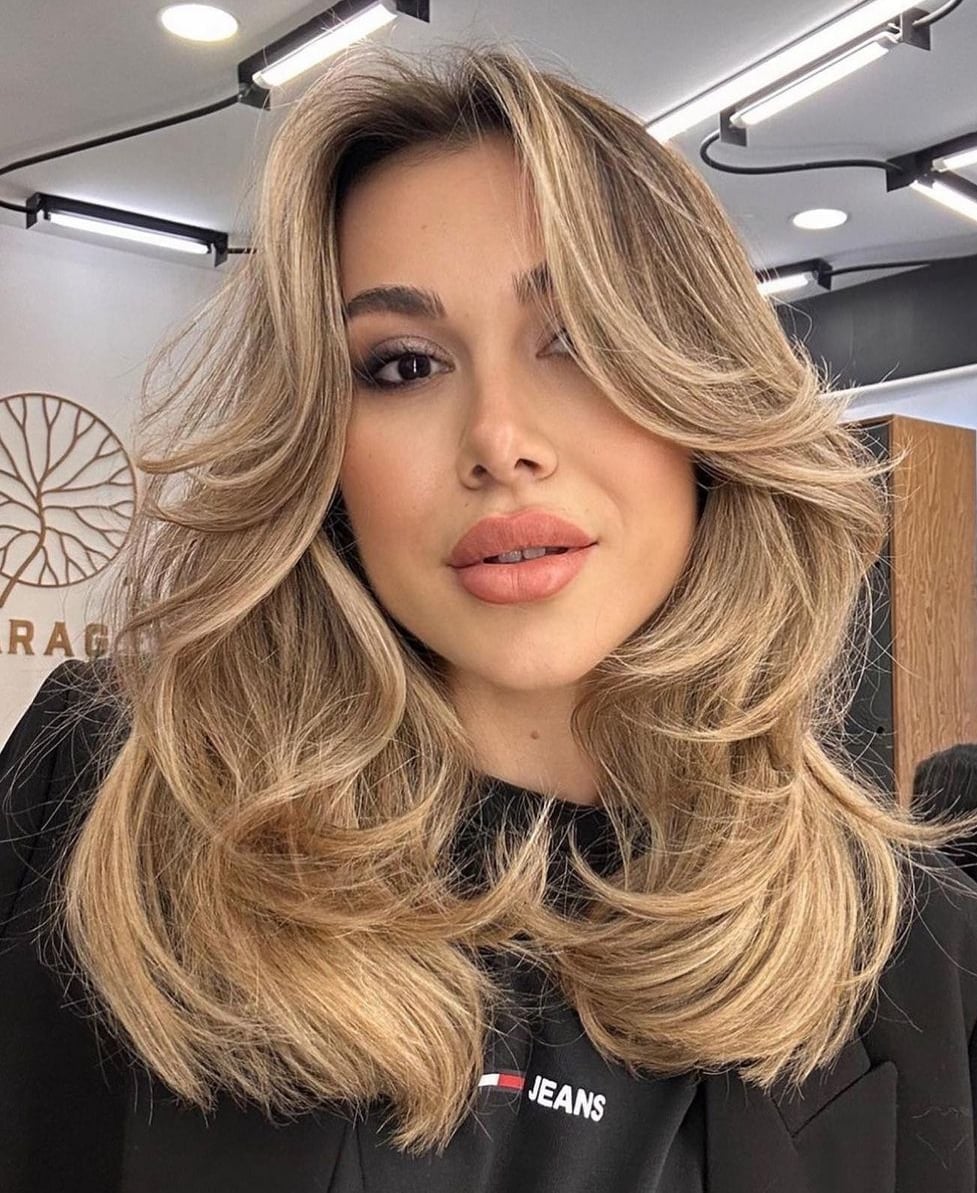
Loose waves versus a smooth blowout. This one picks the first. The face-framing layers start around the chin and sweep out, so the volume sits wide rather than tall. Blonde with thin lighter strands keeps the base from going flat. Fine hair starting at the chin gains real body here. This style requires regular blonde upkeep for dark natural hair. Ask your stylist for: face-framing layers that sweep outwards, blonde with highlights. A texturizing spray on the waves holds the shape past lunch.
Voluminous blowout with face-framing layers
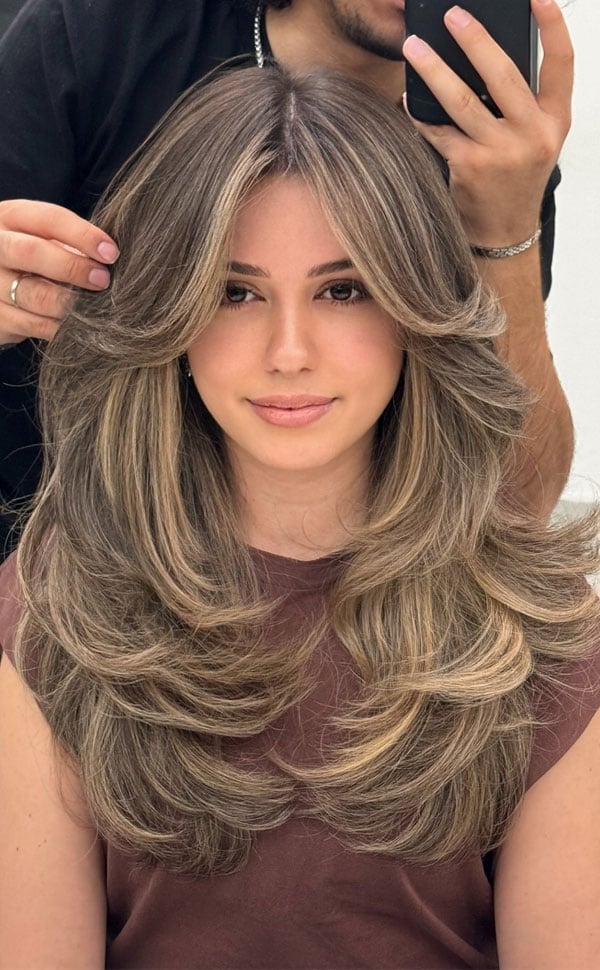
Thick hair meets a voluminous blowout. The layered cut uses curtain bangs that sweep away from the face, and the dark blonde base with lighter highlights looks texture rather than color work. The wave pattern here is gentle, not a tight curl, not a flat iron. Thick hair starting at the collarbone supports the lift. Strong features soften when the layers break the line. Skip it if you prefer an air-dried texture or have very fine hair that will not hold the shape. A large round brush on the blowout sets the volume.
Thick straight hair with face-framing layers
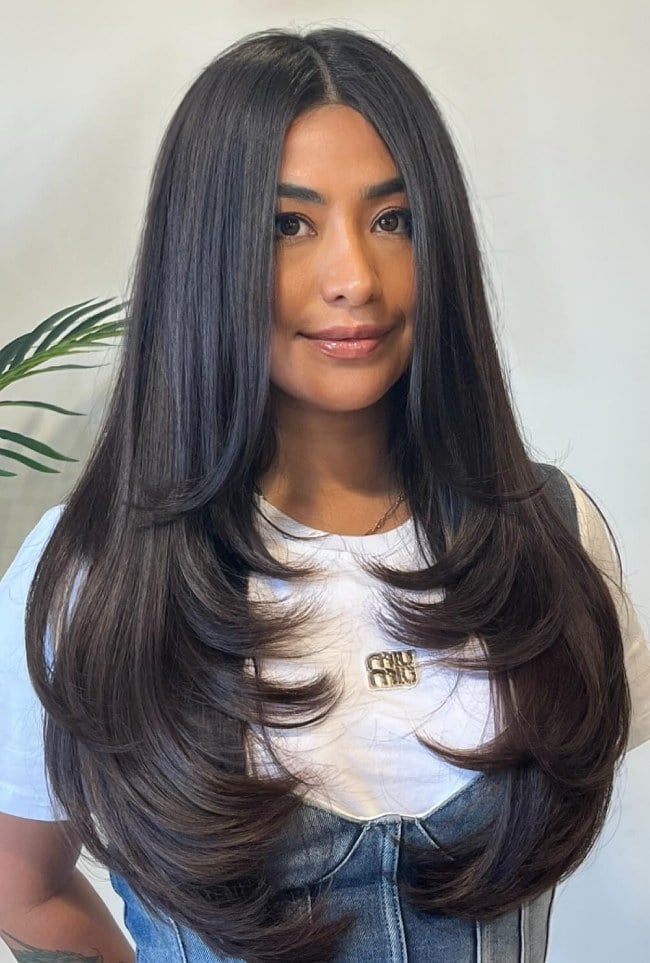
Long, thick, straight hair is famously hard to layer without losing density. This cut starts the face-framing layers at the chin and cascades them down, so the ends stay full while the top gains movement. Dark brown with a middle part and a smooth blowout keeps it neat. Thick, straight hair at the collarbone or longer is the sweet spot. Fine hair will not hold the shape here. The weight is part of the design. Skip it if your hair lacks density. Ask your stylist: face-framing layers starting at the chin, thick straight cut. Trim every six to eight weeks keeps the line clean.
Honey blonde with lighter highlights and curtain bangs
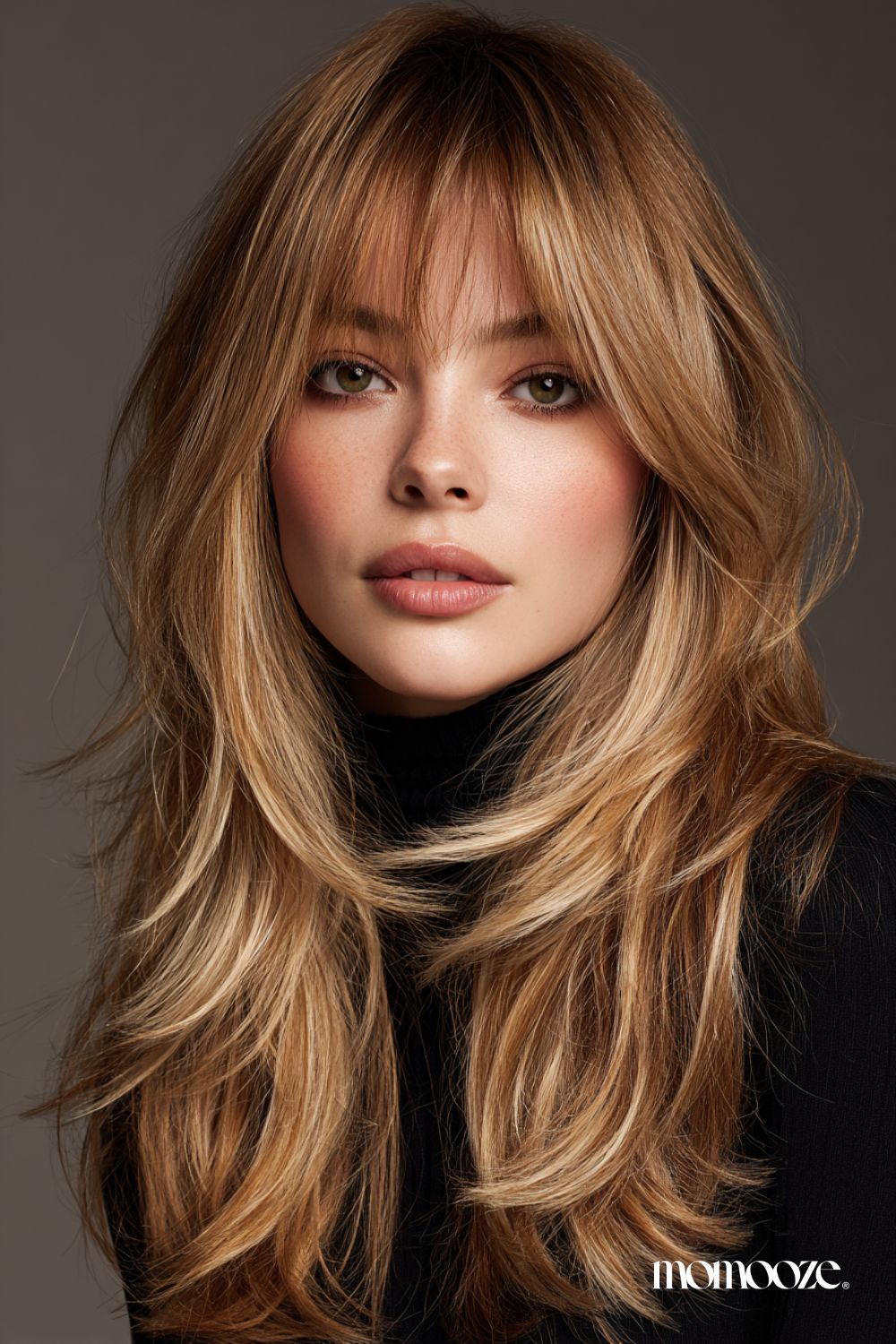
Wondering how to describe it so the stylist nails it? Say honey blonde with lighter highlights and curtain bangs. The layered cut starts around the ears, with the shortest pieces landing near the cheekbones. Wavy texture from a blowout keeps the ends moving rather than sitting flat. Fine hair at collarbone length gains volume this way. Curtain bangs soften round and square faces. The catch: skip this color if you have very dark natural hair and no desire for frequent root touch-ups.
Subtle caramel highlights on a dark brown base

Where honey blonde reads bold, caramel on dark brown reads quiet. Both use face-framing layers, but the tone here stays warmer and deeper. A center part and air-dried wavy texture let the caramel highlights sit mostly around the face. The cut works best on fine hair starting at collarbone length. Thick, coarse hair tends to push the layers outward, which prevents them from softening the jaw. Precision layering matters here. Ask your stylist for face-framing layers with subtle caramel highlights.
Brunette with ash blonde highlights and gentle waves
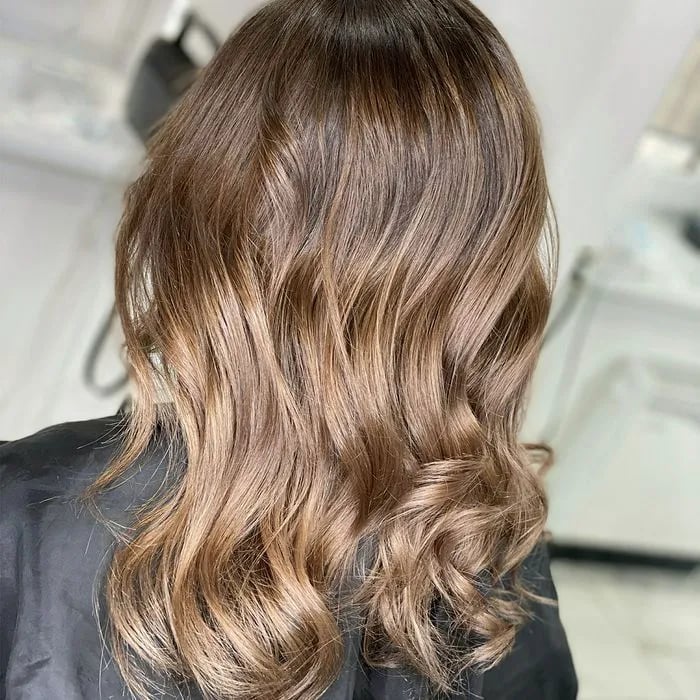
Ash blonde highlights on a brunette base create a cooler effect than caramel. The face-framing layers start below the chin, cut so the shortest pieces graze the jaw. Gentle waves are set with a middle part, adding volume at the sides. Fine hair at collarbone length gets the most out of this shape. The subtle blending between the two tones requires skill. Request face-framing layers with ash blonde highlights. A texturizing spray helps the waves hold without stiffness.
A shag with choppy layers and ash blonde
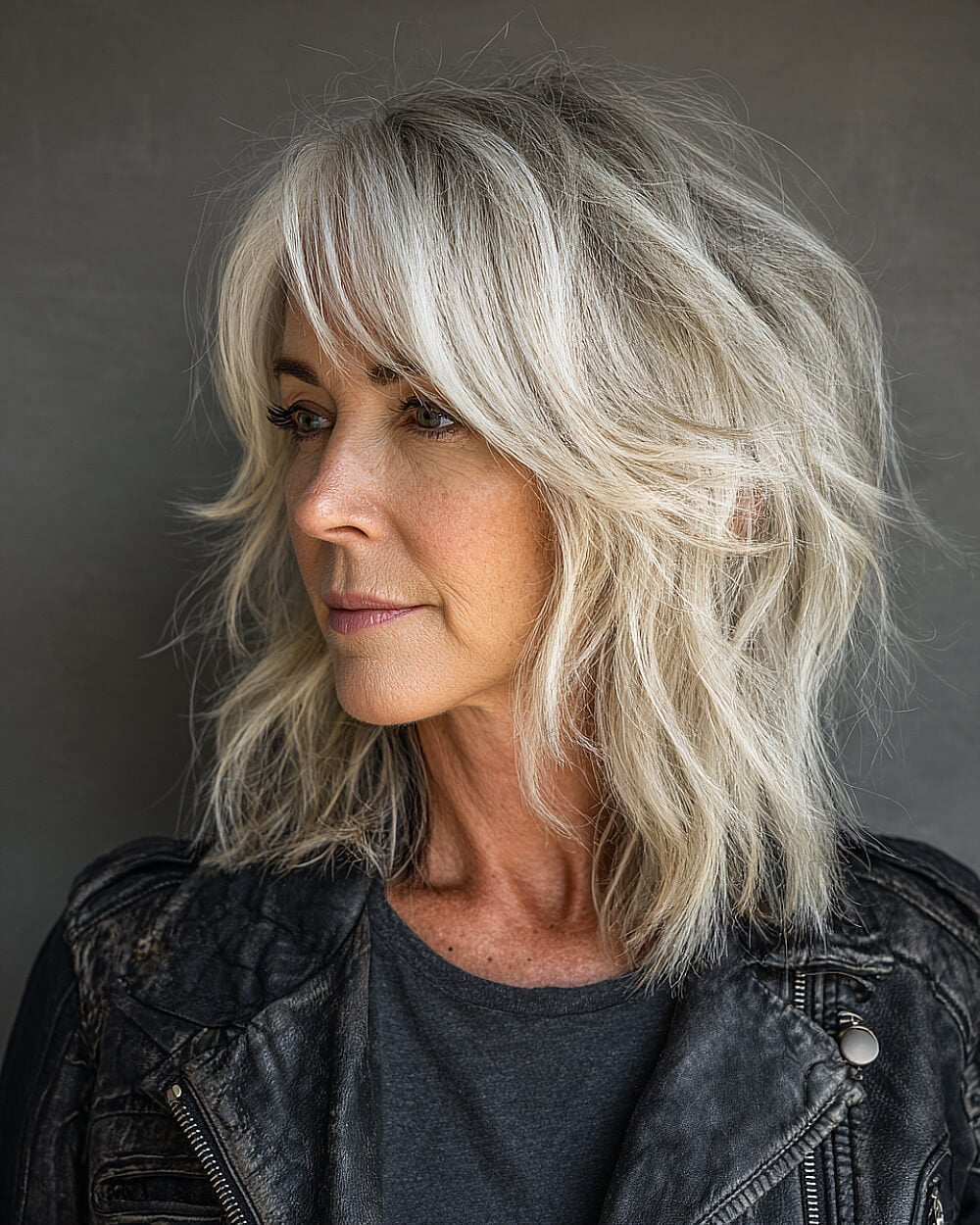
Choppy layers give a shag its texture. Here the ash blonde color has a root shadow that lets the grow-out phase last longer. Curtain bangs sweep to the sides, blending into the face-framing pieces. The cut is styled air-dried with a side part, so the texture looks intentional rather than messy. Fine to medium hair starting at collarbone length takes the shape well. It works best for those who want a textured, not sleek, look. Unruly thick hair can turn the choppy layers into bulk. Use a texturizing paste on air-dried hair.
Ash blonde with subtle highlights and side part
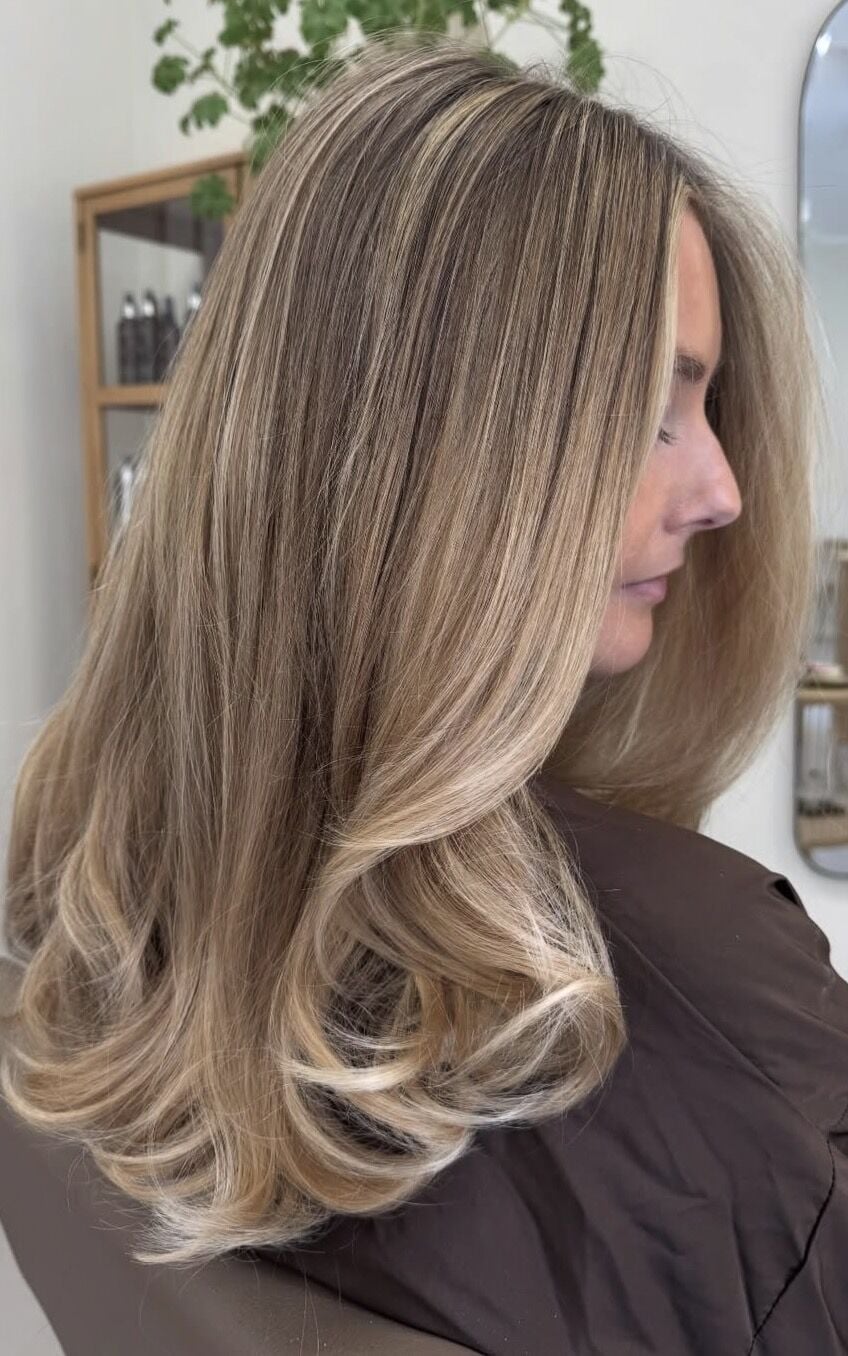
A side part changes the way face-framing layers fall. Here the deeper side gets more length, while the shorter side brings soft layers around the jaw. The ash blonde base has subtle highlights woven through the ends. A gentle blowout keeps the wavy texture smooth. Fine hair at collarbone length benefits from the shift in weight. Skip this if you prefer a middle part. The side part works best for softening round faces. Request face-framing layers, ash blonde with highlights, and a side part. A smoothing serum before blow-drying reduces flyaways.
Copper red shag with wispy bangs

Notice how the shortest layers land right at the cheekbone and the wispy bangs barely dust the brow. That is the shag’s trick: it builds volume where fine hair usually falls flat. The copper red shade keeps the cut from reading too grunge. It reads warm instead. A single process at the bowl, then point-cutting into the ends. You want the stylist to remove weight, not length, so the layers fan out without losing the overall shape. It works best for fine to medium hair that can hold a bend.
Curtain bangs blend into layers with highlights, wavy
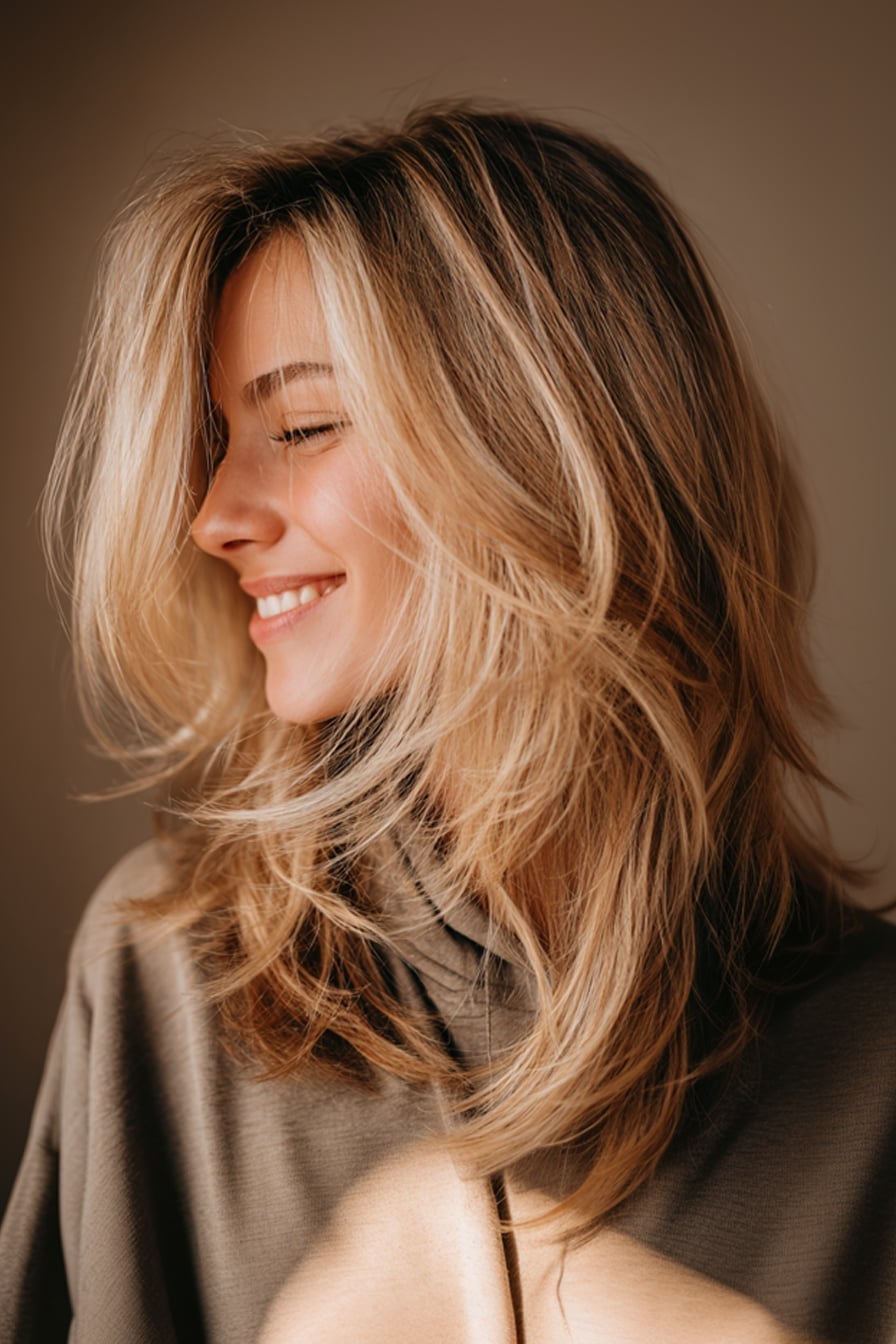
Dark blonde at the root shifts to lighter strands through the ends, and the curtain bangs open just past the eyebrow. The side part lets the layers fall asymmetrically, which breaks up a round face shape. Wavy fine hair holds this shape for two days before it starts to relax. A paddle brush and low heat are enough to reset the fringe.
Relaxed vibe with curtain bangs and dark brown
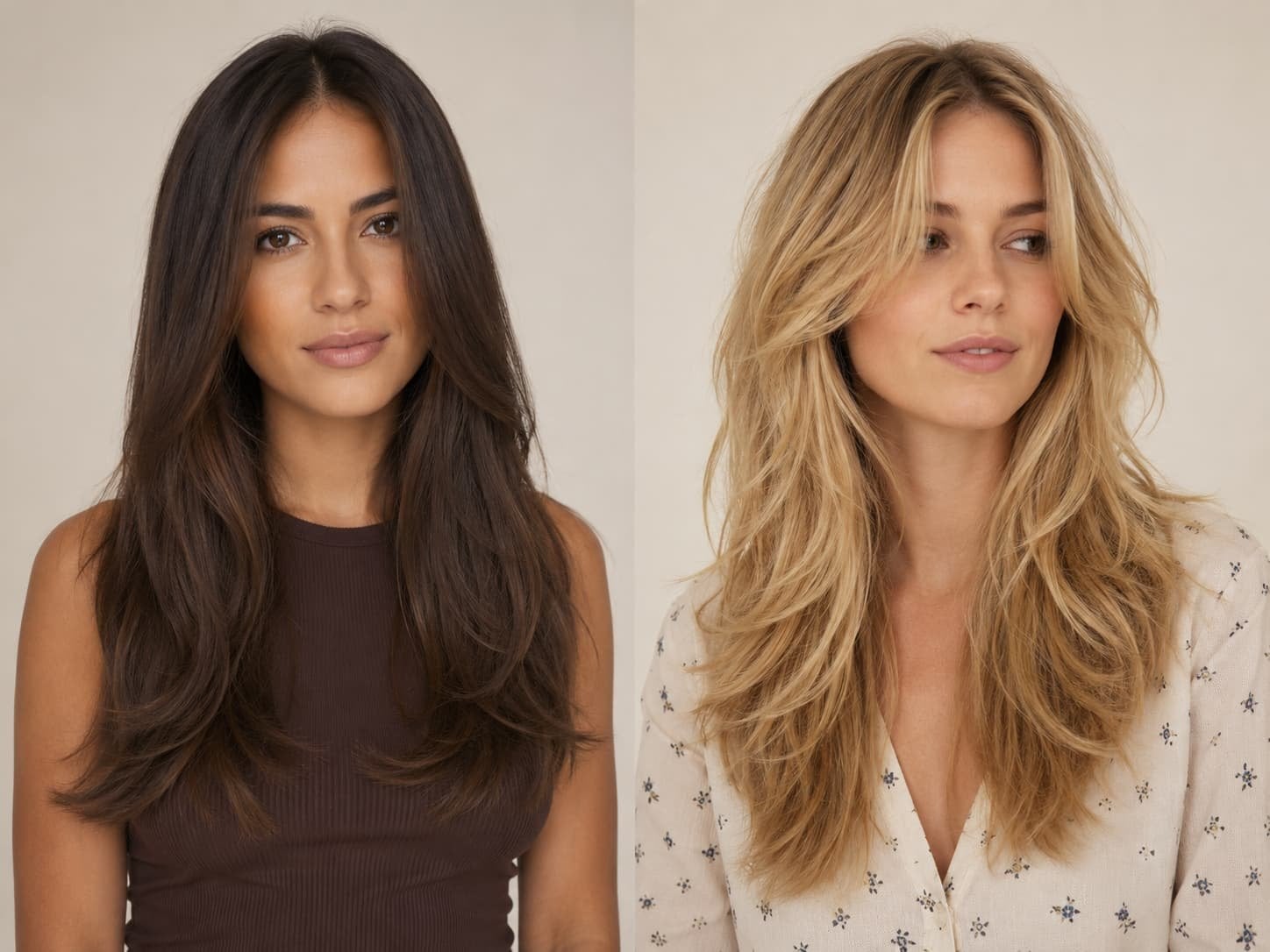
Dark brown base, no highlights, and the curtain bangs are cut to blend into the layers without a hard line. This works best on fine hair starting at collarbone length. The layers add movement without removing density. The catch: the bangs need a quick dry with a round brush every morning or they separate into two sad triangles. Not for you if you dislike daily fringe styling or have very thick hair that will push the layers apart.
Dark brown with blonde highlights and air-dried texture
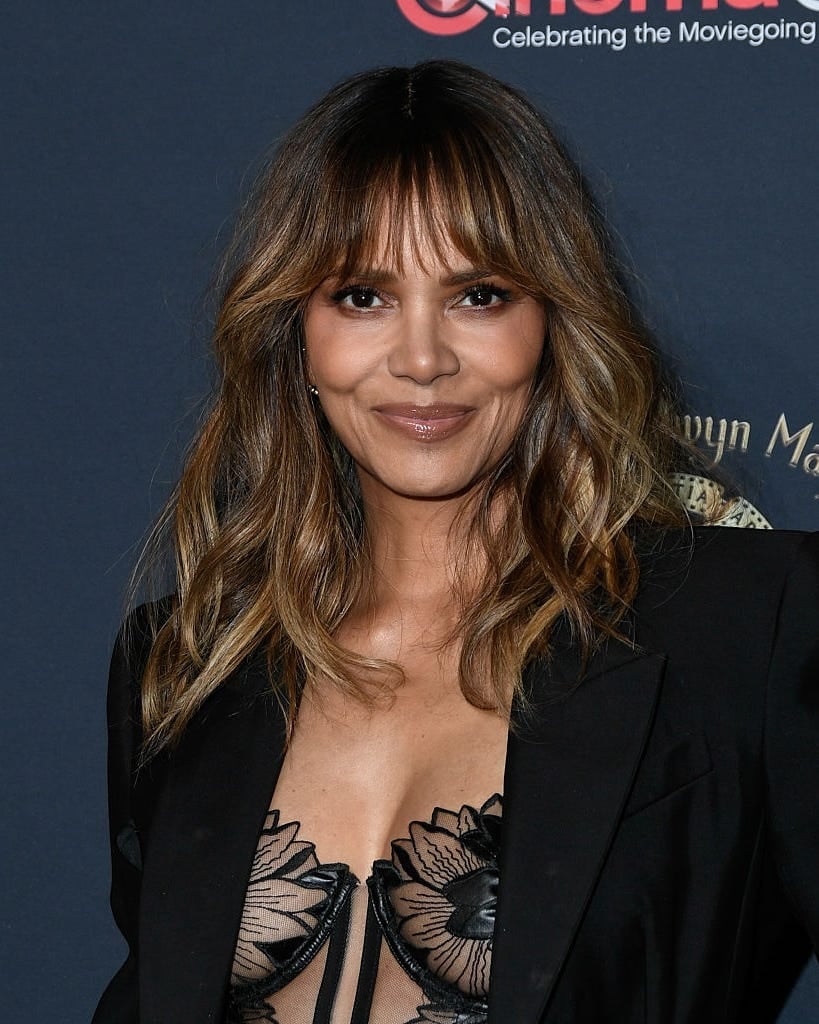
Tell your stylist: face-framing layers, curtain bangs, subtle blonde highlights. The highlights are thin and spaced, just enough to catch the light at the cheek and jaw. The cut relies on a middle part and soft layers that curve toward the chin. Air-dried texture means no round brush; a dab of texturizing paste at the ends keeps the shape from falling into a triangle. The highlights need toning every six weeks to stay blonde rather than brassy.
Blonde with highlights and natural waves

Compare this to the dark brown version above: the lighter base makes the layers look more open, almost translucent. The curtain bangs are longer here, grazing the cheekbone rather than the brow. Fine blonde hair benefits from the thin lighter strands woven through. They add the illusion of density without bulk. A middle part and air-dried waves keep it low-effort. Not for anyone who wants a sharp, geometric line; this shape lives in the soft zone between intentional and slept-on.
Side part with wispy curtain bangs and waves
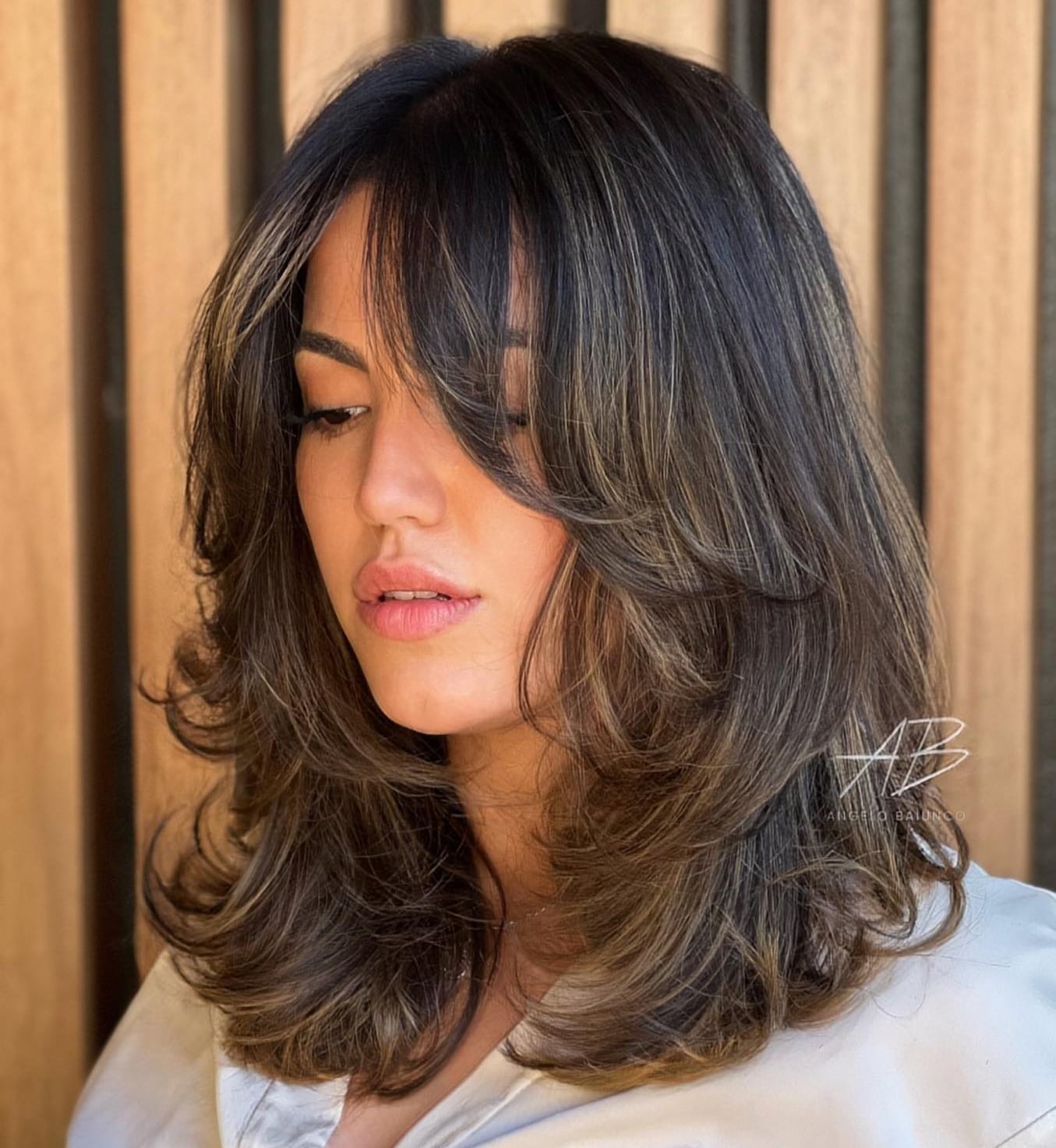
Side part changes the whole weight distribution. Wispy curtain bangs sweep off the forehead while the longer layers fall forward, so the dark brown base with subtle highlights gets seen from two angles. Fine hair at collarbone length benefits from the side part because it adds volume at the root without extra product. The loose waves hold better when the shortest layer hits just below the cheekbone. It works best with a middle part and very thick hair; the wispy bangs will separate instead of blending.
Dark brown with caramel highlights and soft waves
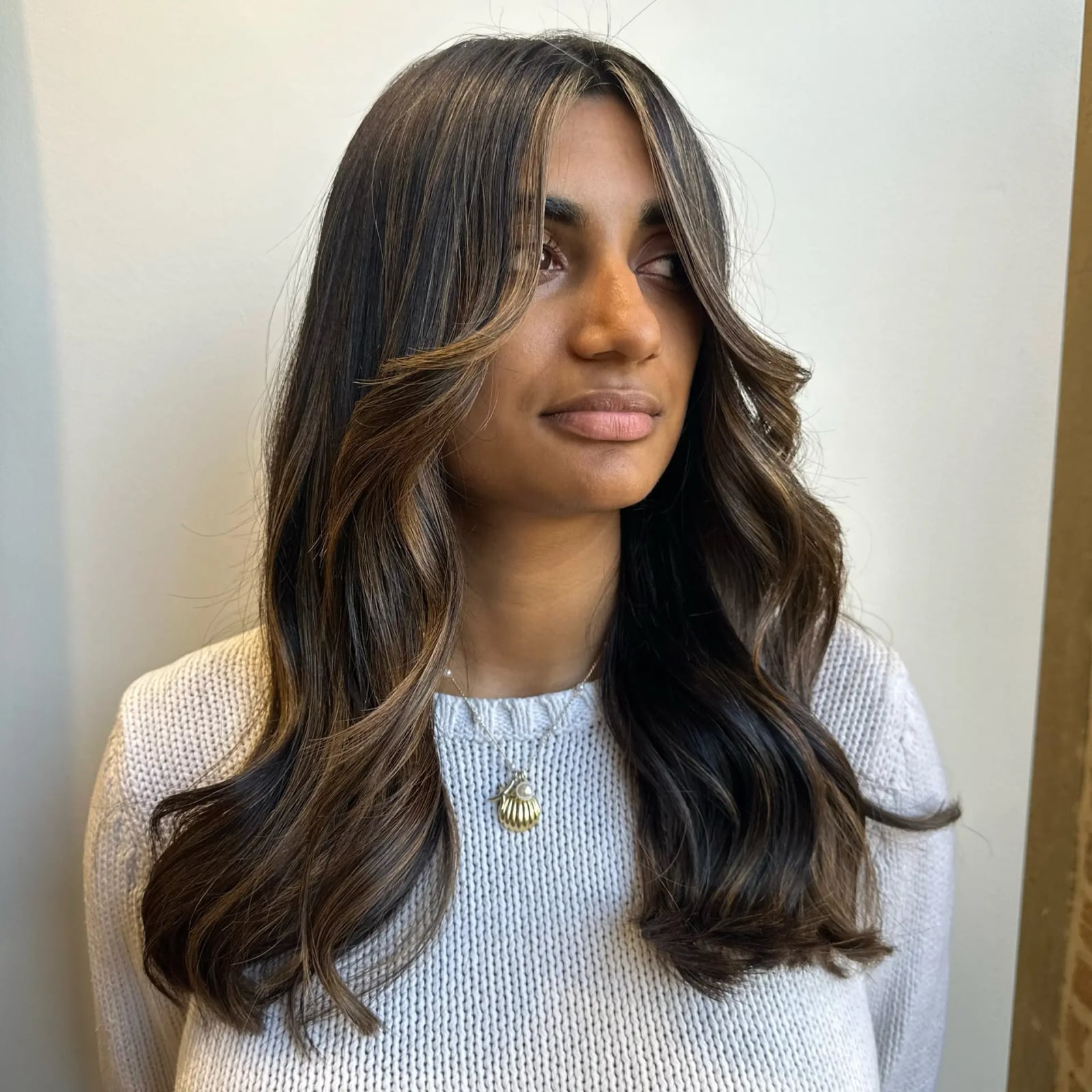
Caramel on dark brown is the kind of contrast that works because the base stays deep enough to anchor the lighter pieces. Long face-framing layers that start at the chin let the curtain bangs land softly on the forehead without a hard line. Fine to medium density hair at collarbone length holds the soft wave pattern without collapsing.
Not for anyone who wants a blunt cut or keeps hair above the jaw. The layers need that extra length to sweep properly. The wave is built with a blowout, not a wand, so the curve looks natural rather than uniform.
Auburn highlights with fine straight texture
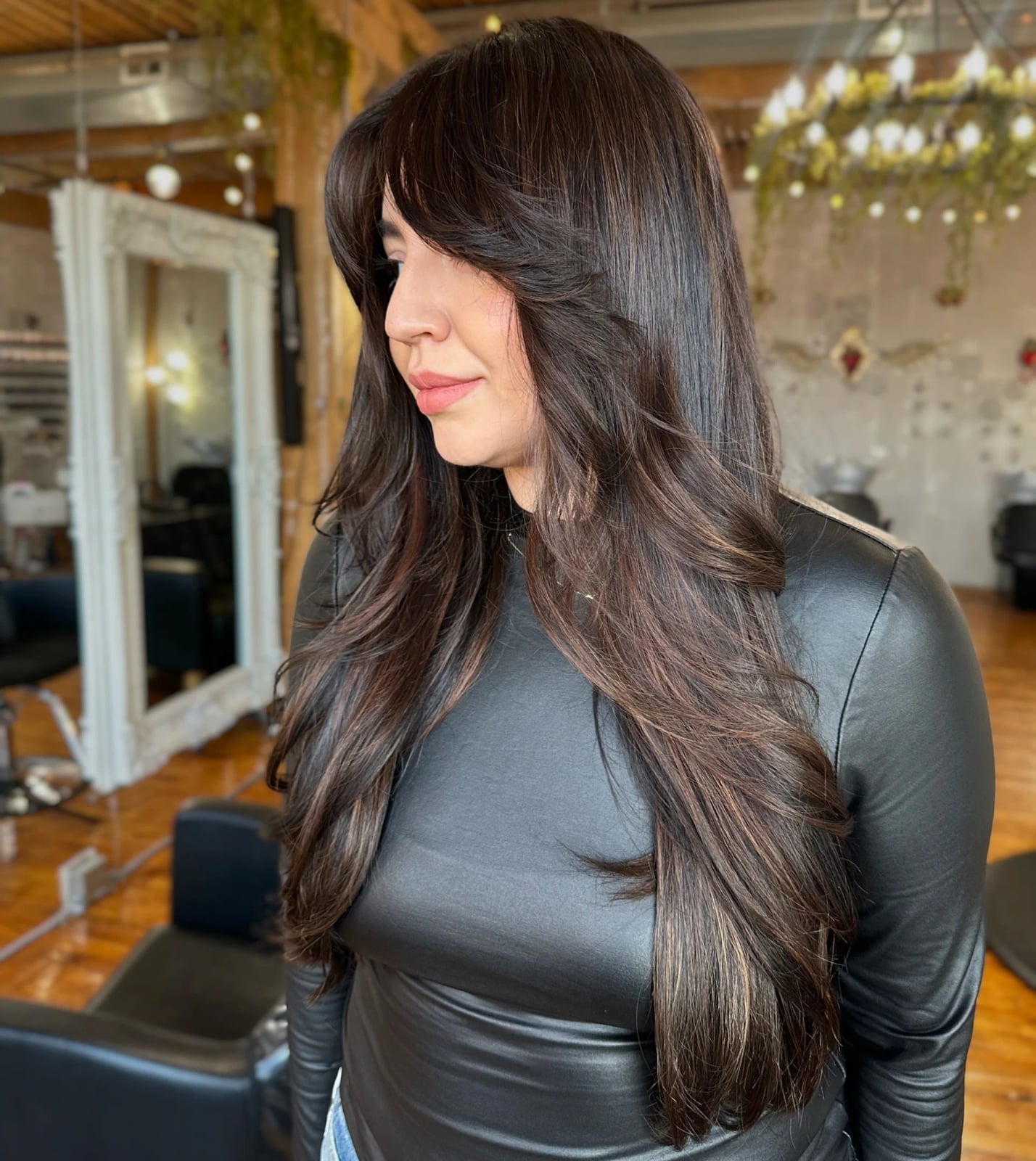
Tell your stylist: long face-framing layers, curtain bangs, auburn highlights. The auburn adds warm dimension against the dark brown base, not a stripe. Fine straight texture needs the curtain bangs cut dry so the weight line lands exactly where you want it. The subtle waves come from a blowout with a round brush, not from texture spray or salt. Straight hair holds a curl about three hours if you skip product. Avoid this style if you have very thick hair or prefer a blunt cut; the layers will spread instead of stack.
Honey highlights add dimension to dark brown
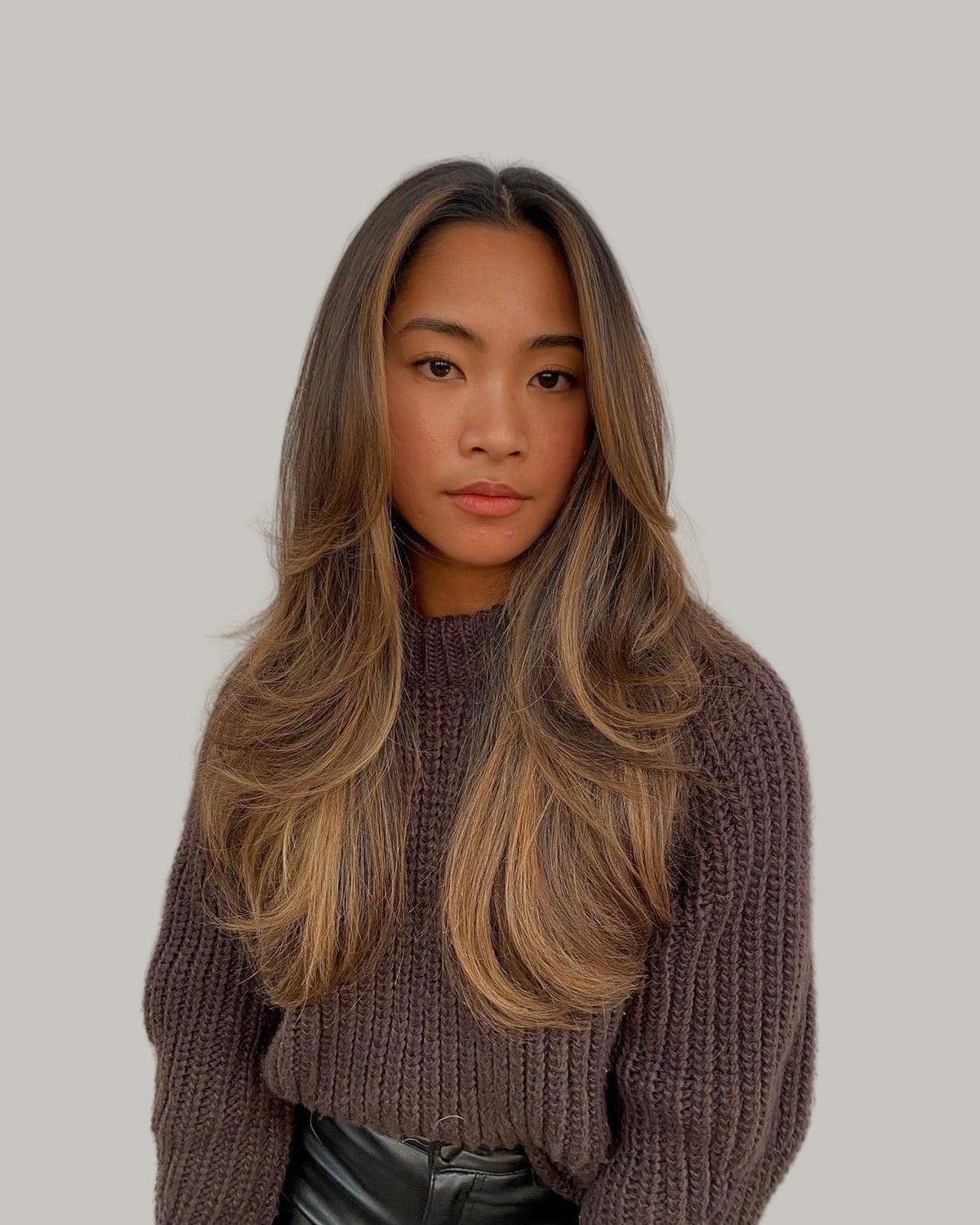
Honey highlights against dark brown read warmer than caramel but cooler than copper. The difference is in the undertone. Long face-framing layers at collarbone length with a middle part let the honey pieces sit right at the cheekbone, so the dimension is visible even when the hair is down. Fine wavy texture benefits from the collarbone length, any shorter and the wave would kink at the shoulder. The blowout is a medium heat, no round brush needed, just fingers and a nozzle.
Dark brown base with honey highlights and waves
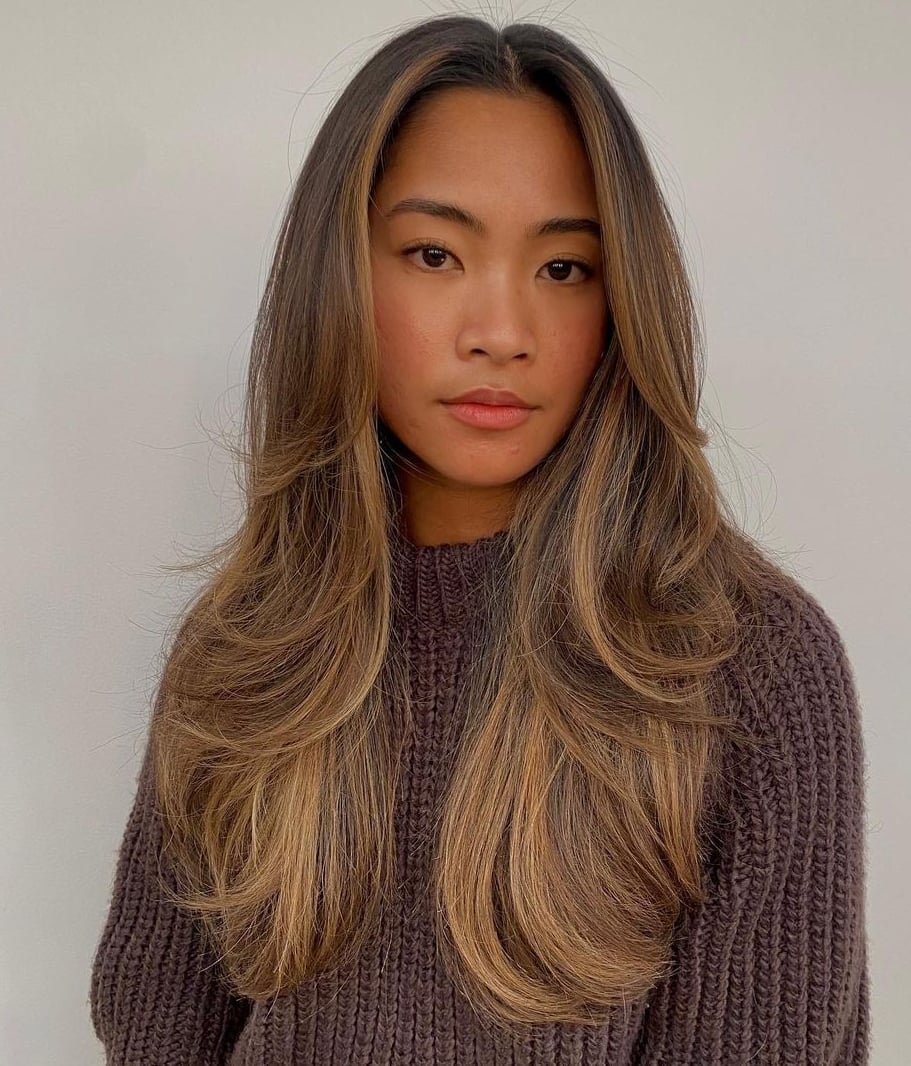
Two photos of the same idea, different execution. Here the honey highlights run slightly wider than the previous section, and the wave is looser, almost a bend rather than a curl. The long face-framing layers at collarbone length with a middle part create a curtain effect that moves with the head turn. Fine wavy texture at this length air-dries into the wave pattern in about twenty minutes. The blowout is optional. Honey on dark brown needs a gloss every six weeks to keep the contrast crisp.
Blunt bangs and caramel highlights
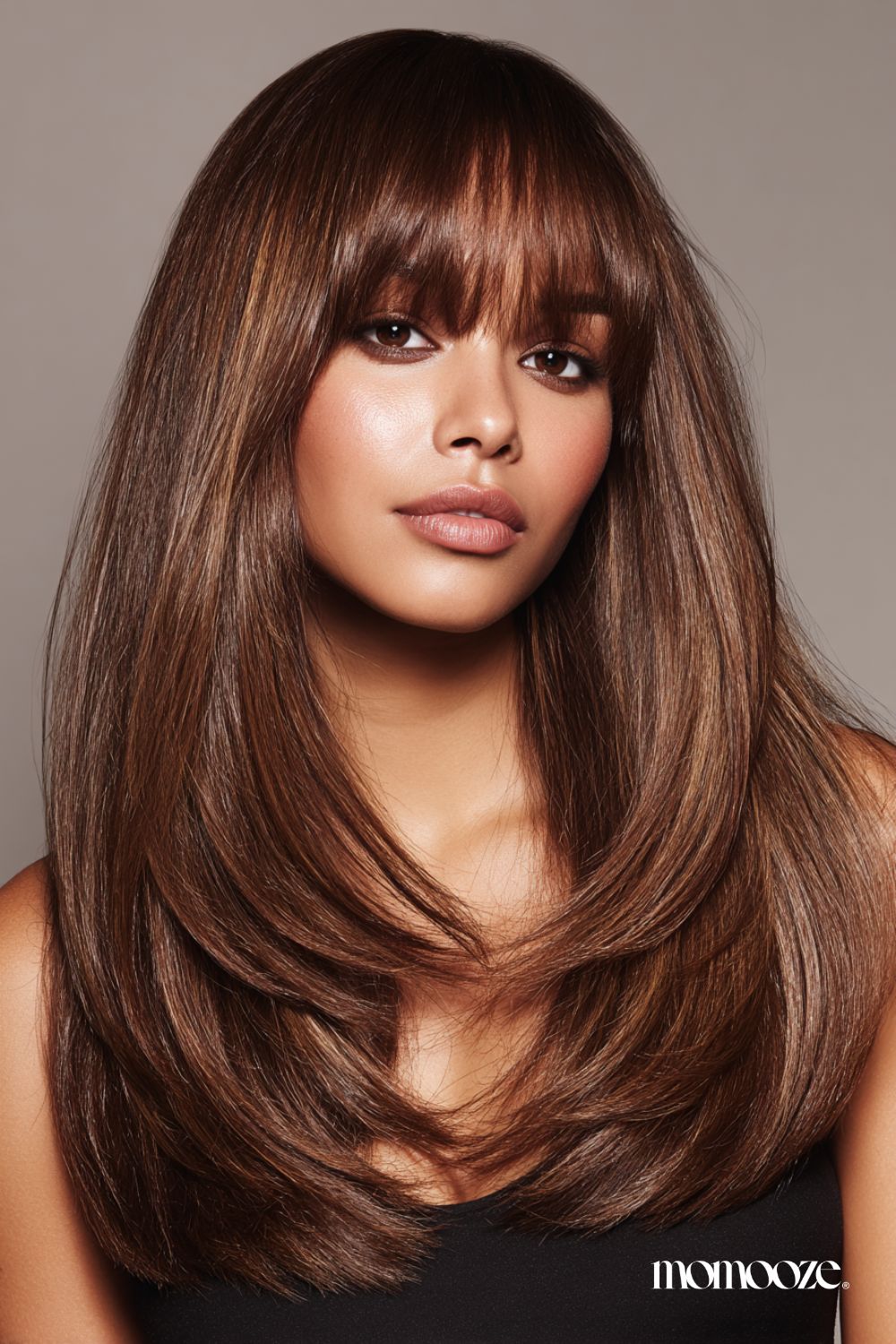
Blunt bangs meet face-framing layers, and the result is a cut that does not play games. The caramel highlights land on a dark brown base, subtle enough for the office, visible enough to catch the afternoon light. This works best on fine to medium straight hair starting at collarbone length. Not for you if you have very curly texture or simply refuse to style bangs every morning.
Long layers with curtain bangs and subtle highlights
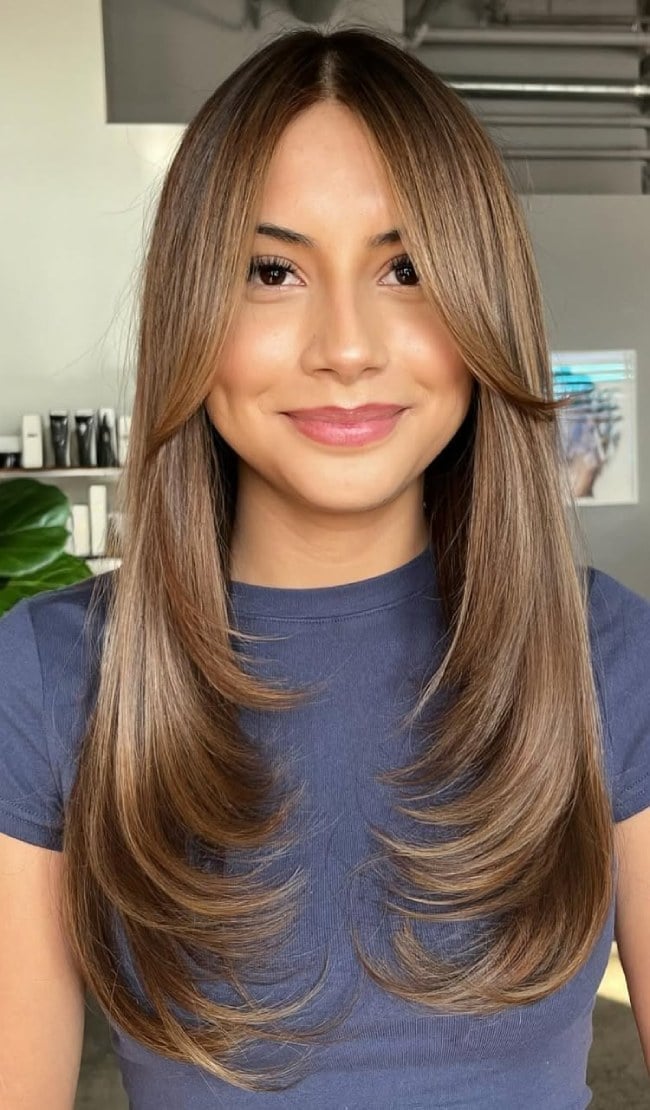
Long layers with a middle part look low-key until you notice the curtain bangs doing the actual work. The difference between this and a standard layered cut is the fringe: it sweeps soft, not dramatic, and the subtle highlights keep the brunette base from reading flat. Book it as long face-framing layers, curtain bangs. Fine straight texture handles the precision well; thick hair may push the bangs apart by noon.
Dark brown with wispy curtain bangs and soft blowout
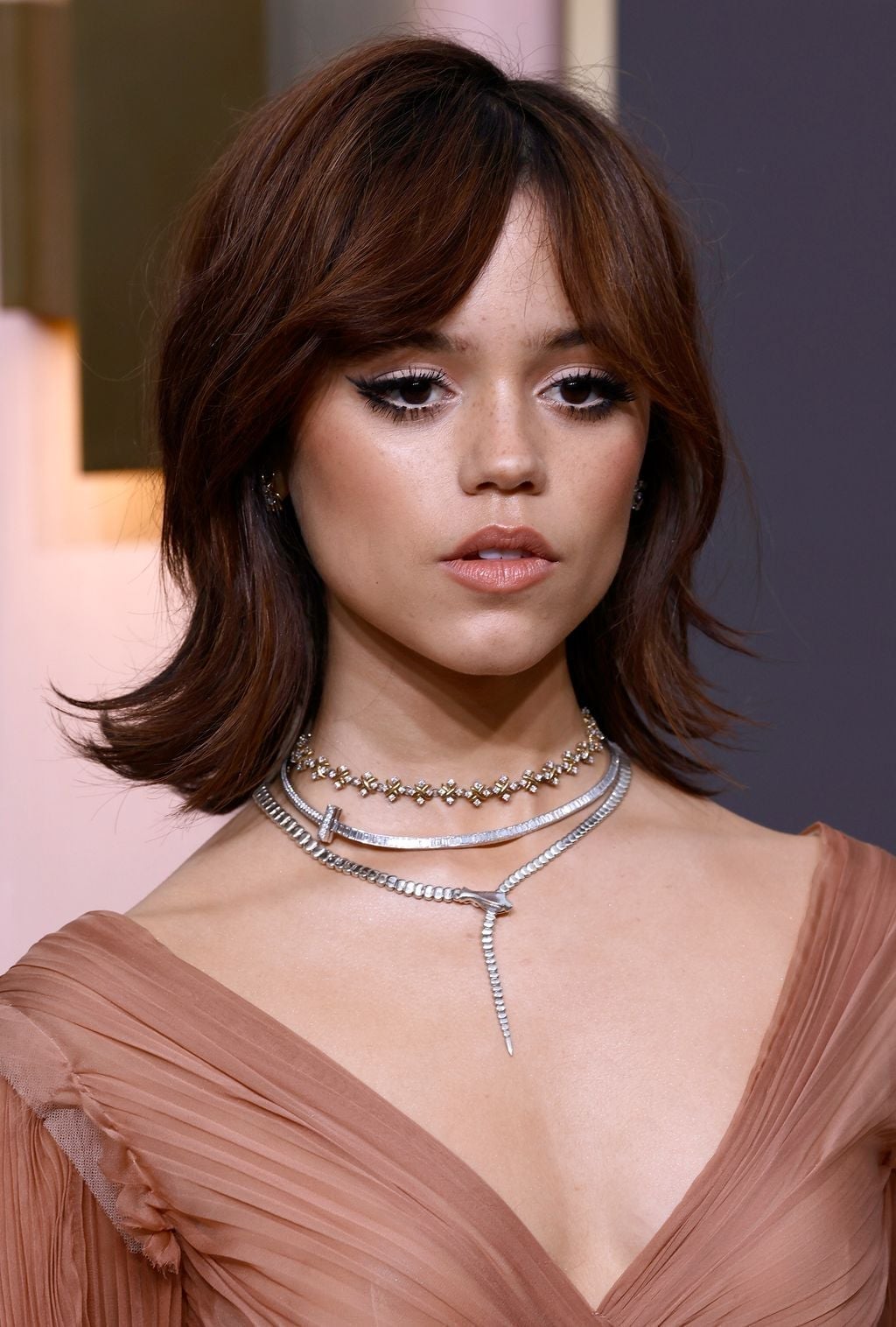
Wispy curtain bangs on dark brown hair create a neat look. The face-framing layers stay subtle, the blowout soft, and the whole style feels deliberate. This versus a heavier fringe: the wispy version lets you push the bangs to the side on lazy mornings. Straight fine texture is ideal. Pass when your hair is very thick, the wispiness gets lost. Blow-dry the fringe first, then the other layers.
Thick wavy hair with curtain bangs and highlights
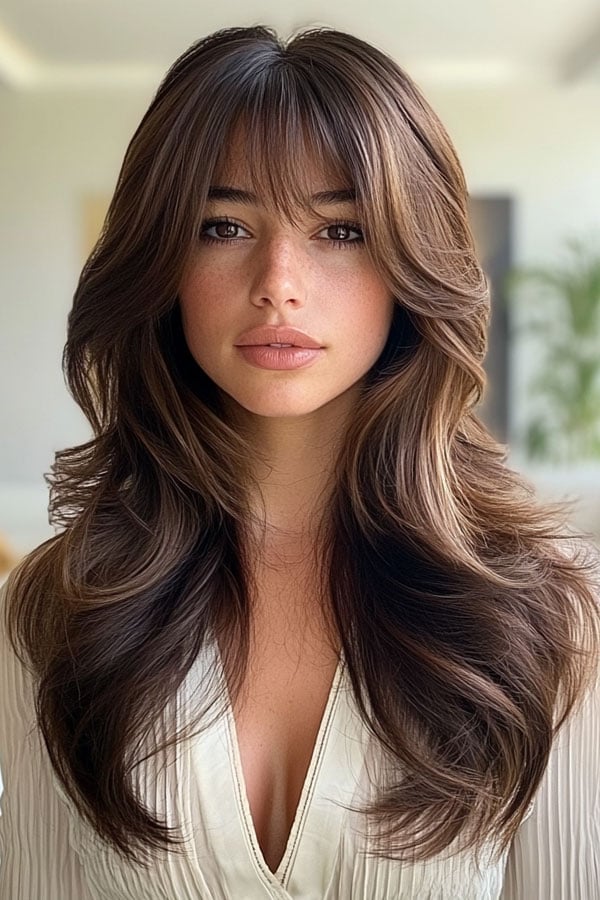
Thick wavy hair with a dark brown base and subtle blonde highlights works because the layers do not fight the texture. The curtain bangs frame without weight, the long face-framing layers keep the volume balanced. A blowout sets the shape, but the waves carry the rest. Thick texture naturally wants to wave. The highlights add dimension without a full color commitment.
Copper balayage on long layered hair
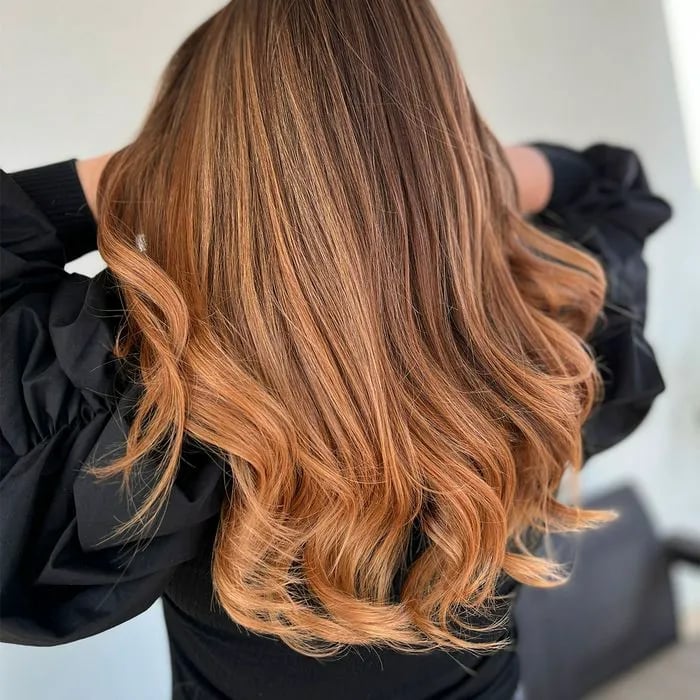
Copper balayage on long layered hair works best when the cut stays simple and the color does the talking. The loose waves and fine texture let the copper tones catch light from a side view. No bangs here. The face-framing effect comes from the front layers alone. This suits fine hair starting at collarbone length. A solid color or very curly texture hides the subtle transition.
Blonde with subtle highlights and natural waves and wavy and fine

Not every face-framing cut needs a full highlight appointment. This one is the exception: layers starting around the collarbone and thin lighter strands woven through the front half. The middle part and air-dried waves keep it low on the daily effort scale. Fine hair starting at collarbone length gains movement without losing density. Not for you if you have very dark natural hair you do not want to lift. Request face-framing layers, subtle highlights.
Dark brown with air-dried texture, close-up take
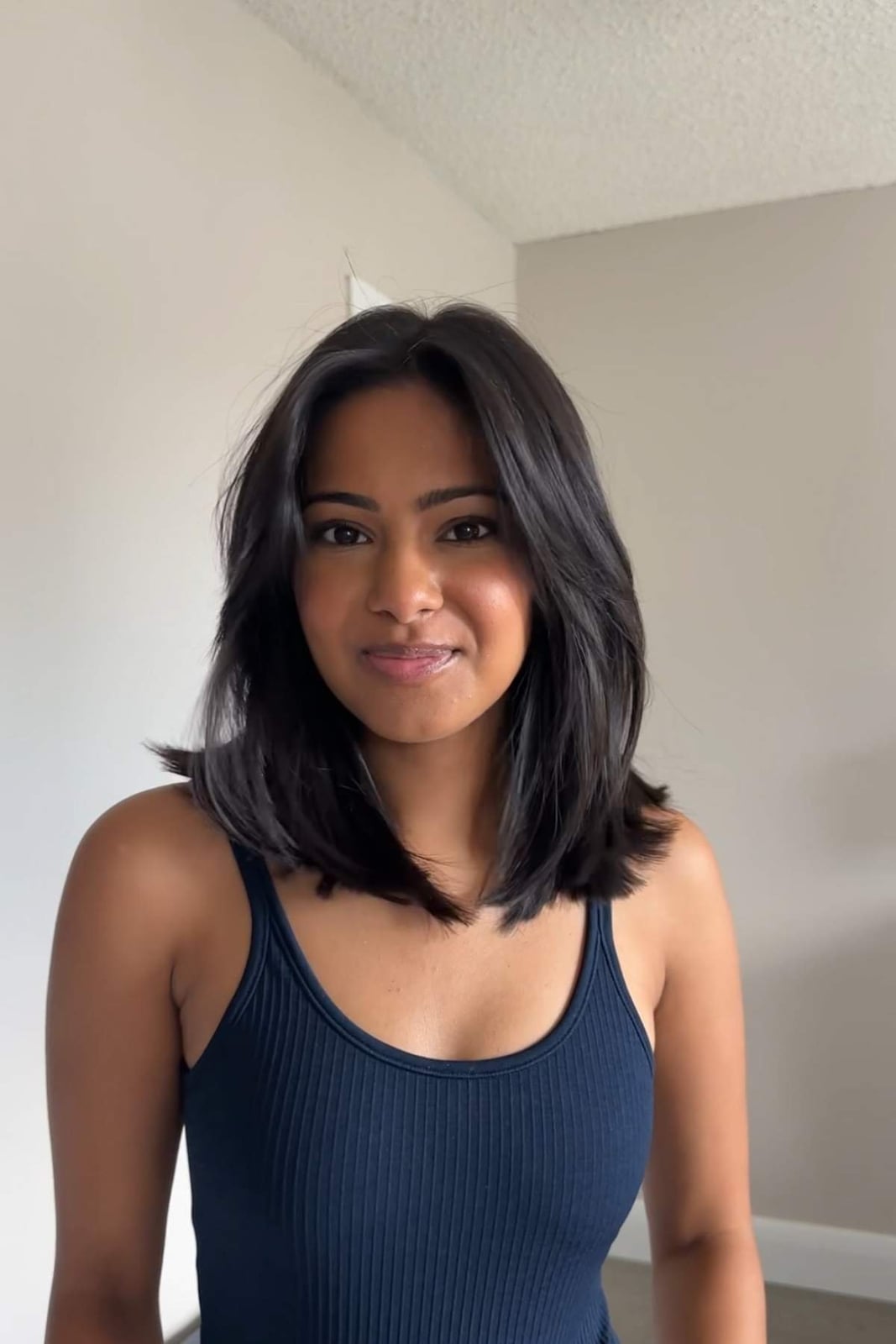
A single rule separates a good face-framing cut from a forgettable one: the blend. Dark brown hair with a middle part and straight, fine texture needs soft interior layers that graduate without a visible line. The air-dried finish proves the cut works on its own. Fine hair starting at collarbone length gets movement without looking thinner. Pass when you prefer a neat blowout every wash. This one is built for the days you let it dry and walk out.
Blonde with fine highlights and air-dried waves
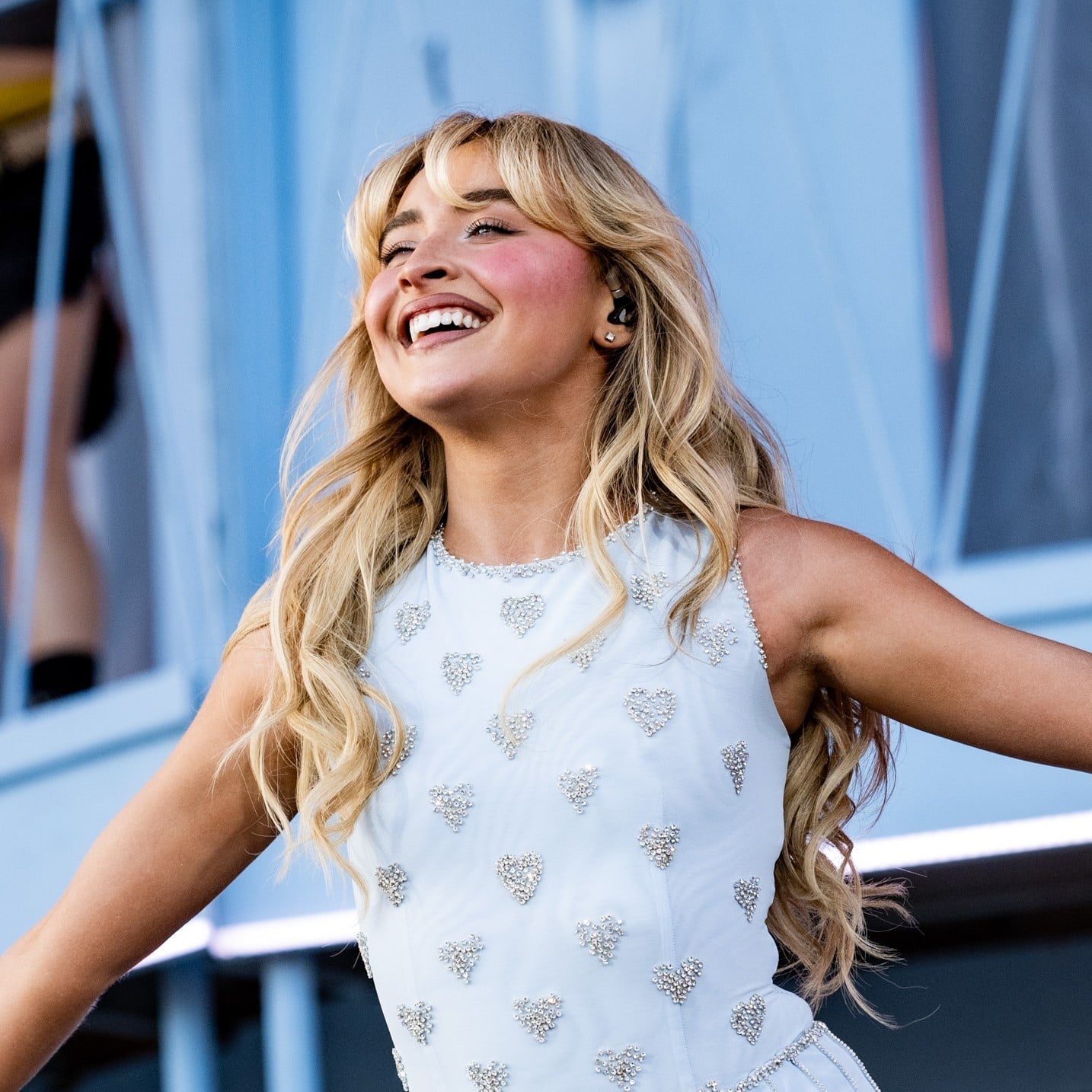
Three things take time here: the fine highlights, the curtain bangs and the soft face-framing layers that blend into them. The blonde base and wavy fine texture mean the color needs a toner refresh at week six. The bangs need a quick blow-dry every morning, even when the rest air-dries. Fine hair starting at collarbone length works well because the layers add body without removing bulk. Request face-framing layers, curtain bangs, blonde with fine highlights.
Dark blonde base with lighter highlights and waves
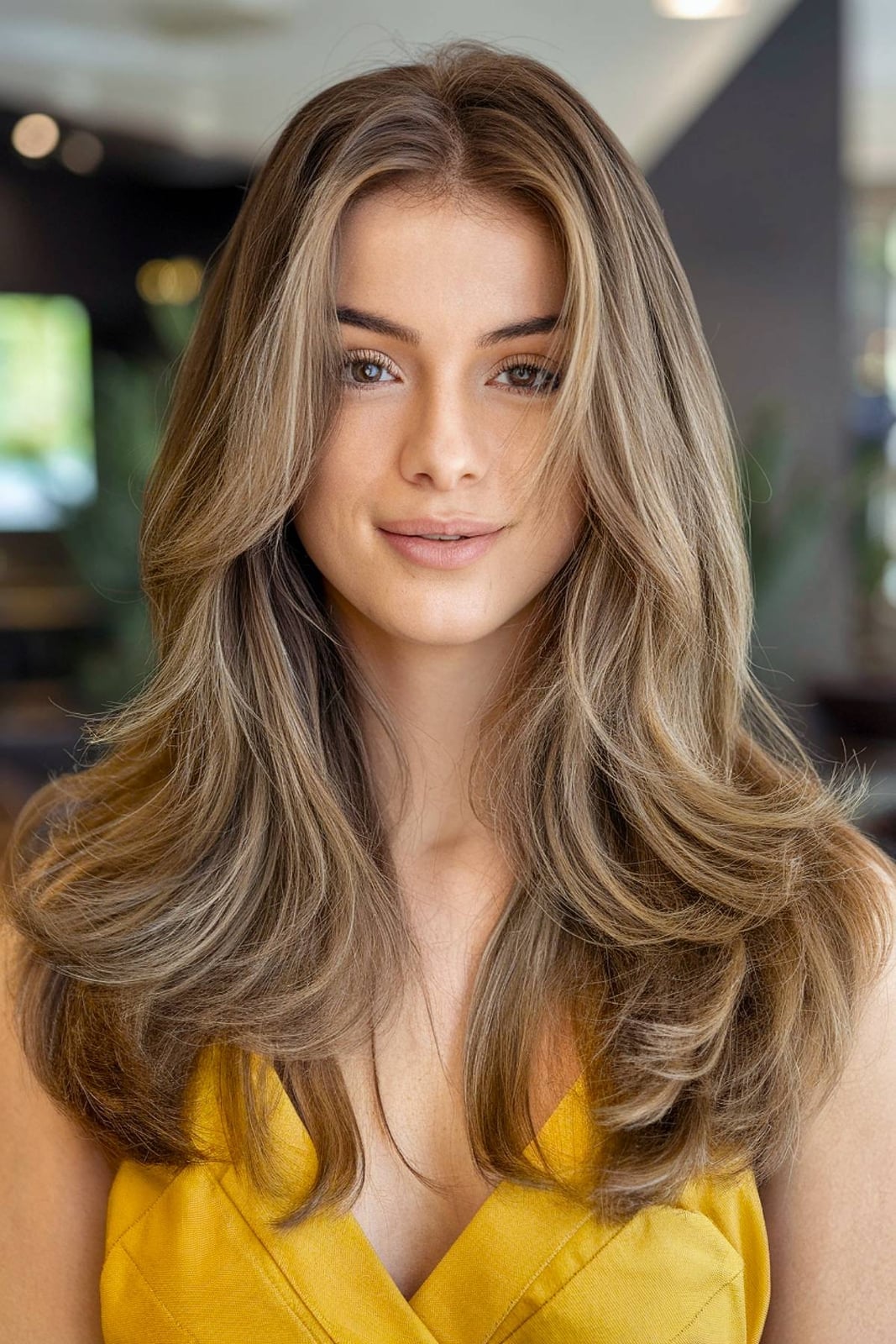
Curtain bangs on fine hair live or die by the blowout. The dark blonde base with lighter highlights and loose waves here needs a round brush on the fringe every wash. The centered part and voluminous styling suit oval and heart-shaped faces best. Not for you if you hate styling bangs daily or have very thick hair that swallows soft layers. The face-framing layers start below the chin and blend into the length, so the shape holds even as the highlights grow out.
Dark brown with subtle highlights and curtain bangs
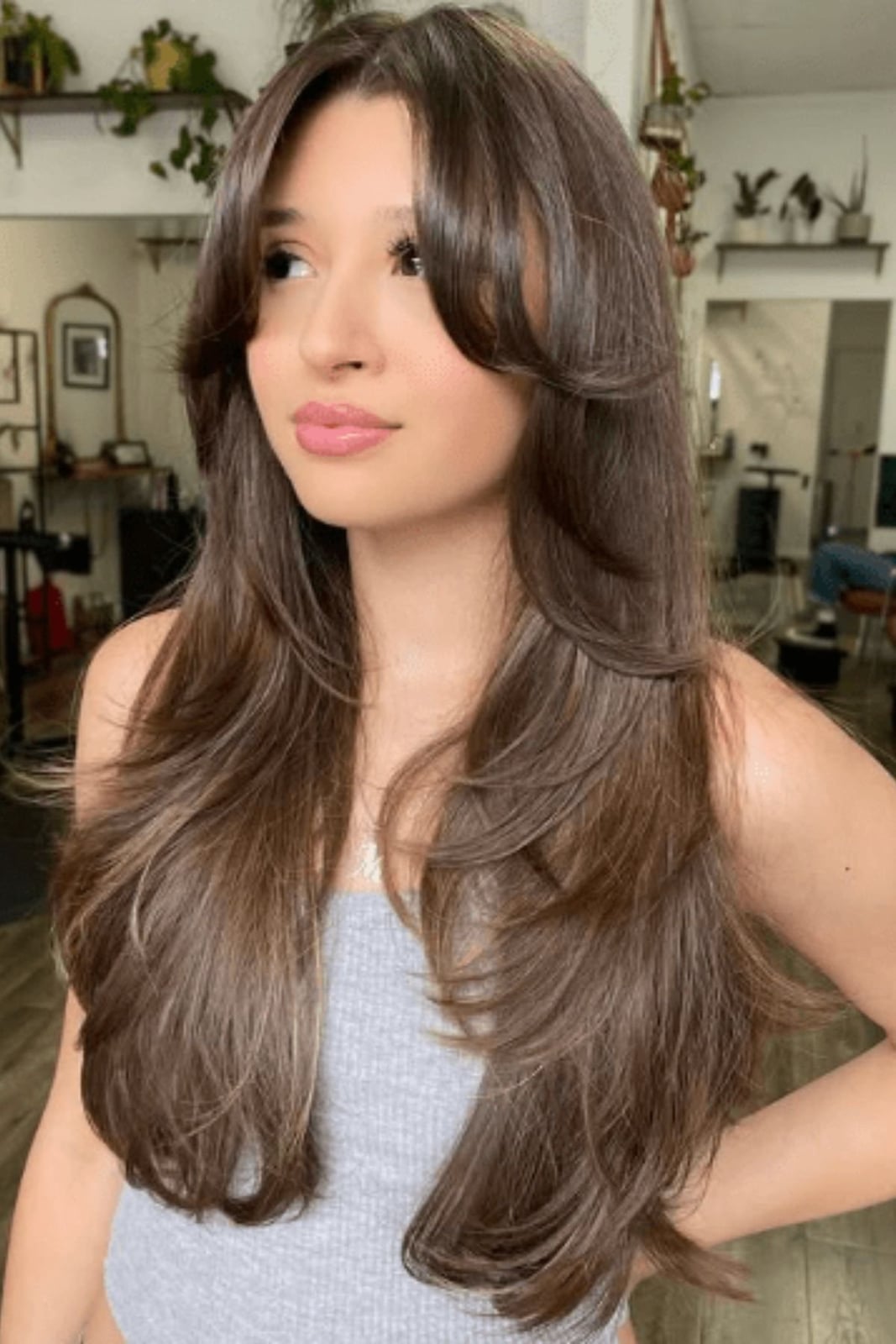
A long cut with curtain bangs and fine highlights builds its effect from the front section alone. The dark brown base keeps it low-maintenance on the color side; the subtle highlights add enough contrast to define the layers. The blowout on wavy fine texture creates the neat silhouette. The face-framing layers are cut so the shortest point sits at the cheekbone, which works for round and square faces. Pass when you want a wash-and-wear fringe. Request face-framing layers, curtain bangs, subtle highlights.
Dark brown with fine highlights and air-dried, everyday version
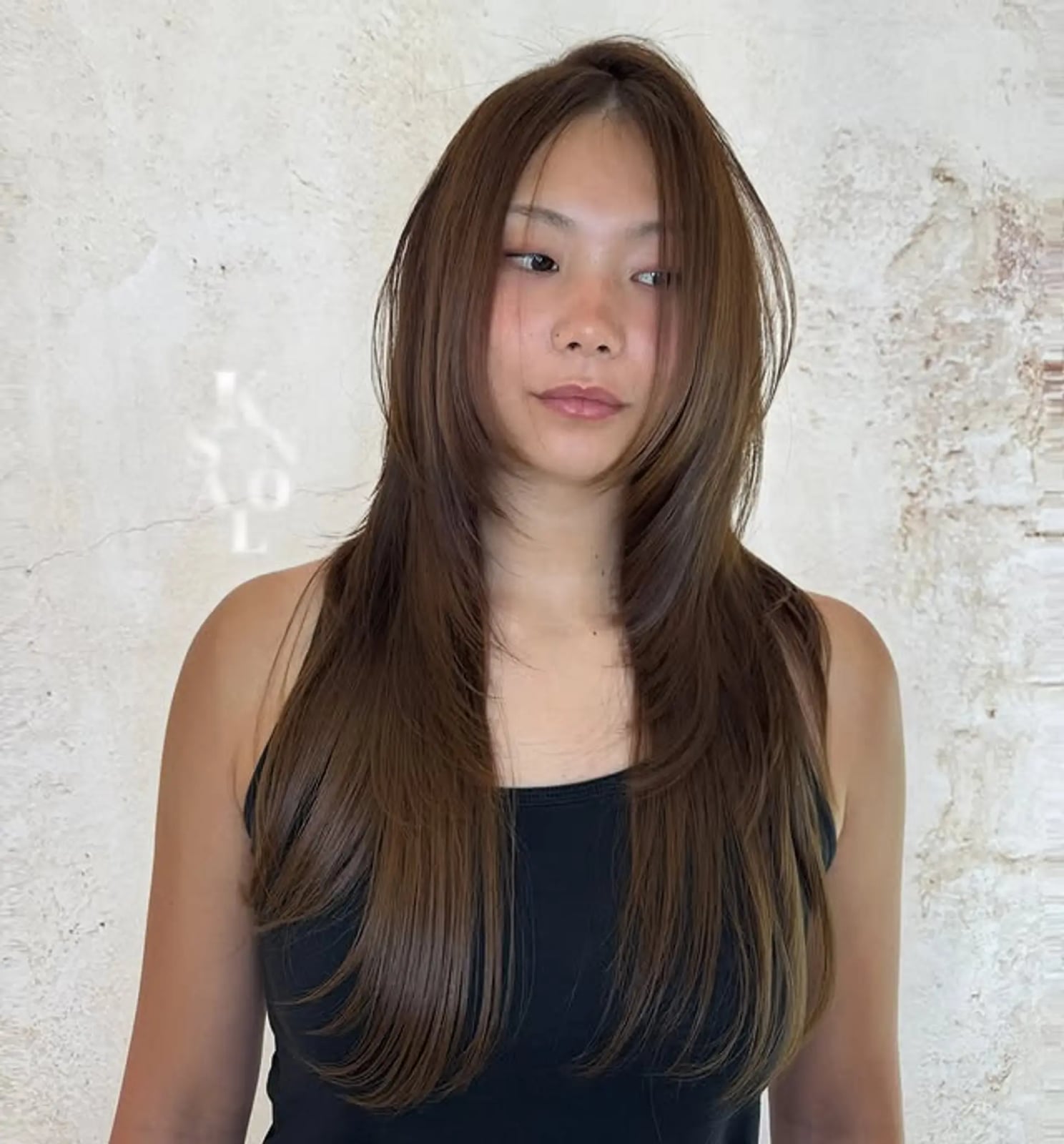
Start with damp hair and a middle part. The long face-framing layers and curtain bangs are cut to air-dry forward without coaxing. Fine highlights on a dark brown base keep the dimension subtle. A texturizing paste worked through the ends stops the layers from disappearing into the length. Curtain bangs dry wonky without a quick blast from the dryer. Fine hair starting at collarbone length gets the most lift from this cut. The layers soften features without sacrificing density.
Choppy layers that frame the face
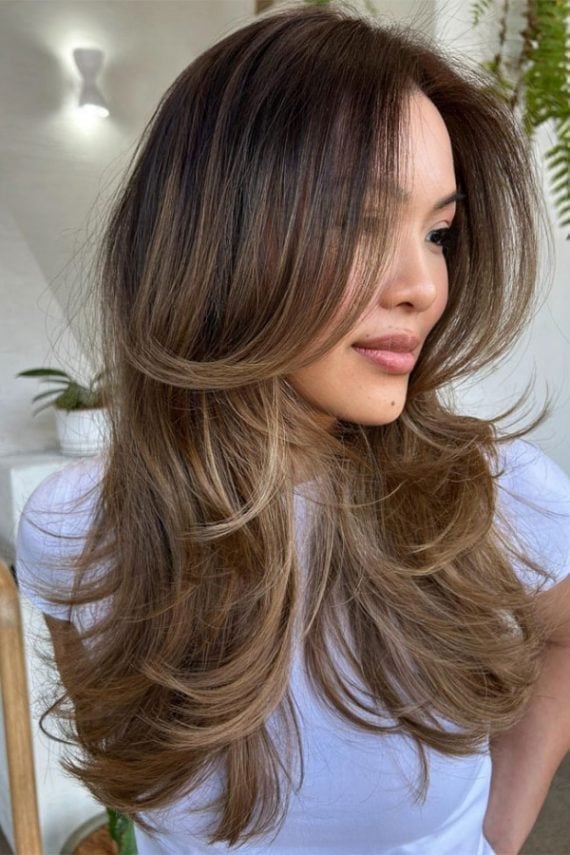
Choppy layers look best when they stay visible. The long layered cut here uses curtain bangs that sweep away from the face, plus a dark brown base with blonde highlights. The voluminous blowout gives the layers room. Not for you if you have very thick, dense hair. The texture can turn choppy into bulky. Fine to medium hair starting at collarbone length gets the movement without the weight. Request long layered cut with face-framing choppy layers and curtain bangs. Blow-dry the fringe with a round brush.
Shag with choppy layers and blonde highlights and curtain bangs
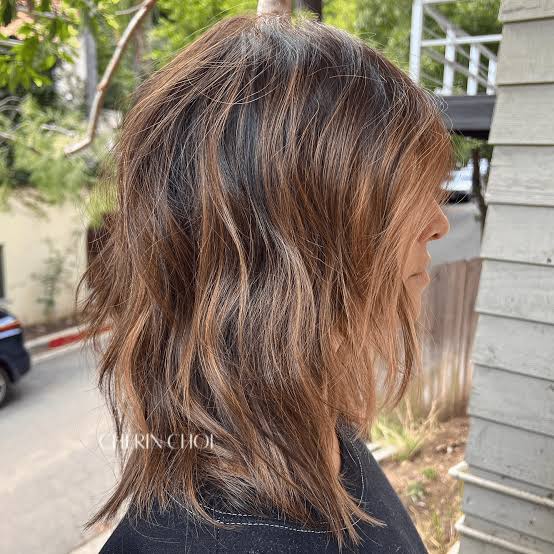
The mistake is treating a shag like a regular layered cut. This shag relies on choppy layers and curtain bangs cut into a dark brown base with blonde highlights. Styled air dried, the texture looks undone and deliberate. Fine to medium hair starting at collarbone length holds the shape best. The choppy ends and curtain bangs resist a smooth finish. Request shag haircut with choppy face framing layers and curtain bangs. Use texturizing paste.
Ash blonde with subtle highlights and side part, close-up take
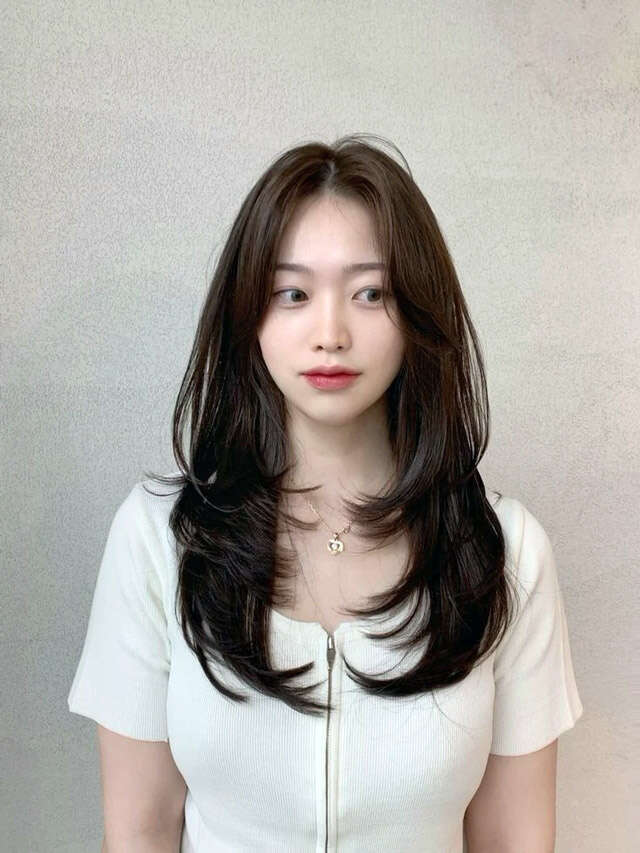
A side part changes how face-framing layers fall. This soft layered cut on an ash blonde base with subtle highlights shifts the weight to one side, making the layers appear longer on the heavier side. Fine hair starting at collarbone length benefits from the asymmetry. Not for those who prefer a middle part. The side part is structural here, not decorative. Use a smoothing serum before blow-drying to keep the ash blonde base glossy. The side part means you commit to one side until the next cut.
Final Thoughts
Choose the version that matches your routine.
- Fine hair: keep layers soft, not choppy, to avoid losing density.
- Ten minutes in the morning: curtain bangs that air-dry forward.
- Cool base that pulls brassy: a toner every ten weeks keeps the highlights clean.
- Thick texture: ask for internal layering so the shape doesn’t get heavy.
Face-framing layers work because they adapt to how you actually style.